
The two routes suit different priorities. The O Circuit is the superior choice for experienced trekkers seeking solitude and the full 360-degree mountain experience, while the W Trek is the better option for those with limited time or a preference for the comfort of mountain hostels. Choosing between them is a matter of deciding whether you want the “greatest hits” highlights of the southern massif or the full, immersive wilderness of the entire mountain range.
Both routes share the same world-class scenery in the Torres del Paine National Park, but they offer fundamentally different experiences in terms of physical demand, social atmosphere, and logistical complexity. For the W route, see our W Trek planning guide for the standard 5-day, 4-night booking template and the quicker 4-day, 3-night option.
At a Glance: W vs O
- W Trek Distance: Approximately 80 km (50 miles)
- O Circuit Distance: Approximately 110–120 km (68–75 miles)
- W Trek Duration: 4–5 days
- O Circuit Duration: 7–9 days
- Best For (W): First-time multi-day hikers and those short on time
- Best For (O): Seasoned backpackers seeking remote wilderness
- Booking Window: 6–10 months in advance for peak season (Dec–Feb)
The Fundamental Difference: Loop vs. Highlights
The relationship between these two trails is simple: the O Circuit is a full loop that encompasses the entirety of the W Trek. When you hike the O, you spend the first few days in the remote “backside” of the park before joining the W trail for the final four days.
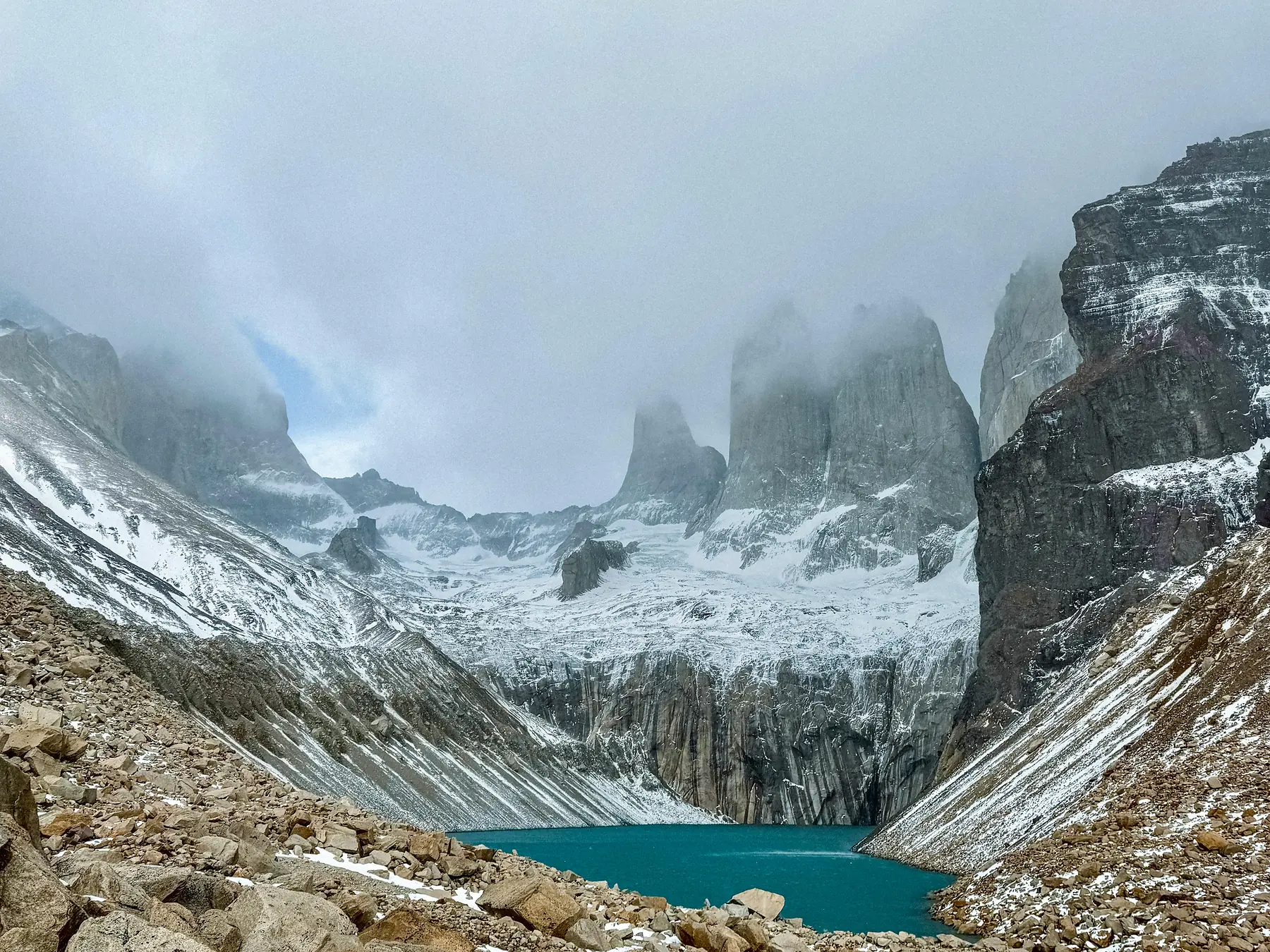
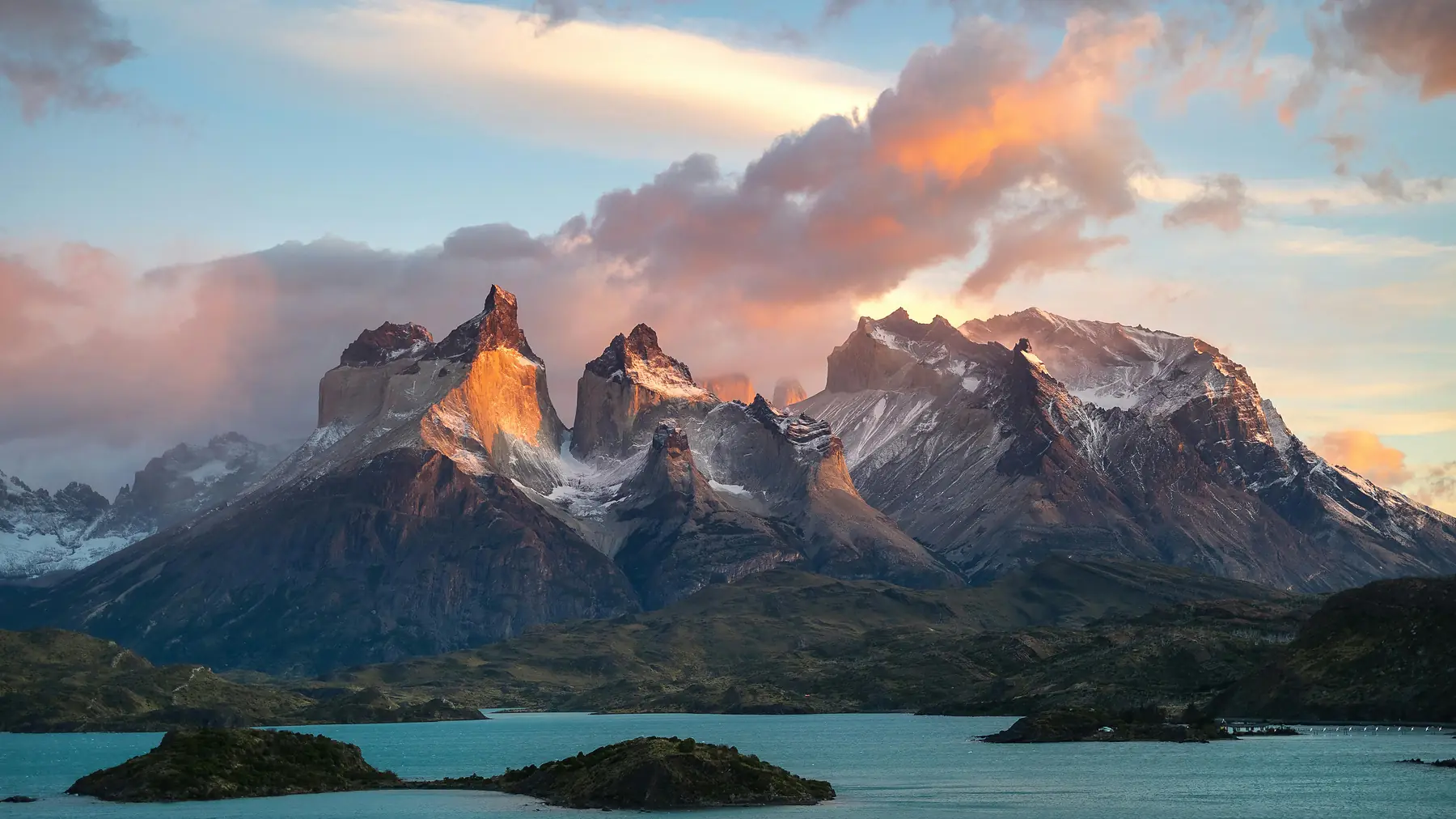
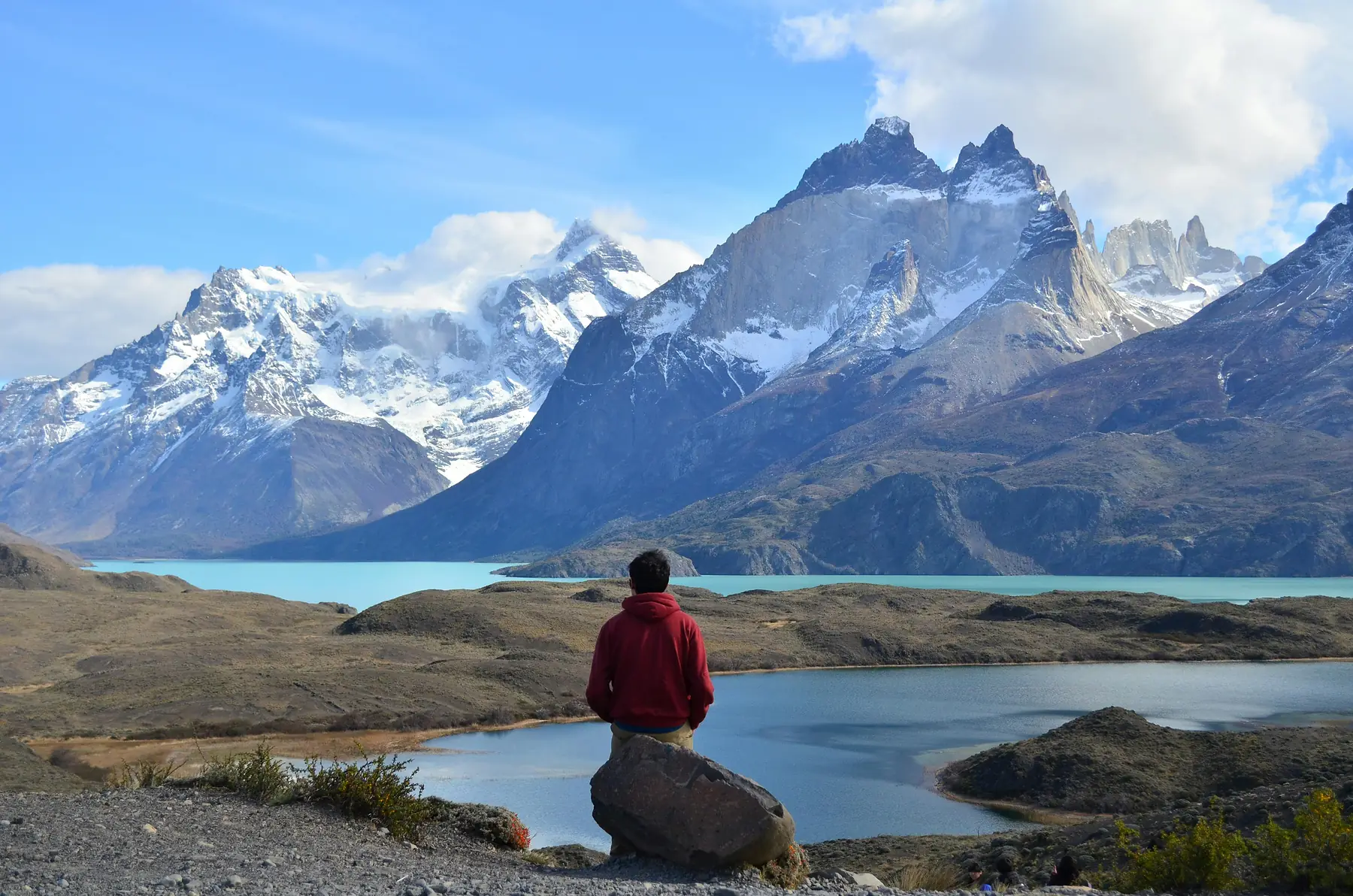
The W Trek is shaped like its namesake letter, focusing exclusively on the three southern valleys of the Paine Massif. It hits the “Big Three” sights, including the Base of the Towers, the French Valley, and Glacier Grey. Because it only covers the southern section, it is a linear route (or a “W” shape) rather than a loop. This gives you flexibility; you can hike it from East-to-West (starting at Laguna Amarga) or West-to-East (starting with the Lake Pehoé catamaran), depending on campsite availability.
The O Circuit is a different beast entirely. It circles the entire mountain range, taking you behind the granite spires where day-trippers cannot reach. Crucially, the O Circuit is strictly regulated as a counter-clockwise route. You must start at the Laguna Amarga entrance and head north toward Camp Serón. This regulation exists primarily for safety at the John Gardner Pass, ensuring that all trekkers are moving in the same direction over the most dangerous terrain.
- Total Distance: ~80 km vs. ~110–120 km
- Direction: Flexible (East or West) vs. Strictly Counter-Clockwise
- Time Required: 4–5 days vs. 7–9 days
- Trail Type: High-traffic “Frontside” vs. Remote “Backside” + “Frontside”
The O Circuit is a complete immersion, while the W Trek is an efficient highlight reel.
Scenery & Vibe: The “Backside” Factor
The “vibe” of your trek changes the moment you step onto the O Circuit’s northern section, often referred to as the “backside.” While the W Trek feels like a busy mountain highway, the backside of the O feels like a true wilderness expedition.
On the W Trek, you are rarely alone. You will share the trails with thousands of other trekkers, including day-trippers who take the shuttle to the Base of the Towers. The scenery is high-drama and iconic, but the social experience is more akin to a bustling tourist destination. You will find large refugios with bars, Wi-Fi, and hundreds of people at each stop.
The O Circuit offers a distinct psychological shift. Because CONAF limits the number of people starting the O Circuit to approximately 100 hikers per day, you enter a “trekking bubble.” You will see the same group of people at every campsite for the first four days. This fosters a deep sense of camaraderie and shared purpose that you simply won’t find on the W. The scenery on the backside includes old-growth lenga forests, the massive Dickson Glacier, and the jaw-dropping views of the Southern Patagonian Ice Field from the top of the John Gardner Pass.
Difficulty & Physical Demand
Do not underestimate the jump in difficulty from the W to the O. While the 30–40 km difference in distance might seem manageable, the terrain and logistical requirements make the O Circuit significantly more demanding.
The W Trek trails are generally well-groomed and easy to follow. While there is significant elevation gain (especially in the French Valley and the trek to the Towers), you are never truly remote. Many W trekkers choose to stay in refugios, meaning they only carry a light daypack with clothes and water, leaving their heavy gear at the lodges.
The O Circuit introduces the John Gardner Pass, the undisputed crux of the park. You will climb to approximately 1,200 meters, often facing sustained winds of 60–80 km/h and the possibility of knee-deep snow, even in mid-summer. Additionally, because there are no refugio dorms on certain sections of the backside, O trekkers must be prepared to camp. This usually means carrying a heavier pack with a tent, sleeping bag, and several days’ worth of food. The trails on the backside are also more technical, featuring muddy bogs, steep root-covered descents, and narrow paths along the edge of the glacial moraine.
If you are attempting the O Circuit, your pack should ideally not exceed 25–30% of your body weight. The steep descent from John Gardner Pass to Camp Paso is notoriously hard on the knees; trekking poles are a non-negotiable piece of gear for this section.
Accommodation: Refugios vs. Camping
The biggest logistical difference between the two treks is where you sleep. On the W Trek, a “luxury” experience is entirely possible. You can book a bed in a heated dorm (refugio) at every single stop, enjoy three-course meals, and even buy a craft beer at the end of the day.
The O Circuit forces a more rugged experience. While the southern half of the loop (the W portion) has plenty of refugios, the northern “backside” is much more limited. Specifically, at Campamentos Serón and Los Perros, camping is the only option. You cannot complete the O Circuit without spending at least a few nights in a tent.
This makes availability a major hurdle. For the 2026/27 season, campsites on the O Circuit are expected to sell out within days of the booking platforms opening. If you cannot secure a spot at the mandatory Los Perros campsite, you cannot legally hike the O. On the W Trek, you have more “fallback” options, such as staying at Central and taking day trips, or utilizing the various campsites operated by different companies.
For a deeper look at the trade-offs between sleeping in a bed or a tent, see our guide on Refugios vs. Camping in Torres del Paine.
Cost Analysis: Permits, Food, and Gear
Budgeting for Patagonia requires looking at the “delta” between the two treks. While the park entrance fee is the same for both (a multi-day pass), the total cost of the O Circuit is inevitably higher due to its length.
For the 2026/27 season, park entry tickets must be purchased via pasesparques.cl. A multi-day pass (required for either the W or O) costs CLP 48,500 and a 1-day pass costs CLP 32,400. The pass is the same regardless of which trek you are doing.
- Duration: 4 Nights vs. 8 Nights
- Campsite Fees: ~$120 vs. ~$240
- Food (Self-catered): ~$100 vs. ~$200
- Logistics (Bus/Catamaran): ~$60 vs. ~$40
The O Circuit costs roughly 40–50% more than the W due to the extra 4 days of food and camping fees.
While the O Circuit is more expensive in total, it can be cheaper on a per-night basis. This is because the mandatory camping on the backside is significantly less expensive than the premium refugio dorms found on the W Trek. A basic campsite for one person (with your own gear) typically ranges from $11 to $40 USD depending on the operator, whereas a refugio bed with full board can easily exceed $200 USD per night.
Logistics & Booking Complexity
Booking a trek in Torres del Paine is often described as a “three-headed monster.” You must coordinate dates across three different booking platforms:
- Las Torres Patagonia: Operates the eastern side (Central, Chileno, Cuernos, Serón, Francés).
- Vertice Patagonia: Operates the western and northern sections (Paine Grande, Grey, Dickson, Perros).
- CONAF: Operates the park entrance and ranger-led camps (though free camps like Paso and Italiano are currently closed or highly restricted).
For the O Circuit, this complexity is magnified. Because you must hike counter-clockwise, your dates must be perfectly sequential. If Dickson is full on Day 3, your entire 8-day itinerary falls apart. On the W Trek, you can often “pivot” by reversing your direction or skipping a valley if a specific refugio is booked.
The O Circuit booking window typically opens in April or May for the following season. For the 2026/27 season, expect the entire O Circuit to be fully booked for December and January within 48 hours of the platforms going live.
If the thought of managing these three platforms is overwhelming, you may want to consider a guided trek. You can compare the benefits in our guide to Guided vs. Self-Guided Trekking in Patagonia.
Seasonal Availability
The W Trek and the O Circuit operate on very different calendars. Because of the high-altitude John Gardner Pass, the O Circuit is strictly seasonal. CONAF typically opens the full loop on November 1st and closes it on March 31st. Outside of these dates, the backside is considered too dangerous for independent trekkers.
The W Trek is more accessible. It is open throughout the primary season (October to April) and can even be hiked in the winter (May to September), though winter treks require a certified guide and specialized cold-weather gear.
Even during the peak season, the O Circuit is more vulnerable to weather. If winds at the pass exceed 80–90 km/h, rangers will frequently close the section between Los Perros and Paso. In this scenario, O trekkers are forced to wait at Camp Perros or, in extreme cases, turn back. The W Trek valleys are more sheltered, meaning it is rare for the entire W to close due to wind.
To see how the weather changes month-by-month, check our guide on the Best Time to Visit Patagonia.
The Verdict: Which Trek Should You Choose?
The right choice depends entirely on your goals, your fitness, and your planning timeline.
Choose the W Trek if:
- You have 5 days or fewer in the park.
- This is your first multi-day backpacking trip.
- You want the comfort of a bed and a hot shower every night.
- You are primarily interested in the “iconic” photo spots like the Towers and Glacier Grey.
- You are booking less than 4 months in advance.
Choose the O Circuit if:
- You have 8–9 days and want to “see it all.”
- You want to escape the crowds and experience true Patagonian silence.
- You are a seasoned hiker comfortable with technical terrain and potential snow.
- You are happy to sleep in a tent and carry a heavier pack.
- You can commit to booking your trip 6–10 months in advance.
If you have decided on a route, your next step is to dive into the specific logistics for that trail. These guides provide everything from campsite-by-campsite breakdowns to detailed gear requirements:
FAQ Section
Is the O Circuit harder than the W Trek in Torres del Paine? Yes, the O Circuit is more physically demanding due to its longer distance (110–120 km vs 80 km) and the inclusion of John Gardner Pass, which involves a steep climb to 1,200 meters often facing high winds.
Does the O Circuit include the entire W Trek? Yes, the O Circuit is a full loop that incorporates the entire W Trek as its southern half, meaning O trekkers see everything W trekkers see, plus the remote northern backcountry.
Can I stay in refugios on the O Circuit? Only partially; while the W portion of the O Circuit has refugios, the “backside” sections (Serón and Perros) are camping-only, making a 100% refugio-based O Circuit impossible.
Which trek is more expensive, the W or the O? The O Circuit is generally more expensive overall due to its longer duration (8–9 days of park fees and food), though the nightly cost can be lower if you camp rather than stay in the W’s premium refugios.
Is the O Circuit worth the extra days? For trekkers seeking solitude and a true wilderness experience, the O Circuit is highly worth it as it bypasses the heavy day-tripper crowds found on the W Trek for the first half of the journey.
Can I hike the O Circuit clockwise? No, Torres del Paine park regulations strictly require all O Circuit trekkers to hike in a counter-clockwise direction for safety and trail traffic management.