

How to Get to Patagonia: Gateways & Arrival Strategy
The arrival decision: Santiago or Buenos Aires, which regional gateway serves your first destination, and when a land border crossing beats a second flight.
Getting to Patagonia requires a two-step flight strategy: first, fly to a capital gateway like Santiago or Buenos Aires, then take a domestic flight to a regional hub. Because Patagonia is roughly the size of France and Spain combined, your choice of gateway depends entirely on whether you intend to visit the Chilean or Argentinian side of the border first.
For the 2026/27 season, international travelers should prioritize flying into Santiago (SCL) for Torres del Paine or Buenos Aires (EZE) for the glaciers of El Calafate and the spires of El Chaltén. While the logistics are complex, navigating them correctly can save you two days of travel time and hundreds of dollars in unnecessary connection fees.
Patagonia Arrival at a Glance
- Primary Gateways: Santiago, Chile (SCL) and Buenos Aires, Argentina (EZE/AEP).
- Chilean Hubs: Punta Arenas (PUQ) and Puerto Natales (PNT).
- Argentinian Hubs: El Calafate (FTE), Ushuaia (USH), and Bariloche (BRC).
- The “No-Fly” Rule: There are no direct commercial flights between Chilean and Argentinian Patagonia.
- Flight Durations: Expect 3 - 4 hours for domestic legs from capital cities to the south.
To capture the best routes for your specific itinerary, use the following mapping of destinations to their most efficient landing strips.
Gateway Quick-Reference Table
| Destination | Primary Airport | Backup/Hub Airport | Transfer to Trailhead |
|---|---|---|---|
| Torres del Paine | Puerto Natales (PNT) | Punta Arenas (PUQ) | 1 - 2 hours from PNT |
| El Chaltén (Fitz Roy) | El Calafate (FTE) | N/A | 3 hours by bus/shuttle |
| Perito Moreno Glacier | El Calafate (FTE) | N/A | 1.5 hours by bus/car |
| Ushuaia | Ushuaia (USH) | N/A | 15 minutes from city center |
| Lake District (Chile) | Puerto Montt (PMC) | Temuco (ZCO) | Variable (30 - 90 mins) |
| Lake District (Arg) | Bariloche (BRC) | San Martín (CPC) | 20 minutes from BRC |
The Patagonia Mental Model: Chile vs. Argentina
The most important logistical fact to accept is that Patagonia is divided by the high peaks of the Andes, which act as a total barrier to commercial air travel between the two countries. You cannot fly directly from Torres del Paine in Chile to El Calafate in Argentina. If you want to visit both, you must either cross the border by land or fly all the way back to one capital city and down to the other.
When planning your entry, think of the region as two distinct vertical corridors. The Chilean corridor is accessed via Santiago (SCL), and the Argentinian corridor is accessed via Buenos Aires (EZE/AEP). Most travelers who want to see the “best of both” follow what guides call the Golden Triangle: fly into Santiago, fly south to Puerto Natales, take a bus across the border to El Calafate, and finally fly from El Calafate to Buenos Aires to depart.
Nearest Airports to Major Treks & Parks
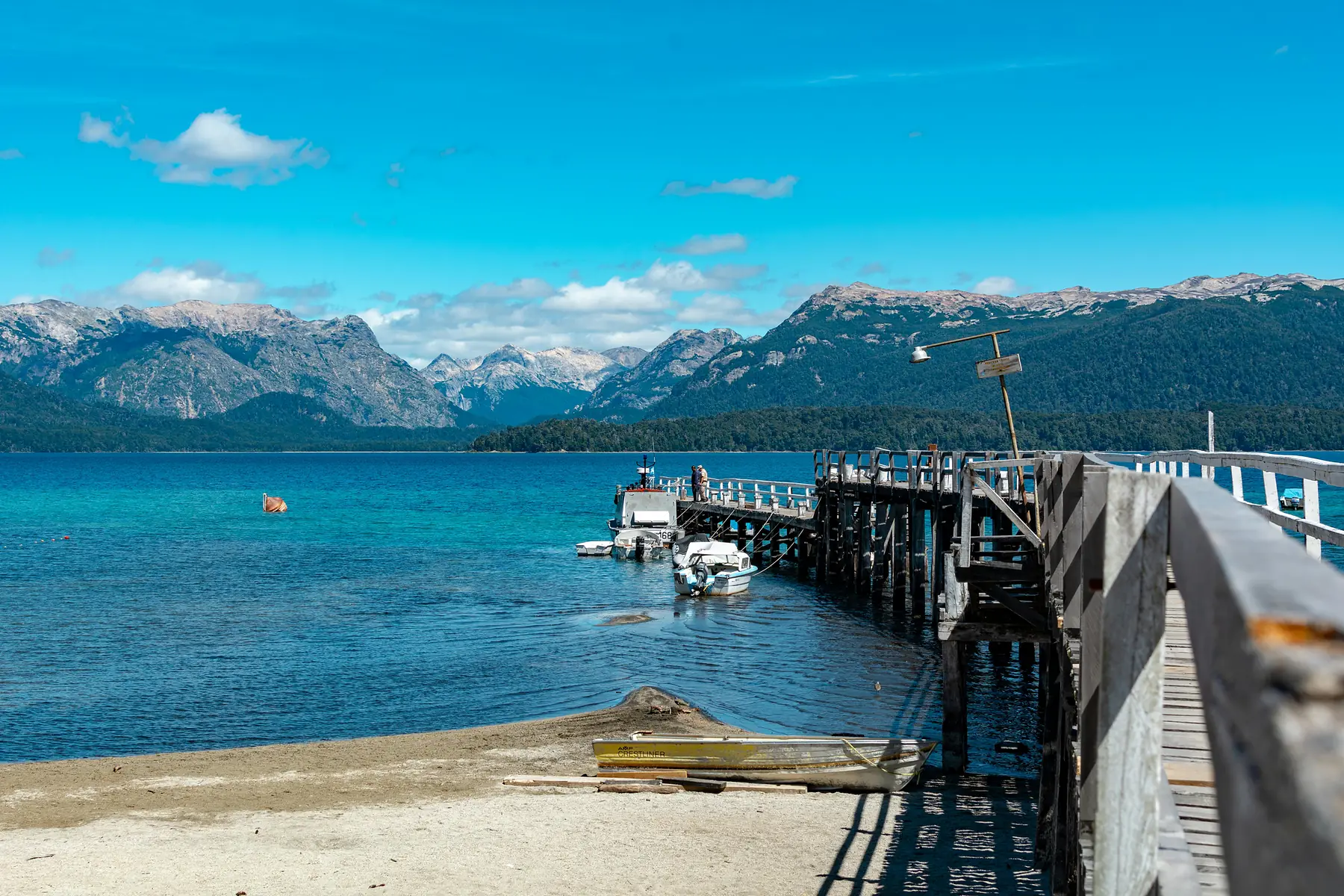
Matching your trekking goals to the correct airport is the difference between a 90-minute shuttle and a 5-hour bus ride. For those heading to Torres del Paine, the nearest airport is Puerto Natales (PNT). While this airport was historically small, for the 2026/27 season it hosts daily flights from Santiago during the peak months of November through March.
If you are visiting El Chaltén to hike the Fitz Roy or Cerro Torre massifs, you must fly into El Calafate (FTE). There is no airport in El Chaltén itself. Upon landing at FTE, you will board a bus or private shuttle for a 3-hour drive across the steppe. Similarly, El Calafate is the sole gateway for the Perito Moreno Glacier, which sits roughly 75km from the airport.
If you are booking the W Trek in Torres del Paine, prioritize a flight into Puerto Natales (PNT). It saves you a 3-hour bus transfer from Punta Arenas, giving you more time to organize your gear or start your first hike to Refugio Chileno.
For more detailed breakdowns on reaching these specific hiking hubs, explore our destination guides:


International Gateways: Flying into Santiago and Buenos Aires
Most travelers from North America and Europe will arrive via Santiago (SCL) or Buenos Aires (EZE). Santiago is generally the more efficient gateway for those starting with the W or O Treks, with major carriers like LATAM, Delta, and American offering direct overnight flights from hubs like Miami, New York, and Dallas. Flight times from the US East Coast are typically 8 - 10 hours.
Buenos Aires presents a unique challenge known as the “Two-Airport Trap.” Most international flights land at Ezeiza International (EZE), but the majority of domestic flights to Patagonia depart from Aeroparque Jorge Newbery (AEP), which is located in the city center. The transfer between the two can take anywhere from 60 minutes to two hours depending on traffic.
Always allow at least 5 hours between an international arrival at EZE and a domestic departure from AEP. Between immigration, baggage claim, the cross-city transfer (typically via Tienda León shuttle or private taxi), and the 2-hour domestic check-in window, a tighter connection is a high-risk gamble.
For travelers coming from Australia or New Zealand, direct routes exist between Sydney/Auckland and Santiago via Qantas and LATAM. These flights are the fastest way into the southern hemisphere, often arriving in Santiago in the early morning, allowing for a same-day connection to Punta Arenas or Puerto Natales.
Picking Your Regional Gateway
The gateway decision follows directly from your first destination. On the Chilean side: Punta Arenas (PUQ) is the reliable year-round hub (3-hour bus to Puerto Natales), seasonal Puerto Natales (PNT) is the weather-prone shortcut to Torres del Paine, and Puerto Montt (PMC) serves the Lake District and Carretera Austral. On the Argentine side: El Calafate (FTE) anchors the trekking itineraries, Ushuaia (USH) is the end-of-the-world hub, and Bariloche (BRC) serves the northern lakes.
Airline-by-airline detail — carriers, frequencies, fares, and booking timing for every one of these internal routes — lives in our dedicated Patagonia flights guide; this page’s job is to get you to the right gateway.
Crossing the Border: The Land Connection
Since you cannot fly between the two sides of Patagonia, the land crossing between Puerto Natales (Chile) and El Calafate (Argentina) is the most common logistical link. The Bus-Sur route is the gold standard for this journey, taking approximately 5 - 6 hours including the time spent at the border. During peak season, these buses run multiple times daily and are the primary way hikers connect Torres del Paine with El Chaltén.
Renting a car to cross the border is possible but comes with significant hurdles. Most rental agencies charge a steep “cross-border fee” (often $200 - $400 USD as of 2026/27) and require you to return the car to the country of origin. One-way international drop-offs are almost non-existent or prohibitively expensive. If you plan to drive, it is usually better to rent a separate car in each country.
Book your Bus-Sur ticket
Reserve your seat at least 2 weeks in advance for peak season travel between Puerto Natales and El Calafate.
Prepare for the Border
Ensure you have your PDI paper (Chile) and any necessary visa documents ready for the physical crossing.
Switch Currencies
While many places take cards, have a small amount of the next country’s currency for immediate needs like terminal fees or small snacks.
For a slow-travel alternative, the Navimag ferry travels from Puerto Montt to Puerto Natales over four days, navigating the fjords of the Chilean coast. For the 2026/27 season, the ferry typically departs Puerto Montt on Fridays and arrives in Puerto Natales on Mondays. This is not a transport shortcut, but a scenic journey for those who want to see the coastline that is otherwise inaccessible by road.

Booking Strategy & Seasonal Logistics
Patagonia’s domestic flight market is highly seasonal. Prices for a flight from Santiago to Puerto Natales can triple between July and January. As a general rule, you should book your domestic legs at least three months in advance for the peak season (December - February). Unlike international flights, these regional routes rarely “go on sale” as the date approaches; they simply sell out.
Baggage allowances are another common friction point. While your international flight might allow 23kg of checked luggage, domestic “Light” or “Smart” fares on Sky or JetSmart often include only a small personal item (backpack). For the 2026 season, expect to pay extra for a 10kg carry-on or a 20kg checked bag. Upgrading your baggage at the airport is significantly more expensive than doing it during the initial booking.
Patagonia is famous for its wind, which can reach speeds of over 100 km/h. These winds can ground flights in Puerto Natales or Punta Arenas without warning. Never book a domestic flight that arrives only a few hours before an international departure. Always build in a “buffer night” in the capital city before your flight home.

QUESTION: What is the best airport to fly into for Patagonia?
ANSWER: It depends on your goal; fly into Puerto Natales (PNT) for Torres del Paine in Chile, or El Calafate (FTE) for the glaciers and hiking in El Chaltén, Argentina.
QUESTION: How do I get to Patagonia from the USA?
ANSWER: Most travelers fly from major hubs like Miami, NYC, or Dallas to either Santiago (SCL) or Buenos Aires (EZE), then take a 3 - 4 hour domestic flight south.
QUESTION: Can you fly directly from Chile to Argentina within Patagonia?
ANSWER: No, there are currently no direct commercial flights between Chilean and Argentinian Patagonia; you must either take a 5 - 6 hour bus or fly back through the capital cities.
QUESTION: What is the nearest airport to Torres del Paine?
ANSWER: Puerto Natales (PNT) is the closest airport, located about 1 hour from the park, though Punta Arenas (PUQ) offers more frequent and reliable flight options.
QUESTION: How do I get to El Chaltén from Buenos Aires?
ANSWER: Fly from Aeroparque (AEP) in Buenos Aires to El Calafate (FTE), then take a 3 - 4 hour bus or private shuttle north to El Chaltén.
QUESTION: Are there budget airlines that fly to Patagonia?
ANSWER: Yes, JetSmart and Sky Airline operate in Chile, while FlyBondi and JetSmart offer low-cost domestic flights within Argentina to major Patagonian hubs.