
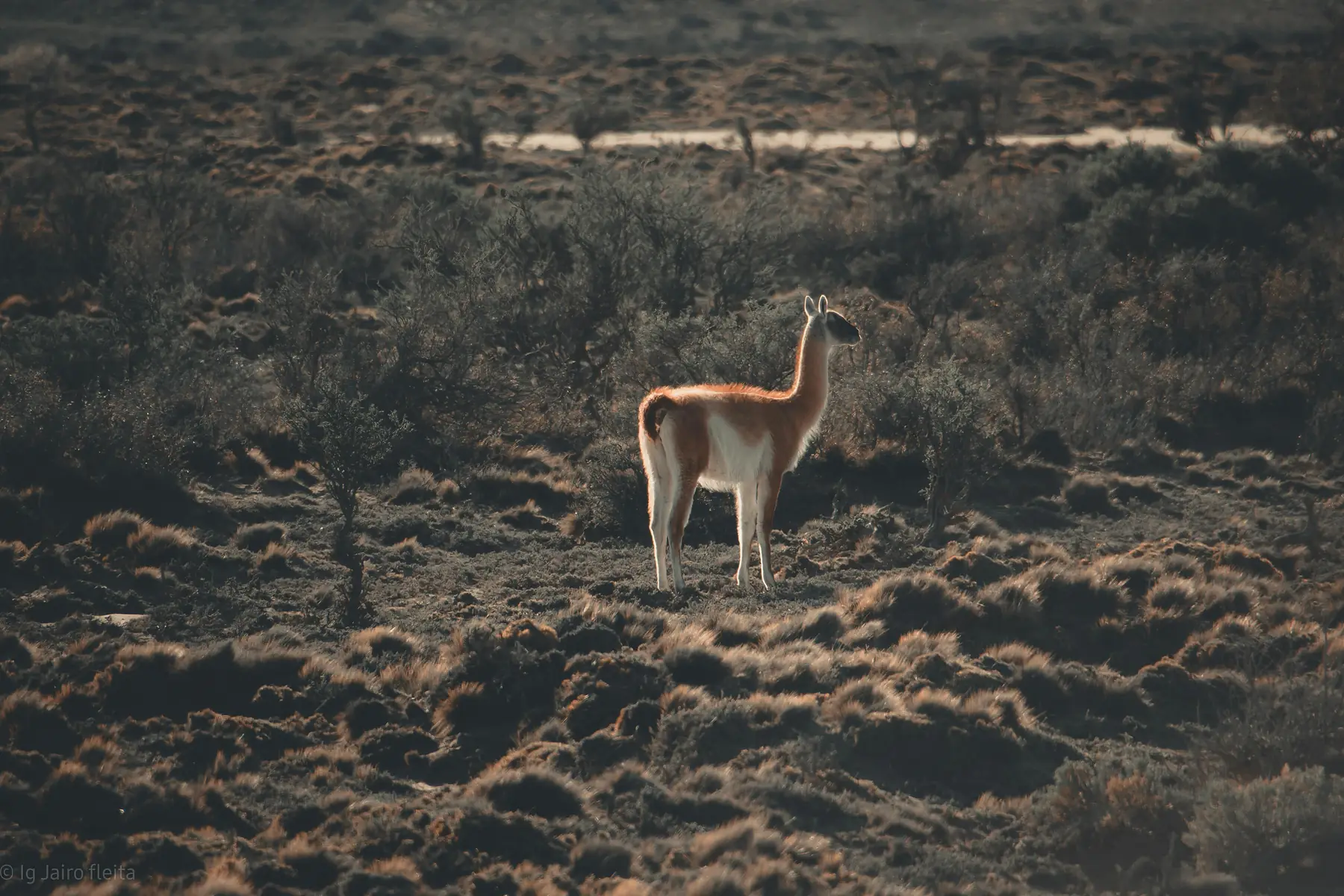
A guanaco is a wild South American camelid and the direct ancestor of the domesticated llama, found primarily across the arid plains and mountain foothills of Patagonia. Known scientifically as Lama guanicoe, these slender, cinnamon-colored herbivores are the most visible icons of the southern steppe and a cornerstone of the regional ecosystem.
For any traveler heading to southern Chile or Argentina, the guanaco (pronounced gwah-NAH-koh) is often the first “exotic” animal encountered. While they may look like a cross between a deer and a camel, they are specialized survivors that have thrived in the harsh Patagonian climate for thousands of years. This guide explores their biology, where to find them in the wild, and how to distinguish them from their domesticated cousins.
What is a Guanaco? The Wild Ancestor of the Andes
The guanaco is one of four species of South American camelids, alongside the wild vicuña and the domesticated llama and alpaca. While the vicuña stays mostly in the high-altitude Altiplano of the north, the guanaco is the undisputed ruler of the southern latitudes.
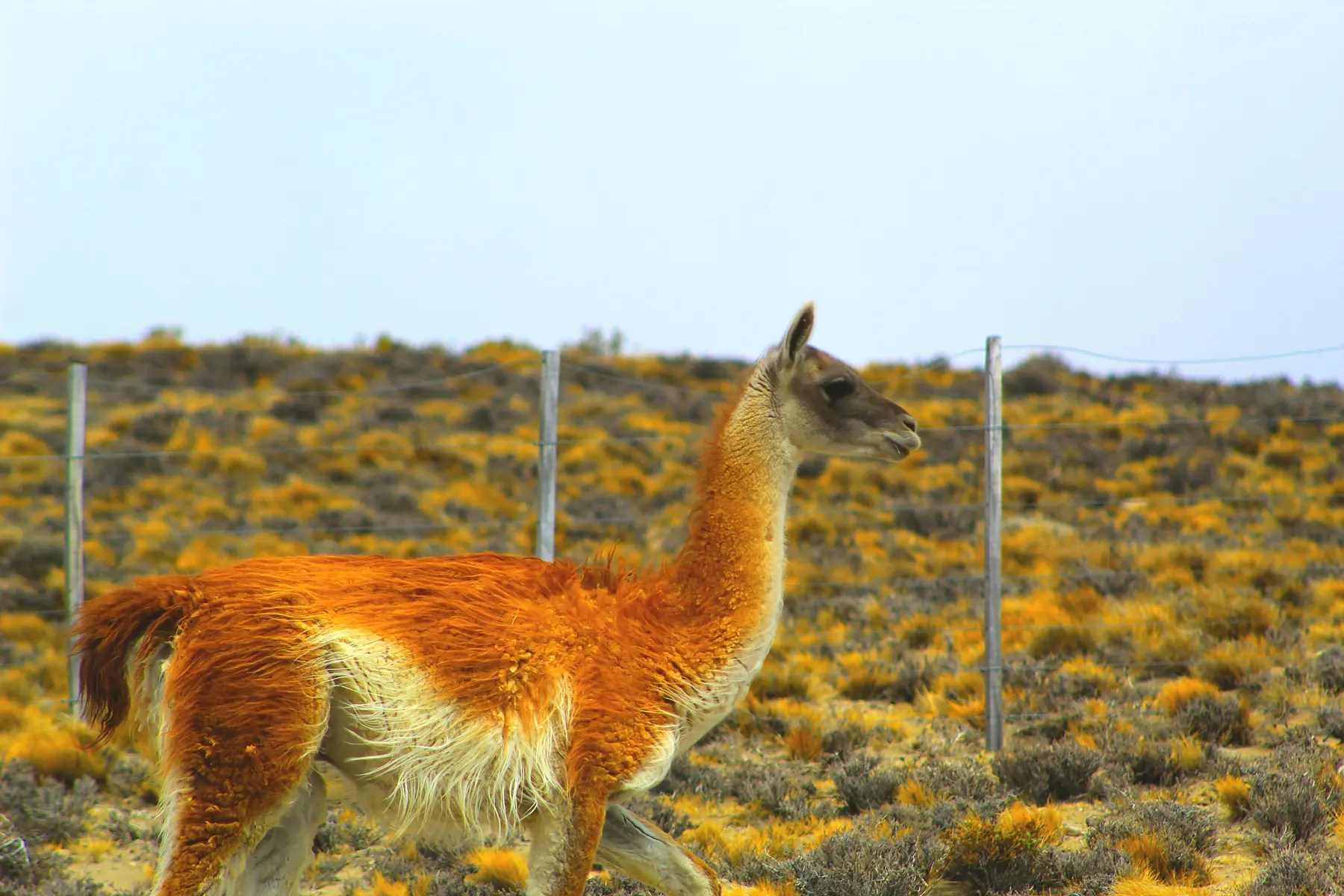
Evolutionarily, the guanaco is the biological blueprint for the llama. Roughly 4,000 to 5,000 years ago, indigenous Andean cultures began domesticating guanacos for transport and meat, eventually breeding the larger, more varied llamas we see today. In the wild, however, the guanaco remains unchanged. They are characterized by their elegant, slender necks, long legs, and a distinctive “gray mask” of fur on their faces.
Physically, they are built for the steppe. Their wool is a thick, double-layered coat of cinnamon or soft brown on the back, transitioning to a bright white on their underbelly and the inside of their legs. This coloration provides excellent camouflage against the yellow-brown grasses of the Patagonian plains. Perhaps their most unique adaptation is their feet: unlike the hard, cloven hooves of sheep or cattle, guanacos have soft, fibrous pads. This allow them to navigate rocky terrain with incredible grip while leaving the fragile topsoil and vegetation largely undisturbed.
Guanaco vs. Llama vs. Alpaca: How to Tell the Difference
The most frequent question asked by travelers in Torres del Paine is whether the animal they are looking at is a llama. While they are closely related, several key physical and behavioral traits make it easy to tell them apart once you know what to look for.
The most immediate giveaway is the coat color. Guanacos are uniform; every individual you see will have the same cinnamon-and-white pattern. Domesticated llamas and alpacas, however, have been bred for centuries for their wool, resulting in a chaotic variety of colors including black, white, spotted, and dark brown. If you see a herd of animals with varied colors, you are looking at domestic livestock, not wild guanacos.
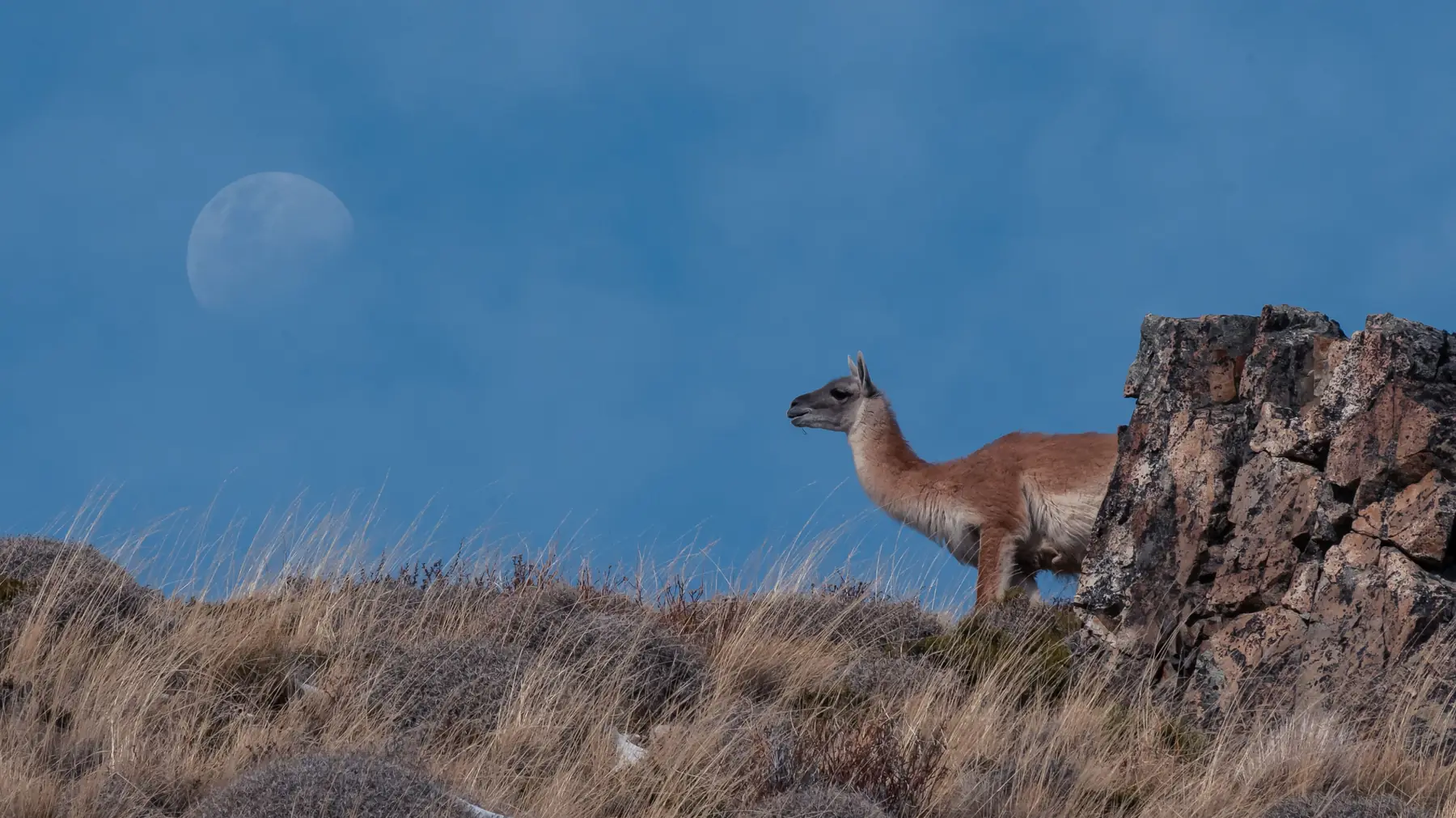
Another clear indicator is the ear shape. Llamas have long, curved ears often described as “banana-shaped.” Guanacos have smaller, pointed, and much straighter ears that they use like radar dishes to track the movement of predators. Finally, consider the location. Guanacos are wild animals that roam freely across national parks; llamas and alpacas are almost exclusively kept in fenced pastures or used as pack animals by trekking outfits.
To help you distinguish between these camelids at a distance, use the following comparison:
| Feature | Guanaco | Llama | Alpaca |
|---|---|---|---|
| Status | Wild | Domesticated | Domesticated |
| Ear Shape | Small, straight, pointed | Large, curved (banana) | Small, spear-shaped |
| Coat Color | Uniform cinnamon/white | Highly variable/spotted | Highly variable |
| Average Weight | 90 - 140 kg | 130 - 200 kg | 45 - 85 kg |
| Face Shape | Gray, slender, elegant | Often woolly, blunt muzzle | Very woolly, short face |
For travelers in Patagonia, if it's wild and has a uniform cinnamon coat with a gray face, it is a guanaco.
Social Structure: From Dominant Males to Chulengos
Guanaco society is highly organized and revolves around three distinct types of groups. Understanding these groups will help you interpret the behaviors you see from the roadside or trail.
The most common sighting is the family group. This is led by a single dominant male, known as the macho, who protects a harem of several females and their young. The macho is easy to spot: he is usually standing on a high point or “sentry post” nearby, watching for pumas while the females graze. He is fiercely territorial and will defend his patch of grass against any interloper.
Young males who have been kicked out of their family groups form “bachelor herds.” These groups can be quite large, sometimes numbering up to 50 individuals. They spend their time practicing fighting and testing their strength until they are old enough to challenge a dominant male for his territory.
The most endearing members of the herd are the chulengos - the name given to baby guanacos. Born primarily between late November and January, chulengos are remarkably precocious. Within minutes of birth, they are standing, and within an hour, they can keep up with the herd’s pace. This is a vital survival mechanism in a landscape where a puma could be watching from any nearby ravine.
One of the more unusual aspects of their social life is the communal dung pile, or bosteadero. Guanacos are fastidious and will return to the same spot to defecate. These piles serve as territorial markers and scent posts, communicating the health and presence of the herd to other guanacos in the area.
Behavior: Warning Cries and High-Speed Sprints
Observing a guanaco is rarely a static experience. They are highly vocal and active animals. If you are hiking and suddenly hear a sound that resembles a high-pitched, rhythmic “laugh” or a horse’s neigh, stop and look around. This is the guanaco warning cry.
When the sentry male spots a predator - usually a puma - he emits this piercing sound to alert the rest of the herd. Upon hearing it, the herd will immediately stop grazing, crane their necks in the direction of the danger, and prepare to bolt. If the threat is close, the guanaco’s speed is its primary defense. They are surprisingly athletic, capable of reaching speeds of 56 km/h (35 mph) across the uneven steppe.
While they are generally docile toward humans, guanacos do have a famous defense mechanism: spitting. This is rarely directed at travelers unless the animal feels cornered or its chulengo is threatened. Within the herd, spitting is a common way to settle disputes or establish hierarchy. It isn’t just saliva; it is a foul-smelling mix of stomach contents that is highly effective at deterring an annoying rival.
Their jumping ability is equally impressive. Despite their size, guanacos can clear a 1.5-meter fence from a near-standstill. This is a critical skill in Patagonia, where sheep farming has crisscrossed the landscape with thousands of kilometers of wire fencing.
Role in the Patagonian Ecosystem and Cultural History
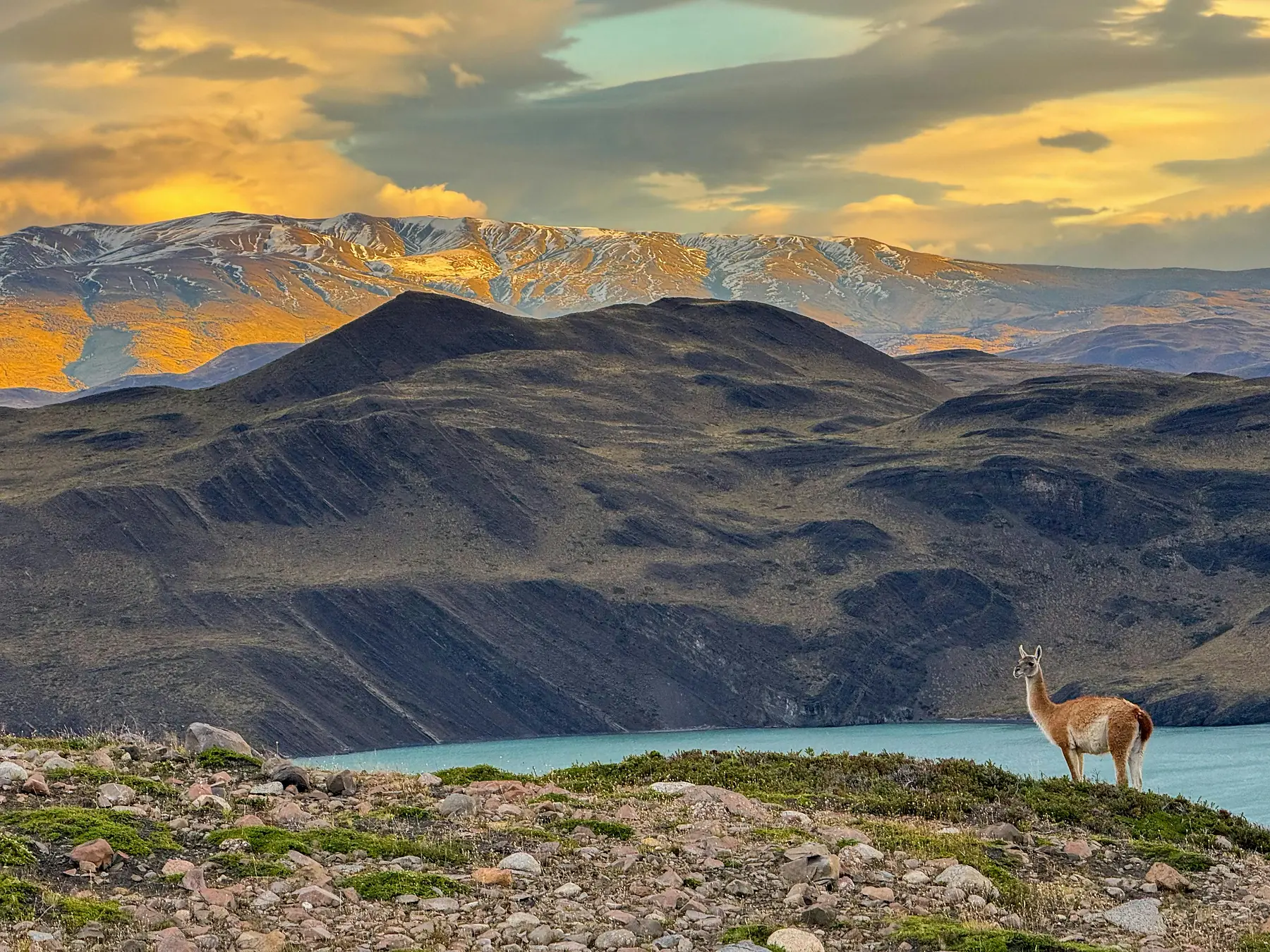
The guanaco is the “keystone” species of the Patagonian steppe. Without them, the entire ecological balance of the region would collapse. Their most famous role is as the primary food source for the Patagonian puma. This predator-prey relationship has shaped the evolution of both species: the puma has become a powerful, stealthy hunter, while the guanaco has developed its incredible speed and communal warning systems.
Beyond being prey, they are “low-impact” grazers. Unlike sheep, which were introduced by European settlers and tend to pull plants out by the roots, guanacos “clip” the grass with their sharp incisors. This allows the plants to regrow more quickly. Their padded feet also prevent the soil compaction and erosion that often follows heavy sheep grazing. Furthermore, they act as essential seed dispersers, carrying the seeds of native flora in their digestive tracts and depositing them across the plains in their communal dung piles.
When a guanaco dies, whether from predation or natural causes, it continues to support the ecosystem. Their carcasses are the primary food source for Andean condors and Patagonian foxes.
The Spirit of the Steppe: Indigenous Context
For thousands of years before the arrival of Europeans, the guanaco was the lifeblood of the indigenous Selk’nam and Tehuelche peoples. It was much more than a food source; it was the foundation of their entire material culture. They used guanaco skins to create “kai” (large capes) for warmth, bone for needles and tools, and sinew for bowstrings. The guanaco was so central to their existence that it featured prominently in their mythology and spiritual rites, viewed as a bridge between the human world and the wild landscape.
Best Places to See Guanacos in Patagonia
While guanacos are found throughout the region, certain locations offer almost guaranteed sightings and excellent opportunities for observation.
Torres del Paine National Park (Chile)
This is the premier location for guanaco sightings. The eastern side of the park, specifically the areas around the Laguna Amarga and Sarmiento entrances, has the highest density of animals. Because they are protected within the park and used to park vehicles, the guanacos here are relatively relaxed, allowing for close-up views from the road or the Aonikenk trail.
Patagonia National Park (Chile)
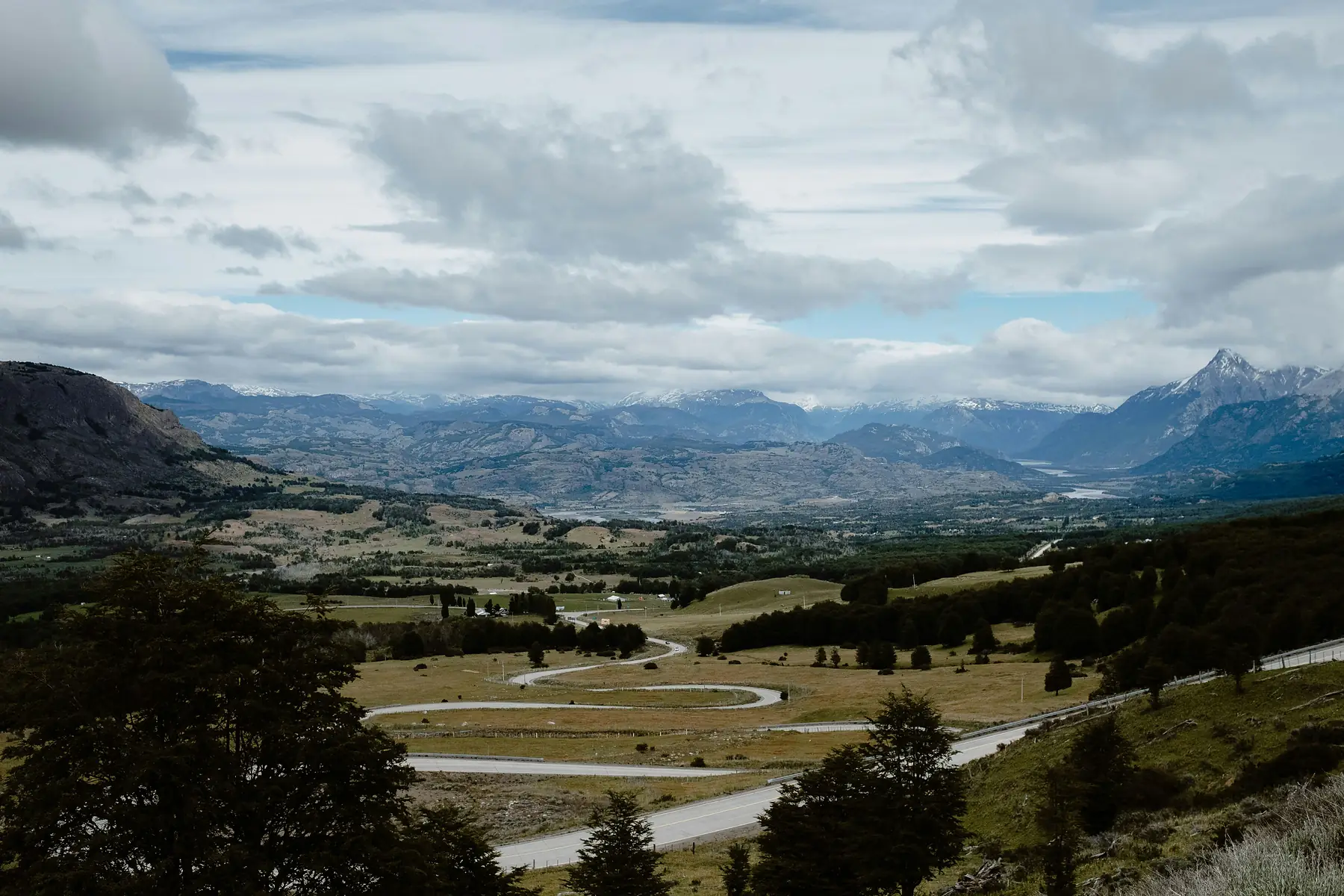
Located in the Aysén region, this park is a world-class conservation success story. Formerly a massive sheep ranch called Estancia Chacabuco, the land was restored by Rewilding Chile. Today, the Chacabuco Valley is home to thousands of guanacos. The sight of massive herds grazing against the backdrop of the Andes is one of the most powerful examples of rewilding in the world.
Tierra del Fuego (Chile/Argentina)
On the “Big Island” of Tierra del Fuego, you can often see guanacos along the roadsides near the town of Porvenir or within Karukinka Park. These southern guanacos are often slightly larger than their northern counterparts, adapted to the even harsher winds of the Strait of Magellan.
Monte León National Park (Argentina)
For a different perspective, visit this coastal park in Santa Cruz province. Here, the Patagonian steppe meets the Atlantic Ocean. It is one of the few places where you can photograph guanacos grazing on the cliffs with the blue ocean and penguin colonies in the background.
If you are planning a trip specifically to see the region’s diverse fauna, our guide to the best wildlife spots in Patagonia provides a complete itinerary.
Photography Tips: Capturing the Spirit of the Steppe
Guanacos are highly photogenic, but getting a world-class shot requires more than just pointing and clicking.
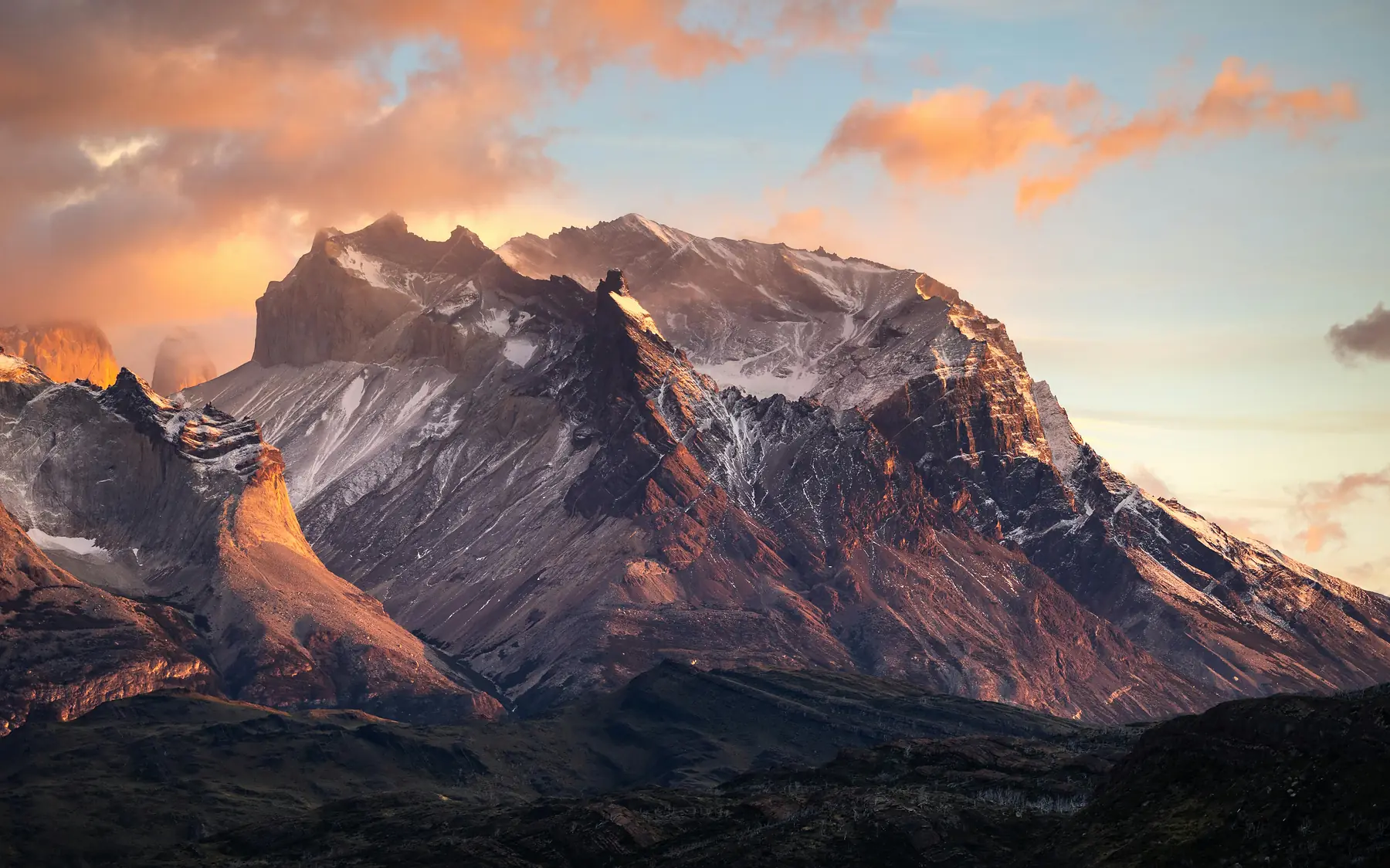
The best light is always during the “Golden Hour” - the first and last hour of sunlight. On the eastern plains of Torres del Paine, the low sun hits the cinnamon coats of the guanacos, making them glow against the deep blue or gray of the mountain peaks. This is also the time when they are most active, moving toward water sources or settling into their night-time bedding areas.
Pay close attention to behavioral cues. If you see a guanaco suddenly stiffen its neck and stare intently in one direction, keep your camera ready. They are likely about to sound a warning cry or bolt, both of which make for dramatic action shots.
Ethics are paramount. Never approach a guanaco too closely; if the animal stops grazing and looks at you, you are already too near. In Torres del Paine, park rules require you to stay at least 50 meters away. Never block their path to a water source or a known crossing point, as this can cause significant stress to the herd.
Conservation: Fences, Sheep, and the Future
Despite their current abundance in national parks, the guanaco has faced significant challenges over the last century. When the sheep farming boom began in the late 1800s, guanacos were viewed as competitors for grass. They were hunted in massive numbers, and their habitat was fragmented by thousands of miles of wire fencing.
The “Fence Problem” remains one of the greatest threats to the species. While guanacos are excellent jumpers, they can easily get their back legs tangled in the top wires of a fence, leading to a slow and painful death. In many parts of Patagonia, you can still see the bleached bones of guanacos hanging from old ranch fences.
The future, however, is looking brighter. Organizations like Rewilding Chile and the Wildlife Conservation Society (WCS) are working to remove redundant fencing and create “wildlife corridors” that allow herds to migrate freely. In Patagonia National Park, hundreds of miles of fencing have been removed, leading to a dramatic increase in the local population.
Today, the estimated population of guanacos in Patagonia is between 1.5 and 2 million (as of 2024 estimates), with the vast majority living in Argentina. While they are no longer considered endangered, their continued health depends on the preservation of large, connected landscapes where they can roam as they have for millennia.
Ready to see these incredible animals in their natural habitat? Check out our guide to the best time to visit Patagonia to plan your wildlife adventure. For the best chance of witnessing the dramatic predator-prey relationship in action, consider booking a puma tracking tour in Torres del Paine.
FAQ
- QUESTION: Is a guanaco a llama or an alpaca?
- ANSWER: A guanaco is a wild South American camelid and the direct ancestor of the domesticated llama; it is distinct from alpacas, which were bred for their wool.
- QUESTION: Are guanacos in Patagonia dangerous to humans?
- ANSWER: Guanacos in Patagonia are generally shy and not dangerous, though they may spit or charge if they feel their young (chulengos) are threatened.
- QUESTION: Can you eat guanaco meat in Patagonia?
- ANSWER: While guanaco was a staple for the indigenous Selk’nam people, its commercial sale is strictly regulated and it is rarely found on restaurant menus today.
- QUESTION: What is a baby guanaco called?
- ANSWER: A baby guanaco is called a chulengo, and they are typically born in the Patagonian late spring and early summer (November through January).
- QUESTION: Why do guanacos in Patagonia spit?
- ANSWER: Guanacos use spitting as a way to establish dominance within the herd, settle disputes over food, or ward off unwanted suitors.
- QUESTION: Where is the best place to see guanacos in Torres del Paine?
- ANSWER: The eastern side of Torres del Paine National Park, particularly around Laguna Amarga and the Sarmiento entrance, offers the highest density of guanacos.