Camping in El Chaltén: 2026/27 Guide to Campsites & Fees
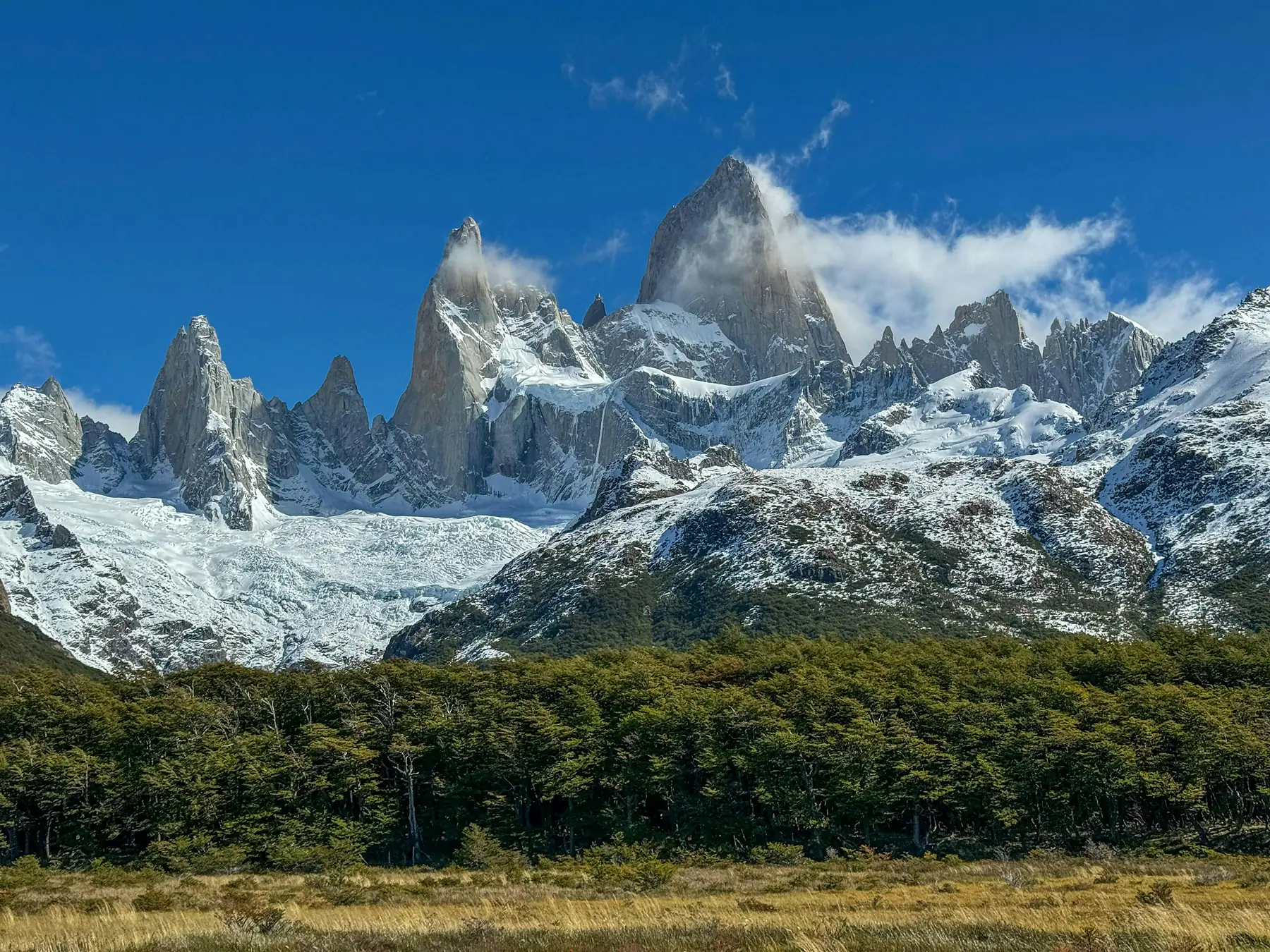
Camping in El Chaltén is no longer free, but it remains the only way to witness the sunrise hit the granite face of Fitz Roy from the foot of the mountain. For the 2026-2027 season, all campers must navigate a system of entrance fees and mandatory reservations for sites within Los Glaciares National Park.
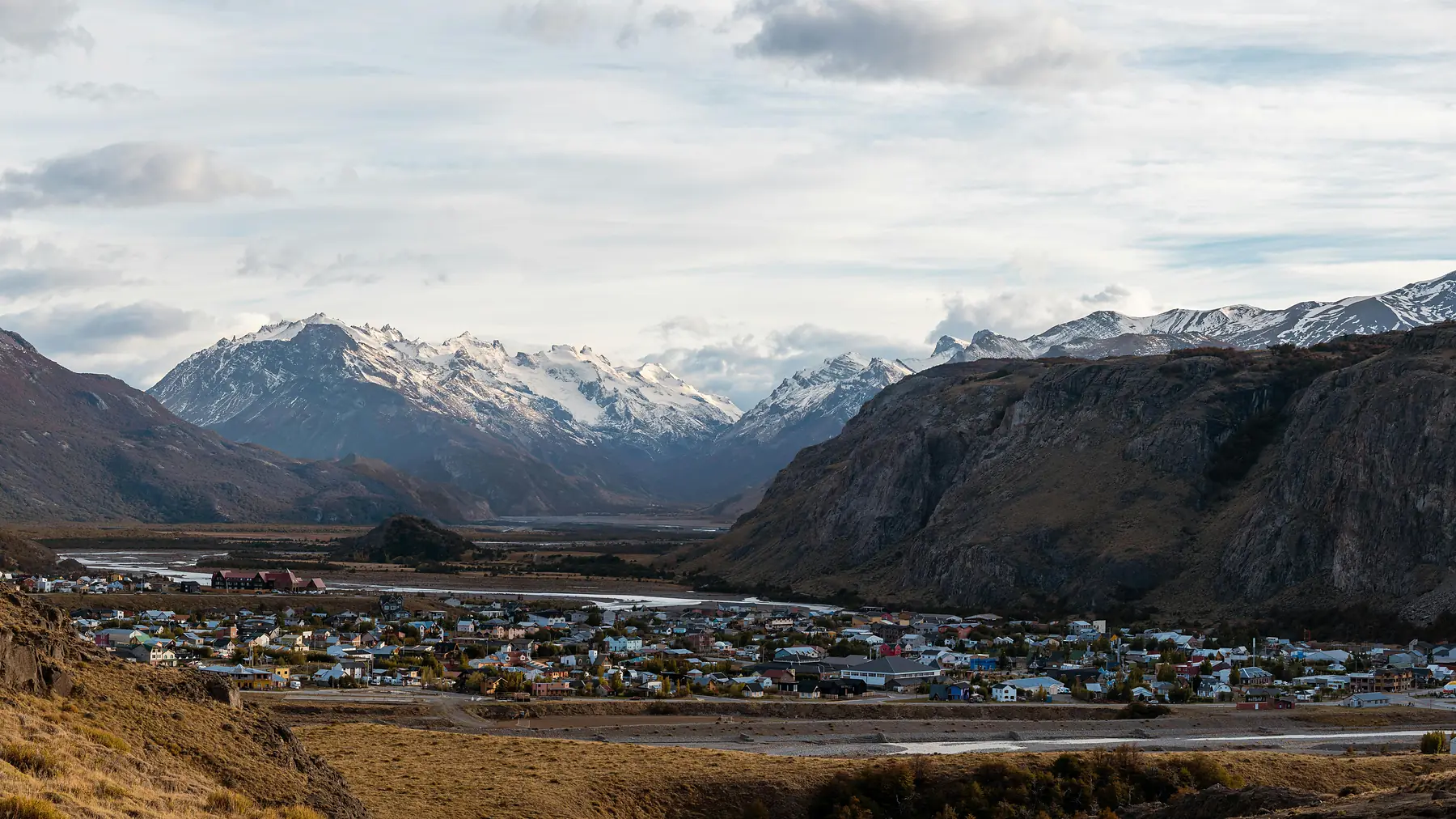
While the “Trekking Capital of Argentina” has moved away from its wild-west roots of open, cost-free camping, the infrastructure remains rugged. Whether you are pitching a tent in a wind-battered town lot or huddling in a backcountry forest, camping provides the flexibility to chase weather windows that hotel-dwellers often miss. This guide breaks down the updated 2026 regulations, the best private basecamps in town, and the logistics of staying at the iconic trailside sites like Poincenot and De Agostini. For a broader look at where to stay, you can view our overview of all Chaltén stay options.
El Chaltén Camping at a Glance
- Park Fees: Required for all non-residents (approx. $45 USD for a 1-day pass, with 50% discount on the second day).
- Reservations: Mandatory for backcountry sites via the official APN (Administración de Parques Nacionales) portal.
- Season: Peak camping runs from November to March; many sites close by May.
- Facilities: Town sites have hot showers and Wi-Fi; park sites have latrines only.
- Fuel: Isobutane canisters and white gas are widely available for rent or purchase in town.
- Wild Camping: Strictly prohibited within National Park boundaries.
The 2026/27 Camping Rules: Fees & Reservations
Camping in Los Glaciares National Park now requires both a valid entrance pass and a specific campsite reservation for every night spent on the trail. This system was implemented to manage the environmental impact on the fragile sub-antarctic forests and to fund the maintenance of the composting latrines at high-traffic sites.
The financial requirement is primarily the National Park entrance fee, which is tiered based on residency and the number of days you intend to stay. As of the 2026 season, while the entrance fee covers access to the backcountry, hikers must secure a confirmed reservation for the three primary backcountry sites: Poincenot, Laguna Capri, and De Agostini. These permits should be secured online before you head to the trailhead, as rangers perform spot checks at the campsites.
Purchase your Park Entrance Pass
Visit the official APN (Administración de Parques Nacionales) website to buy your entrance ticket. For the 2026-2027 season, the fee for non-nationals is 45,000 ARS for a single day, with a 50% discount applied to the second day of a consecutive visit.
Reserve your Campsite
Log into the official APN reservation portal to select your specific dates and campsites. You will receive a digital confirmation or QR code that serves as your permit.
Check-in at the Ranger Station
While not always mandatory for day hikers, campers should stop at the Guardaparque office (Centro de Informes Ceferino Fonzo) at the entrance of town to receive the latest National Park regulations and weather updates.
Strict enforcement of the “No Wild Camping” rule is in effect for 2026. This means you cannot pitch a tent anywhere other than the designated authorized sites. The impact of illegal fires and human waste in the backcountry has led to permanent closures of certain areas in the past; staying within the designated zones is critical for the park’s preservation.
Campsites in El Chalt��n Town (Private & Paid)
The campsites within El Chaltén village serve as the primary base for hikers who require hot showers, communal kitchens, and proximity to the town’s restaurants. These sites are privately owned and do not require the National Park permit, though they do fill up quickly during the peak months of January and February.
Choosing a town site usually comes down to a trade-off between wind protection and price. Because the Patagonian wind can easily shred a lightweight trekking tent, the best sites feature “palisades” (wooden or stone windbreaks) that provide a crucial buffer. If you are looking for more traditional lodging, you can refer to our El Chaltén accommodation hub.
- Location: Central San Martín Ave vs. Near Laguna Torre trailhead
- Wind Protection: High (sturdy wooden palisades) vs. Moderate (trees and small fences)
- Facilities: Large quincho (kitchen), 24h hot showers vs. Small kitchen, limited shower hours
- Vibe: Bustling and social vs. Quiet and family-run
- Price: Approx. 18,000 ARS per person vs. Approx. 15,000 ARS per person
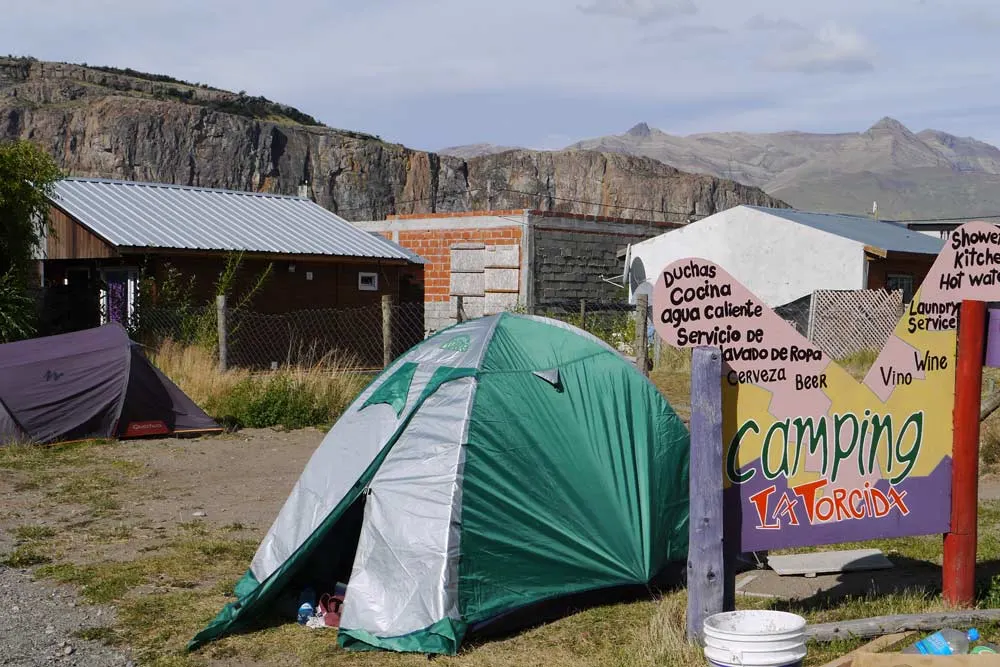
Choose El Relincho for the best wind protection and facilities, or La Torcida for a quieter, more intimate trekking start.
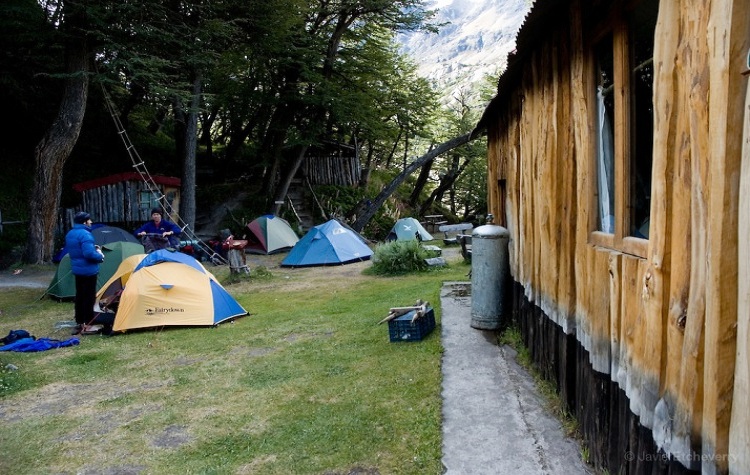
El Relincho is widely considered the gold standard for town camping. It is a large, well-manicured grassy area with dedicated slots separated by windbreaks. The communal kitchen is spacious enough to accommodate the evening rush, and the hot showers are reliable.
La Torcida offers a different experience. Located at the edge of town near the start of the Laguna Torre trail, it feels less like a parking lot and more like a backyard. It is ideal for those who want to be the first on the trail in the morning, though its facilities are more modest than El Relincho.
Other budget alternatives include El Mochilero and Camping Del Lago. These sites are often cheaper but may have limited power outlets and smaller communal areas. During the 2026 season, expect to pay between 10,000 and 12,000 ARS per person per night at these locations.
Backcountry Camping in Los Glaciares National Park
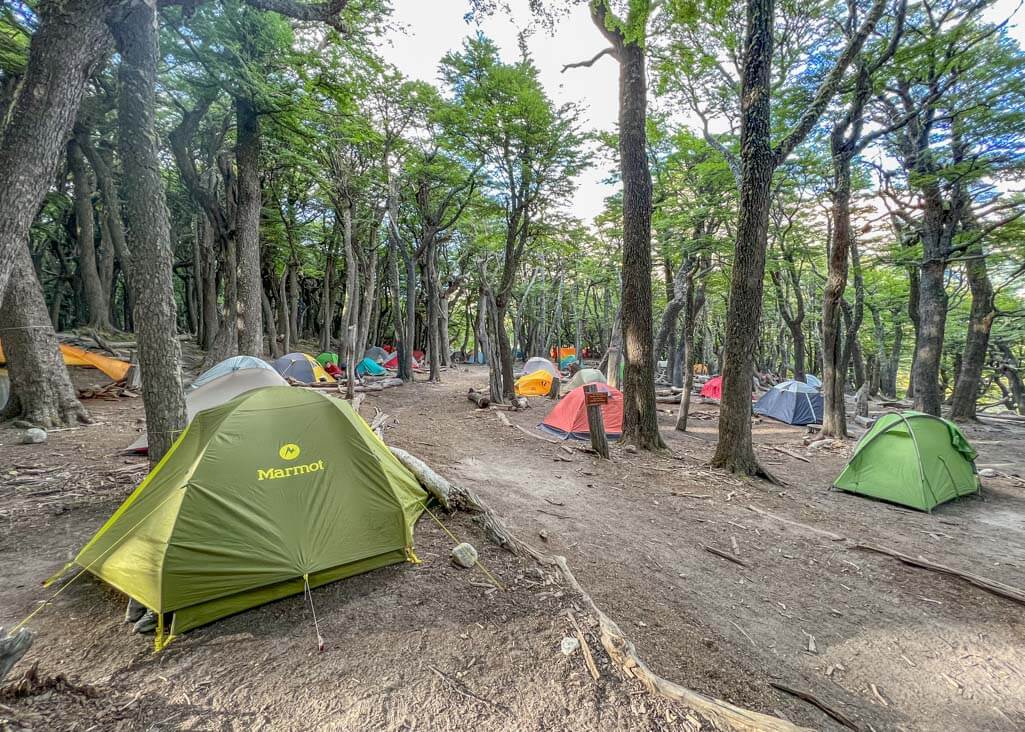
Backcountry camping in El Chaltén is concentrated at three main sites that offer direct access to the most iconic viewpoints in the Andes. These sites are “primitive,” meaning they provide nothing more than a flat spot of dirt and a basic latrine. There are no trash bins, no electricity, and no treated water sources.
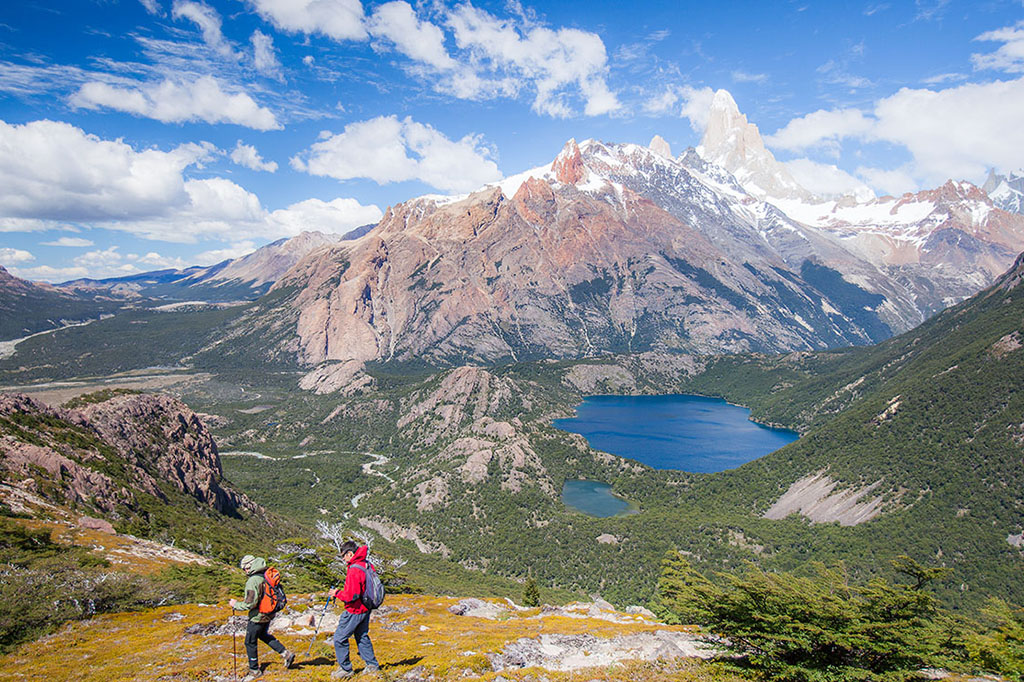
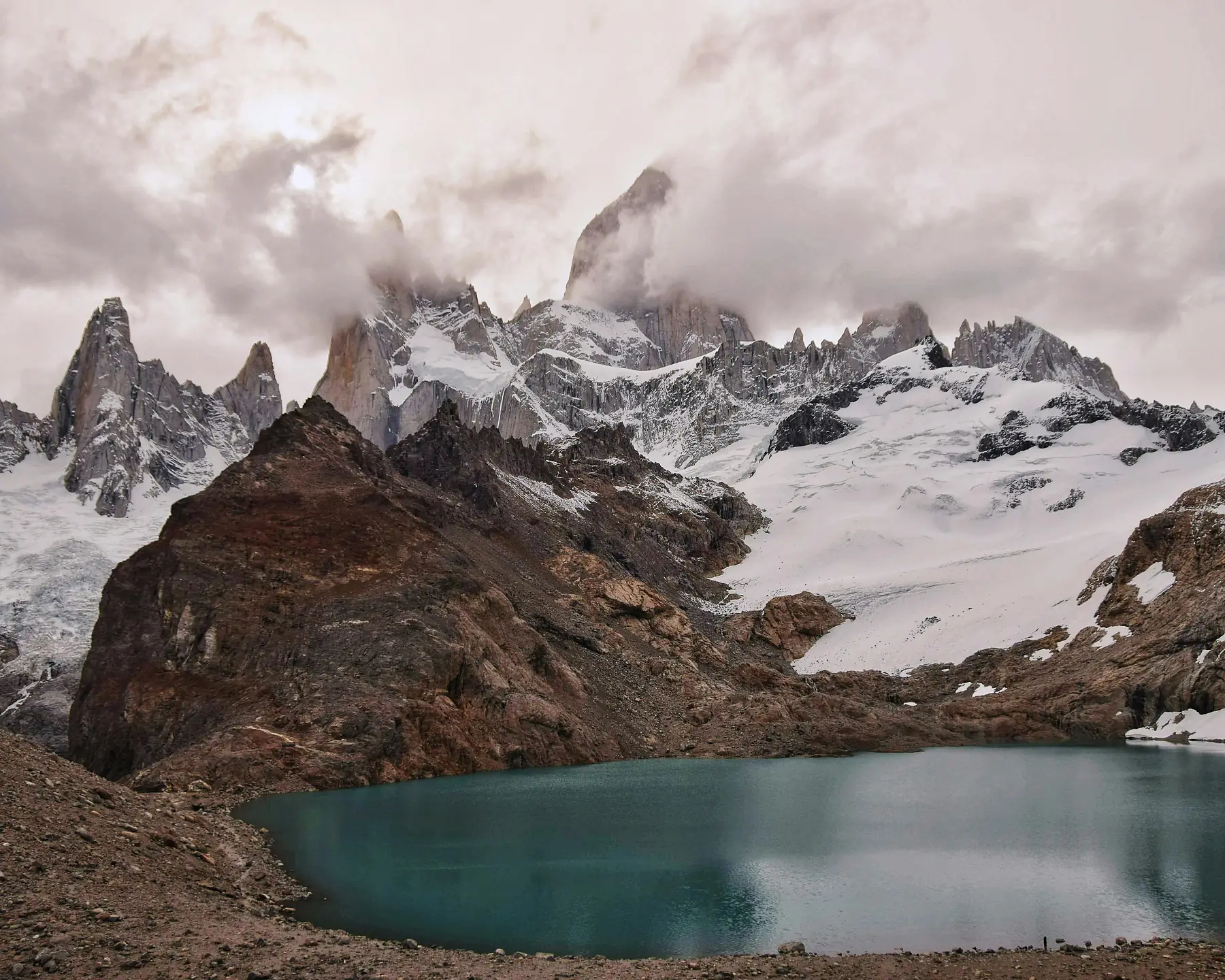
Staying overnight in the park is the only way to be at the Laguna de los Tres viewpoint for the 06:00 sunrise without hiking for four hours in the dark. However, the popularity of these sites means you will rarely be alone. For those planning their specific nights in the wilderness, our guide to the Fitz Roy trek provides a detailed breakdown of the terrain.
Campamento Poincenot
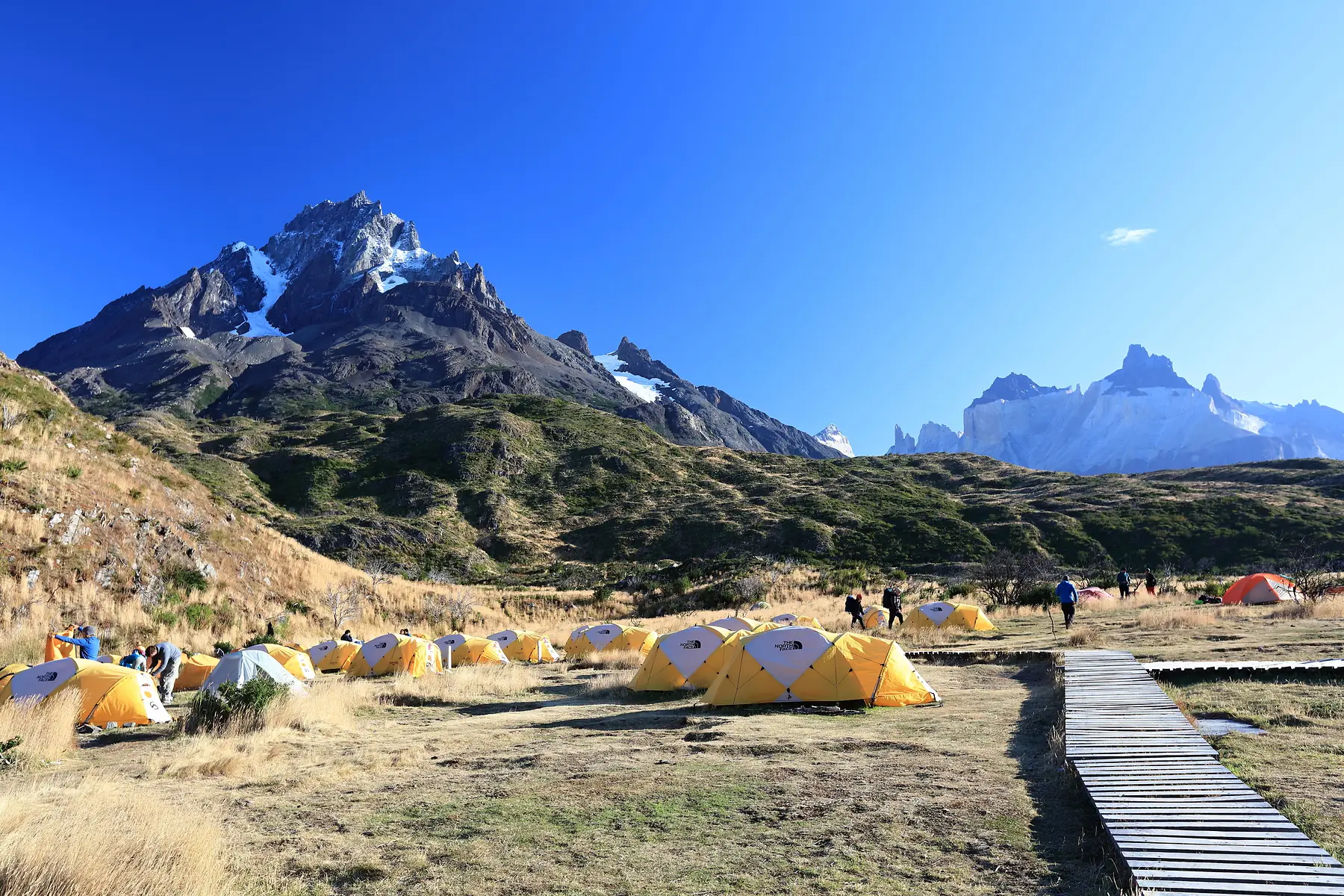
This is the busiest campsite in the park due to its proximity to the final steep ascent to Fitz Roy. It is nestled in a lenga forest which provides some shelter from the wind, but the sheer volume of trekkers means you should arrive by 14:00 to secure a decent spot.
- Water: Take water from the nearby Rio Blanco; it is glacial melt and generally safe, though a filter is recommended.
- Pro Tip: Use the designated “social areas” for cooking to keep your tent site free of crumbs that attract mice.
Campamento Laguna Capri
Located only 4km from town, Laguna Capri is often used by families or those wanting a shorter first day. It offers stunning views of the Fitz Roy massif across the water, but it is much more exposed to the wind than Poincenot. If the forecast calls for high gusts, Capri can be a difficult place to sleep.
Campamento De Agostini
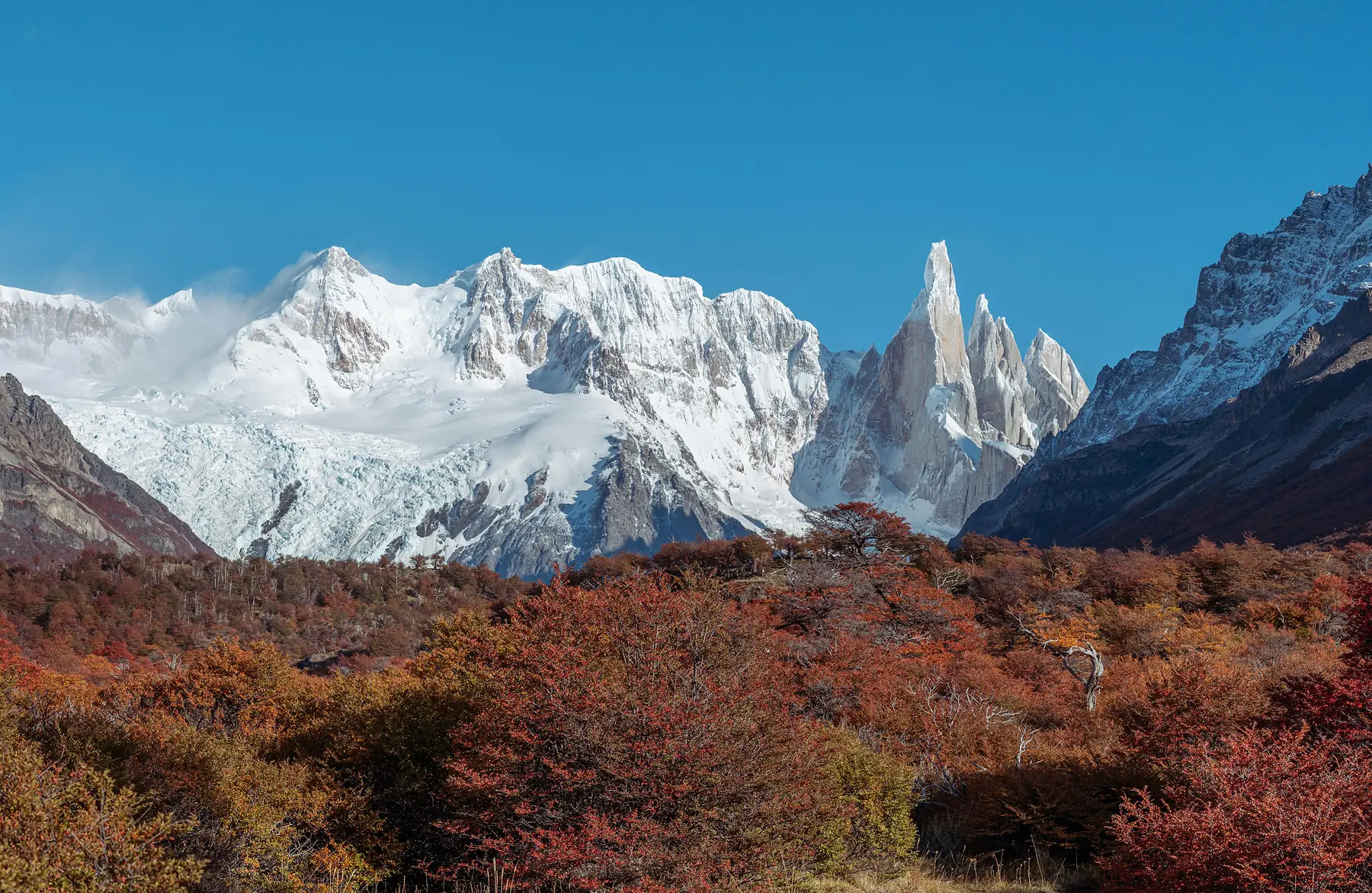
Serving as the base for the Laguna Torre trek, this site is situated in a beautiful forest clearing near the edge of the glacial moraine. It is generally quieter than Poincenot and provides easy access to the Maestri viewpoint for sunset views of Cerro Torre.
Technical & Remote Sites
Beyond the main hub, more experienced trekkers will encounter sites like Campamento Toro and Paso del Viento. These are used specifically for the Huemul Circuit, a demanding four-day trek. These sites require a higher level of self-sufficiency and often involve mandatory camping on the Huemul Circuit in much harsher, more exposed conditions.
You must pack out every single piece of trash you bring into the backcountry, including organic waste like orange peels or tea bags. The cold climate means decomposition is incredibly slow, and left-behind scraps fuel the growing mouse population.
Glamping & Luxury Domes in El Chaltén
For travelers who want the immersion of the Patagonian wilderness without the hardship of a thin foam mat, El Chaltén has seen a surge in “glamping” options. These are structured as fabric or dome-based accommodations, distinguishing them from the luxury hotels in the area.
These sites typically operate on an all-inclusive or semi-inclusive basis, providing high-quality bedding, gourmet meals, and private guides. They are a significant investment but offer an unparalleled way to experience the landscape in comfort.
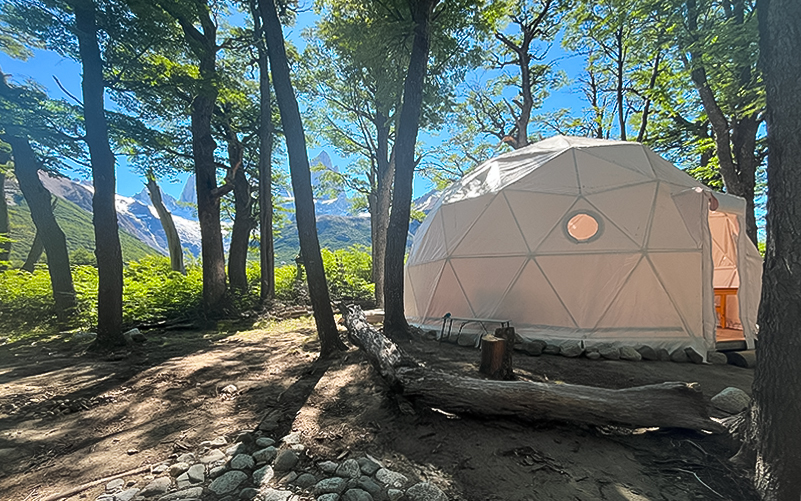
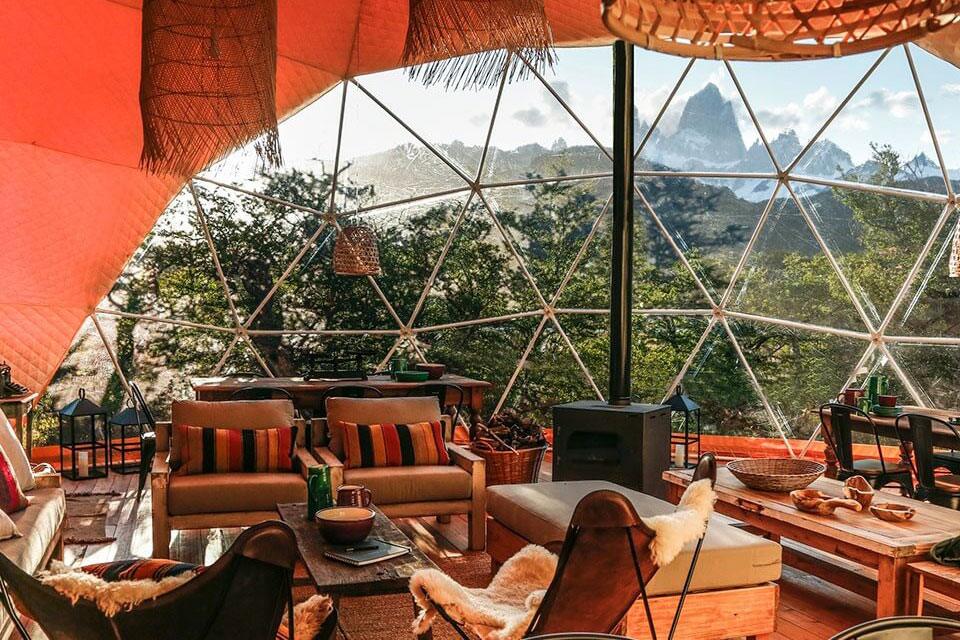
Chaltén Camp is the most prominent eco-dome provider, located just outside the main village. The domes feature wood-burning stoves and large transparent panels facing Fitz Roy, allowing you to watch the stars from your bed. It typically operates from October to April.
Patagonia Eco Domes is located further out, near the El Pilar trailhead. This location is advantageous because it allows you to start the Fitz Roy trek from the “back side,” avoiding the steep initial climb from town. They offer a more secluded experience with a focus on sustainable luxury.
Fitz Camp provides a “luxury-lite” alternative. It is closer to the park boundary and offers pre-pitched tents with real mattresses and a communal dining dome, serving as a middle ground between rugged backcountry camping and high-end glamping.
Essential Gear Rental & Supplies in El Chaltén
You do not need to fly across the world with a heavy tent and stove to camp in El Chaltén. The town has a robust rental market where you can source professional-grade 4-season equipment. This is particularly useful for travelers who are only planning 2-3 nights of camping as part of a longer South American journey.
Most rental shops are located on the main street, San Martín. Shops like Bajo Zero and Viento Oeste are the most reliable, offering everything from down sleeping bags to GPS personal locator beacons. For a complete list of what you should carry, consult our Patagonia packing list.
When renting a stove, clarify if it uses “bencina” (white gas) or “isobutane” (screw-on canisters). White gas is more efficient in the cold, but canisters are much easier to operate for beginners. Most shops sell both, but canisters can occasionally run out during peak season.
To help you navigate the town’s services and trailhead locations, we recommend downloading our detailed town and trailhead map.
Estimated Rental Costs (2026/27 Season):
- 4-Season Tent (2-person): Approx. 25,000 ARS per day.
- Sleeping Bag (-10C rating): Approx. 15,000 ARS per day.
- Cooking Kit (Stove + Pots): Approx. 8,000 ARS per day.
For those needing to stock up on food, the supermarkets in town carry basic trekking staples like pasta, rice, nuts, and dried fruit. However, for specialized dehydrated trekking meals (like Mountain House or similar), you will find a better selection at the specialized gear shops rather than the general grocery stores.
Practical Tips: Weather, Pests, and Water
The success of a camping trip in El Chaltén often depends on how well you handle the local environment. This is not a “fair weather” destination; the conditions can shift from sun to snow in a matter of hours, even in mid-summer.
While you can find detailed month-by-month wind and temperature data on our weather page, campers need to focus specifically on how these patterns affect their gear and sleep.
The Wind and Pitching
Patagonian wind is legendary. When pitching your tent, always point the narrowest, most aerodynamic profile into the wind. Use every single guy-line and stake available. In town sites, utilize the wooden palisades. In the backcountry, look for natural depressions or dense tree clusters. Never leave your tent unattended without it being fully staked down; “flying tents” are a common sight in Chaltén.
Mice Management
The backcountry sites, particularly Poincenot, have a significant mouse problem. These mice are experts at chewing through expensive tent fabric and dry bags to reach a single granola bar.
- Do not keep food in your tent. Ever.
- Use “mouse bags”: Hang your food from a high branch using a cord, or use a hard-sided plastic container that cannot be chewed through.
Water Safety
The water in the streams around El Chaltén is some of the purest on earth, sourced directly from glaciers. However, with thousands of people using the same few campsites, the risk of contamination from human waste is real. While many locals drink it straight, we recommend using a lightweight filter like a Sawyer Squeeze or purification tablets to avoid a trip-ending stomach bug.
Camping Outside the Main Hub: Lago del Desierto & Piedra del Fraile
For those looking to escape the crowds of the Fitz Roy trails, there are excellent camping options further afield. These sites offer a more “old school” Patagonia experience with fewer people and more rugged surroundings.
Piedra del Fraile is a private campsite located on the way to the Marconi Glacier. Because it is privately owned, it charges its own fee and offers amenities you won’t find in the National Park, including a small restaurant that serves hot meals and wine. It is an excellent base for exploring the northern edge of the massif.
Lago del Desierto sits at the end of the road, 37km north of El Chaltén. There are campsites located near the southern pier and others accessible only by boat or a long hike to the northern end of the lake. These sites are perfect for those who want to combine camping with the border crossing into Chile or simply want to sit by a glacial lake in relative silence. For more on the logistics of reaching this area, see our guide to Lago del Desierto.
FAQ
QUESTION: Is camping in El Chaltén free for international tourists? ANSWER: No, as of the 2024/25 season, entering the El Chaltén sector of Los Glaciares National Park requires a paid entrance fee for non-residents. While the backcountry campsites themselves do not currently have a separate nightly fee, you must have a valid park pass and a mandatory reservation.
QUESTION: Do I need a reservation for the Poincenot campsite in El Chaltén? ANSWER: Yes, reservations are mandatory and should be made through the official APN portal. Sites can fill up weeks in advance for popular dates in January and February.
QUESTION: Can I rent a sleeping bag for camping in El Chaltén? ANSWER: Yes, several shops on San Martín Avenue offer high-quality 4-season sleeping bags and tents for daily rental. You will typically need to leave a passport or credit card deposit.
QUESTION: Is the water at the El Chaltén campsites safe to drink? ANSWER: While many hikers drink directly from the streams, using a filter or purification tablets is recommended due to the high volume of traffic at sites like Poincenot. The risk of giardia or other contaminants has increased with the park’s popularity.
QUESTION: Are there mice at the campsites in El Chaltén? ANSWER: Yes, mice are common at the backcountry sites; you must store all food in hard containers or hang it away from your tent to avoid damage. They are known to chew through tents to reach even small amounts of food.
QUESTION: Can I have a campfire while camping in El Chaltén? ANSWER: No, campfires are strictly prohibited throughout the National Park and town campsites to prevent forest fires. You must use a gas stove for all cooking, and rangers strictly enforce this rule with heavy fines.