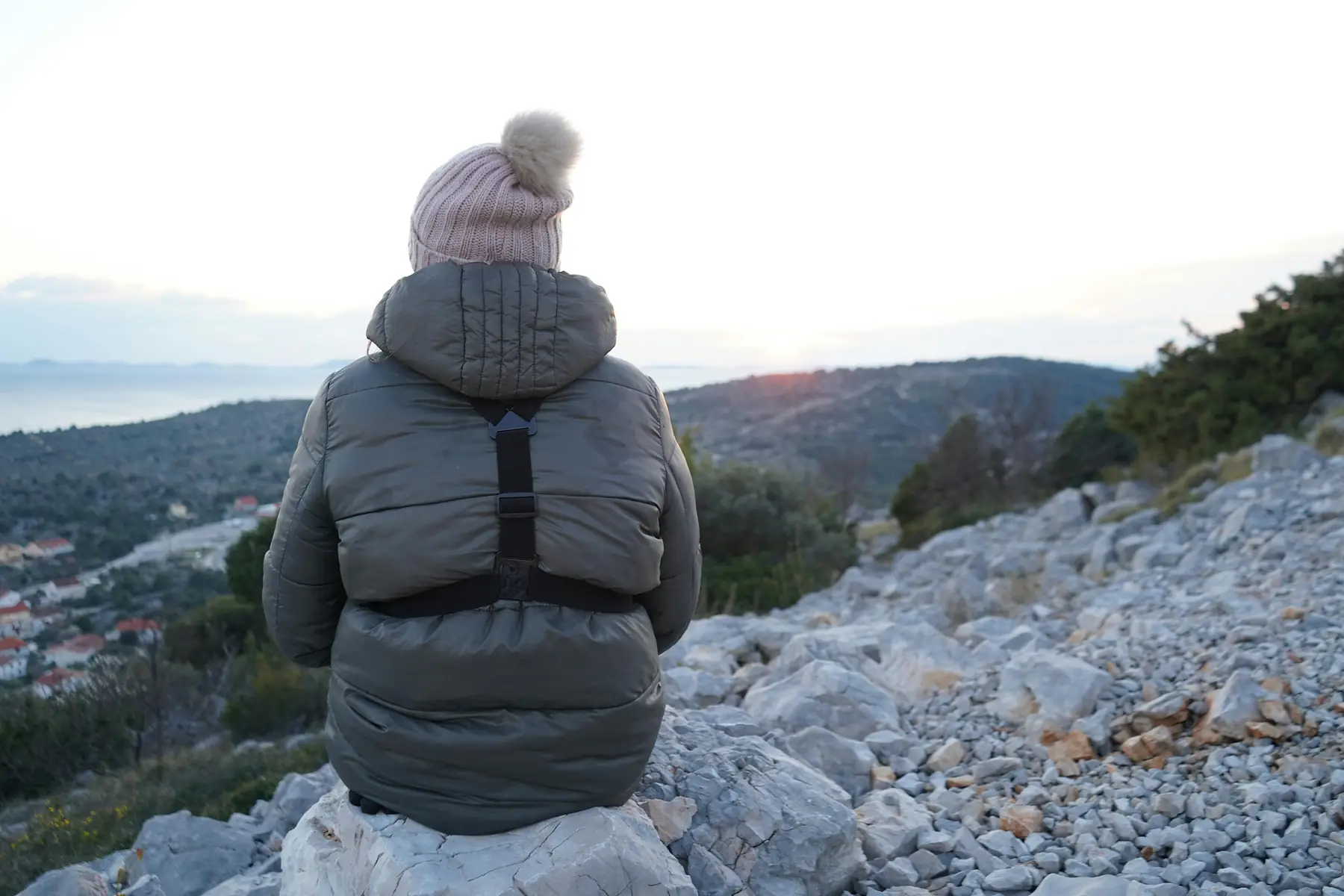
The best waterproof jacket for Patagonia is a three-layer hardshell that provides a total barrier against high-velocity winds while remaining breathable enough for steep mountain ascents. For most trekkers, the Patagonia Torrentshell 3L offers the best balance of durability and price, while the Arc’teryx Beta series is the gold standard for those prioritizing weight and technical performance in extreme conditions.
In a region where the “Roaring Forties” winds can exceed 110 km/h and rain often travels horizontally, your jacket is more than just a rain shell: it is your primary survival tool. Choosing the right one requires looking past simple waterproof ratings and focusing on hood architecture, hem seals, and membrane durability. This guide breaks down the top-performing shells for the 2026/27 season to ensure you stay dry when the Southern Ice Field storms roll in.
Patagonia Jacket Quick Picks
- Top Overall Pick: Patagonia Torrentshell 3L Rain Jacket
- Top Budget Pick: Quechua MH500 Lightweight Waterproof Jacket
- Top W Trek Pick: Rab Downpour Mountain Waterproof Jacket
- Top Heavy-Pack Pick: Mountain Equipment Makalu Jacket
- Recommended Features: A fully waterproof, windproof hardshell with a structured adjustable hood, cuff and hem seals, pit zips and three-layer construction for sustained use
Recommended Waterproof Jackets for Patagonia
Each recommendation comes in a men’s and a women’s version. The product image shows one version; use the links to check fit, sizing and colors. The price markers compare each model with the rest of the category, with $ budget, $$ mid-range and $$$ premium.
Quechua MH500 Lightweight Waterproof Jacket
A feature-rich three-layer shell at an unusually accessible price. Its membrane rating, hood adjustment and mechanical ventilation exceed emergency-rain-jacket expectations, making it the budget choice for W Trek hikers facing wind-driven rain. The fabric feel, cut and long-term support are less polished than specialist shells.

Patagonia Torrentshell 3L Rain Jacket
A durable, widely supported three-layer shell with pit zips, a protective hood and a self-stowing pocket. It is the safest broad recommendation for the W Trek and general Patagonia travel because it balances protection, availability and repairability. It feels crinklier and heavier than ultralight premium shells.

Rab Downpour Mountain Waterproof Jacket
A mountain-oriented shell with a protective hood and useful venting at a mid-range price. Its cut and feature set are more technical than a travel raincoat while remaining light enough for routine pack carry. It is a strong all-rounder for W Trek hikers and mixed day hikes in persistent wind and rain.

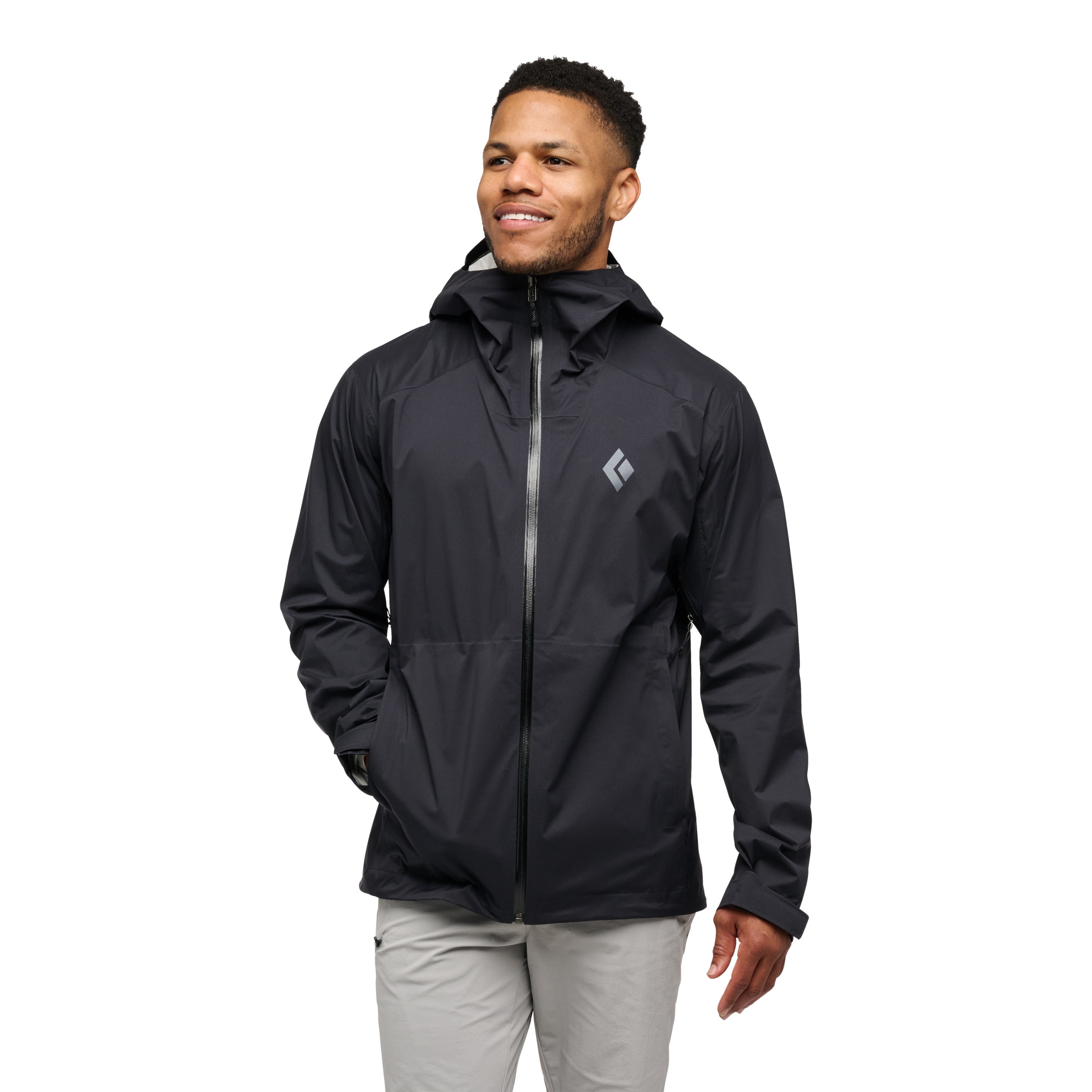
Black Diamond Fineline Stretch Shell
A movement-focused shell with four-way stretch, articulated fit and pit zips for active hiking and scrambling. It packs into its own pocket and publishes clear 10,000mm waterproof and breathability figures. That 2.5-layer protection has less reserve for prolonged Patagonian storms than a three-layer shell.
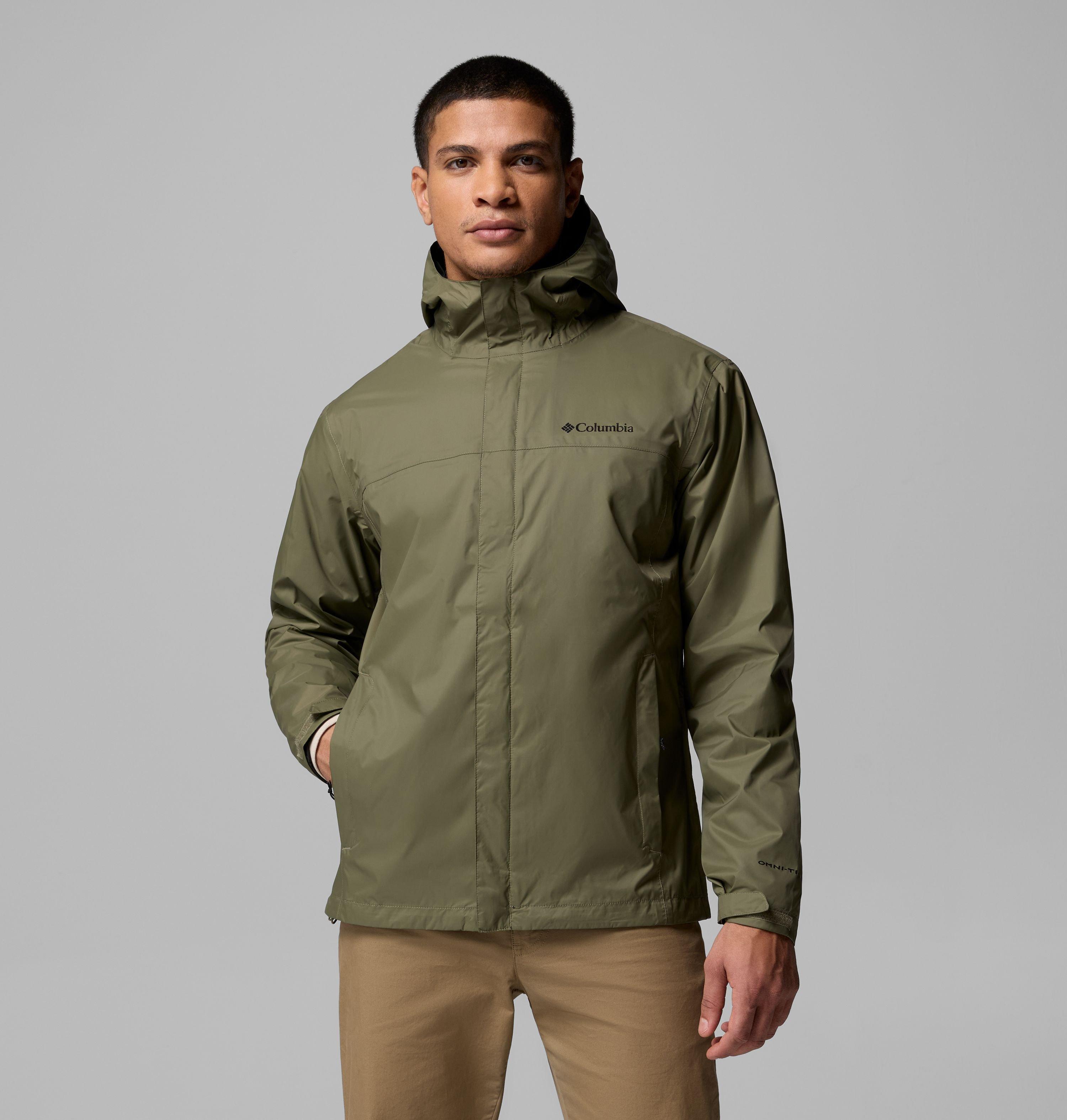
Columbia Watertight II Rain Jacket
A budget emergency shell with broad size availability, fully seam-sealed Omni-Tech construction, an adjustable hood and a self-packing pocket. It covers essential rain-jacket functions for a fair-weather itinerary, but lacks pit zips and does not publish the performance detail expected from technical shells.
Columbia Arcadia II Rain Jacket
A budget emergency shell with regular and plus sizing, fully seam-sealed Omni-Tech construction, an adjustable hood and a self-packing pocket. It is suitable as basic weather backup, but lacks pit zips and the technical performance detail needed to make it a primary choice for sustained storms.
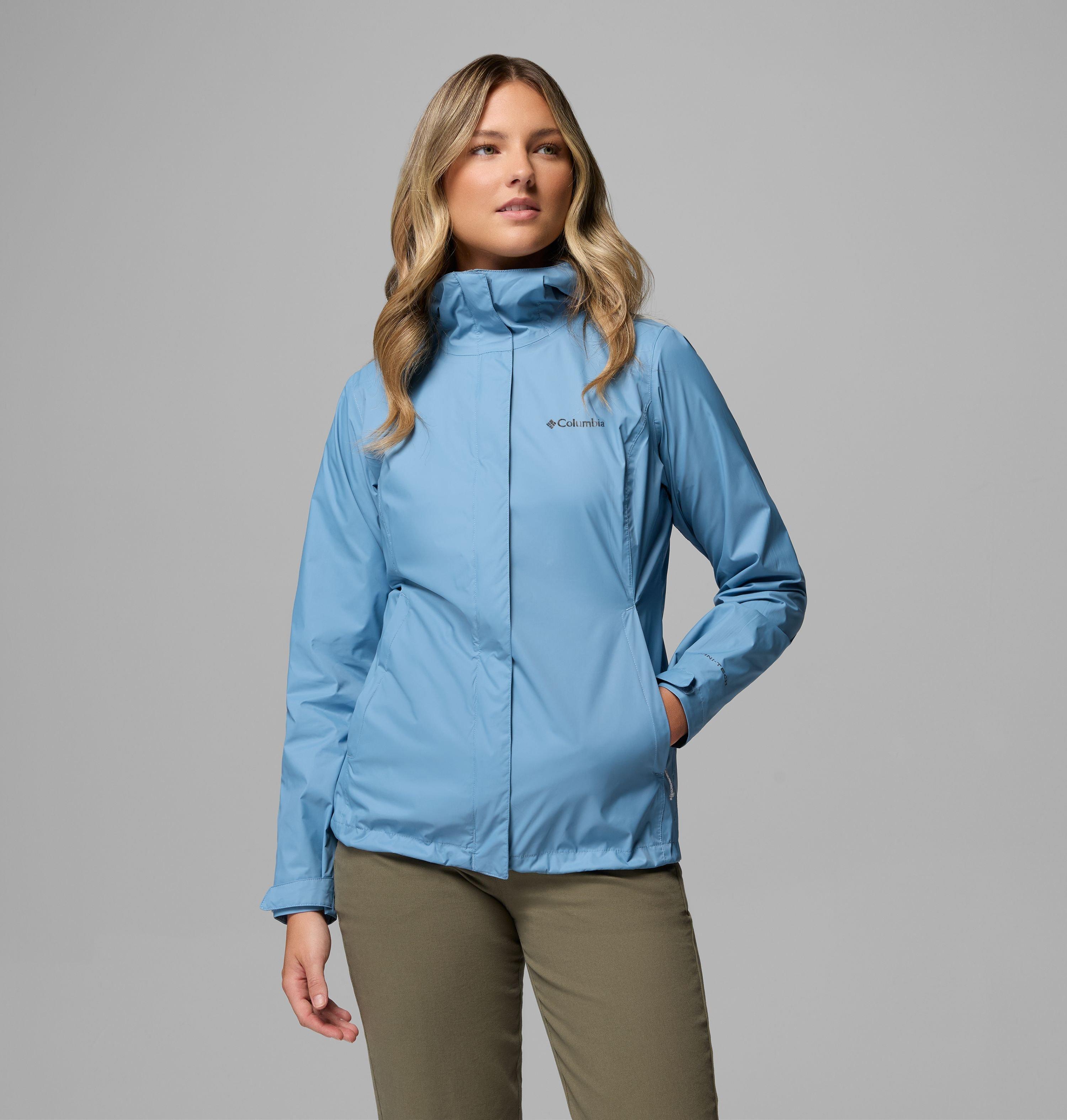
The North Face Summit Series Papsura FUTURELIGHT Jacket
An exceptionally light full waterproof shell aimed at high-output mountain use. Its low weight and compact packability make it easy to carry every day rather than gamble on the forecast, suiting fast refugio W Trek hikers. The very light face fabric requires more care around rock and heavy pack abrasion.
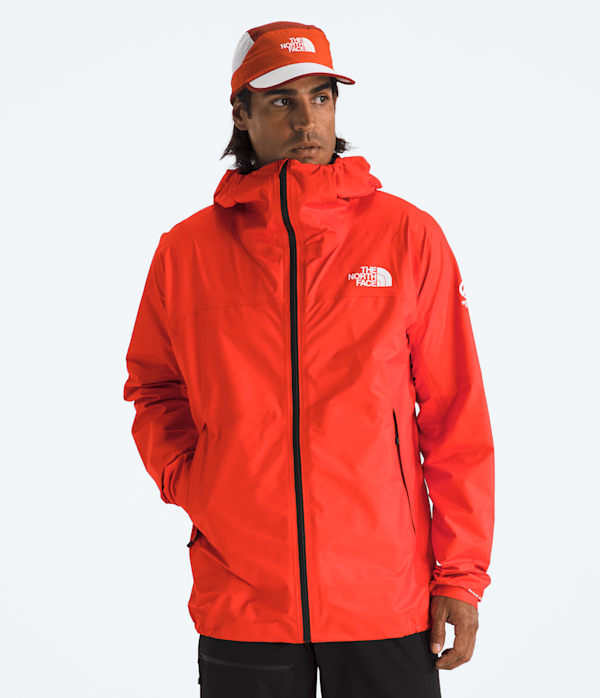
Mountain Equipment Makalu Jacket
A robust mountain shell with a substantially tougher face fabric than ultralight options. Its 75-denier construction, protective hood and long ventilation zips are designed for prolonged bad weather and pack abrasion, making it the specialist choice for self-supported O Trek hikers. It is heavy and excessive for an emergency rain layer.
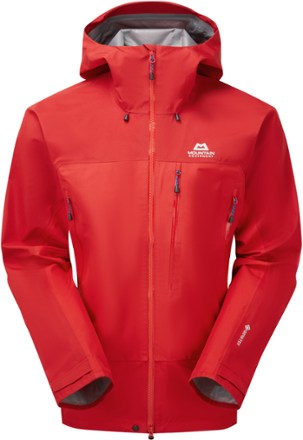
Arc'teryx Beta SL Jacket
A light premium shell that retains pit zips and mountain-ready articulation. Its precise patterning, hood and membrane package balance everyday usability with serious storm coverage, making it best for hikers who will use it frequently beyond Patagonia. It is very expensive and its lighter fabric is not the toughest for constant heavy-pack use.
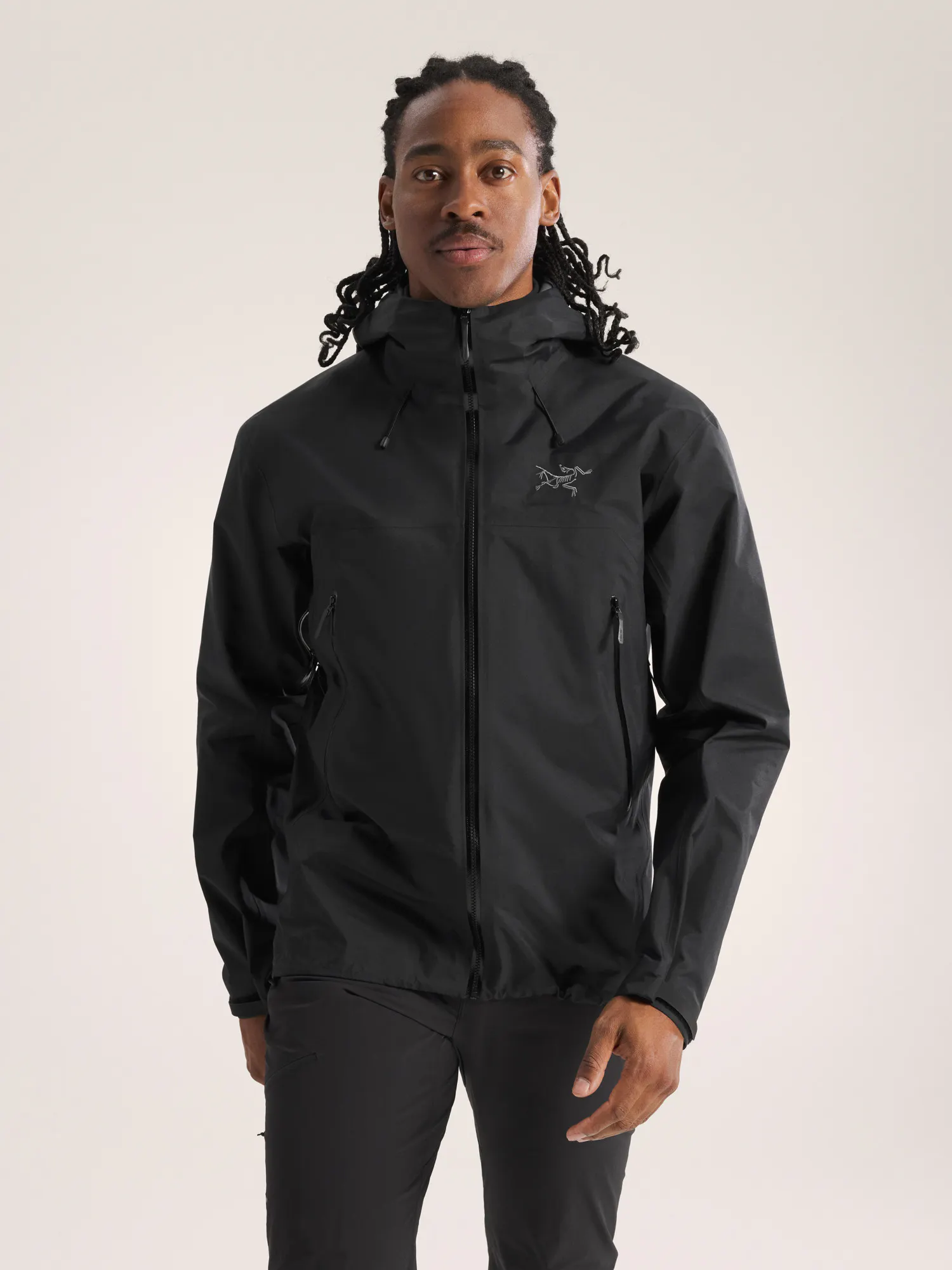
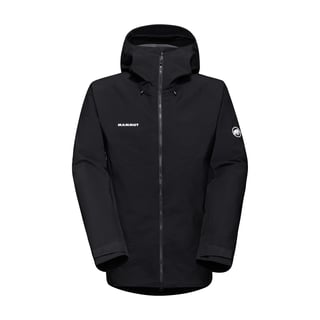
Mammut Crater IV HS Hooded Jacket
A premium storm shell with three-layer GORE-TEX ePE, a durable 75D face, pit zips and a helmet-compatible hood. It supports more technical use than a basic hiking jacket and gives genuine reserve for severe weather. Its weight and price are excessive for travelers who only need an emergency shell.
As you plan your comprehensive gear list, understanding the specific environmental demands of the southern Andes is the first step toward a successful trip.
Why Your “Standard” Rain Jacket Might Fail in Patagonia
A lightweight raincoat that keeps you dry during a commute or a forest hike will likely fail in the face of Patagonia’s unique climate. The primary antagonist here isn’t just the volume of rain, but the force of the wind. When gusts reach 80-110 km/h, a thin or poorly structured jacket acts like a sail, pulling at your body and allowing water to be forced through zippers and neck openings.
Horizontal rain is a literal reality in Torres del Paine and El Chaltén. Traditional top-down waterproofing often fails because water is driven upward and sideways. This makes the quality of your jacket’s “seals,” the cuffs, the hem drawcord, and the storm flap over the zipper, just as important as the fabric itself. Furthermore, the environment is physically abrasive. Between trekking pole straps rubbing on shoulders and the fine, gritty volcanic dust found near the weather-beaten trails, lightweight “2.5-layer” jackets often delaminate or tear within a single season.
Finally, the temperature in Patagonia fluctuates wildly. You might start a hike to Base Torres in 15°C sunshine and end it in a 2°C sleet storm. A jacket with poor breathability will trap your sweat during the climb, leading to rapid cooling and potential hypothermia once you stop and the wind-chill hits.
Hardshell vs. Softshell: The Patagonia Verdict
One of the most common questions for first-time visitors is whether a softshell jacket is sufficient. While softshells are comfortable and highly breathable, they are fundamentally inadequate as a primary outer layer in the southern Andes. A softshell is designed for “highly aerobic activity in stable weather,” which is the exact opposite of a typical day on the W Trek.
We recommend a hardshell as the non-negotiable outer layer for every traveler. A hardshell provides a total windproof and waterproof “armor” that a softshell cannot match. While you might wear a softshell on a clear, breezy afternoon in El Chaltén, relying on one during a crossing of the John Gardner Pass or a storm on the Southern Ice Field is dangerous.
- Waterproofing: 100% waterproof vs. Water-resistant (will soak through)
- Wind Protection: Total wind block vs. High wind resistance (some air permeability)
- Durability: High resistance to abrasion vs. Moderate resistance
- Breathability: Moderate (requires pit zips) vs. High (excellent for uphill)
Always pack a hardshell. A softshell is a luxury 'extra' for dry, windy days but cannot replace the protection of a dedicated waterproof layer.
If you are trying to decide what to wear in Patagonia, prioritize your budget toward a high-quality hardshell before considering secondary layers like softshells.
Essential Features for a Patagonia-Ready Jacket
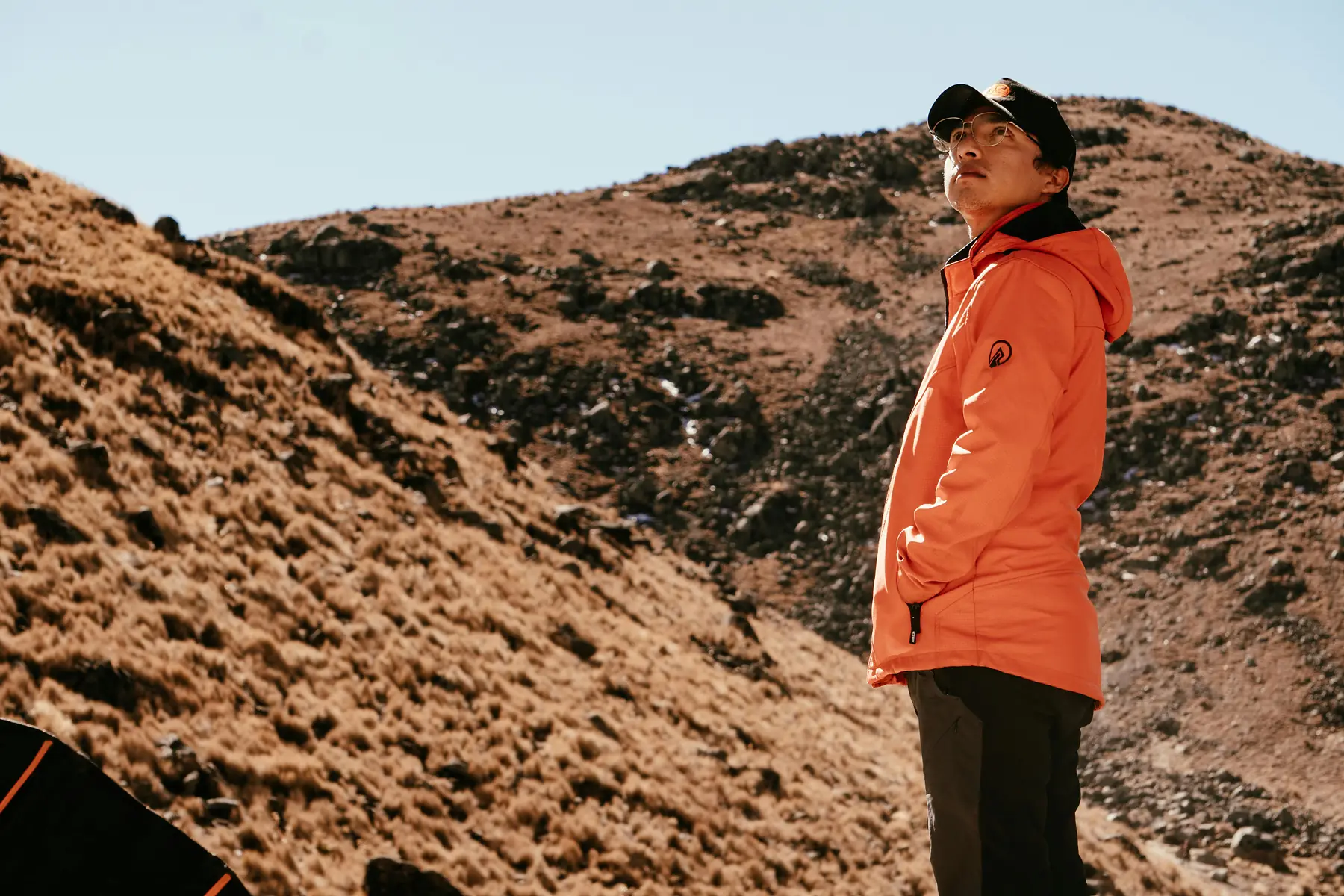
When shopping for a jacket, look past the brand name and evaluate these four specific features. If a jacket lacks more than one of these, it is likely not suitable for a multi-day Patagonia trek.
- Pit Zips: These are underarm zippers that allow for manual venting. Because Patagonia’s trails involve constant elevation changes, you will constantly be switching between sweating on the uphill and freezing on the downhill. Pit zips allow you to manage this without stopping to take your jacket off.
- Helmet-Compatible / Structured Hoods: Even if you aren’t climbing, a “helmet-compatible” hood is larger and features more adjustment points. This allows you to cinch it tight over a beanie or a baseball cap so it doesn’t blow off in 110 km/h gusts.
- Hem and Cuff Seals: Look for robust Velcro cuff closures and a dual-sided hem drawcord. These prevent “wind-pump,” where cold air is forced up into your layering system from the bottom of the jacket.
- High Pocket Placement: Ensure the hand pockets sit high enough that they are still accessible while you are wearing a backpack hip belt.
If you are investing in a high-end jacket, you should also ensure your lower half is protected. We recommend pairing your shell with durable hiking pants or dedicated rain shells.
For more advice on how your jacket interacts with shoulder straps and a hipbelt, see our guide to the best daypacks for Patagonia.
Membrane Tech 101: Gore-Tex vs. H2No vs. Pertex
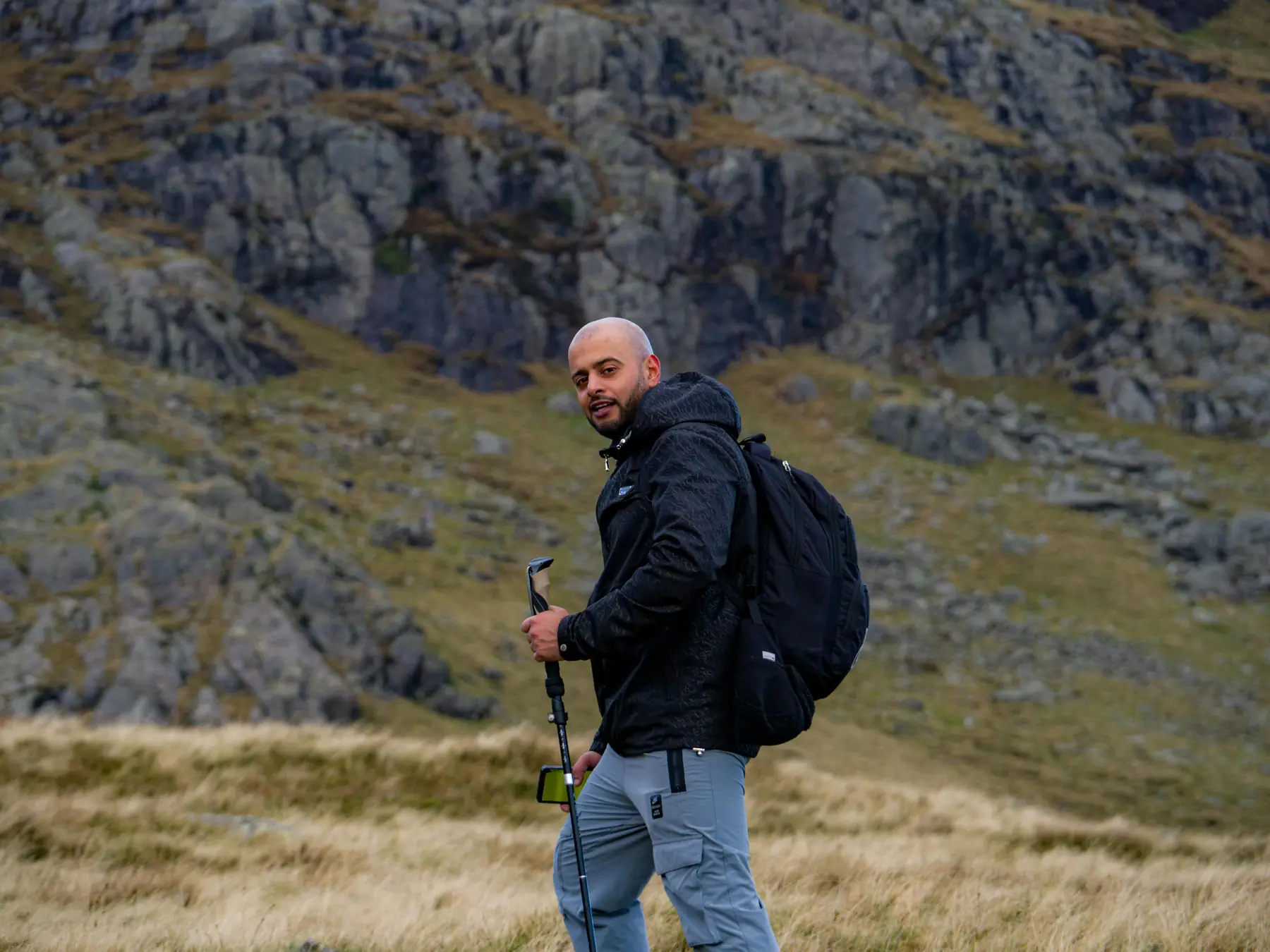
Understanding the technical jargon on a gear tag helps you realize why some jackets cost $150 and others cost $500. Most waterproof jackets work through a “microporous” membrane. These membranes have billions of tiny holes that are too small for a liquid water droplet to enter, but large enough for individual water vapor molecules (your sweat) to escape.
Gore-Tex remains the gold standard for its rigorous testing and durability. For the 2026/27 season, look for the “ePE” label, which indicates the new, more environmentally friendly membrane that meets updated 2025/2026 PFAS regulations in the EU and US (such as California’s AB 1817).
Patagonia H2No is not a specific fabric but a performance standard. Patagonia uses various suppliers but subjects every “H2No” garment to a “Killer Wash” - a 24-hour continuous scrubbing that simulates years of use. If it survives and stays waterproof, it passes.
DWR Maintenance in 2026: With the shift to PFAS-free materials, modern jackets rely on “Green” DWR (Durable Water Repellent) coatings. These are better for the planet but tend to wear off faster than the older, toxic versions. If you notice water stops “beading” on your jacket and the fabric looks “wetted out,” it doesn’t mean the jacket is broken. It simply needs to be washed with a technical cleaner (like Nikwax) and occasionally tumble-dried on low heat to reactivate the coating.
FAQ
QUESTION: “Is the Patagonia Torrentshell 3L waterproof enough for the W Trek?” ANSWER: Yes, the Torrentshell 3L uses a 3-layer H2No membrane specifically designed to handle prolonged, heavy rain and is our top value recommendation for the W Trek.
QUESTION: “Do I need a Gore-Tex jacket for hiking in Patagonia?” ANSWER: While not strictly necessary, Gore-Tex offers the best balance of breathability and waterproofness for Patagonia’s extreme wind and rain, making it ideal for multi-day treks.
QUESTION: “Is a softshell jacket sufficient for the wind in Patagonia?” ANSWER: A softshell is excellent for blocking wind on dry days, but it will not protect you from Patagonia’s frequent heavy rain; we always recommend carrying a dedicated hardshell.
QUESTION: “What is the best lightweight rain jacket for the O Circuit?” ANSWER: For the O Circuit, the Arc’teryx Beta SL or the Outdoor Research Helium UL are top choices due to their low weight and high packability during the 8-10 day trek.
QUESTION: “How should a waterproof jacket fit for trekking in Torres del Paine?” ANSWER: Your jacket should be “regular fit” to allow for a base layer and a mid-layer (like a fleece or down sweater) underneath without restricting movement during steep climbs. For more on what to wear underneath, see our guide to the best base layers.
QUESTION: “Are expensive waterproof jackets worth it for a Patagonia trip?” ANSWER: Higher-priced jackets generally offer better breathability and more robust hoods/zippers, which significantly increases comfort during the 6-8 hours of exposure typical of Patagonia hiking.