The best hiking pants for Patagonia must prioritize wind resistance and rapid drying times over the high breathability usually favored in warmer climates. The Patagonia Quandary Pants are our top overall pick for their travel-to-trail versatility, while the Arc’teryx Gamma Pant is the stronger specialist choice for exposed, windy terrain.
Selecting the right legwear is often an afterthought compared to buying a high-end shell jacket or broken-in boots, yet your pants are the primary interface between your body and the abrasive, wind-scoured environment of the Southern Patagonian Ice Field. In a region where horizontal rain and 80 km/h gusts are standard afternoon occurrences, a pair of thin, “breathable” leggings or heavy cotton chinos can quickly lead to discomfort or, in extreme cases, hypothermia. This guide filters the current 2026 market to identify the specific trousers that handle the “four seasons in one day” reality of the Magallanes region.
At a Glance: Patagonia Hiking Pants
- Top Overall Pick: Patagonia Quandary Pants
- Top Budget Pick: Forclaz MT100 2-in-1 Zip-Off Trekking Pants
- Top W Trek Pick: Rab Incline Light Pants
- Top Wind Protection Pick: Arc’teryx Gamma Pant
- Recommended Features: Quick-drying stretch synthetic fabric with a DWR finish, articulated knees and a gusseted crotch; carry separate hardshell overtrousers
Recommended Hiking Pants for Patagonia
Each of our recommendations comes in a men’s and a women’s version. The product image shows one version - use the links to check the fit, sizing and available colours. The price markers compare each model with the rest of the category: $ budget, $$ mid-range and $$$ premium.
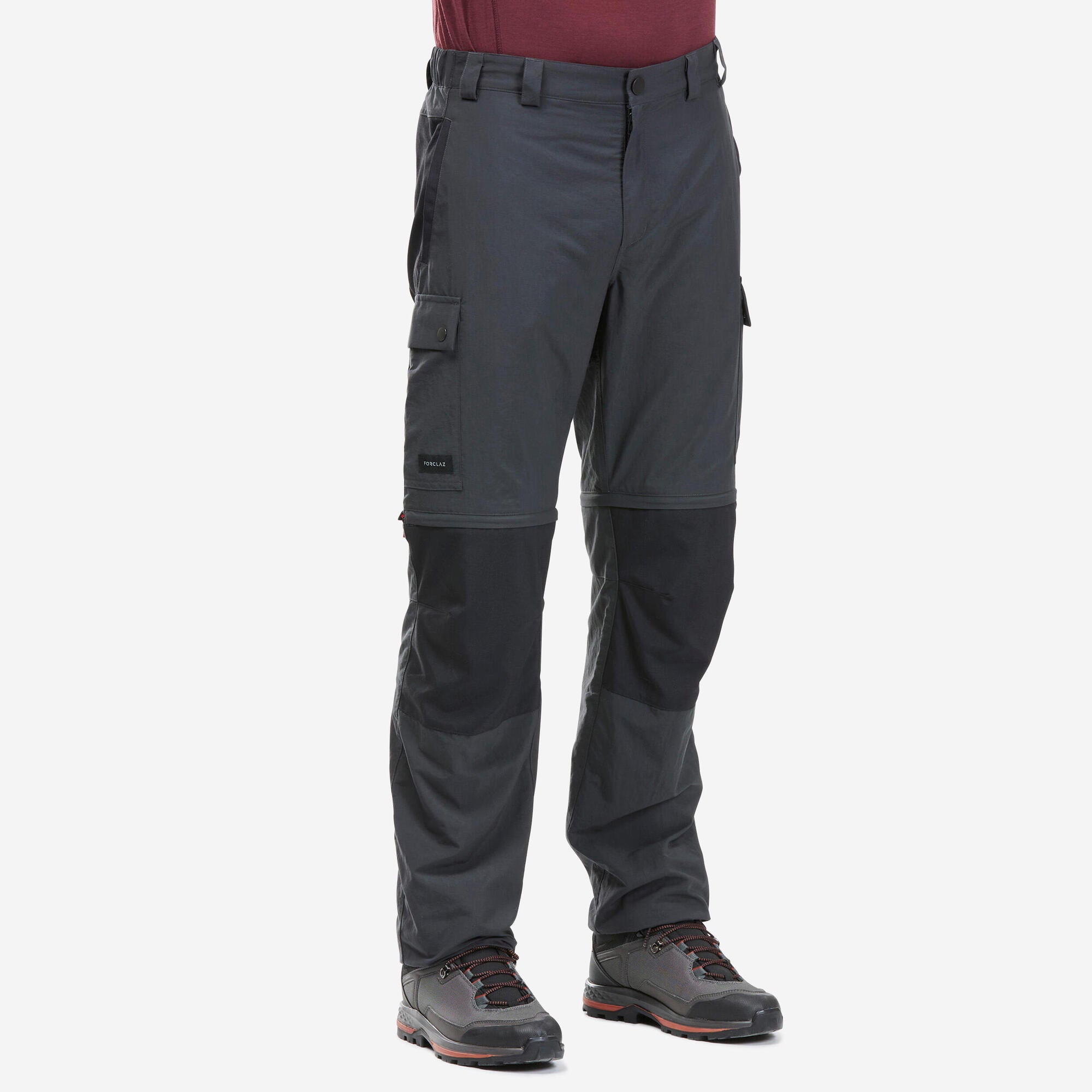
Forclaz MT100 2-in-1 Zip-Off Trekking Pants
A low-cost convertible pant that covers warm valleys and cooler trail sections without duplicating shorts in your pack. The synthetic fabric dries faster than cotton and the zip-off legs are practical for changeable summer temperatures. Its fabric and patterning are less refined than premium stretch trousers, so carry separate rain protection and test the fit before a multi-day trek.
Simond MT500 2-in-1 Zip-Off Hiking Pants
A more trail-focused budget convertible with stretch fabric and reinforced high-wear panels. The zip-off legs reduce packing duplication, while the reinforced knees and seat suit scrambling and repeated pack use better than a basic travel pant. Those extra zips and panels add weight and can feel bulky around the knees.

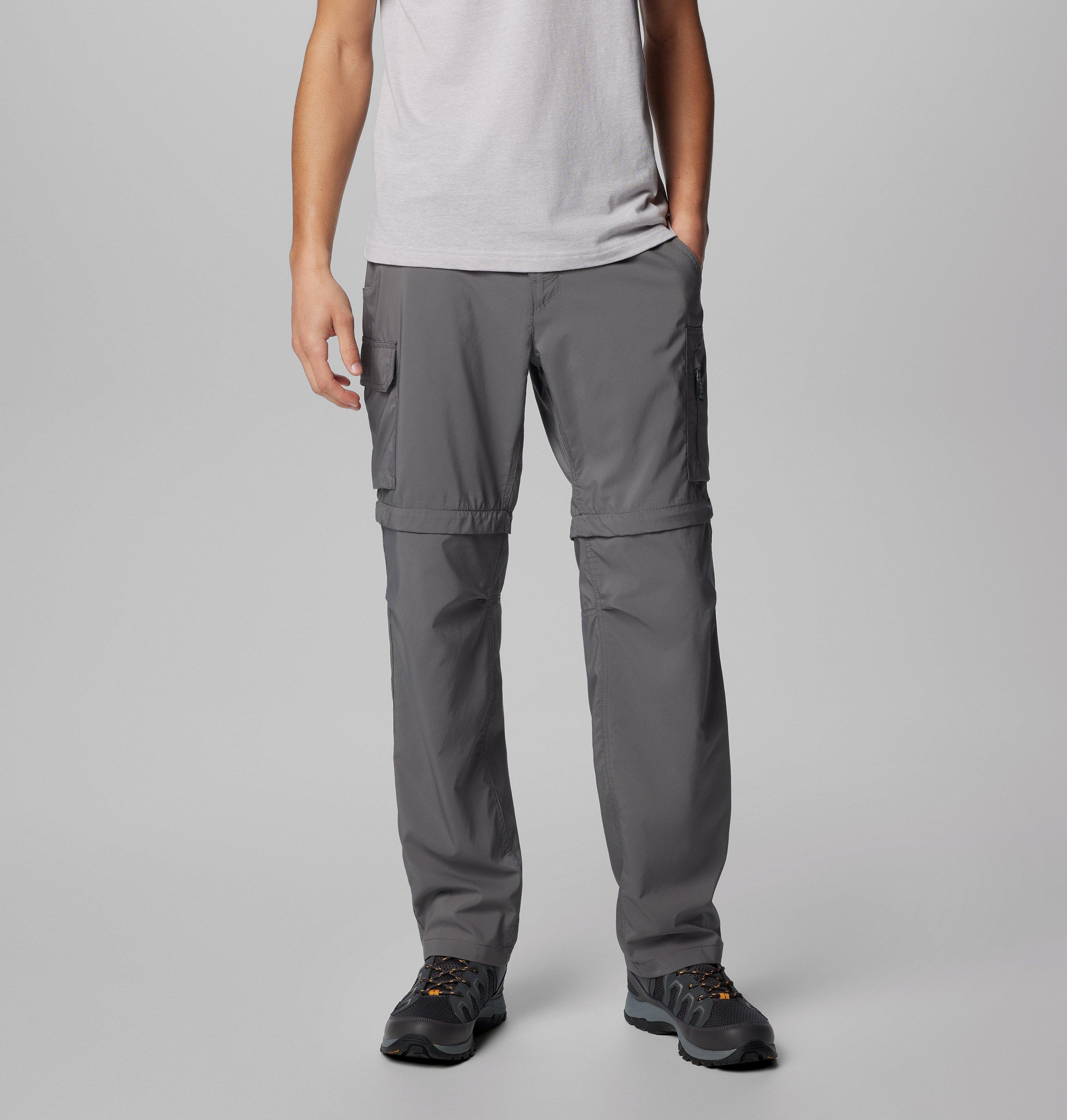
Columbia Silver Ridge Utility Convertible Pants
A sun-focused convertible pant with UPF 50 coverage, moisture management and removable lower legs. It adapts well to warm, exposed trail sections and is a sensible fair-weather W Trek choice when paired with dependable overtrousers. The lightweight woven fabric provides limited warmth and storm protection on its own.
Patagonia Quandary Pants
A balanced stretch hiking pant that looks restrained enough for travel days. Its articulated pattern, practical pockets and water-repellent recycled nylon blend cover hut-based W Trek itineraries and wider Patagonia travel especially well. It dries quickly after light showers, but separate waterproof overtrousers are still necessary in sustained rain.

Rab Incline Light Pants
A lightweight stretch trouser built for high-output days in mild to warm conditions. Rab's articulated cut and quick-drying Matrix fabric provide easy movement without the bulk of zip-off legs, making this a strong W Trek option for hikers who run warm. The light fabric offers less protection in persistent cold wind, so keep waterproof overtrousers accessible.

Helly Hansen Brono / Brona Softshell Pants
A mid-range softshell option with four-way stretch, articulated knees and adjustable hems with boot hooks. It gives hikers more protection on cool, windy W or O Trek days while preserving an easy walking stride. The DWR finish handles only light precipitation, so it cannot replace waterproof overtrousers.

Fjällräven Abisko Midsummer Trousers
A durable, highly ventilated trekking trouser for long days with changing weather. Its hybrid fabric layout reinforces high-wear areas while side vents help regulate heat on climbs, and the G-1000 panels allow some adjustment with Greenland Wax. The price is high and the material is weather resistant rather than waterproof.

Patagonia Terravia Alpine Pants
A reinforced stretch-woven pant for rocky terrain and scrambling. Its articulated alpine cut, tougher knees and seat, removable belt and low-bulk cuffs are useful on technical W or O Trek side trips where abrasion matters. The slim fit and premium price are unnecessary for straightforward maintained trails.

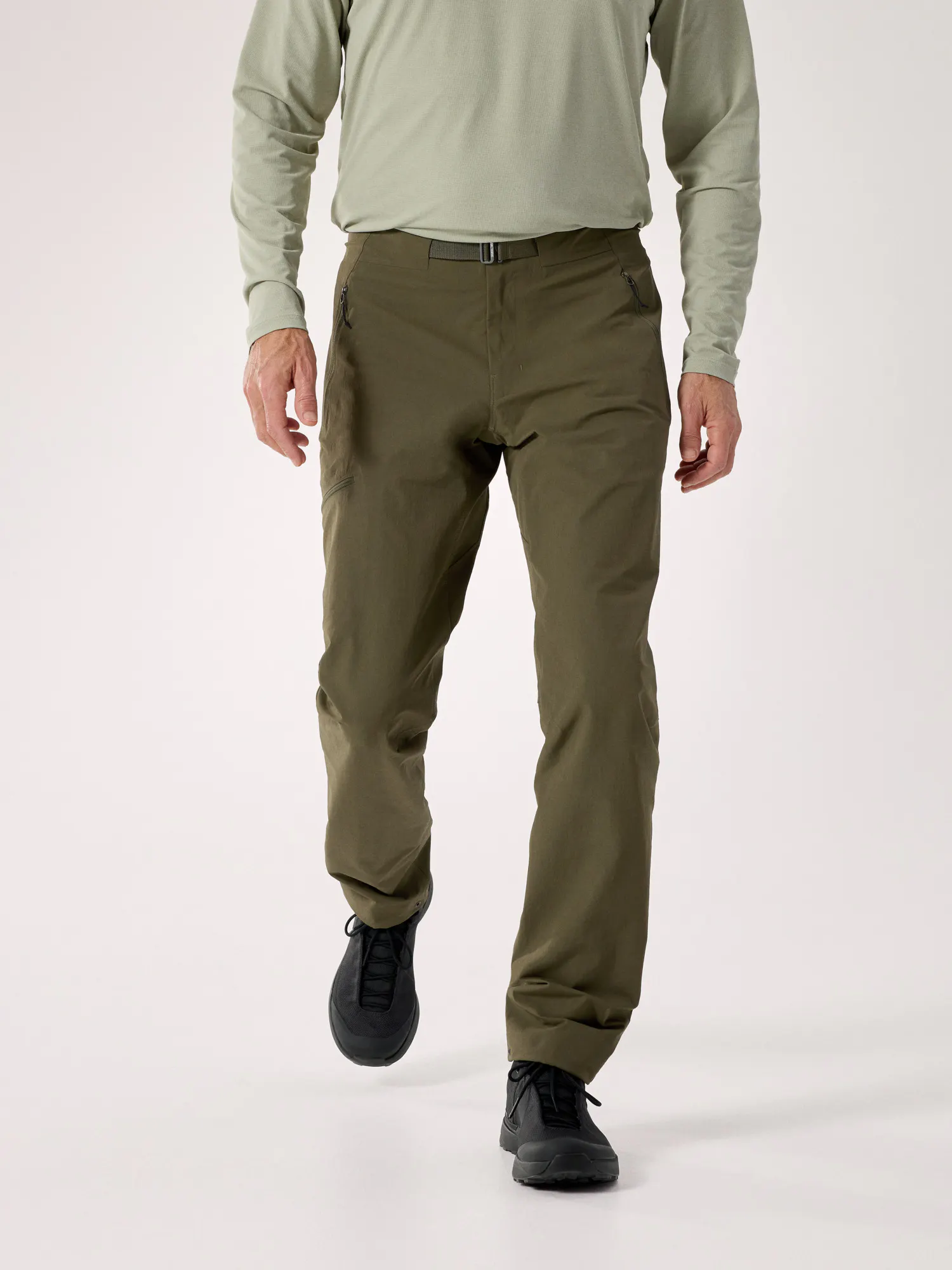
Arc'teryx Gamma Pant
A premium softshell pant with the abrasion resistance, stretch and wind protection needed for exposed side trips and shoulder-season routes. The Fortius 2.0 fabric and precise articulated cut feel more secure than a lightweight travel trouser when moving over rock. It is expensive and can run warm during benign summer valley walking.
If you are currently building your full kit, you should consult our main gear directory to ensure your layering system is cohesive.
Why Patagonia Demands Specific Hiking Pants
Standard hiking pants designed for the mild summers of the Appalachian Trail or the European Alps often fail in Patagonia because they prioritize air permeability (CFM) to keep you cool. In the shadow of the Torres del Paine, high air permeability is a liability. When the wind picks up, it cuts straight through lightweight fabrics, stripping away the thin layer of warm air trapped against your skin.
The extreme wind and variable temperatures of the region require fabrics that act as a buffer. You need a material dense enough to block the bite of the wind but flexible enough to handle the high-stepping required on the rock-strewn approach to the Base Torres. Furthermore, because you will likely experience rain at some point every single day, your pants must feature a high-quality Durable Water Repellent (DWR) finish. This coating causes moisture to bead up and roll off rather than soaking into the fibers, which is critical when you are miles from the nearest refugio heater.
Durability is the final factor. The granite scree fields of El Chaltén and the overgrown sections of the O Circuit’s back side will shred flimsy fabrics. A reinforced seat and knees are not just aesthetic choices; they are functional requirements for a multi-day trek where a blown-out crotch seam can ruin a week-long expedition. Average peak season wind speeds in Torres del Paine typically range from 40–60 km/h, but exposed ridges frequently see gusts between 80 km/h and 110 km/h.
Softshell vs. Lightweight Synthetic: Which is right for you?
Choosing between a technical softshell and a lightweight synthetic pant depends largely on your specific itinerary and your personal metabolic rate. Softshell pants, like the Arc’teryx Gamma or Helly Hansen Brono and Brona, are constructed from a dense stretch fabric that is inherently more wind-resistant and durable. They provide a touch of warmth and feel “sturdier” in a storm. If you are trekking in the shoulder seasons (October or April) or are prone to feeling cold, a softshell is the correct choice.
Lightweight synthetic pants, such as the Patagonia Quandary or Rab Incline Light, are thinner and dry significantly faster if they do get saturated. These are ideal for the height of summer (January and February) when daytime temperatures can occasionally climb into the low 20s Celsius (70s Fahrenheit). They also pack down much smaller, making them a better choice for travellers who are balancing a trek with city time in Buenos Aires or Santiago.
The “Hybrid Strategy” is often the most effective for Patagonia: wear a lightweight synthetic pant for the majority of the trek, but keep a pair of high-quality hardshell rain pants at the very top of your pack to pull on as a wind-blocker the moment you reach an exposed ridge.
Best for Wind Protection: Arc’teryx Gamma Pant
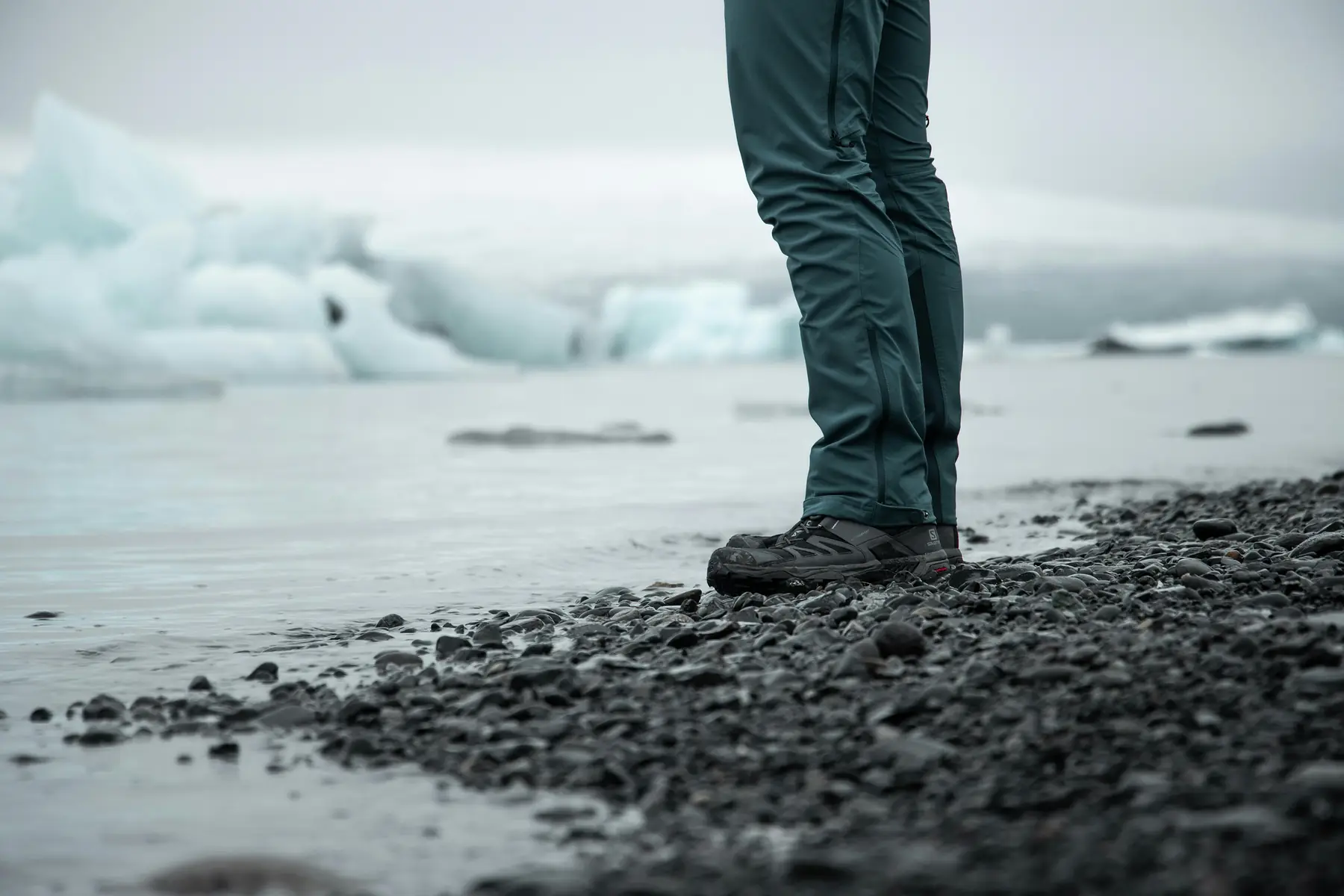
The Arc’teryx Gamma Pant (formerly the Gamma LT) remains the most recommended technical trouser for Patagonia for one reason: the Fortius™ 2.0 fabric. This material strikes a nearly perfect balance between weather resistance and mobility. Unlike many softshells that feel stiff, the Gamma offers a four-way stretch that feels unrestricted even when scrambling over the boulders of the Pritzlaff.
The 2026 model continues to feature the low-profile integrated webbing belt, which is a critical detail for trekkers. Standard belts often bunch up and chafe under the heavy hipbelt of a 60L trekking pack; the Gamma’s flat closure eliminates this pressure point. The zippered thigh pocket is also perfectly positioned to be accessible while wearing a climbing harness or a pack, making it the ideal spot for a map or phone. As of the 2026/27 season, the Gamma Pant has an MSRP of $200 USD and weighs approximately 380g for the men’s model and 300g for the women’s.
While the price point is high, the durability justifies the investment. These pants are known to last for years of heavy use. The only drawback is that on the rare, still, hot days in the valleys, they can feel slightly too warm. However, given that “still and hot” is the rarest weather pattern in Patagonia, it is a trade-off most experienced guides are willing to make.
Best Overall: Patagonia Quandary Pants
For trekkers who want a single pair of pants that can handle the W Trek and then look respectable at a dinner in Puerto Natales, the Patagonia Quandary Pant is the industry standard. For the 2026 season, these are made from a blend of 96% NetPlus® postconsumer recycled nylon (sourced from recycled fishing nets) and 4% spandex, offering excellent movement without looking overly “technical.”
The Quandary excels in the intense southern sun. It features a UPF 40+ rating, which is vital in Patagonia where the ozone layer is thinner and the sun’s bite is surprisingly sharp even on cold days. The DWR finish is among the best in the lightweight category, handling light mist and drizzle with ease. Because they are thinner than the Gamma, they dry in a fraction of the time—often drying out just from your body heat within twenty minutes of a rain shower stopping.
Best Budget Option: Forclaz MT100 2-in-1 Zip-Off Trekking Pants
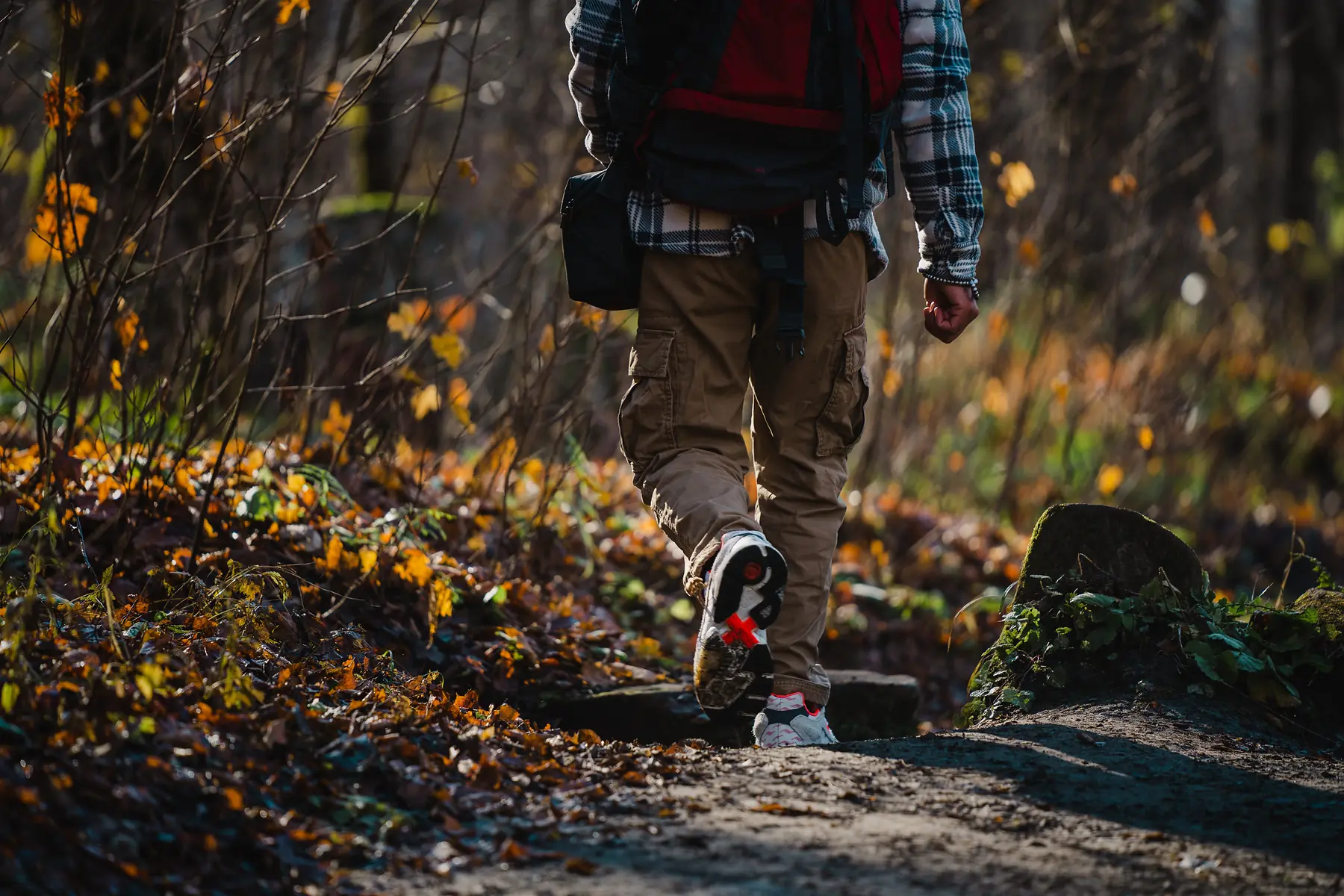
If you are looking to save your budget for the high cost of refugio bookings, the Forclaz MT100 2-in-1 pants cover the basics for around $55 USD. Their zip-off construction gives budget travellers trousers and shorts in one garment, while the lightweight synthetic fabric dries much faster than cotton after a shower or sweaty climb.
The primary trade-off is that the fabric, patterning and zip-off construction feel less refined than a purpose-built stretch trouser. In a true Patagonian gale, you will also feel more air moving through the fabric than you would in a softshell. Pair the MT100 with reliable rain pants and treat it as a budget W Trek or general-travel option rather than a first choice for a fully loaded O Circuit.
Best for Extreme Wind and Rain: Hardshell Over-Pants
In Patagonia, your trekking pants are only half of your lower-body system. You must also carry a pair of hardshell over-pants. These are not meant to be worn all day; they are a tool you deploy when the weather turns from “variable” to “dangerous.”
We recommend a pair with full-length or at least 3/4-length side zippers, such as the Patagonia Torrentshell 3L Pants. When a storm rolls into the French Valley, you do not want to be struggling to pull rain pants over muddy hiking boots while standing on a narrow trail. Side zips allow you to step into the pants in seconds. These hardshells provide a total block against the wind, which can be a literal lifesaver if you are caught on an exposed section like the Paso John Gardner.
To complete your weather protection system, ensure your upper body is equally prepared by reviewing our guide to the best waterproof jackets.
Do not buy “waterproof” hiking pants that are meant to be worn as your only layer. They do not breathe well enough for high-exertion trekking and will leave you soaked in sweat from the inside out. Always use a two-layer system: a breathable trekking pant and a separate hardshell.
Convertible Pants: Are they worth it for Patagonia?
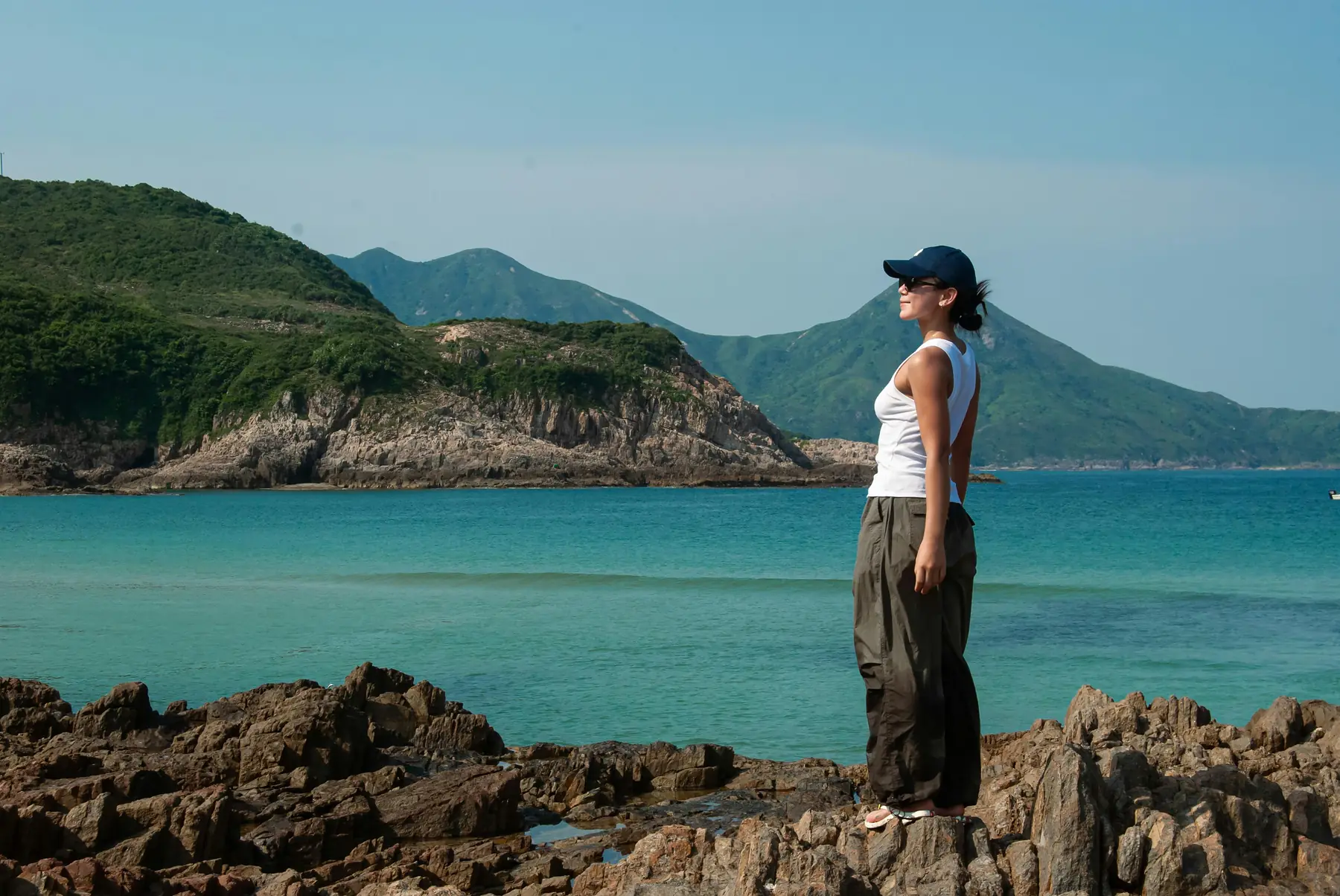
Convertible pants—the ones that zip off into shorts—are a polarizing topic among Patagonia trekkers. On the O Circuit, where you are carrying everything on your back for 8 to 10 days, the weight savings of having “two-in-one” clothing is tempting. On a hot afternoon in the lowlands near Laguna Amarga, you will be glad to have shorts.
However, the downsides are significant. The zippers can chafe against your thighs during the 20-kilometer days common on the W Trek. More importantly, the zipper teeth create a weak point where wind can whistle through. If you choose convertibles, the Simond MT500 is the tougher trail-oriented option, while the Forclaz MT100 is the cheaper choice for travel and maintained routes.
Key Features to Look for in Patagonia Trekking Trousers
When comparing different models, look for these specific technical details that make a massive difference on the trail:
- Crotch Gusset & Articulated Knees: This is non-negotiable. The steep steps of the Paso John Gardner and the rocky climbs in El Chaltén require a full range of motion. Without a gusseted crotch, you risk splitting your seams or being restricted during steep ascents.
- Low-Profile Waistbands: As mentioned, ensure the pants do not have a bulky button or thick belt loops that will dig into your hips under your backpack’s weight.
- Hem Cinches: Some pants, like the Arc’teryx Gamma and Helly Hansen Brono or Brona, feature an adjustable ankle. This is incredibly useful for sealing out the wind and preventing the pants from dragging in the mud. It also makes them more compatible with gaiters.
- DWR Coating: Ensure the pants are treated with a PFC-free DWR. This is your first line of defense against the constant Patagonian mist.
To help you finalize your decision, the comparison below contrasts our leading all-round and wind-protection choices across the metrics that matter most for southern Chile and Argentina.
- Wind Resistance: High / Moderate
- Dry Time: Moderate / Fast
- Weight: ~355g / ~284g
- Durability: Exceptional / Good
- Best Use: O Circuit & Technical Scrambles / W Trek & General Travel
Choose the Gamma for maximum wind protection and durability on technical treks; choose the Quandary for versatility and faster drying in summer months.
Related gear guides
To finish your lower-body setup and ensure you are fully prepared for the trail, explore our other expert reviews:
FAQ
Do I really need specific hiking pants for Patagonia?
While you can hike in general athletic wear, technical hiking pants are highly recommended for Patagonia to provide essential wind protection and quick-drying capabilities during rapid weather shifts. Standard gym shorts or cotton pants will leave you cold and wet.
Are leggings or tights okay for trekking in Torres del Paine?
Leggings are comfortable but offer zero wind protection; if you wear them in Torres del Paine, you must have a pair of windproof rain pants ready to pull over them immediately when the wind picks up. For more on choosing the right under-layers, see our guide to merino and synthetic leggings.
Should I bring shorts or pants for the W Trek?
Pants are the safer default for the W Trek due to wind and brush, but convertible pants are an excellent compromise for the rare hot, still days in the valleys. If you only bring one, make it pants.
Are waterproof hiking pants necessary for Patagonia?
You don’t need your primary hiking pants to be fully waterproof, but you absolutely need a pair of hardshell rain pants to layer over your trekking trousers during Patagonia’s frequent rainstorms. This two-part system is more breathable and versatile than a single waterproof pant.
What are the best hiking pants for the windy O Circuit?
Softshell pants like the Arc’teryx Gamma or Helly Hansen Brono and Brona are best for the O Circuit because they provide stronger wind resistance for the exposed Paso John Gardner. The Fjällräven Abisko Midsummer is another good option if you value durability and extra ventilation for the more rugged backside of the circuit.
Can I wear jeans for hiking in El Chaltén?
No, jeans should never be worn for hiking in El Chaltén as cotton stays wet, becomes heavy, and can lead to hypothermia in Patagonia’s cold, damp conditions. Always stick to synthetic or wool-blend fabrics.