
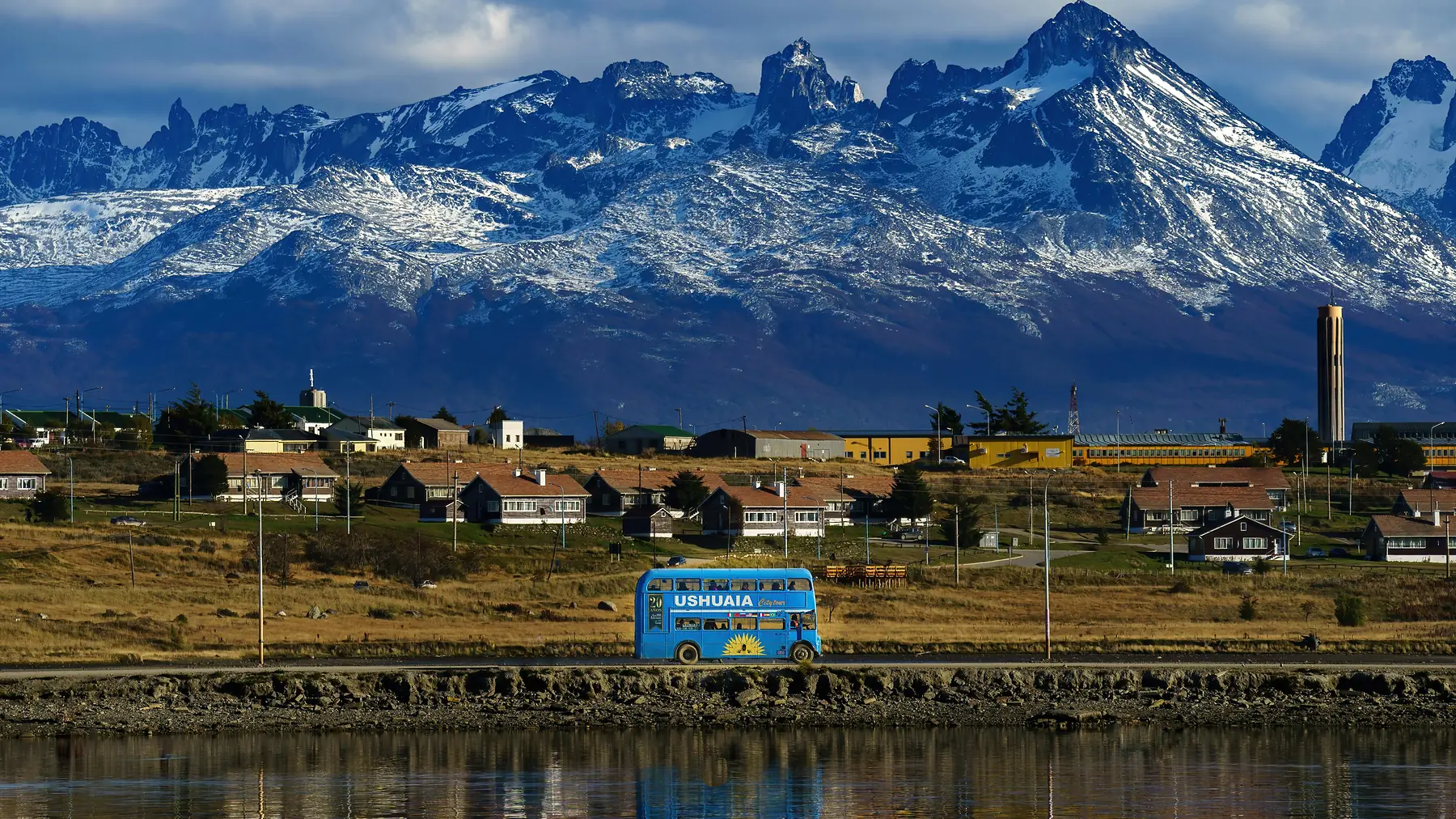
Every Patagonia route eventually points the same way: south. Follow the compass to its conclusion and you reach Ushuaia, the world’s southernmost city, wedged between the Martial mountains and the Beagle Channel on the final island of the Americas. Most itineraries give it two rushed nights at the tail of a longer trip. This one hands it a full week, and the end of the world repays the attention.
Ushuaia works differently from the trekking hubs further north. It is a real city of 80,000 with a naval base, a prison-turned-museum, and king crab restaurants, and it is a single base from which everything radiates: Tierra del Fuego National Park twenty minutes west, the wildlife islands of the Beagle Channel straight offshore, penguin colonies an hour east, and glacier valleys rising directly behind the last street. You unpack once, and every day goes a different direction.
This itinerary suits three kinds of traveller especially well: those boarding or disembarking an Antarctic cruise with days to spare, those who have already done the Fitz Roy and Paine circuit and want Patagonia’s stranger, subantarctic edge, and those who simply like the idea of standing where the road runs out.
Itinerary At-A-Glance
- Total Duration: 7 days (6 nights on the ground)
- Start/End Point: Buenos Aires, Argentina (most Ushuaia flights use Aeroparque, AEP)
- Country: Argentina only (optional Chilean side trip)
- Focus: Day hikes, boat wildlife, penguins, end-of-the-world landscapes
- Best Months: November to March (penguin season and all boats running); a snow-sports variant works June to September
- Estimated Budget: $1,400 to $2,800 USD per person, excluding international flights
- Fitness Level Required: Moderate. Day hikes up to 10 km on rough, boggy ground; everything downgradeable
- Internal Flights: 1 return (Buenos Aires to Ushuaia, c. 3.5 hours)
Route Overview and Logistics
Ushuaia’s single-base structure makes this the easiest itinerary in Patagonia to organise, with no internal transfers and no accommodation relay, but two pieces still need booking discipline, and one seasonal fact shapes everything.
The Two Bookings That Matter
First, the Isla Martillo penguin walk (Day 5) runs with one licensed operator in small groups and sells out days to weeks ahead in high season. Book it before you fly, then build the rest of the week around your slot. Second, accommodation: Ushuaia’s bed stock strains under cruise traffic between December and February, and prices spike when ships are in port. Book early and, if your dates are flexible, avoid the days the big ships turn around.
Penguin Season and Timing
The Magellanic penguins of Isla Martillo are present from roughly October to late March, joined by a small resident group of gentoos; outside those months the colony is empty and Day 5 becomes a different day. November to early December brings nesting; January and February bring chicks. If penguins are the heart of your trip, aim for the core season, and if you are travelling in the southern winter, skip to the variations section for the snow version of this week.
Weather at 54° south is famously moody, but it moves fast; four seasons before lunch is standard. The itinerary’s flexible architecture is deliberate: Days 2, 4, and 6 are all swappable with each other at zero cost. Check each evening’s forecast and give the boat and penguin days your calmest weather, the forest walks your greyest.
Day 1: Arrival at 54° South
Fly from Buenos Aires (most departures use the downtown Aeroparque airport, so confirm which one your ticket says) and watch the window for the final approach, banking over the Beagle Channel with the Darwin Range filling the horizon. Ushuaia’s airport sits ten minutes from town.
Spend the afternoon on foot getting your bearings. Walk the waterfront past the Antarctic expedition ships and the fin del mundo signposts, then give ninety minutes to the Museo Marítimo inside the old prison, the building that effectively founded the city when Argentina used its remotest corner as a penal colony. The cell blocks, Antarctic exploration galleries, and sheer end-of-the-line atmosphere are the right introduction to everything you will see this week. Finish with king crab (centolla) at one of the waterfront restaurants; it is the local dish for good reason.
Day 2: Tierra del Fuego National Park, Where the Road Runs Out
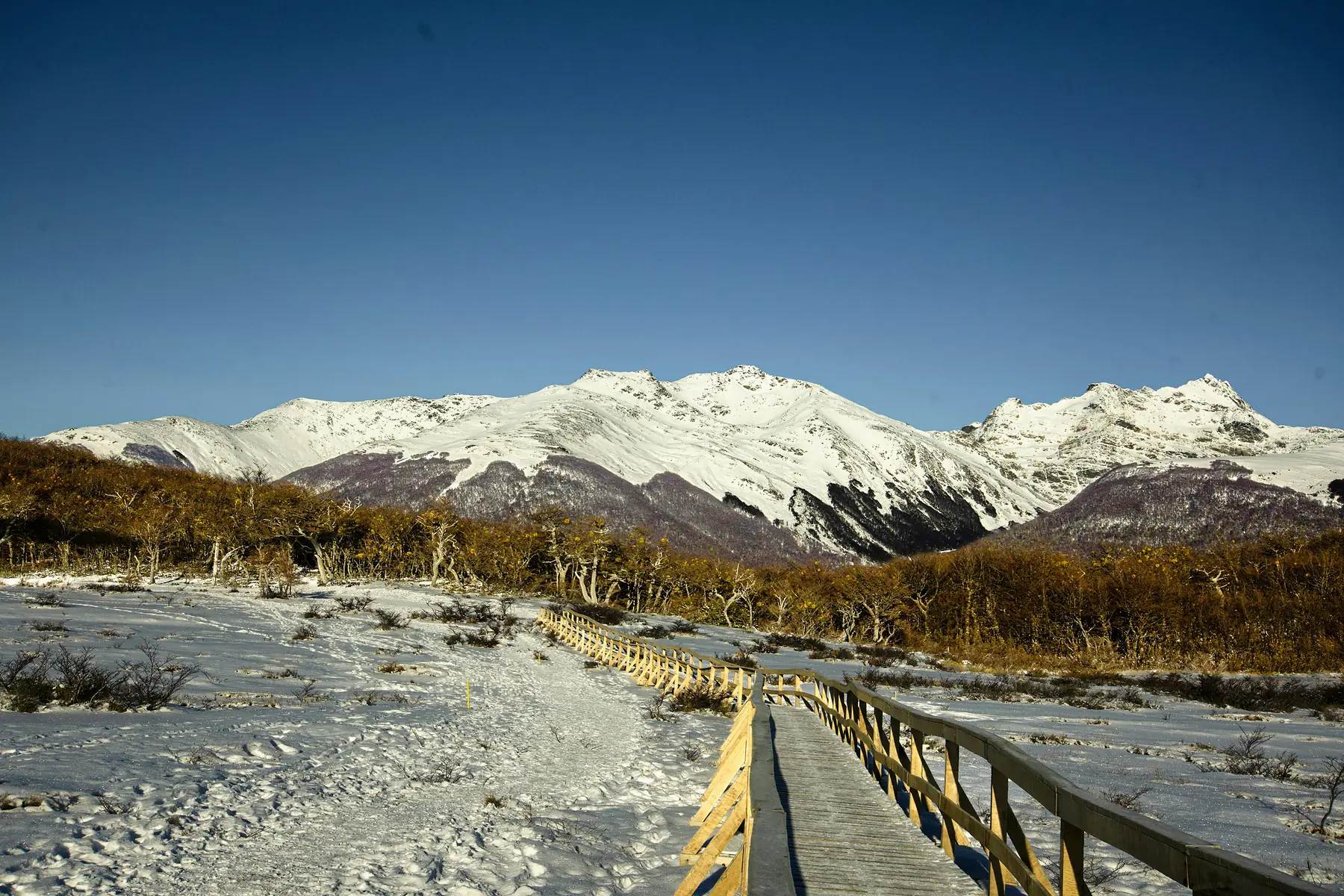
Twenty minutes west of town, Tierra del Fuego National Park protects the drowned coastline where the Andes finally sink into the sea: a landscape of black-water bays, moss-hung lenga forest, and peat bog that belongs more to the subantarctic than to the Patagonia of postcards.
Walk the Senda Costera, the park’s best trail: eight kilometres of coastal path from Ensenada Zaratiegui to Lago Roca country, tracing beaches stacked with mussel shells from ten thousand years of Yámana occupation, with the Beagle Channel glittering through the trees. Finish at Bahía Lapataia, where a wooden boardwalk delivers you to the sign marking the end of Route 3, the terminus of a road network that begins in Alaska. Buses and remises shuttle between trailheads if you would rather not retrace your steps; the nostalgic alternative is arriving on the End of the World Train, the re-created convict railway that steams into the park’s edge from its station outside town.
Watch the forest floor as much as the views: the park is the easiest place in Argentina to see the workings of the North American beavers introduced in the 1940s, from gnawed stumps and dams to drowned silver forests. Rangers run the ongoing story of their management; ask at the visitor centre. And carry your passport-stamped park ticket. Fees are payable online or at the gate, with multi-day re-entry options if you plan to return.
Day 3: Lighthouses and Sea Lions on the Beagle Channel
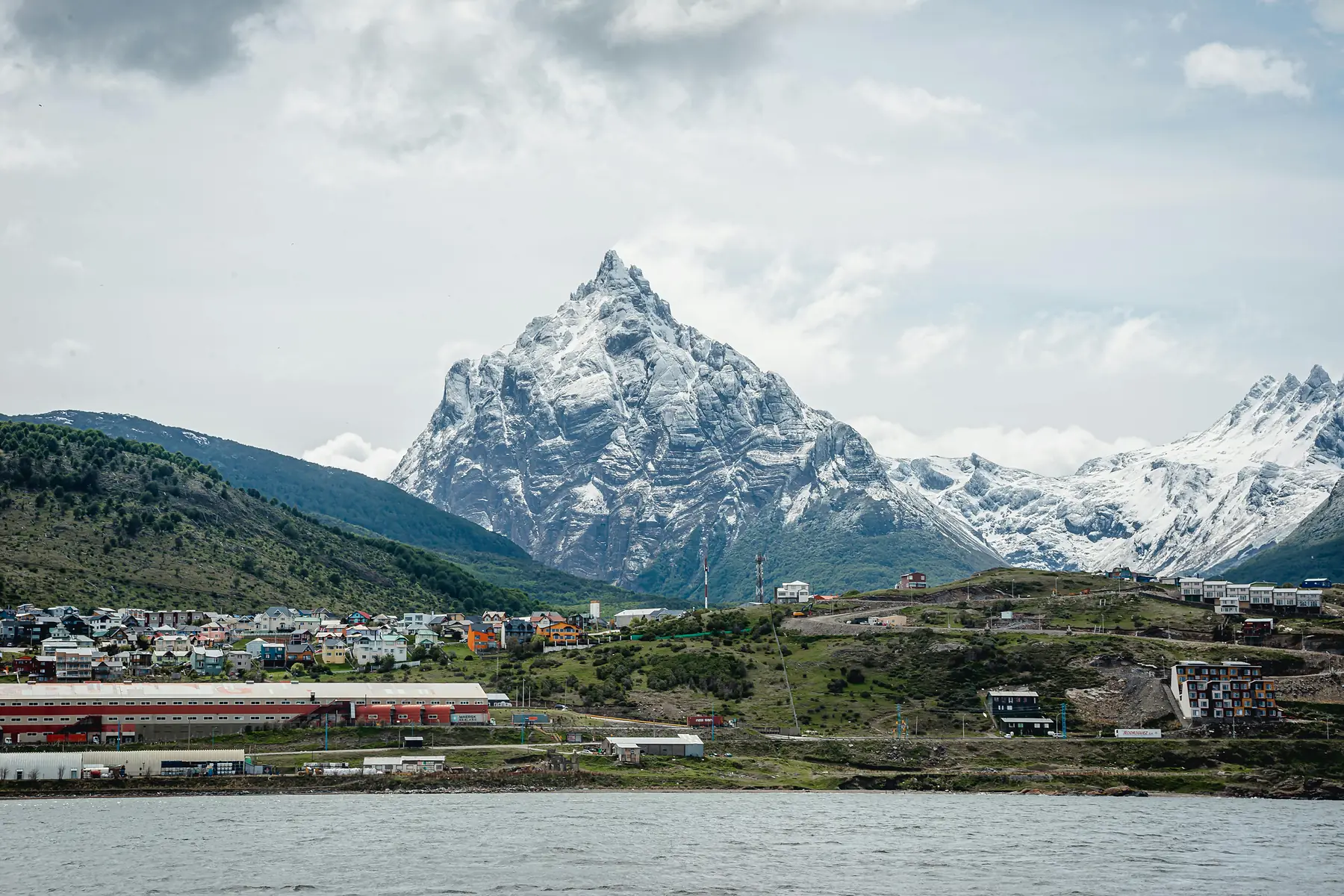
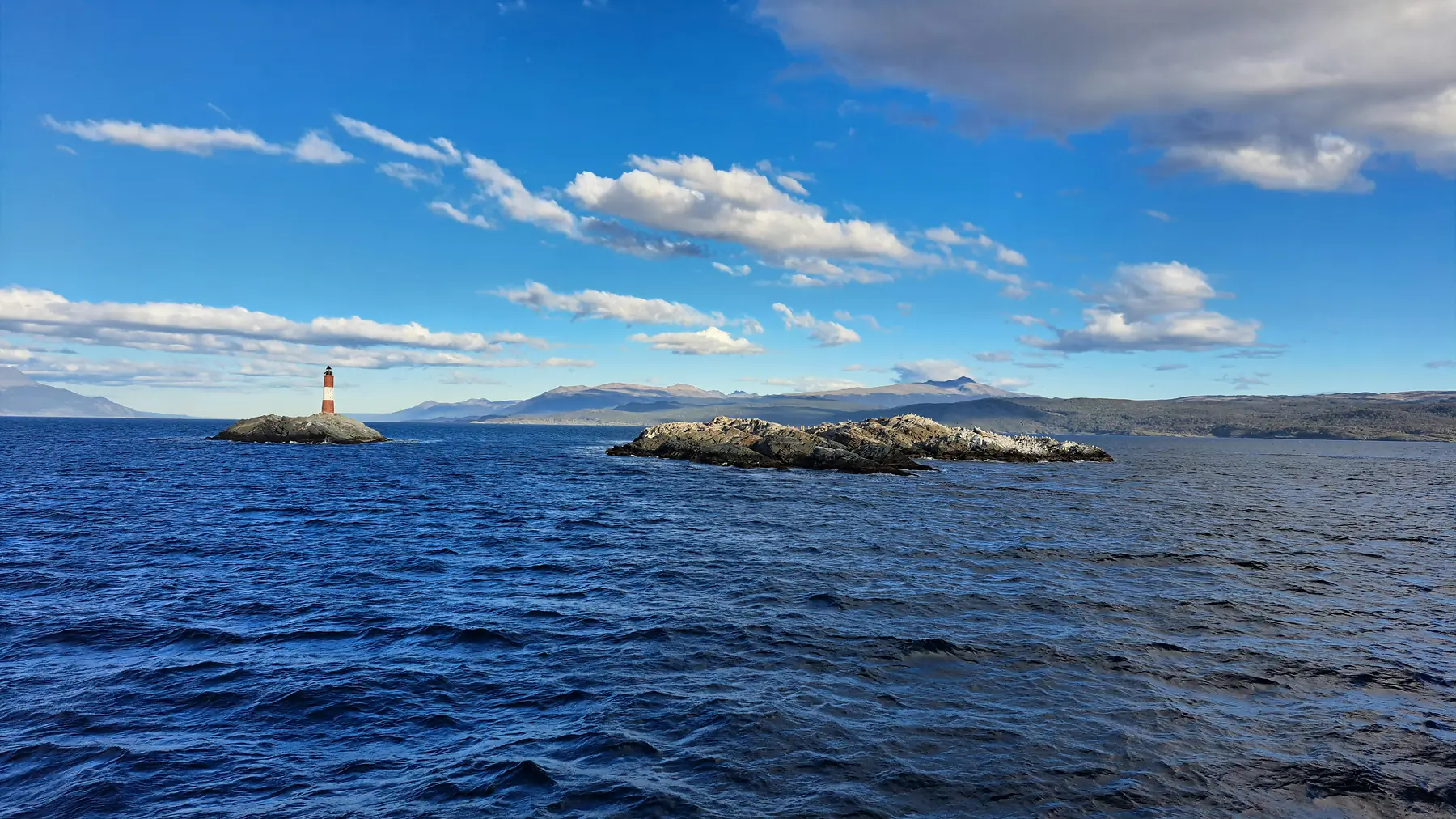
Today you get on the water that defines the city. Catamarans leave the tourist wharf morning and afternoon for the classic Beagle Channel circuit: the sea lion colonies of Isla de los Lobos, the cormorant cities of Isla de los Pájaros (their black-and-white ranks doing a convincing penguin impression), and the wave-battered Les Eclaireurs lighthouse, the red-and-white stripe that stars on every Ushuaia postcard. Most sailings run around three hours; some add a landing on Isla Bridges for a short walk among the middens and wind-shorn vegetation, which is worth the upgrade.
Layer up beyond what feels reasonable, as the open decks are Antarctic-adjacent even in February, and keep an eye on the water: dolphins are regular company, and humpback whales make occasional summer appearances in the channel. Back ashore by late afternoon, walk up to the Plaza Malvinas memorial and the port viewpoints as the expedition ships light up.
Day 4: Laguna Esmeralda, the Peat-Bog Classic
Ushuaia’s favourite day hike starts twenty minutes east of town along Route 3: the trail to Laguna Esmeralda, roughly nine kilometres round trip through the full Fuegian sampler of lenga forest, beaver dams, and open peat bog that will eat an unprepared trainer whole, ending at the lagoon itself, an opaque emerald bowl fed by the Albino glacier hanging above.
The walking is only moderately strenuous, but the mud is legendary; wear waterproof boots (rentable in town), bring poles, and pack a picnic for the lakeshore, where the silence is broken only by the glacier stream. Back in town by late afternoon, reward yourself at one of Ushuaia’s craft breweries. Beer brewed at the end of the world tastes appropriately hard-won.
Do not underestimate Fuegian trails because of their modest statistics. Laguna Esmeralda’s nine kilometres routinely take four hours because of the bog, trail-braiding, and weather swings, and the path is unmarked in stretches. Start before midday, carry warm and waterproof layers however blue the sky looks, and download the offline trail map, because afternoon cloud arrives fast off the Darwin Range.
Day 5: Estancia Harberton and the Penguins of Isla Martillo
Drive or join the tour east along one of the great coastal roads in Argentina: 85 kilometres tracing the Beagle Channel to Estancia Harberton, the island’s oldest farm, founded in 1886 by the missionary Bridges family whose dictionary of the Yámana language remains a monument of ethnography. Tour the settlement and its excellent marine-mammal museum, then board the small boat across to Isla Martillo.
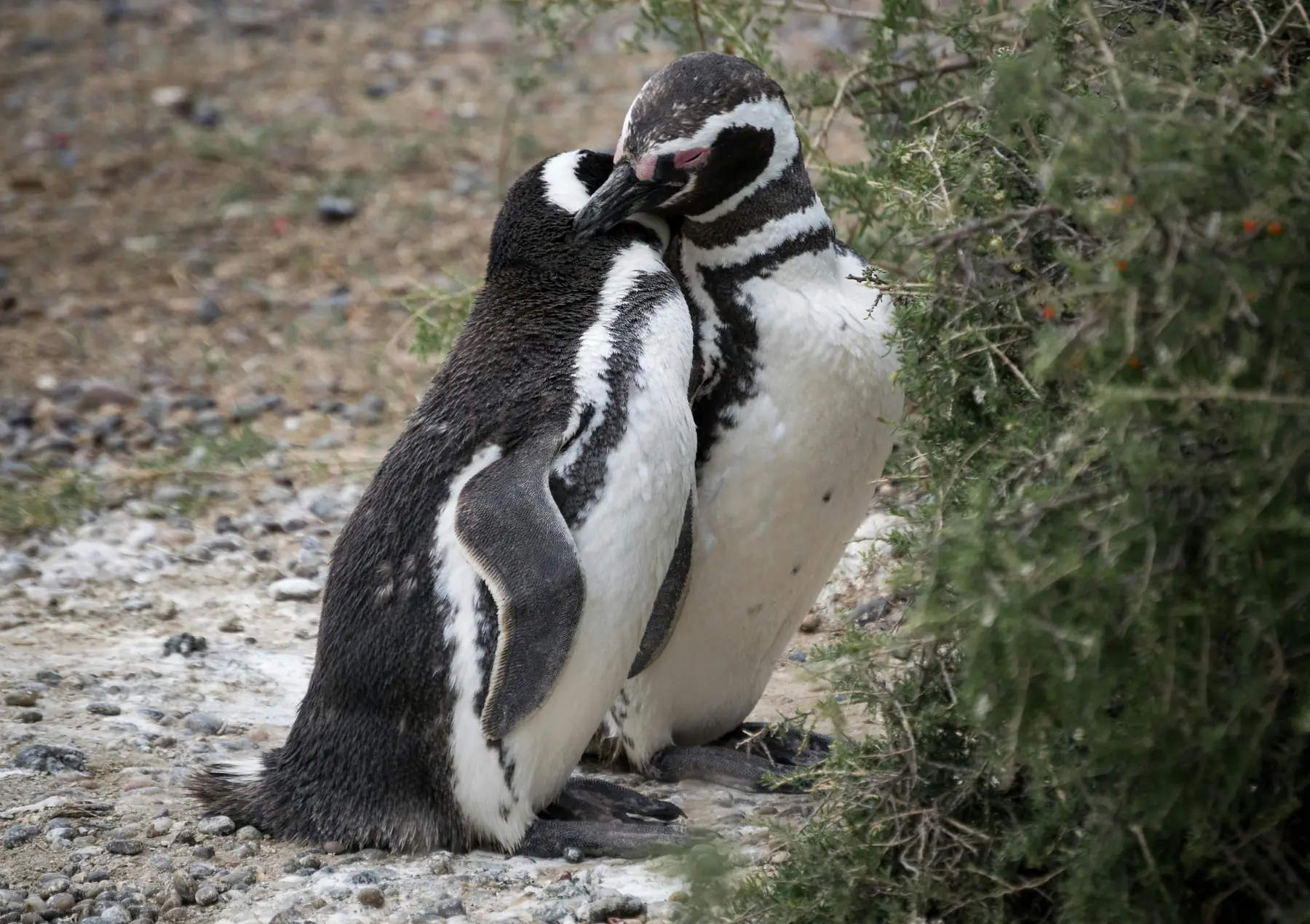
This is the day the trip has been building to: a guided walk (not a deck view, a walk) through a working colony of thousands of Magellanic penguins, with a resident group of gentoos posing at closer range than seems allowed. Groups are small, time ashore is strictly managed, and the birds’ complete indifference to human presence is the kind of wildlife encounter that recalibrates all future ones.
Day 6: The Mountain Day, Martial Glacier or Cerro Guanaco
Your final full day climbs out of the city, and doubles as the week’s weather buffer; anything the forecast cancelled earlier slots in here.
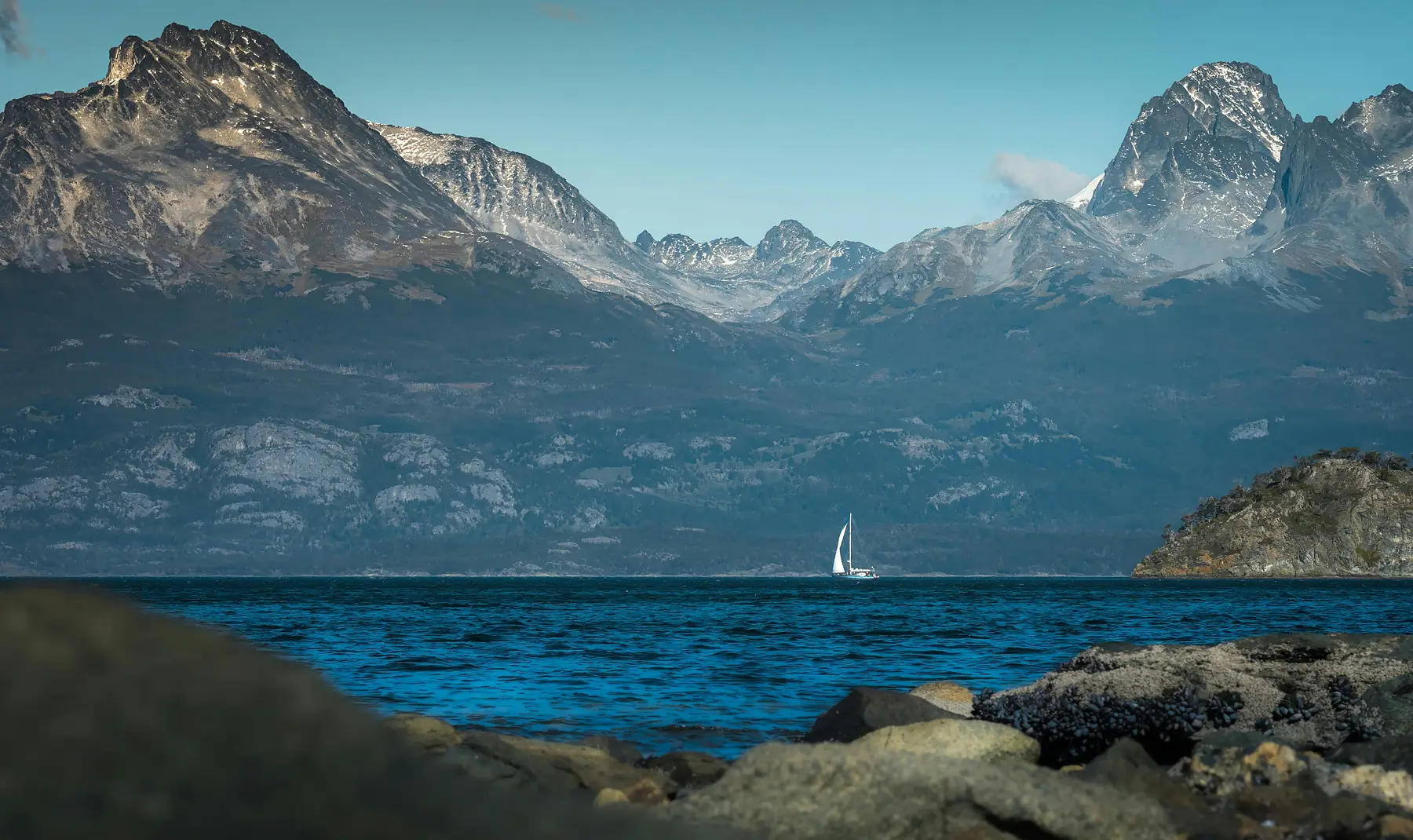
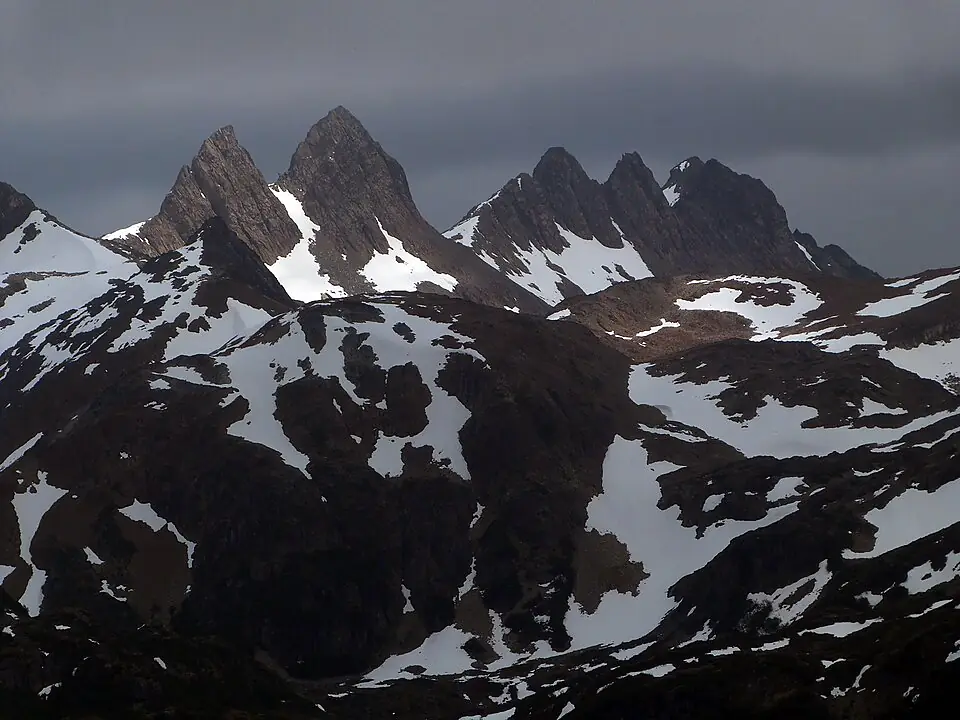
The accessible option is the Martial valley directly above town: a taxi drops you at the old ski base, from where a steady trail climbs to the shrinking Martial Glacier viewpoint in about ninety minutes, with the whole Beagle Channel unrolled at your back. It is arguably the best effort-to-view ratio in Tierra del Fuego. Strong hikers wanting a proper finale should instead return to the national park for Cerro Guanaco: a serious 970-metre ascent from Lago Roca through forest and bog to a bare summit ridge with a 360-degree panorama across the channel to Isla Navarino’s jagged Dientes range. Allow around eight hours; it is the best viewpoint in this itinerary. Whichever you choose, spend the evening on a last king-crab dinner and the southernmost sunset of your life.
Day 7: North Again
A last waterfront coffee, a photograph with the end-of-the-world sign you have been pretending to ignore all week, and the flight back to Buenos Aires. If you are connecting to an international flight, remember the two-airport trap: Ushuaia flights typically land at Aeroparque (AEP), while most long-haul departures use Ezeiza (EZE), a 45-to-90-minute transfer across the city. Build in a generous buffer or an overnight.
Practical Notes and Variations
The Antarctica Connection
Ushuaia is the departure port for the overwhelming majority of Antarctic cruises, and this itinerary pairs perfectly with one, either as acclimatisation beforehand or decompression after. Travellers with flexible schedules and strong nerves can also try for last-minute berths, sold at steep discounts in town when ships have unsold cabins; November and March offer the best odds. Our Patagonia cruises guide covers the options, from Antarctic expeditions to the fjord routes toward Cape Horn.
The Chilean Extension: Isla Navarino
Across the Beagle Channel lies Puerto Williams, Chile: technically the southernmost town in the world, and Ushuaia’s quieter rival. Small boat crossings and flights connect the two in season, and hardened trekkers come for the Dientes de Navarino circuit, the southernmost multi-day trek on earth. Allow four to six extra days and read our border crossings guide first, as schedules are weather-hostage and change annually.
The Winter Version (June to September)
Ushuaia is the one Patagonian hub that genuinely works in winter. Swap the penguins (gone) and Laguna Esmeralda (snowbound, though gorgeous by snowshoe tour) for skiing at Cerro Castor, Argentina’s most reliable snow thirty minutes from town, plus husky sledding in the Tierra Mayor valley and the Beagle Channel boats, which sail year-round. Days are short (the sun barely manages seven hours in July), which locals treat as an excuse for long dinners.
FAQ
Is Ushuaia worth a full week, or is it just a cruise stopover?
It earns the week. The common two-night stopover sees the prison museum and a boat trip and leaves, missing the national park’s coastal trail, the penguin walk at Isla Martillo (which needs a full day and advance booking), Laguna Esmeralda, and any mountain day. Ushuaia’s compensations are structural: one base, no transfers, and five genuinely distinct day trips radiating from it. If your total Patagonia time is short and you must choose between here and the Fitz Roy/Paine corridor, the trekking giants win, but as a second trip or a cruise bookend, a week here is the right length.
When can I see penguins near Ushuaia?
The Isla Martillo colony is occupied from roughly October to late March. Magellanic penguins arrive to nest in October and November, chicks hatch around December, and the colony empties as birds head to sea by early April. A small number of gentoo penguins are present through and slightly beyond that window, and the occasional king penguin turns up as a celebrity vagrant. Outside those months there are no penguin trips from Ushuaia, so winter visitors should not expect penguins, whatever a tour brochure implies.
Do I need a car in Ushuaia?
No, this is Patagonia’s most car-optional itinerary. The national park, Beagle boats, Harberton tours, and every trailhead in this week are served by tour shuttles, scheduled minibuses, or affordable taxis and remises. A one-or-two-day rental adds pleasant freedom for the Harberton coast road and trailhead timing, but parking, one-way logistics, and winter conditions make the shuttle-and-taxi approach genuinely easier for most visitors.
How cold is Ushuaia in summer?
Cooler than almost everyone expects. Summer (December to February) days typically peak between 10°C and 15°C, with wind chill on the water and above the treeline making it feel far less. Rain, sun, and graupel can share a single afternoon. Pack as for Scottish autumn: waterproof shell, warm mid-layer, hat and gloves year-round, and sunglasses for the fierce southern light. The compensation is daylight; in midsummer the sky stays usable past 22:00.
Can I combine Ushuaia with El Calafate and El Chaltén?
Easily, and it is the classic pairing. Direct flights link Ushuaia and El Calafate in about 90 minutes (frequency is seasonal, so check your dates), letting you bolt this week onto the glacier-and-granite circuit without backtracking through Buenos Aires. With 14 or more total days, fly into one and out of the other; our 20-day Patagonia itinerary shows the full southern link-up including the W Trek.
Is the End of the World Train worth it?
Take it for what it is: a beautifully run, unashamedly touristic heritage ride recreating the convict logging railway, with commentary and a stop at the Macarena waterfall, rather than a means of transport. Families and rail romantics love it; hikers on a budget can skip it without regret, as the best of the national park (the Coastal Trail and Lapataia) lies beyond the railhead anyway. If you ride, book the morning departure and continue into the park by bus rather than returning immediately.
How far in advance should I book the penguin walk and accommodation?
For the December-to-February peak, book the Isla Martillo penguin walk two to four weeks ahead (it is capacity-capped by permit, and slots vanish when cruise ships schedule shore excursions), and accommodation one to three months ahead, since Ushuaia’s hotel stock is tight and cruise turnaround days distort prices citywide. In the shoulder months, a week’s notice usually suffices for both. The Beagle Channel boats and national park need only a day or two, and mountain trails need no booking at all.