

The best way to get to Torres del Paine is to fly from Santiago to Puerto Natales and take a two-hour bus directly to the park gates. While the region is geographically isolated in the deep south of Chilean Patagonia, the transport infrastructure is a well-oiled machine designed to move thousands of hikers from the capital to the trailheads with high efficiency.
Planning your arrival involves a multi-stage journey of flights and buses. For most travelers, this means connecting through Santiago before choosing between two gateway airports in the Magallanes region. Whether you are arriving from northern Chile, crossing the border from Argentina, or taking the scenic ferry through the fjords, your logistics will almost certainly center on the gateway town of Puerto Natales.
Transport at a Glance
- Primary Gateway: Puerto Natales (PNT), 75 miles from the park.
- Secondary Gateway: Punta Arenas (PUQ), 155 miles from the park.
- Flight Time: Approximately 3 hours 15 minutes from Santiago.
- Bus Duration: 2 hours from Puerto Natales; 3 - 4 hours from Punta Arenas.
- Peak Season: October through March (daily flights and buses).
The Two Gateways: Puerto Natales vs. Punta Arenas
To reach Torres del Paine National Park, you must first reach one of two cities in southern Chile. Choosing the right one depends entirely on your budget, your timing, and the time of year you travel.
Puerto Natales (PNT) is the closest town to the park, located just 75 miles (120 km) from the Laguna Amarga entrance. The Teniente Julio Gallardo Aerodrome is small and operates primarily on a seasonal basis, with the highest frequency of flights occurring between October and March. Landing here is the most efficient option, as you are only a two-hour bus ride or a 90-minute private transfer away from the park.
Punta Arenas (PUQ) is the regional hub, located about 155 miles (250 km) south of Puerto Natales. The Carlos Ibáñez del Campo Airport is much larger, operates year-round, and generally offers more competitive pricing due to higher flight frequency. However, flying here necessitates a transit of roughly 3 hours - a bus ride from Punta Arenas to Puerto Natales before you can even begin the final leg to the park.
If you fly into Punta Arenas, you do not need to go into the city center to catch your bus. Major operators like Bus-Sur allow you to board the bus directly at the PUQ airport terminal for the journey to Puerto Natales, saving you at least 90 minutes of backtracking.
Flying to Torres del Paine: Routes and Airlines
Almost all international travelers will first land at Comodoro Arturo Merino Benítez International Airport (SCL) in Santiago. From there, you will transfer to a domestic flight heading south.
Three main airlines service the region - LATAM, Sky Airline, and JetSmart. LATAM typically offers the most reliable service and higher baggage allowances, while Sky and JetSmart are low-cost carriers. If you are a hiker carrying a heavy 60L pack with camping gear, pay close attention to baggage tiers during booking. The “Basic” or “Light” fares on low-cost carriers often exclude checked bags, and gate fees can be significant.
Direct flights from Santiago to Puerto Natales (PNT) take roughly 3 hours and 15 minutes. As of the 2026/27 season, these are seasonal, typically running from October through March. Outside of these months, you must fly into Punta Arenas. For those exploring the Lake District before heading south, there are also connecting flights from Puerto Montt (PMC) to both southern gateways.
Sky Airline and JetSmart have strict weight limits for carry-on items. If your trekking pack is your only bag, ensure it meets the dimensions for a “checked bag” rather than trying to squeeze it into an overhead bin, as Patagonia flights are frequently at 100 percent capacity.
The Final Leg: Getting from Puerto Natales to the Park
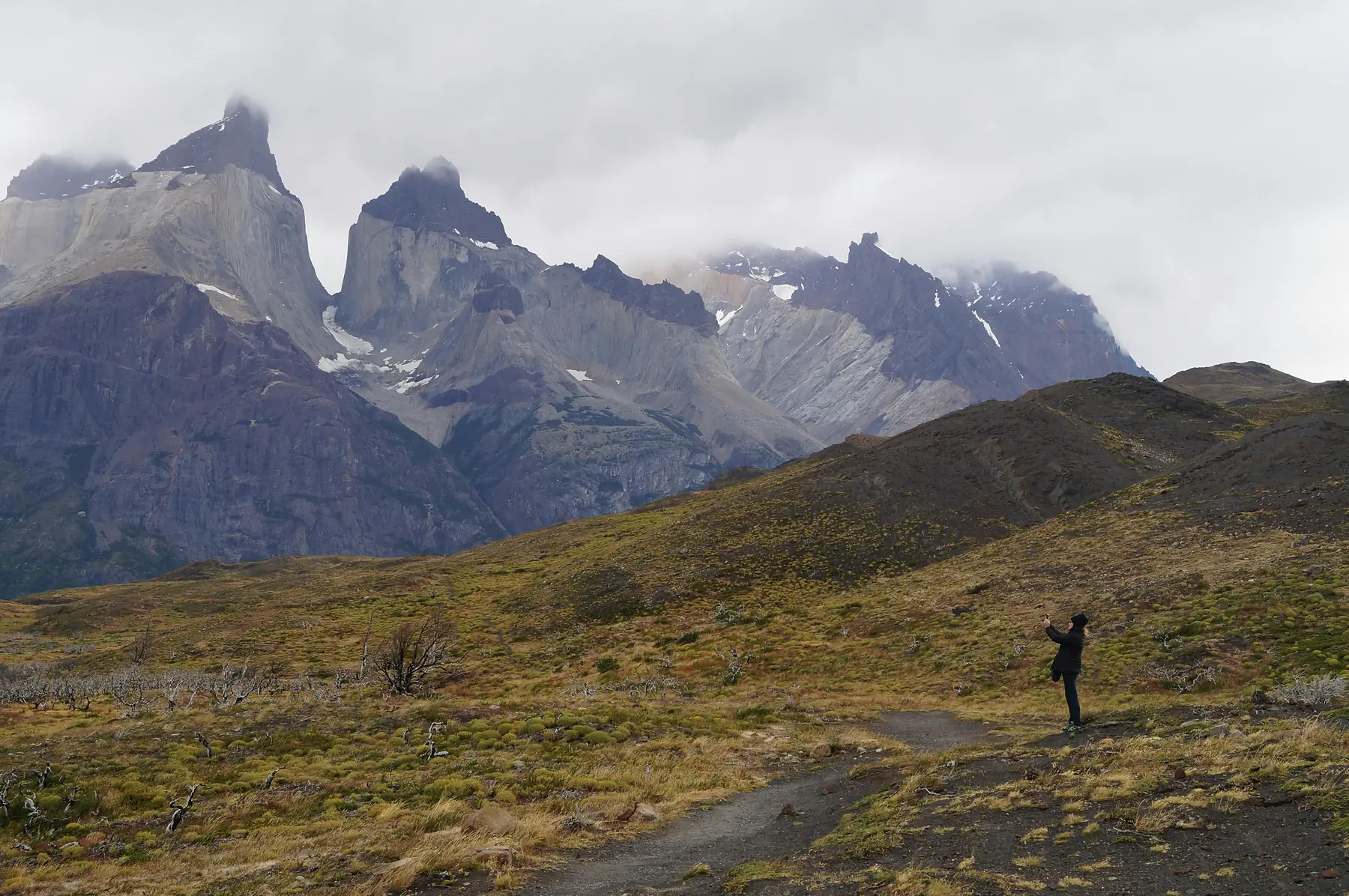
Once you reach Puerto Natales, the final leg of the journey is a 2-hour drive to the park. The vast majority of trekkers use the public bus system, which operates out of the Rodoviario (Bus Terminal) located on Avenida España.
Three reliable companies dominate this route - Bus-Sur, Buses Gomez, and Buses Juan Ojeda. During the 2026/27 high season, buses typically depart at 7:00, 11:30, and 14:30, though schedules are subject to change and should be verified at the time of booking.
When you buy your ticket, you must know which park entrance you need. The bus makes two primary stops:
- Laguna Amarga: The main entrance for those starting the W Trek (East to West) or the O Circuit. This is where you register your permit and pay park fees.
- Pudeto: The stop for the Lake Pehoé catamaran, which takes hikers to the Paine Grande ranger station to start the W Trek (West to East).
For details on the catamaran schedules or how to reach specific trailheads once the bus drops you off, refer to our guide on getting around Torres del Paine.
The bus from Puerto Natales to the park often sells out 2 - 3 days in advance during January and February. Use the Bus-Sur website or an aggregator like Busbud to secure your seat as soon as your flights are confirmed.
Summary Route: The Most Common Path
For most international visitors, the journey follows a specific four-step sequence. If you are planning your first trip, this is the most reliable itinerary to follow:
- International Arrival: Fly into Santiago (SCL).
- Domestic Connection: Fly from Santiago to Puerto Natales (PNT) - or Punta Arenas (PUQ) if PNT is sold out or it is the low season.
- Gateway Transit: If you landed in Punta Arenas, take the 3-hour bus to the Puerto Natales Rodoviario.
- The Park Bus: Take the final 2-hour bus from Puerto Natales to either Laguna Amarga or Pudeto.
Choosing where to start your trek is a critical decision that dictates which bus stop you need. For a breakdown of the best base camps and entry points, see our guide on where to stay in Torres del Paine.

How to Get to Torres del Paine from Argentina (El Calafate)
Many travelers combine Torres del Paine with a visit to the Perito Moreno Glacier in El Calafate. Crossing the border between the two is straightforward but time-consuming.
The cross-border bus from El Calafate to Puerto Natales takes between 5 and 7 hours. This variability is almost entirely due to the queue at the Don Guillermo (Cerro Castillo) border crossing. Bus-Sur and Cootra are the primary operators for this route.
You cannot take a bus directly from El Calafate into the national park; you must first go to Puerto Natales and then take a secondary bus back toward the park. If you are debating between starting your trip in Chile or Argentina, it may help to compare Torres del Paine and El Chaltén to understand the logistical flow of each region.
Chilean customs (SAG) are incredibly strict regarding fresh food and organic matter. Do not attempt to bring fruit, vegetables, unsealed nuts, or honey across the border from Argentina. You will be fined, and your expensive trekking snacks will be confiscated.
Alternative Routes: The Navimag Ferry and Rental Cars
If you have time to spare and want to see the fjords of the Magallanes region, the Navimag Ferry offers a “slow travel” alternative. This is a 4-day, 3-night journey that departs from Puerto Montt and winds through the Patagonian channels before docking in Puerto Natales. It is a cargo-style ferry with passenger cabins, offering a perspective of the coastline that is impossible to see by road or air.
For those who prefer independence, you can rent a car in Punta Arenas or Puerto Natales. The drive from Punta Arenas to the park via Route 9 is paved and well-maintained, taking about 5 hours in total. While driving offers the freedom to stop at viewpoints like Silla del Diablo, it is often unnecessary if you are only there to hike the W or O treks.
For more information on the legal requirements and logistics of driving in the region, consult our guide to renting a car in Patagonia.

Seasonal Transport Considerations
Transport availability in Torres del Paine is dictated by the seasons. The “well-oiled machine” only runs at full capacity during the warmer months.
- High Season (October - March): All flight routes are active, and buses run multiple times daily. Booking weeks in advance is mandatory.
- Shoulder Season (April and September): Flight frequency to Puerto Natales drops significantly, and some bus operators reduce their daily departures.
- Winter (May - August): The Puerto Natales airport usually closes to commercial traffic. Public buses into the park continue to operate but at a significantly reduced frequency (typically once or twice daily). During this time, transport is often supplemented by private transfers arranged through the few lodges that remain open.
If you have your transport sorted and are ready to start planning the specifics of your hike, your next step is our complete guide to the W Trek.
FAQ
What is the closest airport to Torres del Paine? The closest airport to Torres del Paine is the Teniente Julio Gallardo Aerodrome (PNT) in Puerto Natales, located about 75 miles (120 km) from the park entrance.
How do I get from Punta Arenas Airport to Torres del Paine? From Punta Arenas Airport, you can take a direct 3-hour bus to Puerto Natales (skipping the city center) and then transfer to a secondary 2-hour bus into Torres del Paine National Park.
Can I take a bus from El Calafate to Torres del Paine? Yes, you can take a daily bus from El Calafate to Puerto Natales, which takes about 5 - 7 hours including the border crossing, and then catch a local bus into Torres del Paine.
Is there a train to Torres del Paine? No, there are no train services to Torres del Paine or within the Magallanes region; all overland travel is conducted via bus, private transfer, or rental car.
How long is the flight from Santiago to Torres del Paine? A direct flight from Santiago to the Puerto Natales airport (the closest to Torres del Paine) takes approximately 3 hours and 15 minutes.
Do I need to book the bus to Torres del Paine in advance? Yes, during the high season (October to March), it is essential to book your bus tickets from Puerto Natales to Torres del Paine at least several days in advance as they frequently sell out.