
Renting a car is the single best way to experience Patagonia if you value total flexibility and access to remote trailheads that bus schedules simply cannot reach. While the logistics of border crossings and gravel roads require careful planning, the ability to stop for a sunrise at the El Chaltén curve or explore the hidden corners of the Carretera Austral makes a self-drive trip the superior choice for most independent travelers.
As you plan your 2026 or 2027 journey, understanding the interplay between Chilean and Argentine rental markets is essential. This guide covers the specific permits, vehicle types, and safety protocols required to navigate the southern tip of the Andes safely and legally. For a broader look at all your transport options, see our guide on getting around Patagonia.
Why Renting a Car is the Best Way to See Patagonia
The primary advantage of a rental car in Patagonia is the “Freedom Factor,” allowing you to dictate your own pace in a landscape defined by vast distances. While the regional bus network is reliable between major hubs, it tethers you to rigid schedules and drops you far from the most dramatic photography spots and remote estancia stays.
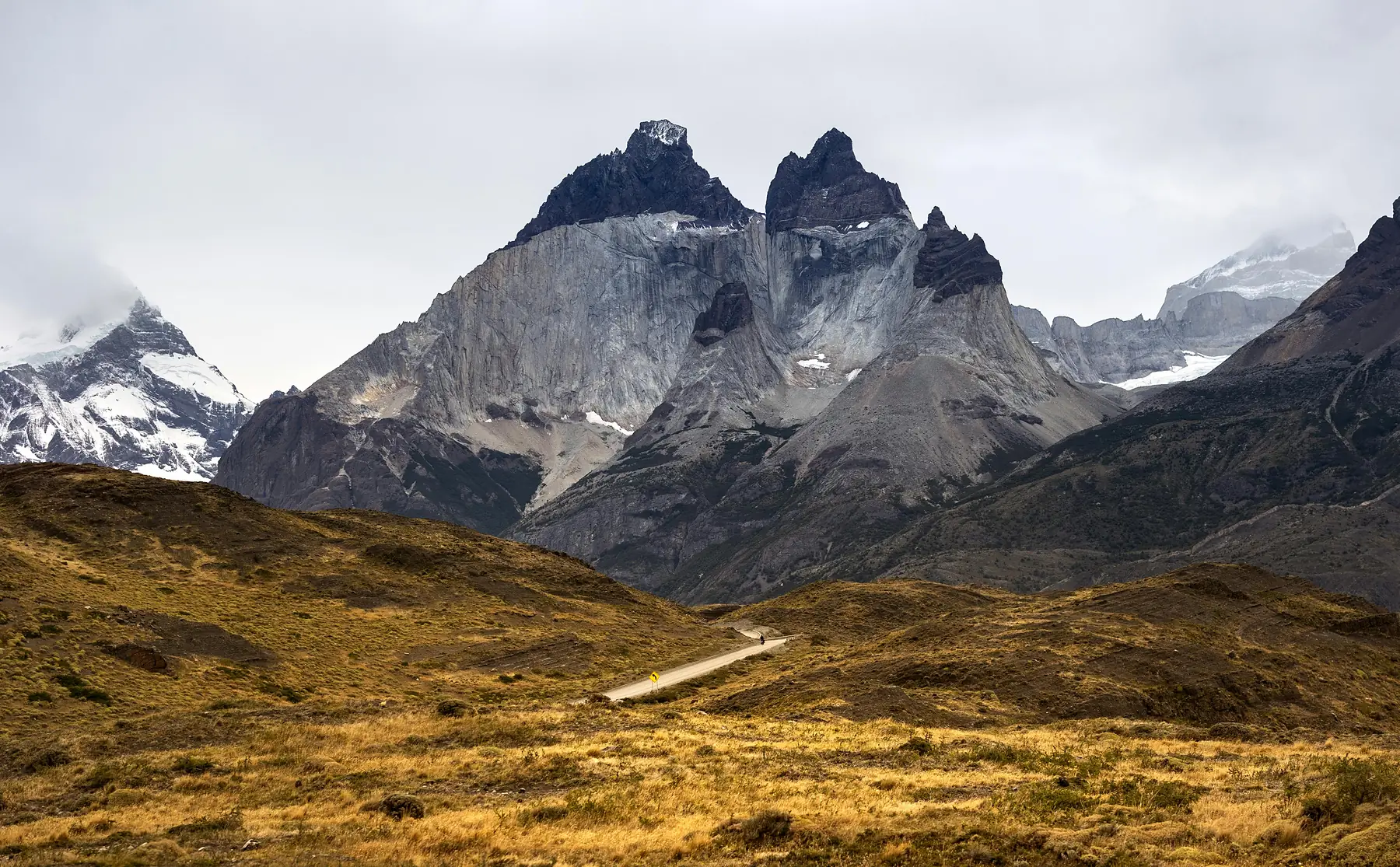
With your own wheels, you can pull over the moment a herd of guanacos appears against the backdrop of the Torres del Paine massifs or when the light hits the granite spires of Fitz Roy just right. You effectively save between four and six hours on every major transit leg by eliminating the need to arrive at bus terminals early, waiting for connections, or taking secondary shuttles to trailheads.
For groups of three or more, renting a car often becomes more cost-effective than purchasing multiple individual bus tickets, especially when factoring in the “hidden” costs of taxis to and from remote lodges. More importantly, it opens up regions like the southern Carretera Austral, where public transport is infrequent and often fully booked weeks in advance. If you are ready to map out your path, our Patagonia road trip itinerary provides a tested day-by-day route.
Choosing Your Rental Hub: Chile vs. Argentina
The most important decision in your planning process is where to pick up and drop off your vehicle, as this dictates your flight path and your overall budget. You must choose a hub within the country where you intend to spend the most time or where the rental inventory best matches your needs.
Chilean Hubs
- Punta Arenas: This is the primary rental capital of southern Chile. It offers the widest selection of vehicles, the most competitive pricing, and the highest volume of 4x4 inventory.
- Puerto Natales: Convenient for those heading straight to Torres del Paine, but stock is significantly more limited and prices are often 20-30% higher than in Punta Arenas.
Argentine Hubs
- El Calafate: The essential base for Los Glaciares National Park. It has a robust rental market, though prices can fluctuate based on the volatility of the Argentine Peso.
- Bariloche: The gateway to the northern Lake District. It is ideal for those planning a northern loop but is a multi-day drive from the deep south.
The One-Way Rental Myth
It is a common misconception that you can pick up a car in Chile and drop it off in Argentina. Due to complex customs laws regarding the permanent importation of vehicles, this is currently impossible. You must return the vehicle to the country where it is registered. If you wish to see both countries, you must plan a “Grand Loop” that brings the car back across the border to its origin.
During the peak season (December through February), you should book your vehicle at least six to eight months in advance. This is especially critical if you require an automatic transmission, as these make up less than 10% of the regional fleet.
The Border Crossing Permit (The “Permiso”)
The single most critical logistical hurdle for a Patagonia road trip is the Permiso Internacional. This is a notarized set of documents that grants the rental vehicle legal permission to exit its home country and enter the neighbor.
You cannot simply show up at the rental counter and ask for this. The paperwork involves a notary and official customs registration, which takes time. Most agencies require a lead time of 7-10 days to prepare the permit. If you fail to arrange this in advance, you will be legally barred from crossing the border, which can effectively ruin a cross-border itinerary.
Border Permit Essentials
- Lead Time: 7-10 days (minimum)
- Cost: $120 - $180 USD (as of 2026/27 season)
- Validity: Typically 30 days
- Required Info: Full passport details and driver’s license of all intended drivers
Beyond the paperwork, Argentine law requires that the vehicle’s VIN (Vehicle Identification Number) be engraved on the windows. While most major rental agencies in Chile handle this automatically for cars destined for Argentina, you should explicitly verify this during pickup. You must also ensure your rental includes the “Argentina Kit,” which consists of two reflective triangles, a first aid kit, a fire extinguisher, and often a tow bar.
Vehicle Selection: 4x4 vs. 2WD and Manual vs. Auto
Choosing the right vehicle is less about the “cool factor” of a 4x4 and more about ground clearance and transmission comfort.
Do You Really Need a 4x4?
For the “Main Loop” consisting of Ruta 9 in Chile and the paved sections of Ruta 40 in Argentina, a standard 2WD vehicle is sufficient. However, a 4x4 is highly recommended, and sometimes essential, for the Carretera Austral or the remote tracks of Tierra del Fuego. Even if you don’t need four-wheel drive for traction, the high clearance of an SUV like a Renault Duster or Toyota Rav4 is invaluable for navigating deep potholes and “ripio” (loose volcanic gravel) without damaging the undercarriage.
The Manual Default
You should assume your rental will be a manual (stick-shift) unless you specifically pay a premium for an automatic. If you are not comfortable driving a manual on steep, unpaved, and wind-swept roads, you must book your automatic vehicle the moment your flights are confirmed.
Always inspect your spare tire before leaving the rental lot. Ensure it is a full-size spare and not a “donut” or space-saver tire. Patagonia’s sharp volcanic gravel can shred a tire beyond repair, and a temporary spare is not rated for the long distances between service towns.
Driving Conditions & Road Safety in Patagonia
Driving in Patagonia is an exercise in patience and vigilance. The environment is spectacular but contains hazards that are unfamiliar to many urban drivers.
The Wind Patagonia is famous for sustained winds that can exceed 80-100 km/h. When opening your car door, always use two hands and hold it firmly; the wind is strong enough to catch the door and bend the hinges backward, a common and expensive rental damage claim. If you are driving a high-profile vehicle like a van or a tall SUV, be prepared for significant buffeting on exposed pampas roads.
Gravel Roads (Ripio) Large sections of the interior, including the road to Estancia Cristina or parts of the Carretera Austral, consist of ripio. These loose stones act like marbles under your tires. Keep your speed below 60 km/h on these sections. High speeds on gravel are the leading cause of roll-over accidents and cracked windshields from stones kicked up by passing trucks.
Wildlife and Potholes The “Guanaco Jump” is a genuine hazard. These large camelids frequently leap across the road without warning. Because of this, and the presence of “pothole fields” (particularly on the section of Ruta 40 between El Cerrito and Tapi Aike), you should never drive at night. Visibility is poor, and hitting a guanaco or a deep pothole in a remote area can leave you stranded for hours. For more on regional hazards, consult our guide on safety in Patagonia.
Fuel Strategy: The “Nafta” Guide
In Patagonia, a fuel station is not just a convenience; it is a critical waypoint. Fuel shortages are rare but possible during the peak weeks of January, and the distances between stations can exceed the range of a small car’s tank.
The “Half-Tank Rule” is the golden rule of Patagonian driving: never pass a fuel station without topping off if your tank is half empty. In Argentina, fuel is called Nafta (Super or Premium), while in Chile, it is Bencina (93, 95, or 97 octane). Diesel is widely available and usually labeled as Gasoil or Diesel.
While major stations in cities like Punta Arenas or El Calafate accept credit cards, many remote stations in places like El Chaltén or Tres Lagos may only accept local cash (Pesos) if their internet connection is down. Always carry enough cash to cover at least one full tank of fuel.
For a detailed breakdown of how to manage your travel funds and where to find the best exchange rates, read our guide on Patagonia currency and money.
Insurance and Excess: Protecting Your Deposit
Rental insurance in South America can be confusing due to the high “Excess” (deductible) amounts. When you pick up your car, the agency will place a hold on your credit card, typically ranging from $1,500 to $3,000 USD for SUVs (as of 2026/27 season). This is to cover potential damages not included in the basic insurance.
Credit Card Coverage Many premium credit cards offer rental car insurance (CDW). While this can save you money, be aware that if damage occurs, the rental company will charge your card immediately. You must then file a claim with your credit card provider to be reimbursed. This requires meticulous paperwork and can take months.
Gravel and Windshield Protection Standard insurance often excludes damage to the windshield or tires caused by gravel. Given the prevalence of ripio, we strongly recommend purchasing the supplemental “Gravel Protection” locally. It is a small daily fee that prevents a $500 windshield replacement bill from a single stray stone. For broader coverage beyond the vehicle, see our Patagonia travel insurance guide.
Crossing the Border: Step-by-Step Logistics
The physical act of crossing the border with a rental car is straightforward as long as your paperwork is in order. You will generally encounter two separate stations, the “Exit” station of the country you are leaving and the “Entry” station of the country you are joining.
When you arrive at the border, you must present the vehicle’s Permiso Internacional along with your passport and driver’s license. The customs officer (Aduana) will stamp the permit to track the vehicle’s movement. For a full walkthrough of the human side of this process, including visa requirements and PDI forms, visit our border crossings guide.
Chile has extremely strict phytosanitary rules (SAG). You are prohibited from bringing any fresh fruit, vegetables, honey, unlabelled nuts, or raw meat into Chile from Argentina. If you are caught with an apple in your glove box, you can face immediate fines starting at $200 USD.
The process can take anywhere from 30 minutes to 3 hours. The longest delays occur when several large tour buses arrive simultaneously. If you see a bus pulling into the border complex, try to get to the Aduana window before the line of 40+ passengers forms.
To start planning your specific route and see how these border crossings fit into a larger journey, explore our recommended itineraries.
FAQ
QUESTION: Can I rent a car in Chile and drive to Argentina? ANSWER: Yes, but you must request a notarized permit (Permiso Internacional) from your rental company at least 7-10 days before your trip. This permit carries an additional fee and is required for the vehicle to legally cross the border.
QUESTION: Do I need a 4x4 for a Patagonia car rental? ANSWER: A 4x4 is not necessary for the main paved roads like Ruta 40, but a high-clearance vehicle is recommended for the gravel sections of the Carretera Austral. Most travelers find that a 2WD SUV offers the best balance of comfort and capability for the region’s potholes.
QUESTION: Is an International Driving Permit required for Patagonia car rental? ANSWER: Generally, no; a valid license from your home country is sufficient as long as it uses the Roman alphabet, though an IDP is recommended for ease of communication with police. It acts as an official translation of your existing license.
QUESTION: What is the minimum age for Patagonia car rental? ANSWER: The minimum age to rent a car in both Chile and Argentina is typically 21, though drivers under 25 may face additional daily “young driver” fees. Some premium vehicle categories may require the driver to be at least 25 years old.
QUESTION: Can I drop off my Patagonia rental car in a different city? ANSWER: One-way rentals are possible within the same country for a significant “drop-off fee,” but you cannot drop off a Chilean car in Argentina or vice versa. You must return the vehicle to the country where the rental originated.
QUESTION: Is it safe to drive a rental car in Patagonia at night? ANSWER: It is strongly discouraged to drive at night in Patagonia due to high wildlife activity (guanacos) and the risk of hitting deep potholes on unlit roads. Most accidents involving rental cars occur during twilight or nighttime hours.