In Patagonia, trekking poles are not an optional accessory - they are essential safety equipment required to navigate 100km/h winds and the unstable glacial scree of the Southern Andes. For most hikers, the best all-around choice for the 2026/27 season is the Black Diamond Pursuit, which balances the durability of 7000-series aluminum with the comfort of ergonomic cork grips.
Whether you are tackling the W Trek’s granite slopes or the technical moraines of the Huemul Circuit, your poles act as your third and fourth legs. They provide the lateral stability needed when a sudden Patagonian “williwaw” (gust) threatens to knock you off balance while carrying a full multiday pack. This guide breaks down the top-performing poles specifically tested for the unique stresses of the Chilean and Argentine wilderness.
At a Glance: Patagonia Pole Essentials
- Top Overall Pick: Black Diamond Pursuit Trekking Poles
- Top Budget Pick: Forclaz MT100 Hiking Pole
- Top W Trek Pick: Fizan Compact 3
- Top Comfort Pick: LEKI Makalu Lite AS
- Recommended Features: Durable aluminum or a reinforced carbon lower shaft, adjustable length, reliable lever locks, comfortable grips and rubber tips for trail protection
Recommended Trekking Poles for Patagonia
The price markers compare each pair with the rest of the category, with $ budget, $$ mid-range and $$$ premium. Check whether a pole is sold individually, choose a length range that fits you, and carry rubber tips where they are required for trail protection.
Forclaz MT100 Hiking Pole
A very inexpensive aluminum pole sold individually, so budget for two. Its simple push-button mechanism and low replacement cost suit infrequent use, while a pair adds useful balance on maintained W Trek descents. Adjustment is coarse and the grip, strap and packed size are basic.

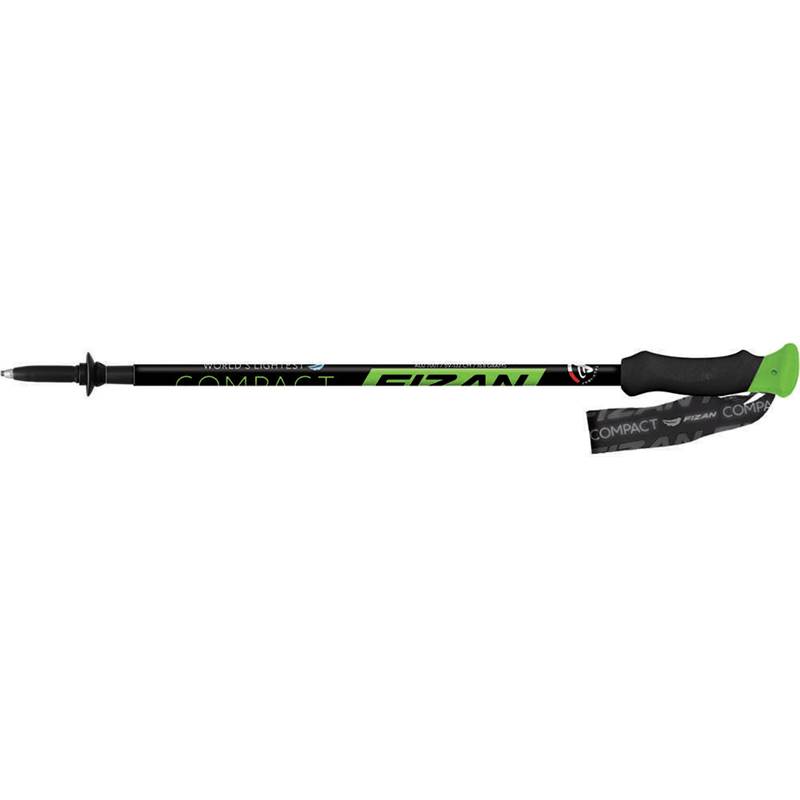
Fizan Compact 3
An unusually light aluminum pair at a moderate price. Its slim three-section shaft packs reasonably small while avoiding the cost and brittleness concerns of ultralight carbon, making it the strongest value W Trek choice. The slender shaft and compact grip feel less confidence-inspiring under very heavy loads.
Black Diamond Trail Back Trekking Poles
A dependable general-purpose aluminum pair with uncomplicated controls. External FlickLock adjustment is glove-friendly and easier to service than hidden twist mechanisms, making it a sensible first full-trek pole for mixed W or O terrain. It is heavier and packs longer than folding or carbon alternatives.
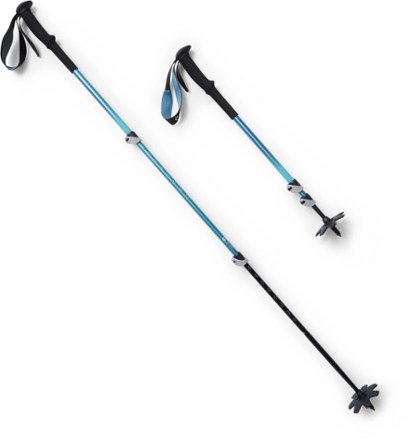
Black Diamond Trail Trekking Poles
A refined aluminum all-rounder with a comfortable extended grip. Dual external locks simplify adjustment and the grip extension helps on steep contouring terrain, suiting trekkers who want one robust pair for both the W and O. The telescoping design is bulky on flights and when lashed to a small pack.
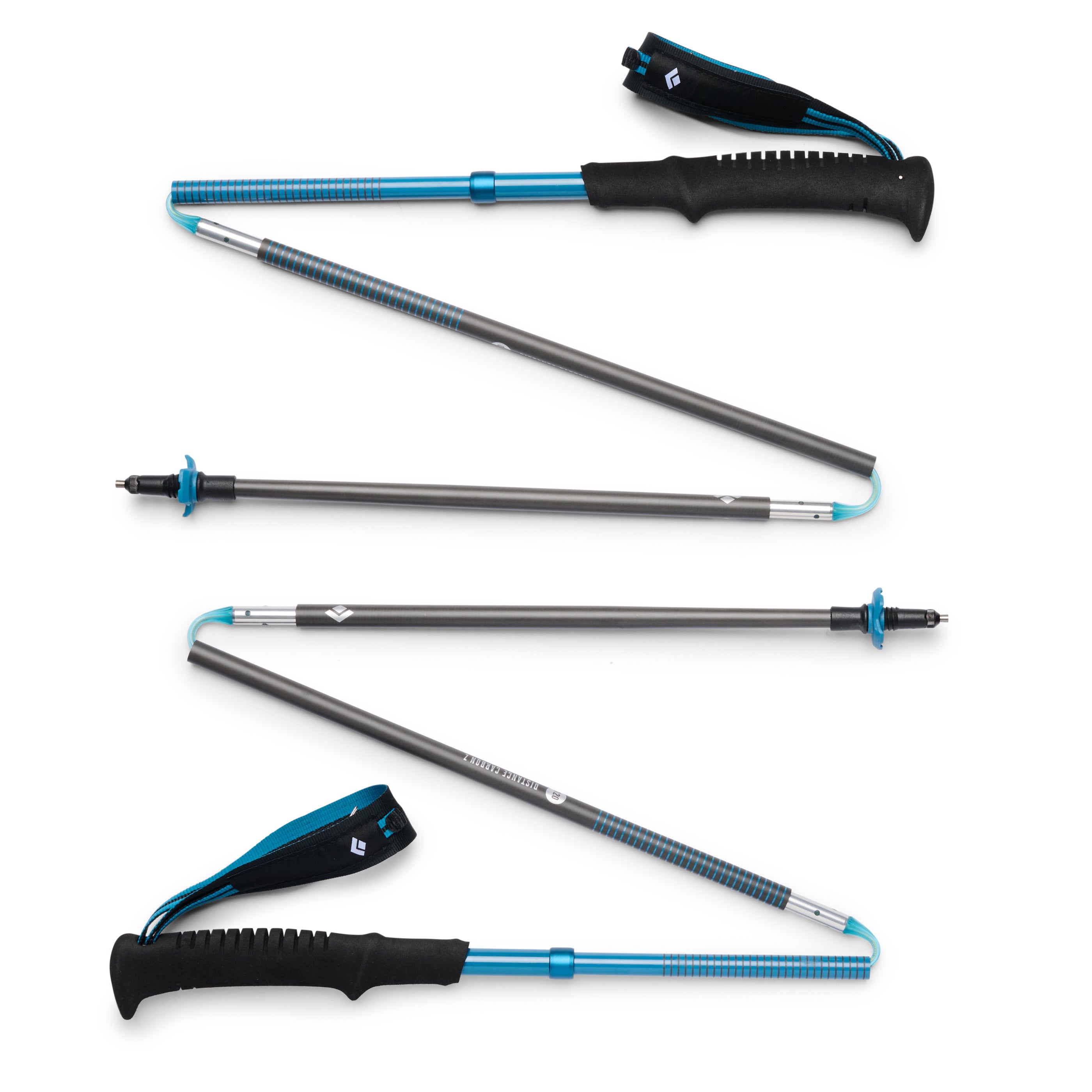
Black Diamond Distance Z Trekking Poles
A compact fixed-length folding pair that deploys quickly and stashes more easily on a daypack than telescoping poles. It is attractive for refugio W Trek hikers and trail runners who use poles intermittently. Fixed sizing and lighter construction make it less versatile under a heavy camping pack.
LEKI Makalu Cork Lite
A classic telescoping pole with a comfortable cork grip, extended grip area and secure external locks. It is a dependable long-distance option for hikers who prefer natural cork over foam and make frequent hand-position changes. Its packed length is awkward compared with folding poles.

Black Diamond Pursuit Trekking Poles
An ergonomically shaped aluminum pair designed for all-day comfort. Angled natural-cork grips and supportive straps reduce wrist strain during repeated descents, making it the best overall option for long W and O Trek days. The ergonomic grip adds cost without reducing weight or packed length.
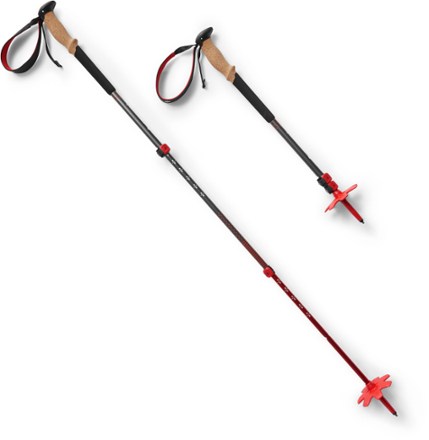
LEKI Makalu Lite AS
A premium aluminum pair with discreet impact damping and an ergonomic grip. Its suspension element is designed to soften repetitive impacts without a loose springy feel, making it useful for hikers with sensitive joints on firm descents. It costs as much as some carbon poles and packs like a conventional telescoping pair.

Komperdell Carbon C3 Pro
A hybrid carbon pair that protects its most impact-prone lower section with metal. It trims swing weight without using carbon where rock strikes are most likely, suiting experienced O Trek hikers who want lighter handling. Availability is patchier than Black Diamond or LEKI and the price is firmly premium.

LEKI Cressida FX Carbon
A short-range folding pair built around a smaller grip and compact packed length. Its women-specific length range solves a genuine fit problem and works well for shorter O Trek hikers who want poles that disappear neatly onto a pack. The high price and 120cm maximum exclude taller users.

For more context on how these fit into your broader kit, see our W Trek packing list or our comprehensive guide to Torres del Paine.
Do You Really Need Trekking Poles for Patagonia?
The short answer is yes. While you might hike without them in the rolling hills of the UK or the well-graded trails of the US National Parks, Patagonia presents a different set of physical demands.
The “Third and Fourth Leg”
The famous Patagonian wind is not an exaggeration. On exposed ridges like the trek to the Base Torres or the crossing of the Magallanes forest, sustained winds of 60 - 80 km/h are common. Carrying a 12 - 15kg pack shifts your center of gravity; trekking poles provide the wide base necessary to stay upright when a gust hits you from the side.
Scree and Moraine
The descents in this region are notoriously “knee-crunching.” If you are hiking the O-Circuit, the descent from Paso John Garner involves dropping nearly 1,000m over a short, steep distance of loose rock and mud. Without poles to take the weight off your joints, the cumulative impact can lead to “Patagonia knee” - a common overuse injury that ends many treks early.
Stream Crossings
Many trails in the El Chaltén region and the more remote circuits require crossing glacial meltwater streams. These rocks are frequently slippery and the water is opaque with “glacial flour.” Poles allow you to probe the depth and find stable footing before committing your weight, preventing a cold and dangerous soak.
Buying Guide: What Makes a Pole “Patagonia-Proof”?
When shopping for poles, don’t be swayed by “ultralight” marketing designed for the Appalachian Trail. Patagonia requires gear that can handle high winds, abrasive dust, and extreme temperature shifts.
Material: Aluminum vs. Carbon
- Aluminum: The better choice for most. It is durable, cost-effective, and bends instead of breaking. The slight weight penalty is worth the peace of mind.
- Carbon Fiber: Excellent for reducing “swing weight” and dampening vibrations, which can prevent wrist fatigue. However, it is brittle. A single hard strike against a granite rock while the pole is under load can cause a catastrophic snap.
Grip: Cork vs. Foam vs. Rubber
- Cork: The gold standard. It stays cool in summer, provides grip when wet, and doesn’t hold onto odors.
- Foam (EVA): Very comfortable and soft, but it can absorb water during a Patagonian downpour, making the grips heavy and slippery.
- Rubber: Generally found on cheaper poles. It is durable but can cause hotspots and blisters on long, multi-day treks.
Locking Mechanisms
Avoid twist-locks. They rely on internal friction, which fails when fine glacial dust gets inside the shaft or when the plastic components contract in freezing temperatures. Lever locks (like Black Diamond’s FlickLock or Leki’s SpeedLock) are external, easy to operate with gloves, and provide a visual confirmation that the pole is secure.
If you are looking for a deeper dive into all types of outdoor equipment, visit our main gear hub.
Critical: The Rubber Tip Rule in Patagonia
One of the most overlooked aspects of trekking in Patagonia is the local regulation regarding pole tips. In Torres del Paine National Park, the Corporación Nacional Forestal (CONAF) strongly encourages, and sometimes mandates, the use of rubber tips over the standard carbide (metal) tips.
The reason is simple: conservation. The trails in Patagonia are under immense pressure from thousands of hikers. Metal tips scratch and scar the rocks and contribute to the widening of trails as hikers avoid the “pockmarked” center of the path. On the fragile Andean tundra, a metal tip can tear through the thin layer of topsoil, accelerating erosion.
Check your tips
Before starting your trek, ensure your poles have rubber “boots” or tips firmly attached.
Carry spares
Patagonian mud is notorious for “sucking” the rubber tips off poles. Always carry a spare pair in your hip belt pocket.
Switch for technical terrain
If you are on a steep, icy section where rubber tips might slip, switch back to carbide for safety, but revert to rubber once you are back on standard trail.
Logistics: Buying vs. Renting Poles in Patagonia
You have three main options for getting poles to the trail, bringing your own, buying them locally, or renting.
The Airline Dilemma
International aviation security (including TSA and Chilean/Argentine authorities) generally prohibits trekking poles in carry-on luggage because they are considered “sharp objects.” You must check them. If you are traveling “carry-on only” to save time at the Punta Arenas airport, renting is your best path.
Renting in Gateway Cities
In Puerto Natales (for Torres del Paine) and El Chaltén (for Fitz Roy), rental shops are everywhere.
- Price: Expect to pay between $5,000 and $9,000 CLP (approx. $5 - 10 USD) per day as of the 2026/27 season.
- Quality: Most shops rent out Black Diamond Trail or Leki Voyager poles. They are often battered but functional.
- Where to go: In Puerto Natales, Rental Natales and Itahue are reliable choices. In El Chaltén, almost every hostel offers gear rental.
Buying Locally
If you want to buy, expect to pay a “Patagonia premium.” Prices for imported gear in Chile and Argentina are often 30 - 50% higher than in the US or Europe. However, shops like Tienda de Montaña in El Chaltén or Andesgear in larger cities carry top-tier brands. You may also find “Forclaz” (Decathlon) poles in major cities like Santiago, which offer a solid mid-range budget option if you didn’t bring your own.
If you’re still finalizing your gear list, check out our best hiking boots for Patagonia to ensure your footwear is as stable as your poles.
FAQ
Can I take trekking poles in my carry-on luggage to Patagonia? No, and even in checked luggage, trekking poles, especially sharp-ended ones, are frequently confiscated when flying into Puerto Natales. This is a common and frustrating issue. The safest workaround is to rent poles in Puerto Natales (try Rental Natales), buy them there, or, as a pro tip, use Reddit to find someone finishing their trek and buy theirs at a discount. This is especially worth doing if your Patagonia trip extends beyond the W Trek.
Are carbon fiber trekking poles durable enough for Patagonia? While carbon fiber is lighter, aluminum trekking poles are generally recommended for Patagonia because they bend rather than snap when wedged into deep rock crevices or moraines. If you choose carbon, ensure it is a high-end, reinforced model.
Do I need rubber tips for trekking poles in Torres del Paine? Yes, rubber tips are highly recommended and sometimes mandatory in Torres del Paine to prevent erosion and protect the rocky trails from scarring. CONAF rangers may check for these at park entrances or major campsites.
What is the best trekking pole length for the steep descents in Patagonia? For steep Patagonian descents, you should lengthen your poles so that your elbow is slightly higher than 90 degrees. This allows you to plant the pole further ahead of you, providing better braking support and reducing the load on your knees.
Should I choose cork or foam grips for hiking in Patagonia? Cork grips are superior for Patagonia because they wick moisture better during steep climbs and provide more comfort across the region’s extreme temperature shifts. They also tend to be more durable over hundreds of kilometers of use.
Are cheap trekking poles like those from Costco good enough for the W Trek? Yes, budget-friendly carbon poles like Cascade Mountain Tech are sufficient for the well-maintained trails of the W Trek. However, they lack the long-term repairability and local spare-part availability of premium brands like Black Diamond or Leki.