
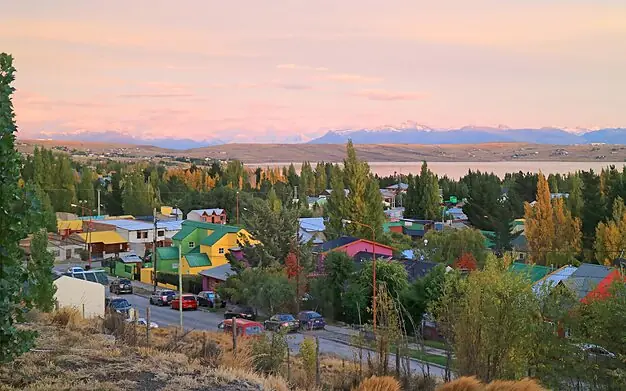
How to Get to El Calafate: 2026 Transport & Flight Guide
The most efficient way to get to El Calafate is by flying into Comandante Armando Tola International Airport (FTE), which serves as the primary gateway for Los Glaciares National Park. Most travelers reach this remote corner of Santa Cruz province via a three-hour direct flight from Buenos Aires, though established bus corridors also connect the town to El Chaltén and Puerto Natales in Chile.
El Calafate is the essential hub for anyone looking to witness the advance of the Perito Moreno Glacier. While its location in the deep south of Argentine Patagonia feels isolated, it is one of the region’s most accessible destinations. Whether you are arriving from the northern Lake District, the hiking trails of El Chaltén, or across the border from Torres del Paine, reaching the “Capital of the Glaciers” is a straightforward process if you understand the seasonal nature of Patagonian logistics. This guide breaks down every major route and transport mode for the 2026/27 season.
Flying to El Calafate: Airports and Airlines
Comandante Armando Tola International Airport (FTE) is the only airport serving the region, located approximately 20 kilometers east of the town center. Despite the “International” designation, its scheduled traffic is almost entirely domestic.
In 2026, three main carriers serve this route. Aerolíneas Argentinas remains the primary operator, offering the highest frequency and more flexible baggage allowances. Budget-conscious travelers should look to Flybondi and JetSmart. These low-cost carriers often provide significantly lower base fares, though you should factor in additional costs for seat selection and cabin bags, which can quickly narrow the price gap with the national carrier.
Flight frequency is highly seasonal. During the peak southern summer (October through April), you can expect upwards of 12 to 15 flights per day arriving from various Argentine hubs. In the winter months, this can drop to just three or four daily flights. If you are planning a winter visit, consult our guide on El Calafate weather to understand how seasonal shifts affect local services and closures.
For international travelers arriving from Chile, it is important to note that there are typically no direct flights from Santiago (SCL) to El Calafate. To reach the glaciers from the Chilean capital, you must either fly to Buenos Aires and connect south, or fly to Puerto Natales (PNT) and continue by bus across the border.
How to Get to El Calafate from Buenos Aires
The 2,700-kilometer journey from the capital is the most common entry point for visitors. Direct flights take approximately 3 hours and 15 minutes, making it a mandatory flight for anyone not on a multi-month road trip.
When booking, pay close attention to the departure airport in Buenos Aires. Most domestic flights to El Calafate depart from Aeroparque Jorge Newbery (AEP), which is conveniently located near the Palermo and Recoleta neighborhoods. However, an increasing number of flights, especially those connecting from international arrivals, depart from Ezeiza International Airport (EZE). Transferring between these two airports requires at least four to five hours to account for traffic and check-in times.
For the 2026/27 season, it is critical to book these domestic legs at least three to four months in advance. El Calafate is one of the most popular destinations in Argentina, and peak season flights on Aerolíneas Argentinas often sell out or triple in price as the date approaches.

Getting from El Chaltén to El Calafate
The connection between El Calafate and the hiking capital of El Chaltén is the busiest bus corridor in Patagonia. The journey covers 214 kilometers of paved road and typically takes 3 hours.
Three major operators dominate this route: Chaltén Travel, Caltur, and TAQSA. Each runs multiple services daily, usually clustered into morning (8:00 to 9:00) and afternoon (13:00 to 18:30) blocks. The route follows Ruta 40 before turning onto Ruta 11, offering spectacular views of Lake Viedma and, on clear days, the distant spires of the Fitz Roy massif.
If you are traveling in a group of three or more, a private transfer can sometimes be cost-competitive with public bus tickets and offers the flexibility of door-to-door service. However, for solo travelers or couples, the public bus remains the most efficient choice. Tickets can be purchased at the main bus terminal in either town or via online platforms like Plataforma 10.
To better understand the layout of the region before you arrive, see our El Chaltén guide for trail maps and arrival logistics.
Crossing the Border: From Puerto Natales (Chile) to El Calafate
Connecting Torres del Paine with Perito Moreno is a staple of most Patagonian itineraries. This international journey is primarily handled by bus companies like Bus-Sur and Turismo Zaahj, which run daily services between Puerto Natales and El Calafate.
The trip covers approximately 270 kilometers and takes between 5 and 7 hours. The variability in time is almost entirely due to the border crossing at Paso Río Don Guillermo (also known as Cerro Castillo). During peak season, several buses may arrive at the border simultaneously, leading to long wait times for immigration and customs processing.
Before booking your tickets, ensure you have checked the current Puerto Natales guide for updated departure times, as some companies only operate on specific days during the shoulder season.

Getting to El Calafate from Ushuaia and Bariloche
Travelers moving between the major Patagonian hubs of Ushuaia or Bariloche face a choice between a quick flight or a grueling multi-day overland journey.
From Ushuaia, we strongly recommend flying. The direct flight takes only 1 hour and 20 minutes. The alternative involves two separate buses, a ferry crossing of the Strait of Magellan, and two border crossings (entering and exiting Chile), which can take upwards of 18 to 24 hours. Aerolíneas Argentinas typically operates at least one to two direct flights daily between FTE and USH during the summer season.
From Bariloche, the choice is more nuanced. Aerolíneas Argentinas operates direct flights (approx. 1h 45m) during the peak summer months. If these are unavailable, you must connect through Buenos Aires. The overland alternative is the legendary “Ruta 40” bus ride. While romanticized, this is a 24-hour journey on a bus that, while comfortable, covers vast stretches of monotonous steppe. Only choose the bus if you genuinely enjoy long-distance road travel or are on a very tight budget.
For more information on these hubs, explore our guides for Ushuaia and Bariloche.
Driving to El Calafate: Car Rental and Road Conditions
Renting a car offers the ultimate freedom to explore the steppe at your own pace, but it requires careful logistical planning. You can pick up vehicles at FTE airport or in downtown El Calafate.
The “backbone” of this region is Ruta 40. While the sections connecting El Calafate to El Chaltén and the border are fully paved and in good condition, other stretches of this highway remain gravel (ripio). If you plan to drive north toward Bariloche, prepare for high winds and flying stones that can easily crack a windshield.
- Travel Time: 3 hours vs. 5-7 hours
- Comfort Level: High (Jet aircraft) vs. Moderate (Semi-cama bus)
- Typical Cost: $120 - $350 USD vs. $40 - $70 USD
- Frequency: 10+ daily vs. 2-3 daily
Flying is best for those short on time, while the bus is essential for those combining the 'Big Two' parks of Patagonia.
If you intend to drive a rental car across the border into Chile (for example, to visit Torres del Paine), you must inform the rental agency at least 72 hours in advance. They need to prepare a specific “Permiso de Salida” (cross-border permit). This document is not optional; you will be turned back at the border without it. As of the 2026/27 season, the cost for this permit typically ranges from $120 to $180 USD depending on the rental duration and agency.

Airport Transfers: Getting from FTE to El Calafate Town
The final leg of your journey is the 20-minute drive from the airport to the town center. Since the airport is located in the open steppe, walking is not an option.
The most popular method is the Ves Patagonia shuttle. They operate a desk in the arrivals hall and timed departures that coincide with every arriving flight. The shuttle provides door-to-door service to most hotels and hostels in the town center. You can book a round-trip ticket upon arrival, which is slightly cheaper than two one-way fares.
Alternatively, taxis and remises (private cars with fixed rates) are readily available outside the terminal. Unlike in Buenos Aires, taxis in El Calafate often operate on a fixed rate for the airport run rather than a meter. For the 2026 season, expect to pay approximately $30 to $45 USD for a private transfer to the town center, though rates fluctuate with local currency changes.
To help you decide where to be dropped off, consult our guide on where to stay in El Calafate. For a better sense of the town’s layout and the distance to the national park, you can also view our El Calafate map.
To go deeper into planning your stay once you arrive, explore our related guides:
FAQ
Which airport do you fly into for El Calafate? You fly into Comandante Armando Tola International Airport (FTE), located approximately 20 kilometers (12.5 miles) from El Calafate town center.
How do I get to El Calafate from the USA? There are no direct flights; you must fly into Buenos Aires (EZE), transfer to Aeroparque (AEP) or stay at EZE, and take a domestic flight to El Calafate.
Is there a bus from Puerto Natales to El Calafate? Yes, several companies like Bus-Sur operate daily buses between Puerto Natales and El Calafate, with the journey typically taking 5 to 7 hours including the border crossing.
Can I drive a rental car from El Chaltén to El Calafate? Yes, the 214-kilometer drive between El Chaltén and El Calafate is fully paved and takes about 3 hours via Ruta 40 and Ruta 11.
Are there low-cost flights to El Calafate? Yes, budget airlines Flybondi and JetSmart operate regular flights to El Calafate from Buenos Aires, often offering lower fares than the national carrier, Aerolíneas Argentinas.
How long is the flight from Buenos Aires to El Calafate? A direct flight from Buenos Aires to El Calafate takes approximately 3 hours and 15 minutes.