Best Bariloche Restaurants: 2026 Dining & Chocolate Guide
Bariloche is the undisputed culinary capital of the Argentine Lake District, offering a food scene that has evolved far beyond its traditional roots in steak and chocolate. Whether you are looking for a $25 grass-fed ribeye in a raucous downtown grill or a $90–$150 foraged tasting menu hidden in a lakeside forest, the city’s dining landscape is now defined by a “Peak to Plate” philosophy that prioritizes hyper-local ingredients.
While the Swiss-style architecture remains, the flavors of 2026 Bariloche are shaped by high-altitude vineyards, wild-harvested pine mushrooms, and a craft beer culture that rivals any in North America. This guide breaks down the essential dining zones, the legendary institutions, and the new wave of chefs who are currently redefining Patagonian identity.
To understand how to fit these meals into your broader trip, see our comprehensive Bariloche guide.
The Bariloche Dining Landscape: Three Main Zones
Dining in Bariloche is organized into three distinct geographical hubs, each with its own character and logistical requirements. Understanding these zones is essential for choosing where to stay and how to get around.
Bariloche Dining at a Glance
- Downtown (Centro): Best for chocolate shops, steakhouse icons, and craft beer “crawls.” Highly walkable.
- Avenida Bustillo (The Lake Road): Home to upscale lakeside dining and cozy family bistros between KM 1 and KM 20.
- Circuito Chico & Llao Llao: The destination for fine dining and the most famous sunset brewery views.
- Logistics: A SUBE card is required for all public buses (Línea 20) connecting these zones.
The Downtown area, centered around Calle Mitre, is the high-energy heart of the city. This is where you will find the highest concentration of “Dining for Hikers” - casual, high-calorie spots like Manush or Weiss Burger Bar that stay open late and welcome travelers in trekking gear. Because this area is so concentrated, it is the best base for those who want to walk to dinner. You can explore the best hotels in this hub in our Bariloche neighborhood guide.
Avenida Bustillo follows the shoreline of Lake Nahuel Huapi. The dining here is more spread out and generally quieter than downtown. You will need a car or to use the local bus system to reach these spots. If you are taking the bus to a restaurant at KM 12, for example, remember that you must have a pre-charged SUBE card before boarding. For details on where to buy and charge these cards, refer to our Bariloche transport guide.
Circuito Chico represents the “destination dining” zone. Located about 18km to 25km from the center, this area houses the city’s most prestigious culinary experiments and the iconic Llao Llao Hotel. It is a dedicated trip rather than a quick outing, but for many, it provides the definitive Patagonian meal.
The “Big Three” Staples: Steak, Chocolate, and Beer
The foundation of Bariloche’s food culture rests on three pillars: world-class beef, a century-old chocolate tradition, and a pioneer craft beer scene. While the city offers much more, these are the non-negotiable experiences for any first-time visitor.
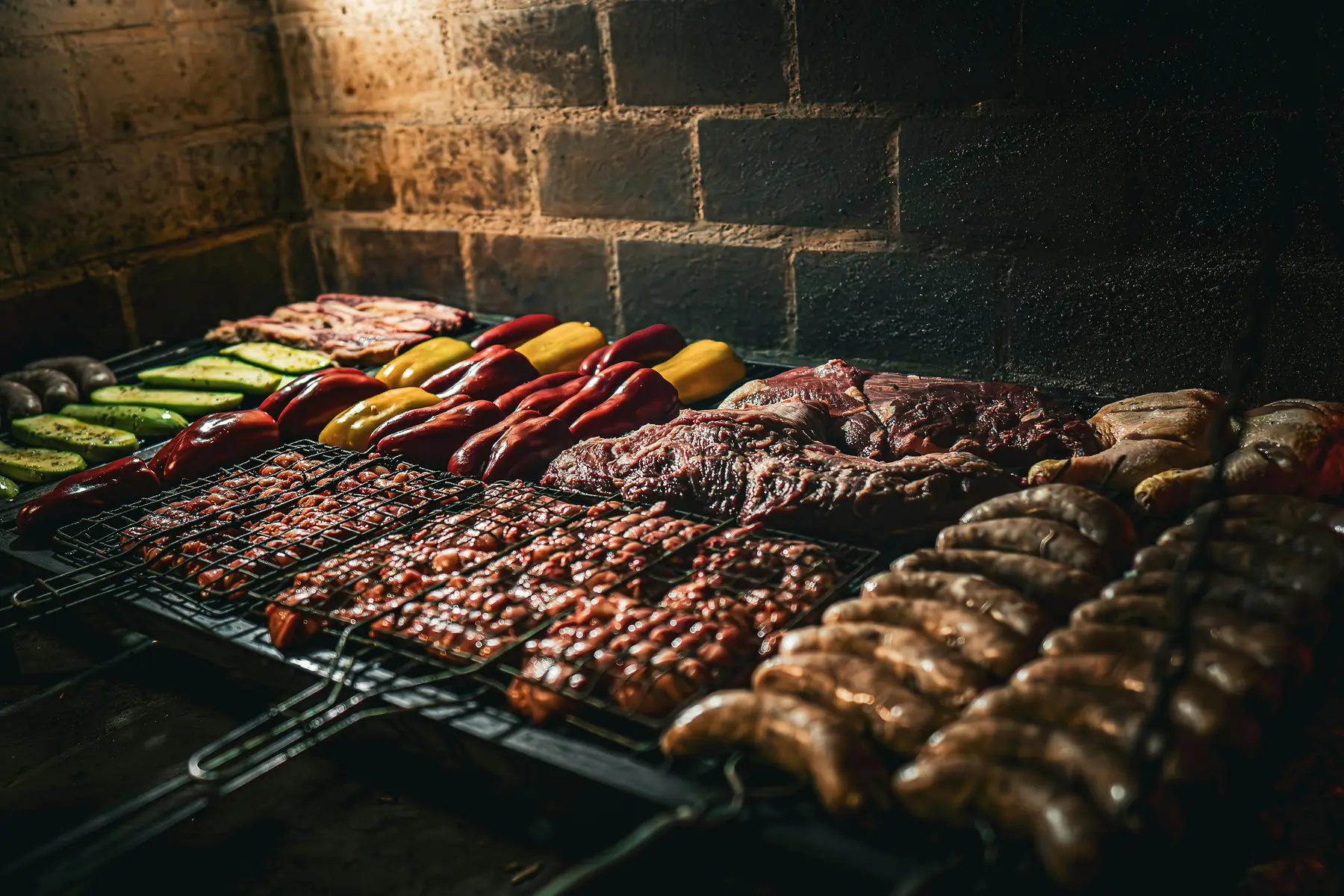
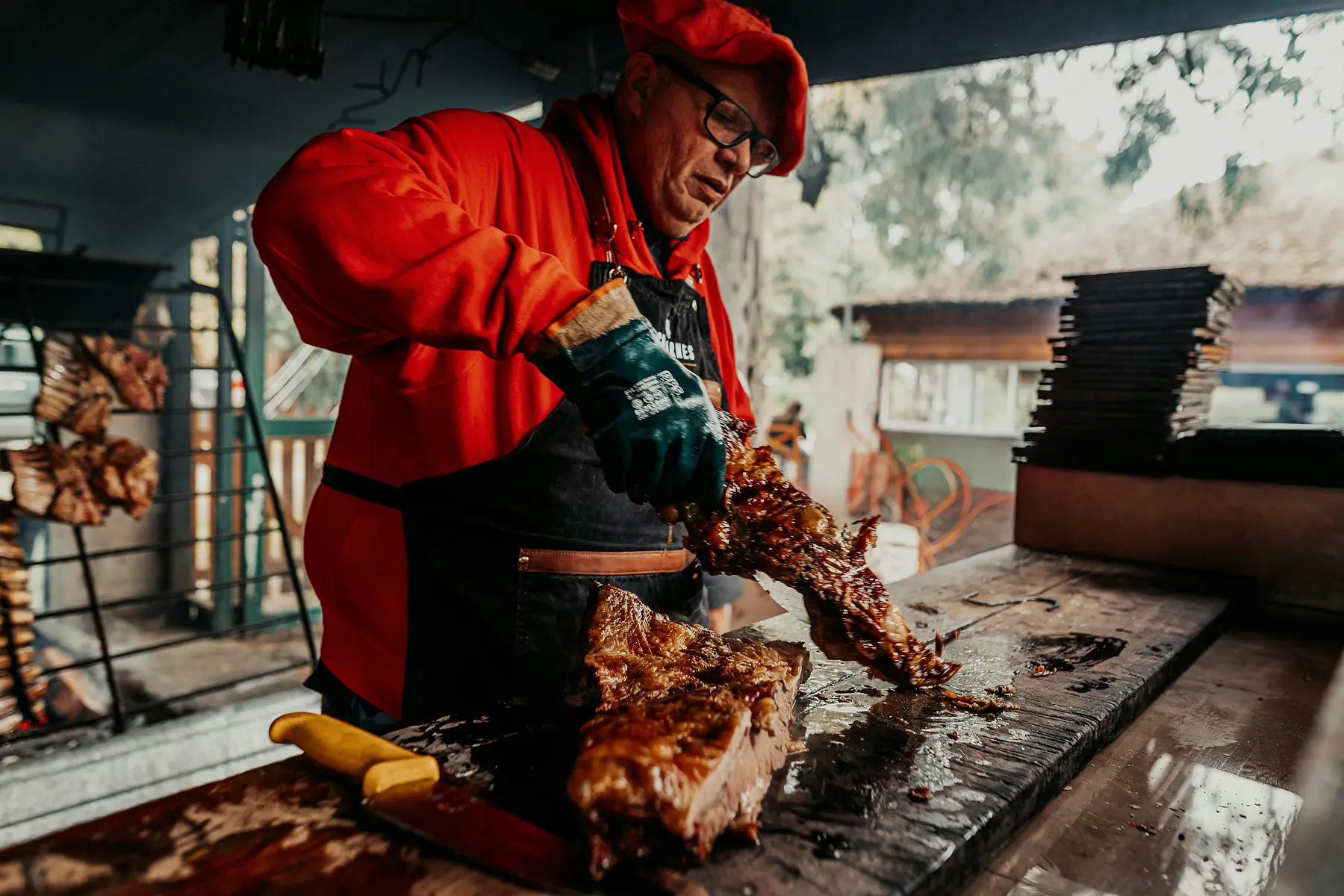
For steak, the city is split between the “no-frills” volume of El Boliche de Alberto and the refined, fire-focused technique of Alto el Fuego. Both serve exceptional Argentine beef, but the experiences are vastly different.
- Vibe: Raucous, fast-paced, and traditional - Quiet, cozy, and residential
- Ordering Style: Choose your cut and watch it grill - Curated menu with creative sides
- Price: Mid-range ($$) - Mid-range to Upscale ($$$)
- Reservation Policy: Walk-in only for the Parrilla (expect 1-2 hour waits) - Reservations highly recommended
Go to Alberto for the 'classic' high-energy experience; choose Alto el Fuego for a superior, intimate meal.
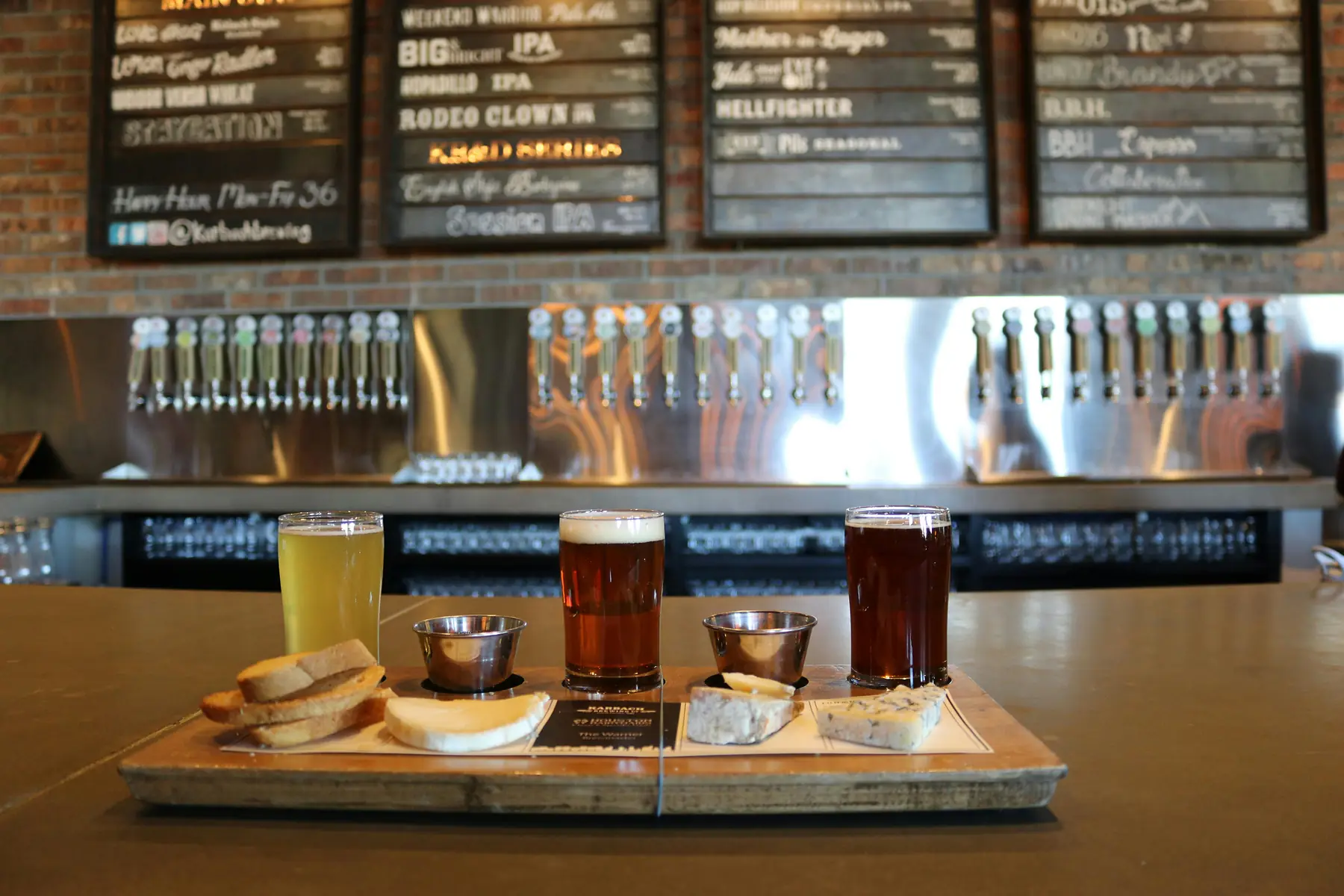
The craft beer boom in Bariloche was fueled by the region’s exceptionally soft glacial water, which is ideal for brewing crisp lagers and complex IPAs. Today, the city has one of the highest concentrations of microbreweries in South America. While many have expanded into large chains, the quality remains high due to the local availability of fresh hops from nearby El Bolsón.
The Best Chocolate Shops in Bariloche: Beyond Calle Mitre
Bariloche is the chocolate capital of Argentina, a legacy brought by European immigrants after World War II. While Calle Mitre is lined with dozens of shops, three producers stand out for their quality and specific regional specialties.
The most famous chocolate export from Bariloche is “FraNui” - fresh raspberries from the region covered in two layers of chocolate (white and dark or milk). You can find them in the freezer section at Rapa Nui. They are best eaten about 15 minutes after being removed from the freezer.
Mamuschka is the gold standard for high-quality, bean-to-bar chocolate. Recognizable by its bright red storefront and Russian nesting doll branding, this shop focuses on technical precision. Their “Timbo” (a whipped chocolate log) and their range of truffles infused with Patagonian berries are essential purchases. They also offer some of the best coffee in the downtown area.
Rapa Nui offers more than just chocolate; it is a full sensory experience. The shop features an indoor ice skating rink and an extensive ice cream counter that often has a line out the door. Their chocolate-covered raspberries (FraNui) have become a national obsession in Argentina, but their “marroc” (peanut praline) and artisanal tablets are equally impressive.
Jauja is the local favorite for those who prioritize regional flavors over traditional Swiss styles. Originally from El Bolsón, Jauja specializes in integrating Patagonian ingredients like Calafate berry, elderberry, and rosehip into their chocolates and ice creams. Their flavors are often more subtle and less sweet than the major commercial brands.
If you are planning to spend an afternoon hopping between these shops, you can find them mapped out in our guide to Bariloche activities.
Bariloche’s Craft Beer Capital: Top Breweries & Taprooms
The “Cerveza Artesanal” scene in Bariloche is so established that it has its own unofficial “beer route” along the Circuito Chico.
Cervecería Patagonia is the most famous brewery in the region, primarily for its location. Situated at KM 24.7 on the Circuito Chico, the taproom features a massive outdoor deck overlooking Lake Moreno and the Llao Llao peninsula. The “24.7” Session IPA (brewed with local elderberries and honey) remains their flagship regional specialty, and the sunset view is arguably the best in Argentina.
Manush is the premier choice for those staying downtown. It manages to balance a high-volume pub atmosphere with genuinely excellent gastronomy. Unlike many breweries where the food is an afterthought, Manush serves some of the best trout and lamb burgers in the city. Their “Milk Stout” and “IPA” are consistently award-winning.
Cervecería Blest is the historic pioneer, credited with starting the craft movement in Bariloche in the 1980s. Their taprooms have a traditional, wood-heavy “mountain pub” feel. It is the best place to try classic styles like Scotch Ale or Bock, served in a no-nonsense environment that feels like old-school Bariloche.
Lakeside Dining: Restaurants with a View of Nahuel Huapi
For many travelers, the ultimate Bariloche meal involves a window seat overlooking the deep blue waters of Lake Nahuel Huapi.
If you are driving the Route of the Seven Lakes toward San Martín de los Andes, Punto Panorámico is a mandatory stop. It is a casual restaurant that sits on a cliffside with a 180-degree view of the Llao Llao peninsula. The food is simple - think empanadas and sandwiches - but the photographic payoff is the best in the region.
Holly Restobar offers a more accessible waterfront experience closer to the city center. It features large glass windows and a deck that sits almost directly over the water. It is an excellent spot for a “merienda” (afternoon tea) or a sunset cocktail without needing to trek out to the Circuito Chico.
Winter Garden (Jardín de Invierno), located inside the legendary Llao Llao Hotel, is the gold standard for luxury lakeside dining. While the hotel itself is exclusive, the café is open to the public for lunch and its famous afternoon tea. The prices are higher than downtown, but the service, the historic architecture, and the manicured views of the park are unmatched.
The Locavore Renaissance: Modern Patagonian Fine Dining
In recent years, Bariloche’s food scene has undergone a significant shift. A new generation of chefs has moved away from European mimicry to focus on foraged ingredients and open-fire cooking, a movement recently recognized by the expansion of the Michelin Guide’s interest in Argentina.
For restaurants like Ánima and Lumbre, you must book at least 2-4 weeks in advance during the peak summer (January) and winter (July) seasons. Most of these spots use WhatsApp for reservations; they rarely answer phone calls or emails.
Ánima, located at KM 18.5 of the Circuito Chico, is widely considered the best restaurant in Bariloche. It is an intimate space run by a couple who focus on seasonal, local products. The menu changes constantly based on what is available in the surrounding forests and local farms. It is a quiet, thoughtful meal that requires a dedicated reservation.
Lumbre is a standout of the modern Patagonian scene. Located in a woodland setting at Av. Bustillo KM 20, the kitchen is entirely wood-fired. They specialize in “mountain life” ingredients - think foraged pine mushrooms, wild boar, and salt-cured trout. The atmosphere is rustic but the technique is world-class, representing the new “Peak to Plate” identity of the region.
Quiven offers a more theatrical experience. This is a multi-course tasting menu restaurant overlooking the lake, where each dish is designed to tell a story about Patagonian geography. It is the closest thing Bariloche has to the “molecular” dining scenes of Buenos Aires or Mendoza, but with a strictly local ingredient list.
Local Specialties: What to Order in Bariloche
When reading a menu in Bariloche, you will encounter ingredients rarely seen in the northern parts of Argentina. The focus here is on cold-water fish and wild game.
- Cordero Patagónico (Patagonian Lamb): Unlike the fatty lamb found elsewhere, Patagonian lamb is lean and flavorful because the sheep graze on sparse shrubs in the wind-swept steppe. It is traditionally roasted “al asador” (spread flat on a cross over an open fire). For a deep dive into this tradition, see our Patagonian lamb guide.
- Trucha (Trout): The lakes and rivers around Bariloche are world-famous for trout. You will find it smoked as an appetizer, grilled as a main, or even stuffed into ravioli.
- Wild Game: Look for Ciervo (venison) and Jabalí (wild boar). These are often served in “cazuelas” (stews) or as cured meats on a “picada” platter.
- The Foraged Pantry: Keep an eye out for Rosa Mosqueta (rosehip), which is made into jams and sauces, and the Calafate berry. Legend says that anyone who eats a Calafate berry is destined to return to Patagonia.
For a broader look at the traditions behind these ingredients, visit our Patagonian food pillar.
Practical Logistics: Tipping, Timing, and Reservations
Dining in Bariloche follows Argentine social customs, which can be a surprise for travelers from North America or Europe.
The most important rule is the Dinner Hour. Restaurants in Bariloche may open at 7:30 PM or 8:00 PM, but they will be empty. The locals do not arrive until 9:00 PM or 9:30 PM. If you want a quiet meal, arrive early; if you want the “vibe,” book for 9:30 PM.
As of the 2026/27 season, cash remains a preferred payment method for many smaller restaurants, often resulting in a 10–20% discount if you pay in pesos. However, almost all mid-to-high-end restaurants now accept major credit cards (Visa/Mastercard) without issue.
Tipping (Propina): A 10% tip is the standard for good service. It is not usually included in the bill. Even if you pay your main bill with a credit card, try to leave the tip in cash, as it ensures the server receives it directly. You may also see a “Cubierto” charge on your bill; this is a standard table fee for bread and water service, not a tip.
Reservations: For “staple” spots like El Boliche de Alberto (Parrilla), there are no reservations - you simply show up, put your name on a list, and wait. For anything in the “Fine Dining” category, WhatsApp is the essential tool. Ensure you have a local SIM or data plan to manage these bookings. The availability of tables is highly seasonal, so check our Bariloche weather and seasonality guide to see how the crowds might affect your plans.
To help visualize these locations and plan your route, you can view our curated Bariloche restaurant map.
FAQ
What are the best restaurants in Bariloche for a view of the lake? For the most iconic views, visit Cervecería Patagonia or Punto Panorámico on the Circuito Chico, or Holly Restobar closer to the downtown waterfront.
Do I need reservations for Bariloche restaurants? For high-end spots like Ánima or Lumbre, you must book weeks in advance via WhatsApp; however, classic steakhouses like El Boliche de Alberto (Parrilla) are walk-in only and often have long wait times.
Which Bariloche chocolate shop is the best? While Rapa Nui is famous for its chocolate-covered raspberries (FraNui), Mamuschka is widely considered the best for high-quality, bean-to-bar truffles and technical precision.
Are there vegetarian-friendly restaurants in Bariloche? Yes, modern spots like Nené Bar and Lumbre offer creative plant-based dishes, and most craft breweries serve excellent pizzas and salads alongside meat-heavy options.
What is the most famous food to try in Bariloche? Bariloche is world-renowned for its chocolate, but on the savory side, you must try Patagonian Lamb (Cordero), wild trout, and regional venison.
Is tipping expected at Bariloche restaurants? A 10% tip (propina) is the standard in Bariloche for good service, usually paid in cash even if the bill is settled with a credit card.