Camping on the W Trek is the most immersive and cost-effective way to experience Torres del Paine National Park. Whether you choose to carry your own tent or book a pre-pitched “Fully Equipped” setup, camping allows you to stay closer to the trail and wake up to the sound of calving glaciers or the first light hitting the granite towers.
This guide provides a comprehensive breakdown of every campsite on the W Trek planning guide, including facility details, gear requirements for Patagonian conditions, and 2026/27 pricing expectations. By understanding the differences between the two operators, you can build an itinerary that balances budget with the physical demands of the trail.
W Trek Camping at a Glance
- Total Campsites: 7 primary sites along the W route.
- Operators: Vértice Patagonia and Las Torres Patagonia.
- Booking Window: 4 - 6 months in advance for peak season (December - February).
- Accommodation Types: Individual (own gear) or Fully Equipped (rented gear).
- Average Cost (2026/27): $15 - $45 USD for individual sites; $80 - $150 USD for fully equipped.
- Cooking: Stove shelters are listed at Grey, Paine Grande, Central and Francés. Chileno explicitly bans stoves; plan Cuernos as a no-stove night too.
W Trek Camping vs. Refugios: Which is Right for You?
The choice between camping and staying in a refugio dorm usually comes down to a trade-off between cost and comfort. Camping is significantly cheaper, often saving hikers over $80 USD per night compared to a dorm bed, and offers a more private, nature-focused experience.
However, camping requires more preparation. Even if you rent a pre-pitched tent, you will be more exposed to Patagonia’s famous winds and fluctuating temperatures. For many, the “quincho” (cooking shelter) provides a better social atmosphere than the more formal refugio dining rooms, as it brings together hikers from all over the world to share meals and trail intelligence.
For a complete analysis of the pros, cons, and comfort levels of both options, see our detailed comparison of W Trek refugios vs. camping.
Types of Camping on the W Trek
There are three distinct ways to camp on the W Trek, and your choice will dictate how much weight you carry and how much you spend.
Individual Camping
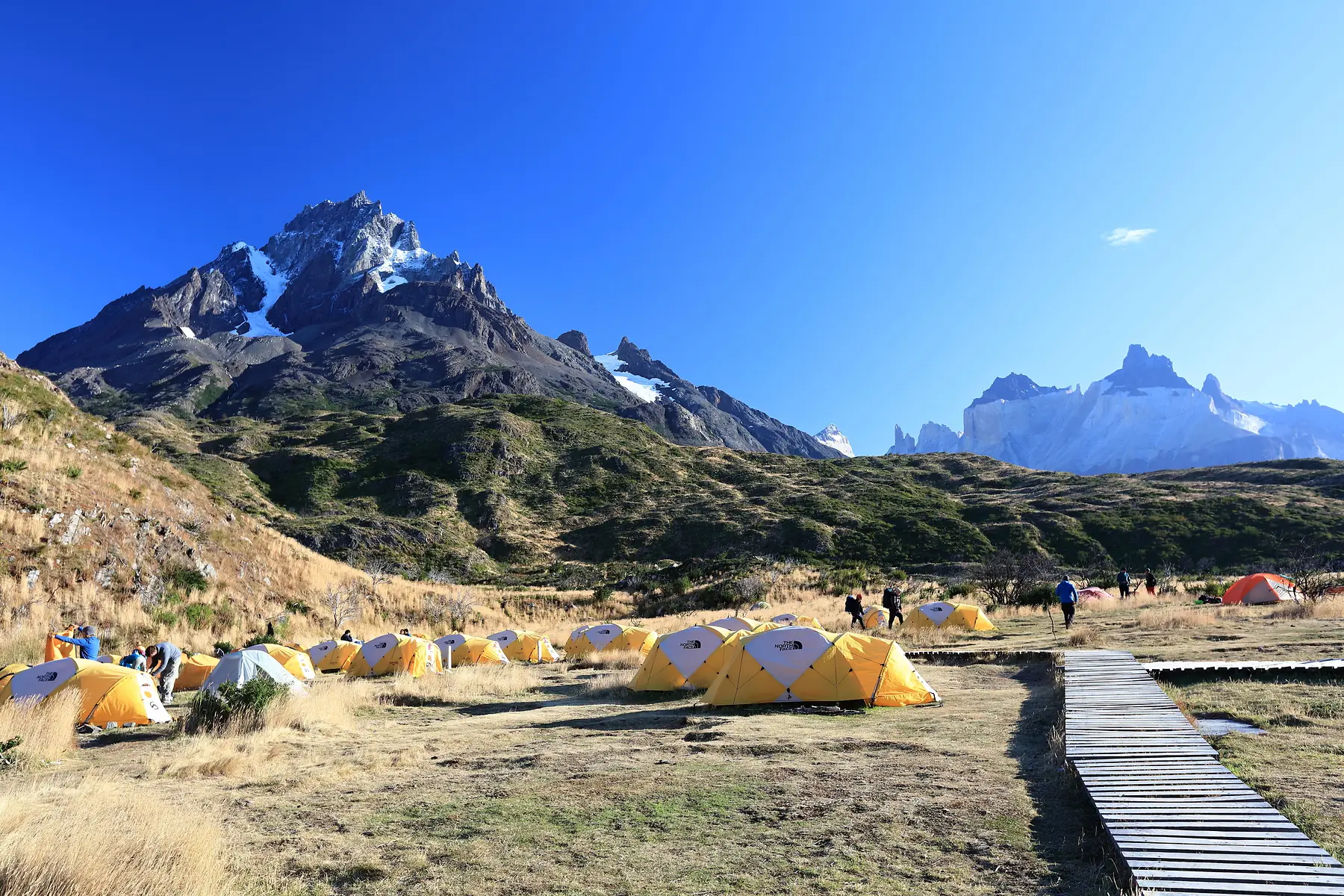
This is the traditional “purist” approach. You carry your own tent, sleeping bag, and sleeping mat. Most private campsites in the park use wooden platforms to protect the ground and provide a level surface. This means you cannot use standard tent stakes; you will need extra cord or specialized “fishbone” anchors to secure your tent to the wooden slats.
Fully Equipped Camping
This “luxury camping” option is ideal for those who want the experience of sleeping under canvas without the 15kg pack. When you book a fully equipped site, you arrive to find a high-quality, 3-season tent already pitched on a platform, complete with a thick foam or inflatable mat, a warm sleeping bag, and often a pillow.
Semi-Equipped Options and Camp Italiano
Some sites offer “Semi-Equipped” options, which typically include the tent and mat but require you to bring your own sleeping bag. Camp Italiano is no longer a bookable overnight campsite, although hikers can still use the designated bag-drop area before walking into the French Valley.
The W Trek Campsites: East to West Breakdown
Selecting the right sites is essential for a manageable W Trek itinerary. The following breakdown moves from East (Hotel Las Torres area) to West (Grey Glacier).
Central (Las Torres Patagonia)
Located near the start of the trek, Central is a high-capacity site with excellent facilities, including hot showers and a large cooking area. It serves as a strategic base for your first night if you arrive late from Puerto Natales.
- Itinerary Role: Starting or ending point for most hikers.
- Prioritization: High availability; a reliable backup if Chileno is full.
Chileno (Las Torres Patagonia)
Chileno is the most sought-after site on the trek because it sits halfway up the path to the Base Torres lookout. It is significantly more sheltered than the valley floor but has a major restriction: no cooking stoves are allowed due to the high forest fire risk. You can use supplied hot water for instant noodles or a freeze-dried meal, but cannot use a stove there.
- Itinerary Role: Essential for those wanting to see the sunrise at the Towers with a shorter morning hike.
- Prioritization: Top priority; books out 5 - 6 months in advance.
Cuernos (Las Torres Patagonia)
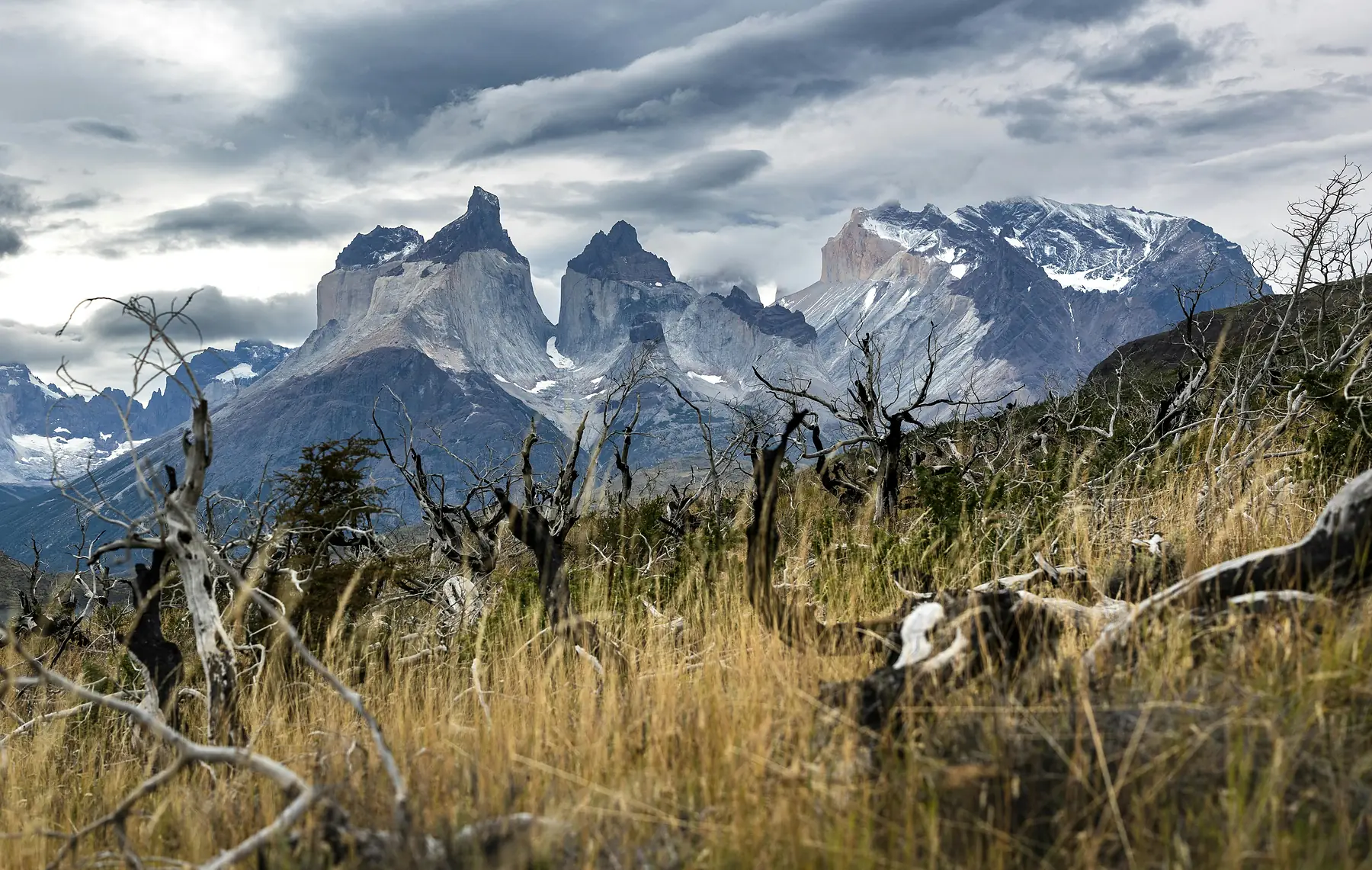
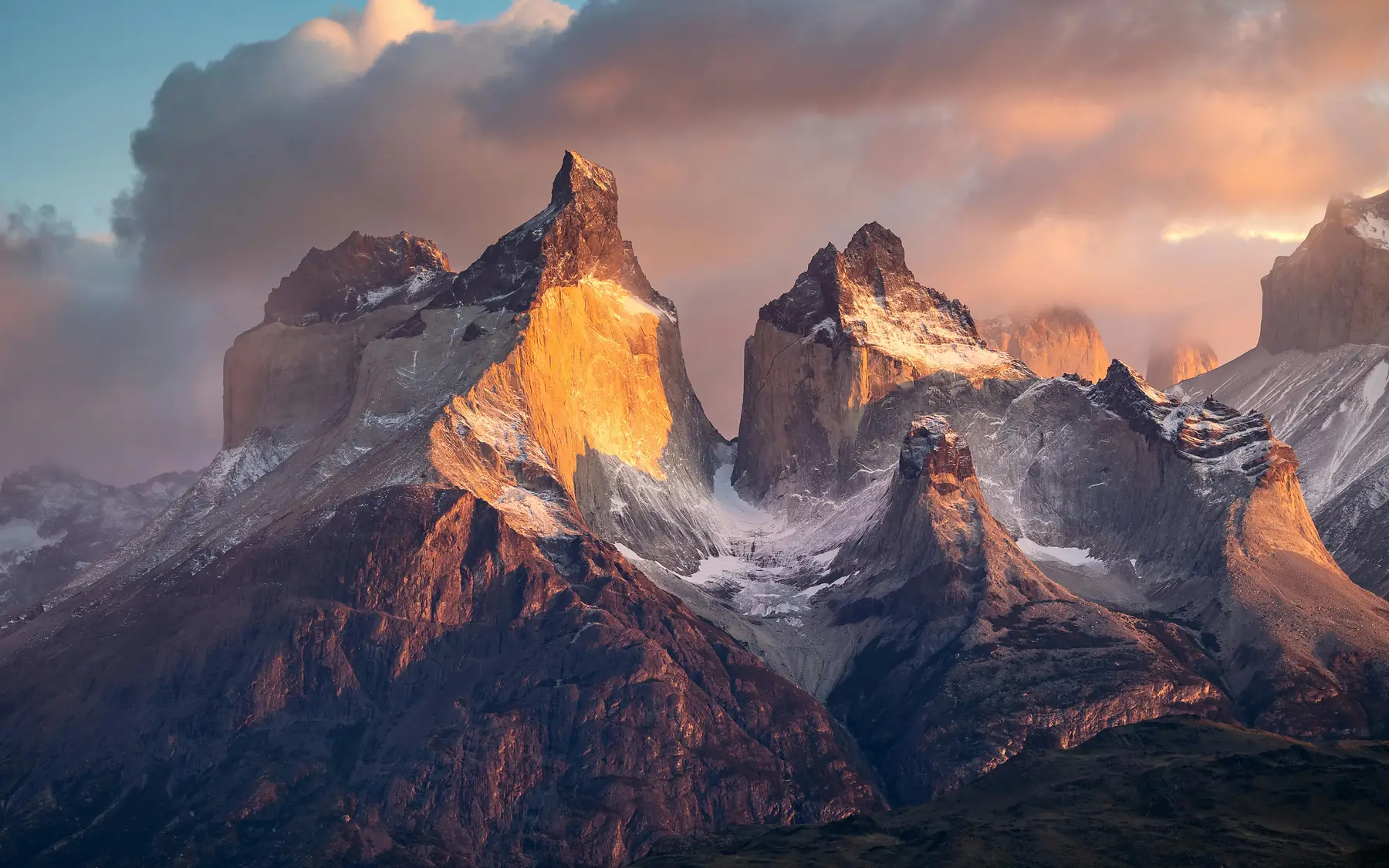
Nestled at the base of the “Horns” of Patagonia, this site is famous for its stunning views and its cramped, tiered wooden platforms. It has a cozy, communal atmosphere but the platforms are close together, meaning you will likely hear your neighbors.
- Itinerary Role: A standard stop on Day 2 of a Westbound trek.
Francés (Las Torres Patagonia)
A newer addition to the trail, Francés features modern platforms and some of the best shower facilities in the park. It is located about 30 - 45 minutes past the Los Cuernos junction.
- Itinerary Role: An alternative to Cuernos; slightly closer to the French Valley entrance.
Italiano Ranger Station
Italiano is not an overnight campsite. Most hikers use the designated bag-drop area here before day-hiking into the French Valley.
- Itinerary Role: The French Valley pack-drop point.
Paine Grande (Vertice Patagonia)
Paine Grande is the largest hub on the trek, acting as the docking point for the Lake Pehoé catamaran. It is notoriously windy, as it sits in a natural wind tunnel. The cooking area is massive and well-equipped, making it the social heart of the western W.
- Itinerary Role: Mandatory stop for the western end of the trek.
Grey (Vertice Patagonia)
Located in a wooded area near the Grey Glacier, this site offers excellent wind protection compared to Paine Grande. It is a short walk to several spectacular glacier viewpoints.
- Itinerary Role: The final (or first) stop for those visiting the glacier.
If you are looking for camping options elsewhere in Torres del Paine, such as near the park entrances or for the O Circuit, consult our complete guide to Torres del Paine camping.
Facilities and Amenities: What to Expect
While you are in the wilderness, the private campsites on the W Trek function more like organized mountain villages than backcountry spots.
Bathrooms and Showers: Most private sites (Central, Chileno, Cuernos, Francés, Paine Grande, and Grey) offer hot showers. However, hot water is often on a schedule at Las Torres Patagonia sites, typically available from 07:00 to 09:00 and 17:00 to 22:00. Vertice Patagonia sites (Paine Grande and Grey) generally offer longer hot water windows, though availability can be limited by high demand. Expect queues during peak hours.
Cooking Areas (Quinchos): To prevent forest fires, cooking with gas stoves is strictly limited to these enclosed shelters. They are equipped with benches and tables. Social etiquette dictates that you clear your space quickly once finished to allow others to cook.
Power and Storage: Charging stations are rare and usually limited to a few outlets in the refugio bar or the cooking shelter. Bringing a high-capacity power bank is essential. Most sites offer a “luggage room” (often just a covered rack) where you can leave your pack while doing side-trips, though you should always keep your valuables on your person.
Food and Cooking Rules on the Trail
Fire safety is the single most important rule in Torres del Paine. Due to devastating fires in 2005 and 2011 caused by hikers, the park authorities have zero tolerance for rule-breakers.
Stove Usage: You should bring a reliable canister stove (like a Jetboil or MSR PocketRocket). Note that you cannot fly with gas canisters; you must purchase them in Puerto Natales before heading to the park. Standard screw-top canisters are widely available at outdoor shops and even some grocery stores.
Water: Use designated taps when staff confirms they are potable. Do not assume an untreated glacial stream is safe: CDC guidance recommends treating water of uncertain safety by boiling it or filtering and disinfecting it according to the product instructions.
Essential Gear for W Trek Camping
When camping in Patagonia, your gear is your survival system. The wind can reach sustained speeds of 60 - 80 km/h, which will flatten a cheap, low-profile tent.
- Tent: A 3-season tent with a high waterproof rating and strong aluminum poles is the minimum requirement. Freestanding tents are much easier to pitch on the wooden platforms.
- Sleep System: Even in mid-summer (January), night temperatures can drop to 0°C (32°F). A sleeping bag with a comfort rating of -5°C (23°F) is recommended.
- The Platform Kit: Bring 10 - 15 meters of extra 2mm paracord. This allows you to tie your tent’s guy lines to the edges of the wooden platforms or through the gaps in the slats.
For a full breakdown of clothing, footwear, and personal essentials, refer to our W Trek packing list.
Costs and Budgeting for 2026/27
Camping is the primary way to keep your W Trek budget under control. While prices fluctuate, the relative cost between the different styles of accommodation remains stable.
Individual camping is the most economical choice. As of the 2026/27 season, prices range from approximately $15 USD per person at Vertice sites to $45 USD at Las Torres sites. If you opt for Fully Equipped camping, prices jump significantly to $80 - $150 USD per night because you are essentially paying for gear rental and the labor of the staff who maintain the site.
For a complete breakdown of park fees, transport costs, and total trip budgets, visit our W Trek cost guide.
If the available nights do not line up across the two operators, an arranged W Trek package can be worth comparing before you change your route.
W Trek Camping FAQ
Do I need to bring a tent for the W Trek? No, you can book “Fully Equipped” camping which includes a pre-pitched tent, sleeping bag, and mat at every site on the W Trek.
Is camping on the W Trek safe from wildlife? Yes, camping on the W Trek is very safe; while pumas exist in the park, they avoid the high-traffic, designated campgrounds.
Can I cook my own food while camping on the W Trek? You can use a portable stove only in a designated shelter. The operators list stove shelters at Grey, Paine Grande, Central and Francés; Chileno explicitly prohibits stoves, and Cuernos is not listed as a permitted stove sector, so plan both as hot-water or pre-booked-meal nights.
Are there free campsites on the W Trek? No. Do not plan on free overnight camping on the W Trek. Camp Italiano remains useful as a daytime bag-drop point for the French Valley, but not as an overnight stop.
Can I rent camping gear in Puerto Natales for the W Trek? Yes, several shops in Puerto Natales offer high-quality tent, sleeping bag, and stove rentals specifically for W Trek hikers.
How far in advance should I book W Trek camping? For the peak season (December - February), you should book W Trek camping at least 4 to 6 months in advance to ensure availability at key sites like Chileno.