
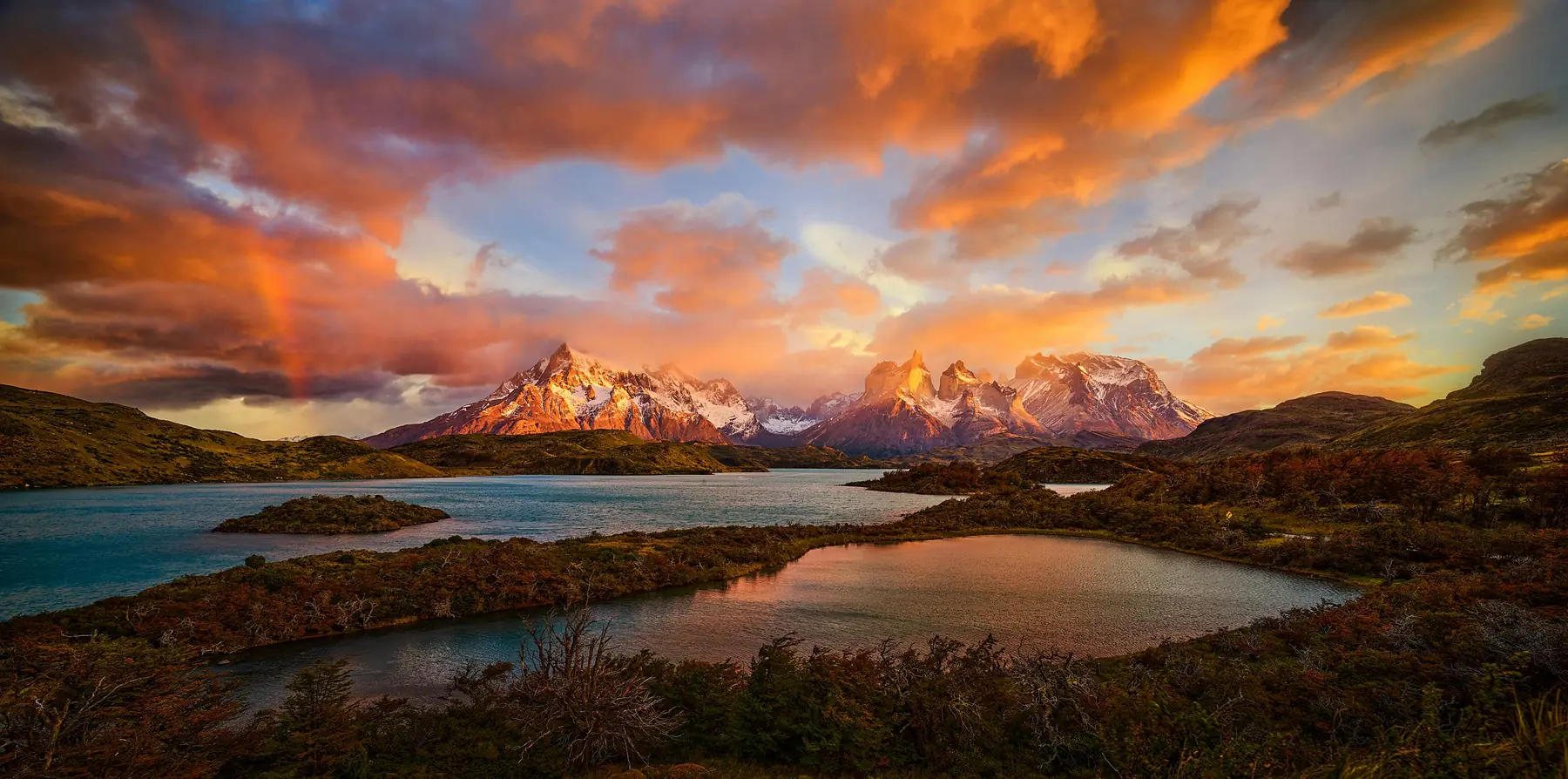
2 Week Patagonia Itinerary: The Ultimate 14-Day Route (2026)
Two weeks is the definitive duration for a first trip to Patagonia, providing enough time to cross the border between Chile and Argentina to see the “Big Three” destinations — Torres del Paine, El Chaltén, and the Perito Moreno Glacier — without the exhaustion of a rushed schedule. This 14-day blueprint balances the region’s most iconic multi-day treks with essential buffer days for the unpredictable Southern Patagonian weather.
Planning a trip of this scale requires navigating complex logistics, including international border crossings and high-demand accommodation bookings. To execute this specific route, you should begin your planning at least six months in advance, particularly if you intend to stay in the mountain refugios of Torres del Paine.
Patagonia 2-Week At-A-Glance
- Total Distance: ~850 km (Calafate – Chaltén – Natales – Torres del Paine – Punta Arenas)
- Border Crossings: 1 (Paso Río Don Guillermo)
- Estimated Cost: $2,500 – $3,500 USD per person (Mid-range)
- Best Months: November to March
- Booking Lead Time: 6 months+ for peak season (Dec–Feb)
Why 14 Days is the Patagonia “Sweet Spot”
When choosing the right Patagonia itinerary for your timeframe, 14 days emerges as the most efficient window. A 7-day trip forces you to choose between Chile or Argentina, often resulting in more time spent in airports than on trails. Conversely, a 3-week itinerary is excellent for including the Lake District or the Carretera Austral, but it can lead to “granite fatigue” for those primarily focused on the southern massifs.
The 14-day window provides three distinct advantages:
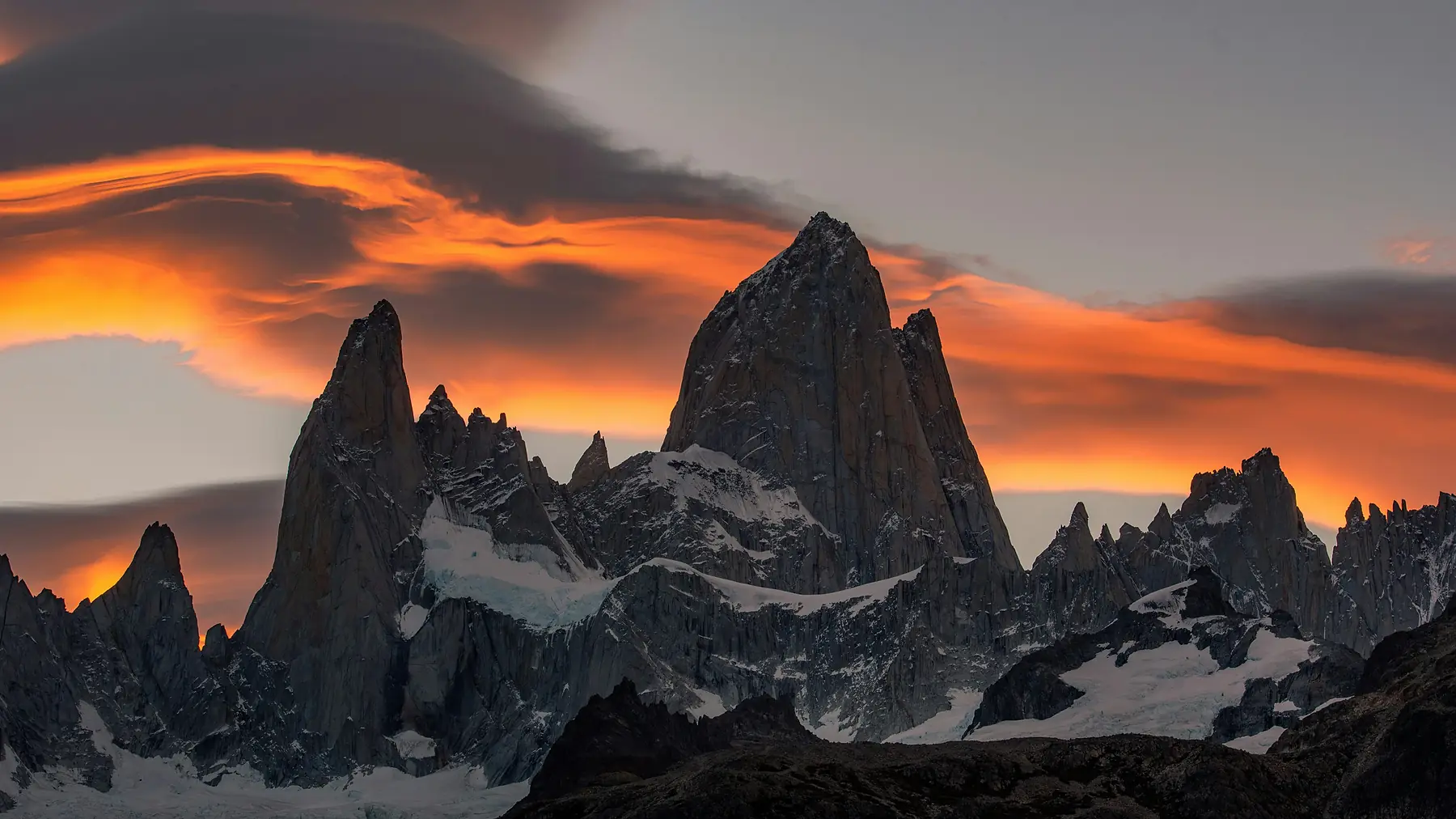
- Weather Buffers: El Chaltén is notorious for “losing” entire days to cloud cover. In a 14-day trip, we allocate five days to Chaltén, ensuring you have a high probability of seeing Fitz Roy in clear light.
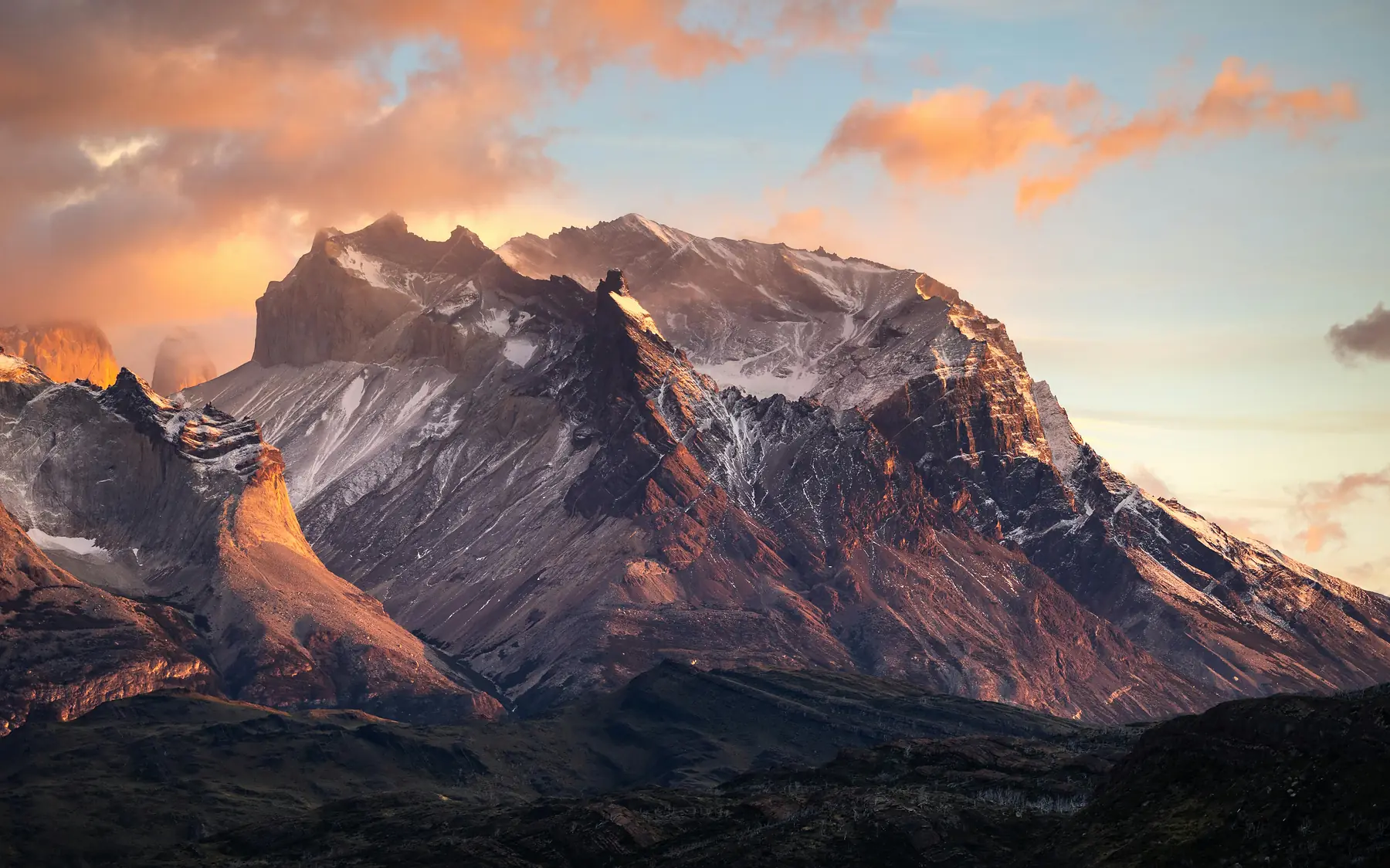
- Cross-Border Integration: You can comfortably visit both the Magallanes region of Chile and the Santa Cruz province of Argentina. This allows you to compare the jagged spires of Torres del Paine with the sheer verticality of the Fitz Roy range.
- Physical Recovery: This itinerary builds in a “transit day” at the midpoint, which serves as a necessary break for your legs between the high-mileage days in El Chaltén and the start of the W Trek.
Unlike a 10-day trip, which often skips the deeper trails of El Chaltén to save time, this 14-day route ensures you see the “Big Three” highlights with enough flexibility to adjust for local conditions.
The Logistics: Fly-in/Fly-out Strategy
The most common mistake travelers make is booking a simple round-trip flight to a single airport. Because of the vast distances and limited road infrastructure, backtracking can cost you two full days of your vacation.
Option A: The “Open Jaw” (Recommended)
Fly into El Calafate (FTE) in Argentina and fly out of Punta Arenas (PUQ) in Chile (or vice versa). This linear route is the most efficient way to see both countries.
- Inbound: Fly from Buenos Aires (AEP/EZE) to El Calafate.
- Outbound: Fly from Punta Arenas to Santiago (SCL).
Option B: The “Punta Arenas” Loop
Best for those keeping their international flights within Chile. You fly into Punta Arenas, take the bus to Puerto Natales, cross to Argentina for the first half of the trip, and return to Punta Arenas for your flight home. This involves roughly 5 – 6 hours of additional bus travel at the end of the trip compared to the open-jaw route.
We recommend starting in Argentina (El Calafate) and ending in Chile (Torres del Paine). Saving Torres del Paine for the final act provides a grander crescendo to the landscape, and the logistics of finishing in Punta Arenas often align better with late-evening international departures from Santiago.
As of the 2025/2026 season, El Calafate (FTE) is primarily served by Aerolíneas Argentinas, Flybondi, and JetSmart, while Punta Arenas (PUQ) is served by LATAM, SKY, and JetSmart.
Day 1–2: El Calafate & The Perito Moreno Glacier
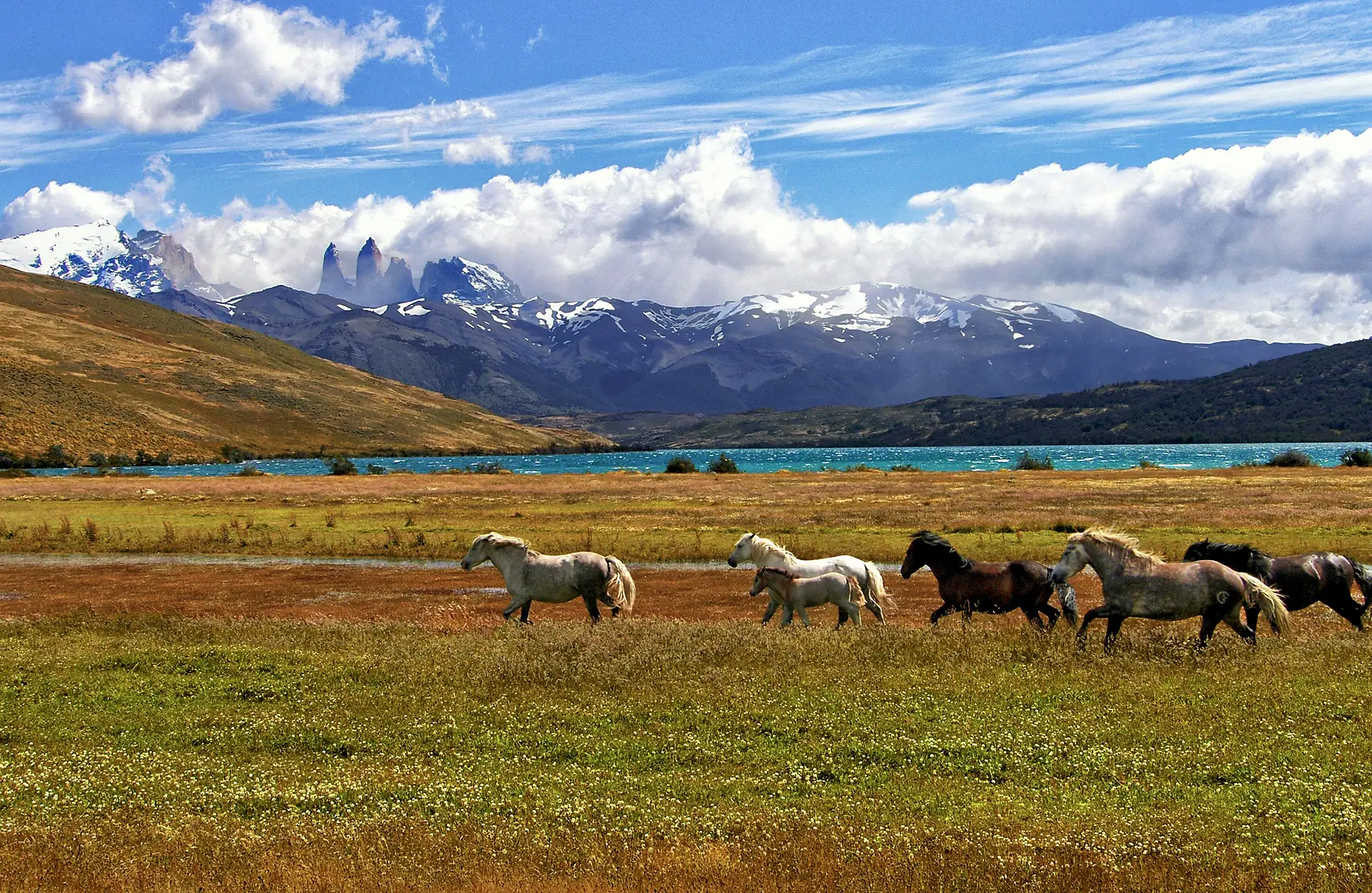
Your journey begins in El Calafate, a bustling hub on the shores of Lago Argentino. While the town itself is primarily a service center for tourism, it serves as the essential gateway to the southern sector of Los Glaciares National Park.
Day 1: Arrival and Orientation After landing at FTE, take an official airport shuttle to your accommodation in El Calafate. Spend the afternoon walking the Reserva Laguna Nimez, a bird sanctuary where you can often spot flamingos against the backdrop of the Andes. Use this evening to buy any last-minute supplies and confirm your bus ticket to El Chaltén for Day 3.
Day 2: The Perito Moreno Glacier This is one of the few places on Earth where you can stand within a few hundred meters of a massive advancing glacier. You have three primary ways to experience it, which we detail in our Perito Moreno activity guide:
- The Walkways: A network of steel boardwalks offering multiple angles of the glacier’s face. Ideal for photography and hearing the “white thunder” of calving ice.
- Minitrekking: A 1.5-hour crampon hike on the ice itself. This is the most popular mid-range option.
- Big Ice: A more strenuous 3.5-hour trek that goes deeper into the glacier’s center to see blue lagoons and crevasses.
For the 2025/2026 season, the entrance fee for the Perito Moreno sector of Los Glaciares National Park is $45,000 ARS for international visitors (approximately $45 USD, though subject to exchange rate volatility). A 50% discount is available for a second-day visit if purchased within 72 hours.
Day 3–7: El Chaltén – The Trekking Capital
On the morning of Day 3, take the 3-hour bus ride north to El Chaltén. As you approach, the Fitz Roy massif typically appears on the horizon — a view that remains one of the most iconic in the southern hemisphere.
While staying in El Chaltén, you don’t need local transport; the trailheads for the major hikes start at the edge of the village.
- Day 4: Laguna de los Tres: The “must-do” hike. It’s a 22km round trip with a steep final kilometer. The payoff is the classic view of Mount Fitz Roy reflecting in a glacial lake.
- Day 5: Laguna Torre: A flatter 18km trek leading to a lake filled with icebergs calved from the Cerro Torre glacier.
- Day 6: Loma del Pliegue Tumbado: Often overlooked, this hike provides the best 360-degree views of the entire park, including both Fitz Roy and Cerro Torre from a high alpine plateau.
- Day 7: Buffer/Rest Day: Use this day to visit the Chorrillo del Salto waterfall or simply rest your legs at one of the town’s many craft breweries. If the weather was poor on Day 4 or 5, this is your second chance to hit the major trails.
The wind in El Chaltén can reach speeds that make high-altitude hiking dangerous. Always check the “Windguru” forecast for the Fitz Roy zone before heading to Laguna de los Tres. If winds are predicted above 60 km/h, consider the more sheltered Laguna Torre trail instead.
As of October 2024, a mandatory entrance fee has been introduced for the Northern Sector of Los Glaciares National Park (El Chaltén). For the 2025/2026 season, the fee for international visitors is $45,000 ARS, which can be paid online or at designated access portals.
Day 8: The Great Border Crossing (Argentina to Chile)
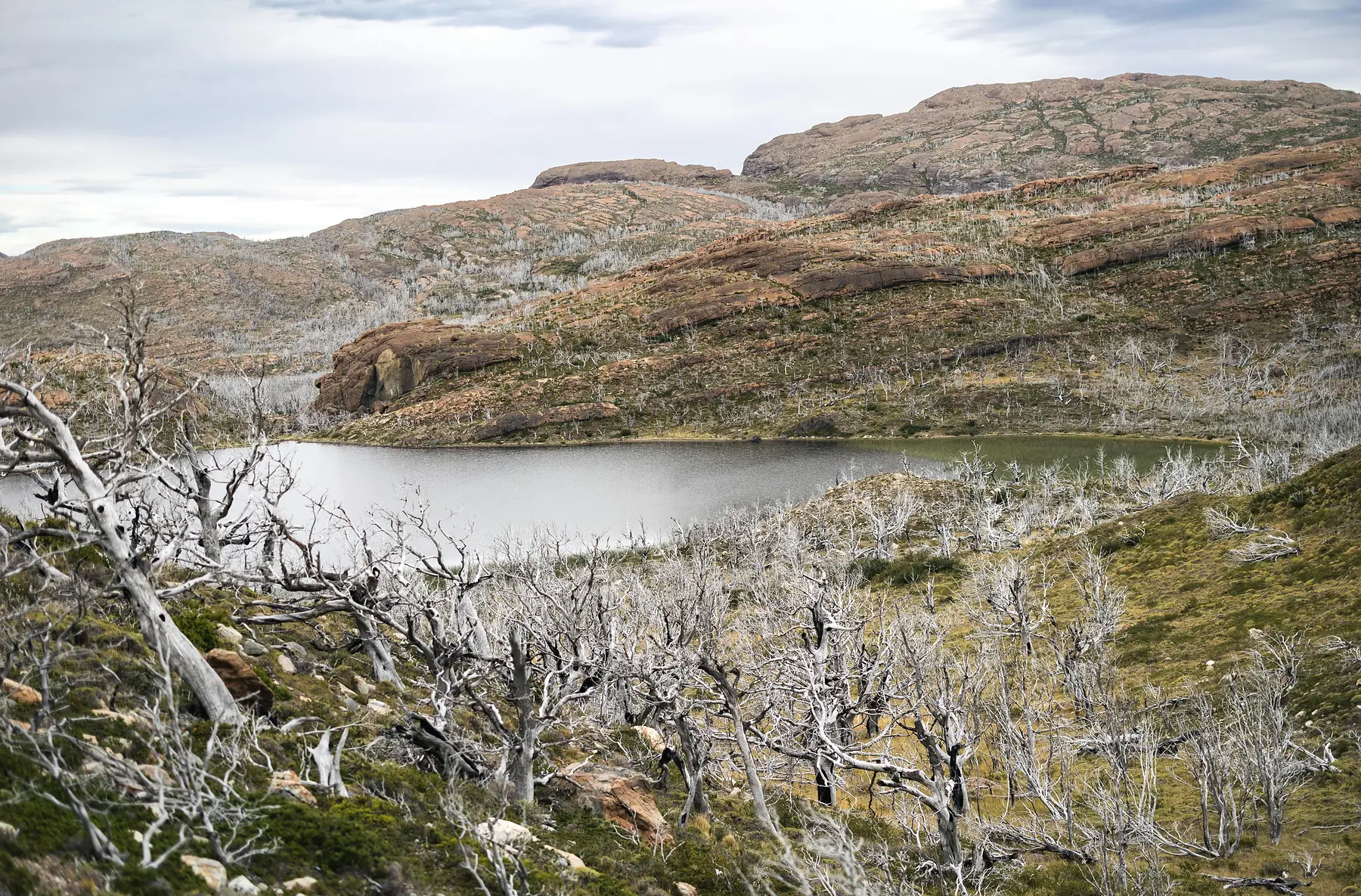
This is your primary transit day. You will travel from El Calafate to Puerto Natales, the gateway to Torres del Paine.
The most reliable way to make this journey is via public bus (Bus Sur or Turismo Zaahj). The trip typically takes between 5 and 7 hours, depending on the speed of the logistics at the Paso Río Don Guillermo crossing.
Crucial Customs Warning: Chile’s agricultural service (SAG) is extremely strict. You cannot bring any “unprocessed” food across the border. This includes fresh fruit, vegetables, meat, honey, or dairy. Even a single apple in your backpack can result in a fine of $200 USD or more. Packaged snacks like sealed granola bars are generally permitted, but you must declare all food on your customs form.
Spend the evening in Puerto Natales renting any trekking gear you lack (poles and dry bags are highly recommended) and attending a W-Trek briefing if you are staying in the refugios.
Day 9–13: Torres del Paine National Park
The final leg of your itinerary takes you into the heart of the guide to Torres del Paine National Park. You have two main ways to structure these five days:
Option 1: The 5-Day W Trek
This is the classic multi-day experience, moving from west to east (or vice versa) and staying in mountain refugios or campsites. We have a detailed 5-day W Trek itinerary that breaks this down mile-by-mile.
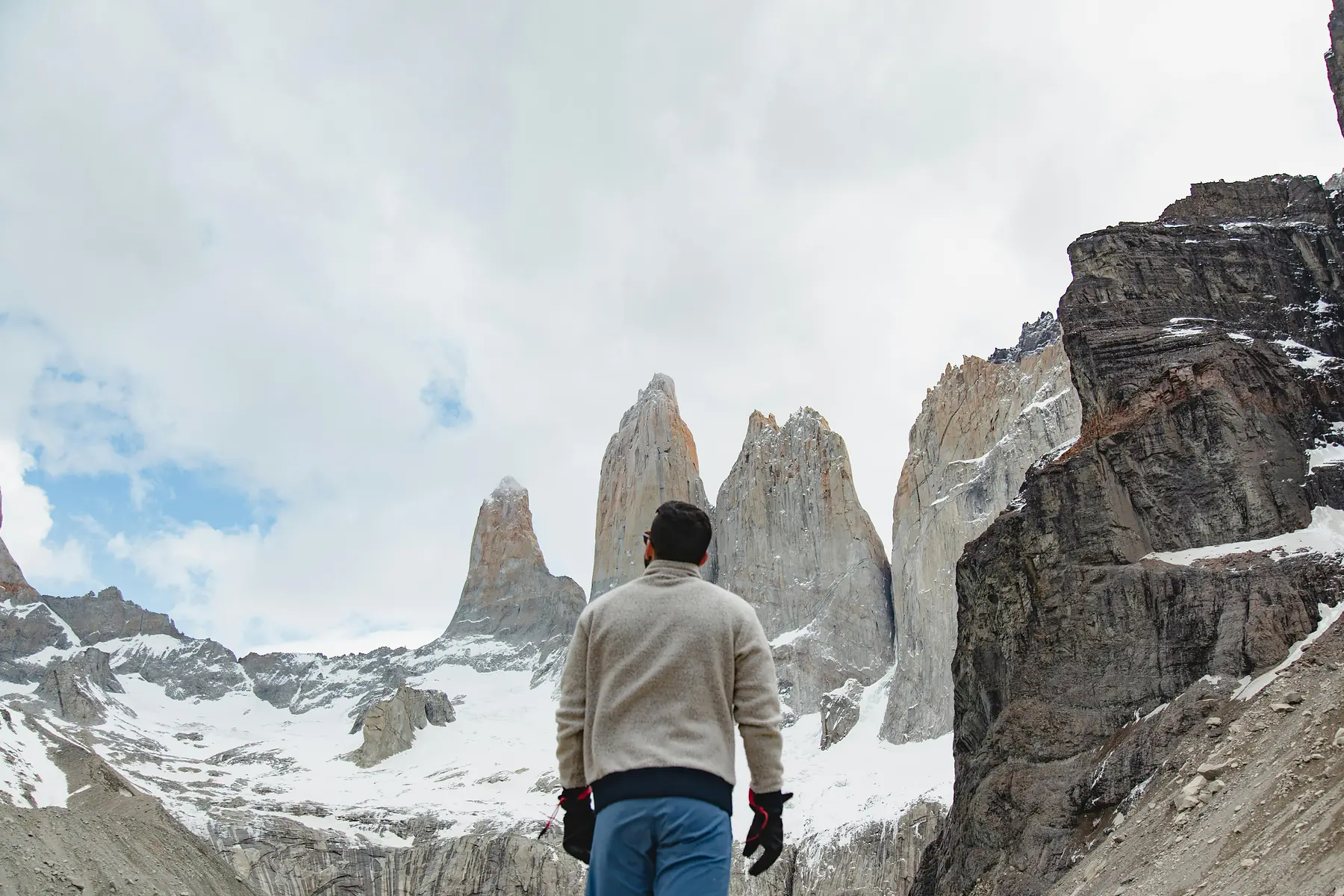
- Day 9: Base Las Torres (The Towers hike).
- Day 10: Trek to Los Cuernos or Domo Frances.
- Day 11: The French Valley.
- Day 12: Grey Glacier and Lago Pehoé.
- Day 13: Grey Glacier activities and return to Puerto Natales.
Option 2: The “Base Camp” Approach
If you prefer a real bed and a hot shower every night, stay at accommodation in Torres del Paine like Hotel Las Torres or an eco-camp. You can do the “greatest hits” as day hikes, using the park’s shuttle buses and catamarans to reach the trailheads.
- Cost: USD 900–1,500 (4 nights, bed + full board) vs. $2,500 – $5,000+ (luxury hotels)
- Logistics: Book as soon as operator windows open (March–June) vs. Easier to book 3 months out
- Effort: High (consecutive 15-20km days) vs. Moderate (flexible distances)
Choose the W Trek for the full immersion of waking up in the mountains; choose Day Hiking if you prioritize physical comfort and want to avoid carrying a heavy pack.
For the 2026/27 season, Bus Sur operates daily services between Puerto Natales and Torres del Paine (Laguna Amarga/Pudeto), with the first departure at ~06:45/07:00. Tickets are CLP 15,000 each way — book at bussur.com. Park entry must be pre-purchased via the official PasesParques.cl platform.
Day 14: Departure via Punta Arenas
On your final day, take the 3-hour bus from Puerto Natales to Punta Arenas. If your flight departs in the late evening, you have time for one last Patagonian experience.
The Isla Magdalena Penguin Tour is a popular half-day trip from Punta Arenas (seasonal, typically October 1 to March 31). You’ll take a boat to an island inhabited by over 120,000 Magellanic penguins. Afterward, take a taxi or the airport shuttle directly to PUQ airport for your flight to Santiago.
Check out our guide on things to do in Punta Arenas if you have a longer layover.
Transport & Budgeting for 2 Weeks
Deciding how to move between these locations is the biggest factor in your total trip cost.
Public Bus vs. Rental Car For this specific 14-day route, we recommend the public bus. The bus network between El Calafate, El Chaltén, and Puerto Natales is exceptional.
- Rental Car Cons: If you rent a car in Argentina and want to take it into Chile, you must pay for a “Permiso de Salida” (roughly $140–$180 USD as of 2026) and you often cannot leave the car in a different country without an exorbitant “drop-off” fee (often exceeding $1,000 USD).
- Bus Pros: Reliable, affordable (~$30–50 per leg), and allows you to sleep or enjoy the scenery.
Daily Budget Breakdown (Per Person)
- Budget (Hostels/Camping): $120 – $150 per day.
- Mid-Range (Hotels/Refugios): $200 – $300 per day.
- High-End (Luxury Lodges): $600+ per day.
If you find yourself wanting more time in the north, consider adding the Lake District to your trip, though this usually requires expanding your itinerary to 21 days.
FAQ
Is 2 weeks in Patagonia enough to see both Chile and Argentina?
Yes, 14 days is the ideal duration to visit the highlights of both Los Glaciares (Argentina) and Torres del Paine (Chile) without feeling rushed. It allows for approximately 5 days in each major trekking hub plus transit time.
What is the best month for a 2 week Patagonia itinerary?
December through February offers the best weather and longest daylight, though November and March provide fewer crowds and lower prices. During these shoulder months, you should expect slightly colder nights and a higher chance of spring winds.
Do I need a car for a 2 week Patagonia trip?
No, the route between El Calafate, El Chaltén, and Puerto Natales is well-served by reliable public buses, making a car optional. Most trailheads in El Chaltén are accessible on foot from the town center.
How much does a 2 week Patagonia itinerary cost?
A mid-range traveler should budget between $2,500 and $3,500 USD per person, including domestic flights, park fees, and a mix of hotels and refugios. This does not include international airfare to South America.
Can I hike the W Trek during a 2 week Patagonia trip?
Absolutely; the 5-day W Trek fits perfectly into a 14-day schedule, leaving 9 days for Argentina and travel logistics. This is the most common way to structure a two-week visit to the region.
Is the water safe to drink during a 2 week Patagonia trek?
In most of Torres del Paine and El Chaltén, the glacial stream water is safe to drink directly from the source. However, you should always check local park alerts for specific trail conditions or potential contamination near high-traffic campsites.