
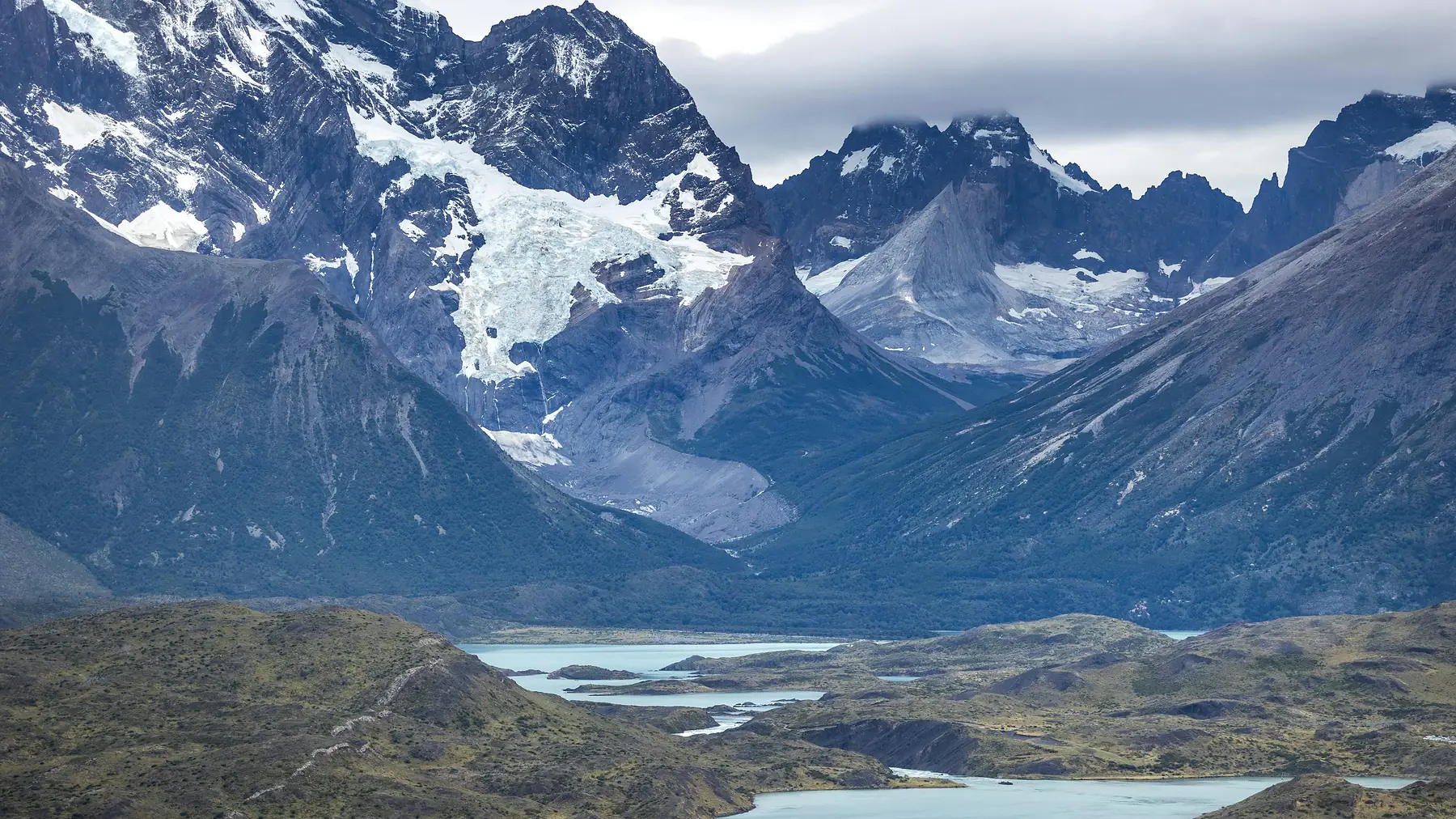
Twenty days is, frankly, the right amount of time for Patagonia. It’s enough to complete the W Trek properly, make the journey down to Ushuaia at the bottom of the world, see Perito Moreno, and tackle the headline hikes around El Chaltén without once feeling like you’re rushing. You’ll come home having genuinely experienced the region rather than survived it.
This itinerary covers the full arc: from flying into Puerto Natales and walking the W Trek, through the crossing south to Punta Arenas and Ushuaia, then the flight north to El Calafate and the road up to El Chaltén, before finishing with a few days in Buenos Aires. We focus on logistics, pacing, and the rationale behind each decision rather than re-treading the details of individual hikes, which are covered in our dedicated guides linked throughout.
One thing to say upfront: this itinerary covers a large amount of southern South America, and transit days are part of the deal. The routing is designed to minimise wasted time, but the journey between Ushuaia and El Calafate, in particular, is a significant travel commitment. If you’d prefer more time in the mountains and less time on buses and planes, cutting Punta Arenas and Ushuaia entirely and running a 17 or 18-day version through Torres del Paine, El Calafate, and El Chaltén is genuinely the better call. You’d trade the end-of-the-world experience for more time on the trails, more rest days, more weather buffer, and a slower pace through the towns you do visit. That version of the trip is arguably more enjoyable for most hikers. But if you want to stand at the bottom of the world and back it up with proper hiking on both sides of the border, this is the trip.
Itinerary At-A-Glance
- Total Duration: 20 days (19 nights on the ground)
- Start: Santiago, Chile
- End: Buenos Aires, Argentina
- Countries Visited: Chile and Argentina
- Main Trek: W Trek, 4 to 5 days
- Best Months: December to early March (peak), November and late March (shoulder)
- Estimated Budget: $4,000 to $6,500 USD per person, excluding international flights
- Fitness Level Required: Moderate to high. Expect 15 to 22 km hiking days with significant elevation gain
- Border Crossings: 3 (Chile to Argentina overland via Ushuaia, Argentina to Chile by air, Chile to Argentina by air to El Calafate)
Route Overview and Why It Works
The geography of this trip dictates a lot of the decisions. Torres del Paine sits in Chilean Patagonia, accessed via Puerto Natales. Ushuaia is deep in Argentine Tierra del Fuego, most easily reached overland via Punta Arenas and then the ferry crossing at Primera Angostura. El Calafate and El Chaltén are in Argentine Patagonia, connected to Buenos Aires by regular direct flights.
The routing runs: Santiago to Puerto Natales (fly), Torres del Paine W Trek, then south by road to Punta Arenas, across to Ushuaia by bus and ferry, then Ushuaia to El Calafate by air, El Calafate to El Chaltén and back, and finally El Calafate to Buenos Aires to fly home.
This is an open-jaw itinerary: you fly into Santiago and out of Buenos Aires. If you need a round-trip flight to Santiago, you’ll need to factor in either an additional return leg from Buenos Aires, or fly back to Santiago after El Calafate. That adds a day and some cost, but it’s manageable. Most travellers doing 20 days will find the open-jaw option is worth pursuing if international flights allow it.
Direct flights from Santiago to Puerto Natales operate seasonally, typically November through March, on JetSmart and Sky Airline. Book early. Seats are limited and prices climb steeply once peak season demand kicks in.
Day 1: Fly South to Puerto Natales
Your travel day south. The direct flight from Santiago to Puerto Natales takes around three and a half hours. You’ll arrive by early afternoon, which is the ideal time to arrive: enough daylight to walk down to the Ultima Esperanza Sound, get your bearings, and eat a proper meal before the busy days ahead.
Don’t underestimate the value of arriving relaxed. Use this evening for exactly that.
Day 2: Gear Setup and Logistics Day
This day exists so you’re not rushing at the trailhead. Use the morning for gear rental, the afternoon for briefings and packing, and the evening for an early night.
Practically speaking:
- Visit rental shops for trekking poles, sleeping bags, or stoves. A good pole rental runs around $5 to $8 USD per day, and they’re genuinely worth it on the steep section up to the Torres viewpoint and the long descent out of the French Valley
- Head to the Unimarc supermarket for trail snacks and fuel. Significantly cheaper than refugio meal packages
- Attend the daily 3:00 PM W Trek briefing at Erratic Rock. Current conditions, weather forecasts, and any trail closures. Don’t skip this
- Confirm your bus tickets to Torres del Paine for tomorrow morning
- Check all refugio and camping bookings. Printed confirmations are useful; park Wi-Fi is unreliable
Eat a substantial dinner. Mesita Grande and Cangrejo Rojo are both reliable. Then get to bed early.
The Erratic Rock briefing at 3:00 PM is one of the most useful hours you’ll spend in Puerto Natales. The staff update it daily with real conditions from inside the park, including which campsites are waterlogged, where the wind is worst, and whether the catamaran is running on schedule. It’s also where you can ask the questions your booking confirmations won’t answer.
Days 3 to 6: The W Trek
The W Trek is the centrepiece of the Chilean half of this trip. The classic west-to-east direction takes three nights and four days, which is the right call for most people, though slower walkers or those who want more time at Grey refugio may prefer five.
Walking west to east is generally preferred because you finish with the Torres viewpoint as the iconic finale. East to west also works, and some travellers prefer it because if weather closes in early in the trip, you’ve already seen the headline sight.
Day 3 (Trek Day 1): Puerto Natales to Paine Grande, Hike toward Grey Glacier
Take the 6:45 or 7:00 AM bus from Puerto Natales. After two hours you’ll reach Laguna Amarga, pay the park entrance fee, then connect by shuttle to Pudeto and the catamaran across Lago Pehoé to Paine Grande (catamaran around CLP 28,000, roughly USD 28, one way in 2026). Drop your bag, then hike out toward Grey Glacier. Turn back at the first viewpoint for a shorter day, or continue to the suspension bridges for the full 22 km round trip. Sleep at Paine Grande.
Day 4 (Trek Day 2): Paine Grande to Francés via the French Valley
The most demanding day of the trek. Walk to Campamento Italiano, drop your heavy pack, and climb into the French Valley. The upper viewpoint at Mirador Británico is the goal, though the lower Mirador Francés is a reasonable turnaround if weather or legs aren’t cooperating. Continue to Francés or Cuernos for the night. Total distance 18 to 26 km depending on your route.
Day 5 (Trek Day 3): Francés to Chileno or Central
A long but more moderate day along Lago Nordenskjöld. Most people stay at Chileno to set up for sunrise the next morning. Central or Las Torres is a comfortable alternative if you’d prefer better sleep, at the cost of a longer pre-dawn hike. Distance 14 to 18 km.
Day 6 (Trek Day 4): Sunrise at the Towers, Exit to Puerto Natales
Leave Chileno around 4:00 AM for the steep climb to the Torres viewpoint. If the forecast is bad for sunrise, sleep in and hike up later in clearer daytime conditions. Descend, pack up, and walk down to Las Torres. The 14:30 bus back to Puerto Natales is the most reliable. You’ll be back in Puerto Natales by early evening.
Refugio and camping reservations inside Torres del Paine must be booked months in advance, often by August or September for the following peak season. Vertice operates Paine Grande, Grey, Dickson, and Los Perros; Las Torres Patagonia operates Chileno, Cuernos, Francés, Central, Norte, and Serón. Italiano is day-use only for the 2026/27 season and cannot be used for overnight stays. Do not plan around free camping options without confirming current status close to your trip date.
Day 7: Rest Day in Puerto Natales
After four days on the trail, a genuine rest day here makes a real difference to everything that follows. This isn’t padding: it’s the difference between arriving in Ushuaia still feeling like yourself, and arriving already depleted before the second half of the trip begins.
Use the morning to sleep properly. In the afternoon, wander the waterfront, do laundry, eat lunch somewhere slow. Puerto Natales is a pleasant small town with a few good restaurants and no agenda. Let it work on you.
If you feel restless, the short walk up to Cerro Dorotea is an easy half-day option with solid views over the sound. But there’s no obligation. You have more hiking ahead.
Day 8: Puerto Natales to Punta Arenas
The bus from Puerto Natales to Punta Arenas takes around three hours heading south down Route 9. It’s a straightforward journey with nothing complicated about it. Morning departures get you there by midday, leaving a comfortable afternoon in the city.
Punta Arenas is worth a few hours of genuine exploration. The city sits on the Strait of Magellan and has a different feel to Puerto Natales: more urban, more historically interesting, with good seafood. The Cementerio Municipal is one of the more remarkable cemeteries in South America. The Natural History Museum and the view from Cerro La Cruz are worth an hour each if you have the energy.
Have dinner here before your early start the next day. Sotitos or El Mercado are reliable choices for centolla, the local king crab.
Day 9: Punta Arenas to Ushuaia
This is a long travel day and you should go in expecting that. The total journey from Punta Arenas to Ushuaia takes roughly eight to ten hours depending on your operator and how efficiently the ferry crossing moves.
The route crosses into Argentina via the ferry at Primera Angostura (around 20 minutes crossing the Strait of Magellan), passes through Río Grande on the Argentine side of Tierra del Fuego, and arrives in Ushuaia by early evening. Several bus operators run this route with the ferry included as part of the ticket. Book in advance, particularly in peak season.
The landscape along the way is worth the effort. The crossing at Primera Angostura is a genuine moment: standing on deck in the wind, watching the far bank of Tierra del Fuego come into view, is a reminder of where you are and what it took to get here. Don’t spend the whole crossing on your phone.
Arrive in Ushuaia, check in, eat dinner, sleep.
Days 10 and 11: Ushuaia
Ushuaia markets itself hard as “the southernmost city in the world,” and while that claim has some caveats, the setting is genuinely dramatic: mountains rising steeply behind the town, the Beagle Channel in front of it, and a feeling of being at the edge of something that no amount of tourist shops can entirely undermine.
Two days here is the right amount for most people. It’s enough to do the main Tierra del Fuego National Park hike and one boat trip, without feeling like you’re killing time before the flight north.
Day 10: Tierra del Fuego National Park
The national park sits 12 km west of the city and is easily reached by bus or taxi. The Senda Costera is the best all-round trail: a 10 km coastal walk through lenga beech forest along the Beagle Channel with good views and manageable terrain. The train at the park entrance is touristy but charming if you’re in the mood.
For a longer day, the circuit via Lago Roca and Laguna Negra adds elevation and a proper half-day of hiking. Total 18 to 22 km depending on the loop.
Day 11: Beagle Channel Boat Trip and Glaciar Martial
The morning boat trip on the Beagle Channel is one of the better use-cases for a tourist excursion in Patagonia. A half-day trip to the sea lion colony at Isla de los Lobos, the penguin colony at Isla Martillo (accessible in season, roughly October to March), and past Les Eclaireurs lighthouse is genuinely impressive. Most operators depart around 9:00 or 10:00 AM and return by 1:00 PM, which leaves the afternoon free.
In the afternoon, the short walk up to Glaciar Martial gives you a close look at a small hanging glacier above the city. It’s not the most dramatic glacier you’ll see on this trip, but the view down over Ushuaia and the channel is good, and it’s only an hour each way.
If you’re visiting between October and March, the Magellanic penguin colony at Isla Martillo is worth the boat trip upgrade. The colony is small enough that you walk among the penguins rather than viewing from a distance, which is genuinely memorable.
Day 12: Fly Ushuaia to El Calafate
Flights from Ushuaia to El Calafate (USH to FTE) are operated by Aerolíneas Argentinas and LATAM, with most routings going direct or via a short connection at Río Gallegos. Flight time is around two hours direct. Morning departures are preferable: they give you the afternoon in El Calafate to arrange the Perito Moreno tour for the following day and eat a proper dinner.
El Calafate after Ushuaia feels noticeably more comfortable. The town is geared toward tourists in a way that Ushuaia’s more workaday port-city feel isn’t. That’s not a criticism, just useful to know going in.
Spend the evening arranging your Perito Moreno visit. La Tablita and Don Pichón are reliable steakhouses for dinner.
Day 13: Perito Moreno Glacier
Perito Moreno is one of the few major glaciers in the world that is not retreating. Standing on the boardwalk watching house-sized chunks of ice calve into Lago Argentino, with a sound like distant thunder echoing across the water, is worth the trip from town.
Three main options:
- Boardwalk day trip: Around $45 USD park entrance fee. The budget choice but genuinely worth it. The system of walkways and viewing platforms gives you multiple angles on the ice face, and you can stay as long as you like. Most people find two to three hours here is plenty
- Mini Trekking: A short walk on the glacier with crampons, included transfer. $200 to $250 USD in 2026. Better suited to people who’ve never walked on ice before than to experienced hikers
- Big Ice: Four to five hours on the glacier, for those who want the full experience. $300 to $400 USD. Skip this if your legs are still tired from the W Trek, which they may well be
For most travellers, the boardwalk option is plenty. You’ll be back in El Calafate by early evening.
The Glaciarium ice museum on the edge of town is worth an hour if you have time, particularly for understanding the science behind why Perito Moreno is advancing while most of the world’s glaciers retreat.
Day 14: El Calafate to El Chaltén
The bus from El Calafate to El Chaltén takes around three hours along a good paved road through flat steppe, until the Fitz Roy massif appears on the horizon with the kind of abruptness that makes people actually gasp. Morning departures at 7:30 to 8:30 AM get you there by lunchtime.
El Chaltén is small and walkable, with every major trail starting from the village itself. There’s no park gate, no entrance fee to reach the trailheads (note: Los Glaciares National Park does charge a foreign visitor fee, currently around $45 USD for a day pass in 2026, though enforcement isn’t always consistent), and no need for a car.
After checking in, do a short acclimatisation walk. Mirador Los Cóndores and Mirador Las Águilas are both easy two-hour return walks from the village with good views back over El Chaltén and north toward the mountains. Save your legs for what’s coming.
Days 15 to 19: The Big El Chaltén Hikes
Five full days in El Chaltén is the right amount for this itinerary, and it’s what makes the 20-day version genuinely superior to a shorter trip. You have enough time to do both headline hikes with a proper rest day between them, a third option if the weather holds, real buffer for a bad day or two, and the latitude to simply enjoy the village rather than treat every morning as a race to the trailhead.
The two headline hikes are Laguna de los Tres (Fitz Roy) and Laguna Torre, and they’re best tackled in whatever order the forecast dictates. Check conditions each evening at your accommodation: most hostels post the next morning’s outlook, and the local advice is consistently reliable.
Save your best weather day for Laguna de los Tres. Fitz Roy is famously cloud-bound, and a clear view at the laguna is one of the best things this trip has to offer. A cloudy view is still impressive, but loses most of its magic.
Laguna de los Tres (Fitz Roy)
A 20 to 25 km day with around 800 m of elevation gain. The first 8 km are gentle, the middle section is moderate, and the final kilometre is a brutally steep scramble to the laguna at the base of Fitz Roy. Plan 8 to 11 hours. Start early.
The final climb to Laguna de los Tres is genuinely steep, and the descent on tired legs is where most injuries on this trail happen. Trekking poles are strongly recommended. Allow more time than you think you need, and don’t push to summit if weather is closing in. The view is not worth a fall on loose scree.
Laguna Torre
A more moderate 18 km return hike with limited elevation gain. Plan 6 to 8 hours. Cerro Torre is more often shrouded than Fitz Roy, but the walk through forest is beautiful and the lake at the end is worth it regardless of what the peak is doing above you.
Recommended Structure over the Five Days
Use day one for a shorter acclimatisation walk: Chorrillo del Salto is a pretty two-hour return to a waterfall, or walk up toward Laguna Capri for views of Fitz Roy without committing to the full climb. Days two and four for the big hikes, in whichever order the weather dictates. Day three as a genuine rest day: cafés, a slow lunch, legs up. Both major hikes are long, and doing them back-to-back leaves most people genuinely depleted. The rest day in the middle is what allows you to enjoy the second one rather than endure it. That leaves day five as flex time.
If Four or Five Days Have Good Weather
If the forecast is consistently clear, you have the option of a third major hike. The best choices are:
- Loma del Pliegue Tumbado: A 22 km full-day hike with panoramic views of both Fitz Roy and Cerro Torre simultaneously. Technically demanding enough to feel earned. Only consider this if your legs are holding up well across the trip
- Lago del Desierto: A beautiful lake 37 km north of El Chaltén, accessible by remis taxi or organised transfer. Relatively flat trail, genuinely quieter than the main treks, and worth it on a clear afternoon
What If the Weather Is Consistently Bad?
Unlikely but possible. Do Laguna Torre regardless: it’s lower elevation and the forest section is pleasant even in mist. Use shorter options like Chorrillo del Salto or Mirador del Salto for other days, and be patient. The five-day window means you’re not making desperate decisions on day three hoping the weather breaks. Patagonian weather moves quickly, and the two hours after a storm clears, when Fitz Roy’s granite spires emerge into fresh light, can produce the most memorable views of the whole trip.
Day 20: Final Day in El Chaltén, then El Calafate
Your last morning in El Chaltén. Use it well: a slow breakfast, a final walk up to one of the mirador trails above town, or simply sitting with a coffee watching the mountains. By this point in the trip, you’ve earned a morning with no agenda.
The afternoon bus back to El Calafate departs around 14:00 or 17:00 depending on the operator, and takes three hours. You’ll arrive in El Calafate by early evening with time to eat dinner and rest before your flight the following day. Flights from El Calafate to Buenos Aires (FTE to EZE or AEP) are operated by Aerolíneas Argentinas and LATAM, with flight time around three hours twenty minutes. Book this well in advance, especially if you have an international connection to make out of Buenos Aires the same day.
If your Buenos Aires flight departs early on day 20, you may need to travel back to El Calafate on day 19 instead. The morning bus gets you there by midday, leaving the afternoon free and a comfortable night before your flight. Factor your flight time into this decision before you finalise your El Chaltén accommodation.
Practical Notes and Variations
If You Had a Few More Days
A 22 to 24 day version of this trip would be meaningfully better, mostly in El Chaltén and around Ushuaia. An extra day in Ushuaia allows you to properly explore Tierra del Fuego National Park without rushing, and an extra day in El Chaltén provides real weather buffer. If your schedule allows any extension, add it here rather than in transit.
If You’re On a Tighter Budget
The biggest costs on this itinerary are the glacier trekking tours (skip Big Ice and Mini Trekking at Perito Moreno if budget is a concern — the boardwalk is genuinely excellent), the flights within Argentina (book early, domestic Argentine flights are significantly cheaper at 60–90 days out), and refugio meal packages (buy trail food at the Unimarc in Puerto Natales instead). Camping inside Torres del Paine with your own gear cuts daily costs on the W Trek roughly in half.
If You’re a Less Confident Hiker
The W Trek can be replaced by a series of day hikes from a base at Hotel Las Torres or the EcoCamp area, doing the Towers viewpoint and parts of the French Valley as day trips rather than carrying overnight gear. In El Chaltén, both Laguna de los Tres and Laguna Torre have earlier turnaround points at intermediate viewpoints that are still impressive and significantly less demanding. Ushuaia’s national park has short coastal trails that require no technical ability.
If You’re Travelling in Shoulder Season
This itinerary works from late October through mid-April. November and March/April are noticeably less crowded and around 20 to 30% cheaper, but with more variable weather and shorter daylight hours. By late April, refugios on the W Trek begin closing and the direct Santiago to Puerto Natales flights typically stop running. The Ushuaia to Punta Arenas bus connection operates year-round.
If the Punta Arenas to Ushuaia Bus Feels Like Too Much
Some travellers choose to fly directly from Punta Arenas to Ushuaia rather than doing the bus and ferry crossing. It’s faster (around 90 minutes versus a full day) and not dramatically more expensive in peak season. The trade-off is missing the Primera Angostura crossing and the overland journey through Tierra del Fuego, which are worth experiencing if you have the time. But if day 9 feels like too much given your overall energy levels on the trip, the flight is a perfectly reasonable alternative.
FAQ
Is 20 days enough time to do the W Trek, Ushuaia, El Calafate, and El Chaltén?
Twenty days is enough to cover this full route comfortably, but the itinerary does include several significant transit days. The W Trek takes four days of walking plus two days for logistics and exit. Ushuaia accounts for two hiking days and one long travel day in each direction. El Calafate is a single day at Perito Moreno. El Chaltén gets five days, which is the right amount for the main hikes plus weather buffer. If you’re short on time, cutting Ushuaia and Punta Arenas brings the trip down to around 17 days without sacrificing any of the major hiking.
Is it possible to do the W Trek and El Chaltén in one trip?
Yes, combining the W Trek in Torres del Paine with the hikes around El Chaltén is the standard structure for most multi-week Patagonia trips. The two areas are connected by an overland bus from Puerto Natales to El Calafate (five to six hours including the border crossing), then a separate three-hour bus from El Calafate to El Chaltén. In 14 days you can do both. In 20 days you can do both properly, with rest days and weather buffer built in.
How long does it take to get from Puerto Natales to El Calafate?
The bus from Puerto Natales to El Calafate takes five to six hours, including the overland border crossing at Cerro Castillo on the Chilean side and Cerro Cancha Carrera on the Argentine side. The crossing is usually straightforward but can slow down when multiple buses arrive simultaneously. There are no direct flights between the two towns; the bus is the standard connection.
How do you get from Punta Arenas to Ushuaia?
The standard route is by bus with a ferry crossing at Primera Angostura. The total journey takes eight to ten hours and crosses from Chilean Patagonia into Argentine Tierra del Fuego via the Strait of Magellan. Several operators run this route with the ferry included. An alternative is to fly directly from Punta Arenas to Ushuaia, which takes around 90 minutes, though this is more expensive and you miss the crossing itself, which is one of the more memorable parts of the journey south.
When should you book W Trek refugios?
As soon as operator booking windows open, which is typically between March and June for the following season. Vertice Patagonia operates Paine Grande, Grey, Dickson, and Los Perros; Las Torres Patagonia operates Chileno, Cuernos, Francés, Central, Norte, and Serón. Both booking systems fill quickly once they go live. If you’re planning a January or February trip and haven’t booked within the first few weeks of windows opening, your options will be limited. Refugio beds go faster than camping spaces at the most popular sites.
What is the best base for exploring Torres del Paine?
Puerto Natales is the main base town for Torres del Paine, sitting around two hours south of the park by bus. Most travellers spend one or two nights here before starting the W Trek to sort gear, attend the Erratic Rock trail briefing, and stock up on food. The town has a good range of accommodation, gear rental shops, and restaurants. There is also accommodation inside the park itself, including at Hotel Las Torres and EcoCamp Patagonia, which is worth considering if you prefer to avoid early morning bus connections or want to do the park as a series of day hikes rather than a multi-day trek.