
Patagonia Glacier Tours: Ice Hiking & Boat Trips (2026/27)
Patagonia glacier tours range from $100 boat excursions to $600 deep-ice expeditions, with El Calafate in Argentina and Torres del Paine in Chile serving as the primary gateways for 2026/27 travelers. Whether you are looking for the accessible walkways of Perito Moreno or the remote, rugged trekking of the Calluqueo Glacier, the Southern Patagonian Ice Field offers more ways to touch, walk on, and navigate around ancient ice than anywhere else on Earth.
Choosing the right tour depends on your physical mobility, your budget, and how much time you are willing to spend in transit. While the famous Perito Moreno glacier allows you to stand within meters of calving ice via steel walkways, other glaciers like Grey or San Rafael require multi-hour boat journeys or strenuous hikes to reach. This guide breaks down every major glacier experience across the region to help you decide where to invest your time and budget.
Types of Patagonia Glacier Tours: Choosing Your Experience
The best way to see Patagonia’s glaciers depends on your comfort level with physical exertion and your desire for proximity to the ice. Tours generally fall into four categories: ice trekking, boat excursions, kayaking, and sightseeing walkways, each offering a distinct perspective on the scale of the ice fields.
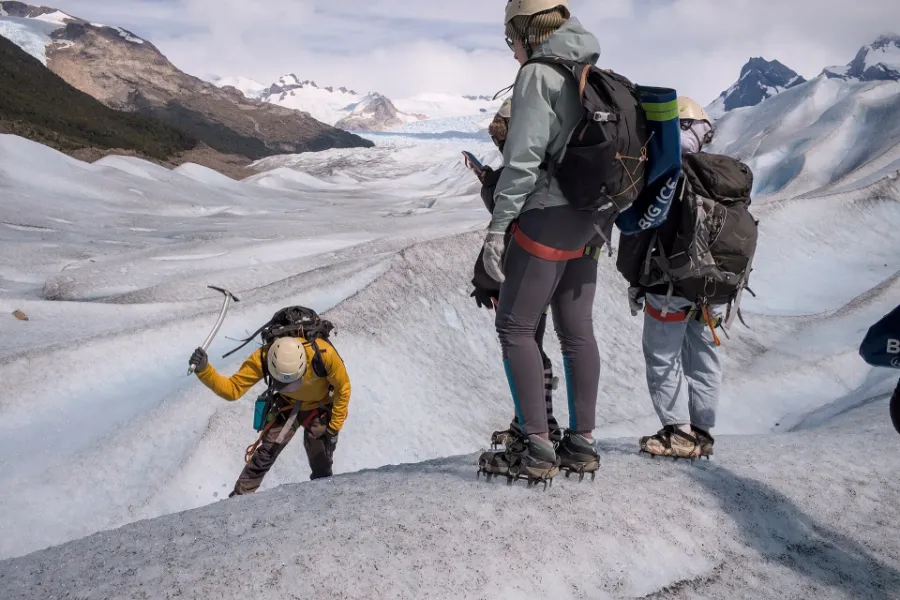
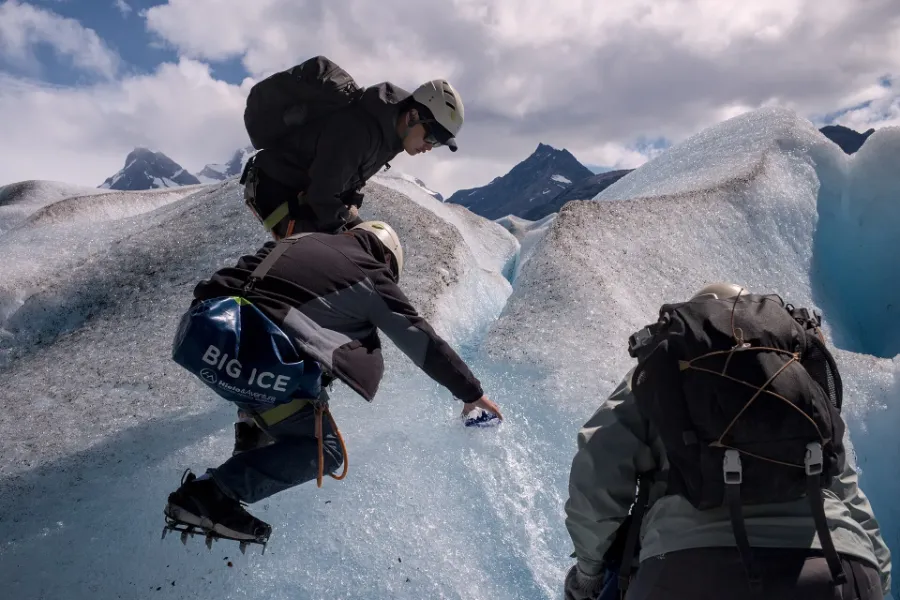
Ice trekking is the most immersive option, allowing you to strap on crampons and walk directly on the glacier surface. These tours are strictly regulated and typically split into “Minitrekking” (shorter, easier routes) and “Big Ice” (longer, more technical explorations). For those who prefer to stay on the water, boat excursions range from massive catamarans that carry hundreds of passengers to small, agile zodiacs that can navigate closer to the ice walls.
If you prefer a quieter, more intimate encounter, kayaking allows you to paddle among floating icebergs at water level. This is the only way to truly appreciate the silence of the fjords, interrupted only by the crack of shifting ice. Finally, sightseeing walkways provide the most accessible views. At Perito Moreno, these steel paths allow travelers of all ages to view the glacier from multiple angles without needing a boat or specialized gear.
To help you narrow down the best region for your trip, consider how these destinations compare across key logistical factors.
- Accessibility: High. Direct flights and 1.5-hour drives to the ice. | Moderate. Requires 2-hour bus from Natales plus park entry. | Low. Long drives on the Carretera Austral or multi-day boat trips.
- Activity Variety: Excellent. World-class trekking, boat tours, and walkways. | Good. Strong focus on kayaking and boat navigations. | High Adventure. Specialized trekking and remote fjord cruises.
- Crowd Levels: High. Expect busy trails and full boats in peak season. | Moderate to High. Busy at Grey Glacier, quieter elsewhere. | Very Low. You will often be the only group on the ice.
- Typical Cost: $100 - $600 USD per person. | $120 - $350 USD per person. | $200 - $600 USD per person (due to logistics).
Choose El Calafate for the most iconic ice trekking, Torres del Paine for glaciers integrated into mountain hikes, and Aysen for remote, crowd-free expeditions.
For a deeper look at the science behind these massive ice formations and the geography of the ice fields, see our comprehensive guide to the glaciers of the region.
The science of Patagonia’s ice
El Calafate: The Hub for Perito Moreno & Los Glaciares
El Calafate is the undisputed capital of Patagonia glacier tours because it provides the easiest access to the most stable and spectacular ice on the planet. Most travelers base themselves here for three to four days to explore Los Glaciares National Park, where the Perito Moreno glacier serves as the primary attraction.
For those wanting to walk on the ice, the Minitrekking and Big Ice tours are the gold standard. Minitrekking involves about 1.5 hours on the ice and is accessible to travelers aged 8 to 65 with moderate fitness, while Big Ice offers a more grueling 3.5-hour trek that goes much deeper into the glacier’s center to see blue lagoons and deep crevasses.
If you aren’t looking to hike, the “Todo Glaciares” and “Gourmet Glaciares” boat tours are the best ways to see the northern part of the park. The standard “Todo Glaciares” route takes you to the massive walls of the Spegazzini and Upsala glaciers. However, the “Gourmet” experience on the Maria Turquesa vessel is often worth the extra cost for its smaller crowds and superior viewing decks. Note that access to the Upsala Glacier face is frequently restricted by high concentrations of icebergs; most tours view it from a distance.
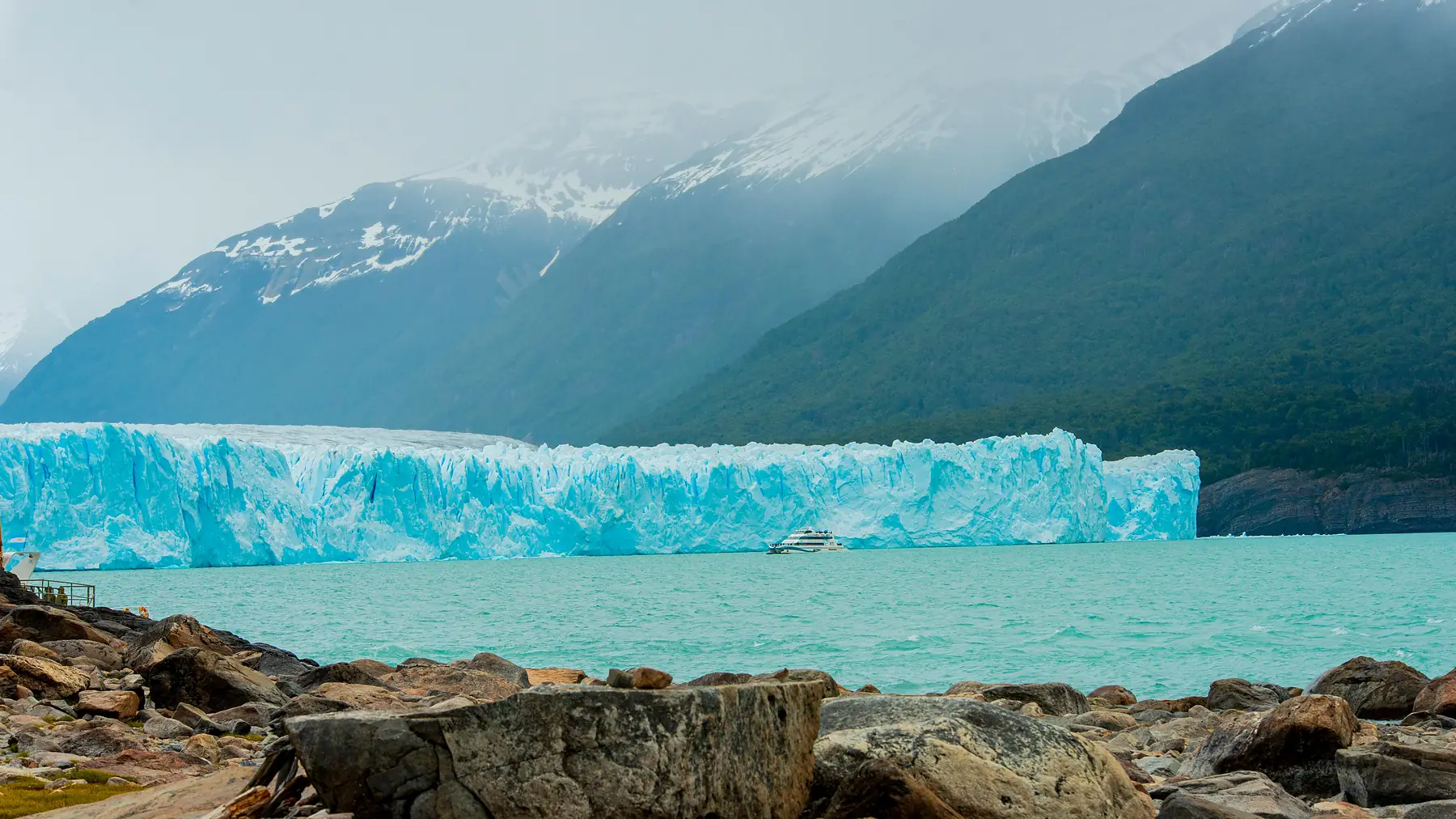
For families or those with limited mobility, the “Safari Azul” is an excellent middle ground. It combines a short boat ride with a walk through the forest to a beach right at the base of Perito Moreno, allowing you to touch the ice without the physical demands of a full trek. Another premium option is a visit to Estancia Cristina, which combines a boat tour of the Upsala Glacier with a 4x4 journey to a high-altitude viewpoint overlooking the Southern Ice Field.
Explore the Perito Moreno walkways
Torres del Paine: Glaciers of the Chilean Granite Peaks
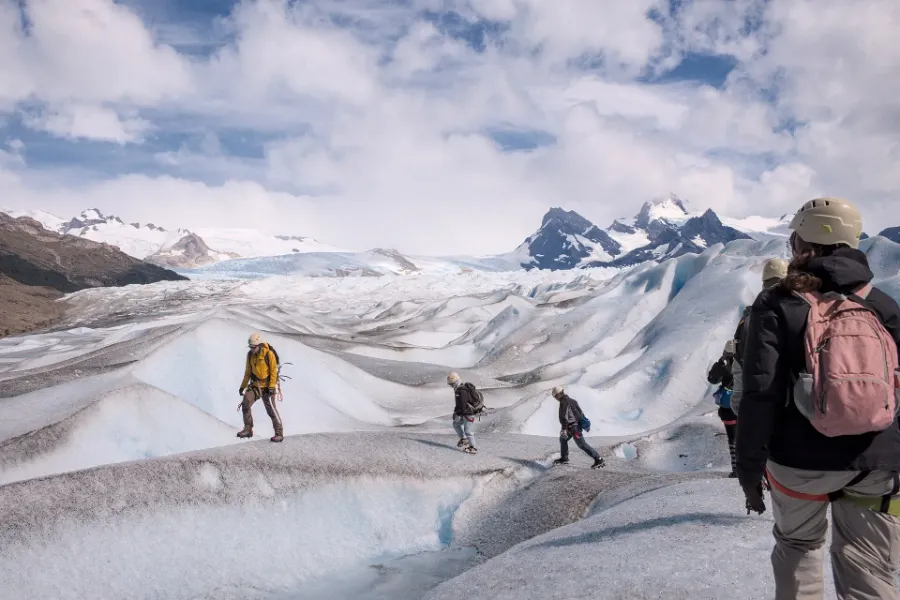
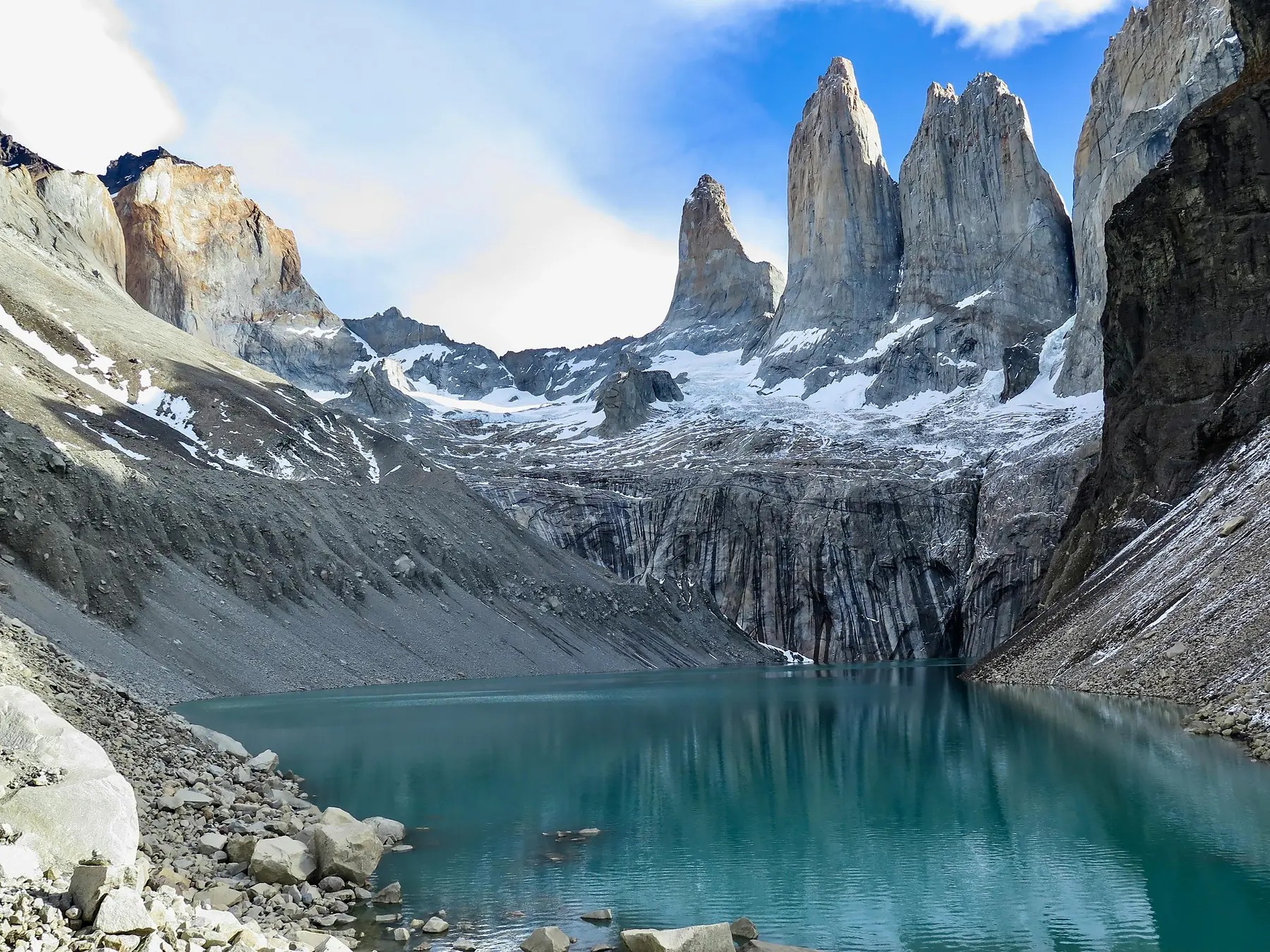
Glacier tours in Torres del Paine are centered around the massive Grey Glacier, which forms the western edge of the famous W Trek. Unlike the glaciers in Argentina, which are often accessed from a central town, the tours here are integrated into the national park experience and often require staying in Puerto Natales or within the park itself.
The Grey III Navigation is the most popular boat tour in the park. Departing up to four times daily during the peak season (typically 10:00, 13:00, 16:00, and 19:00), the catamaran takes you to the distinct faces of Grey Glacier.
Ice hiking on Grey Glacier is a more rugged experience than its counterparts in El Calafate. It requires a boat transfer from Refugio Grey and involves navigating a more fractured, technical ice surface. Because of the logistics involved, these tours are generally smaller and feel more like a mountain expedition than a tourist excursion.
For those who want to see glaciers but are staying outside the main park, the Balmaceda and Serrano tour is a classic full-day trip from Puerto Natales. You’ll sail through the Ultima Esperanza Fjord, view the hanging Balmaceda glacier, and take a short walk to the base of the Serrano glacier. This tour is famous for its “whiskey with ancient ice” tradition, where guides harvest a piece of floating ice for your post-hike drink.
If you are interested in navigating the icebergs of Lago Grey by boat or paddle, these guides provide the specific details you’ll need to plan your day.
Aysen & Northern Patagonia: Remote Ice Field Expeditions
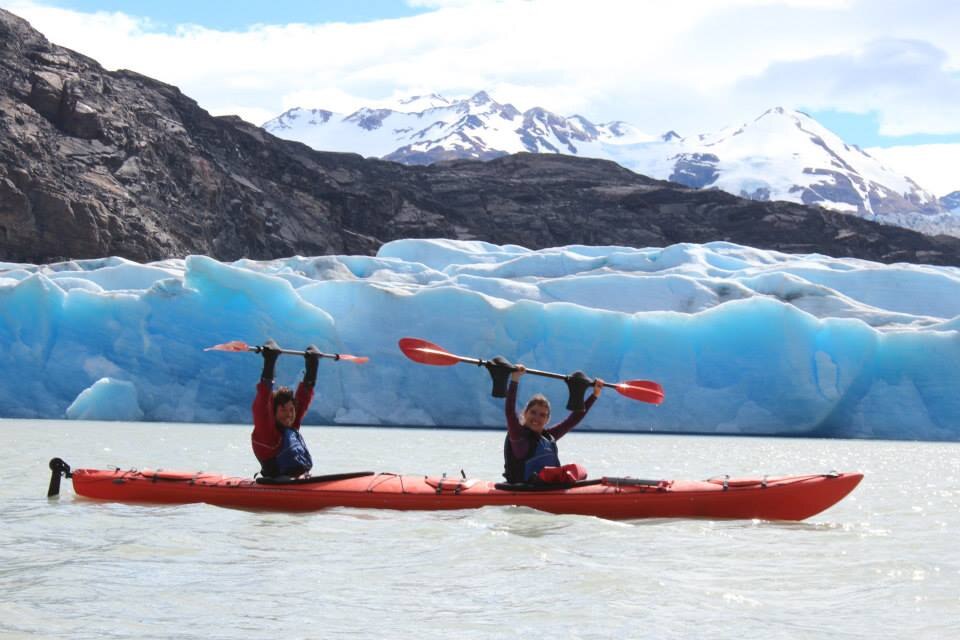
The Aysen region is the frontier of Patagonia glacier tours, offering solitude that is impossible to find in El Calafate or Torres del Paine. Tours here are more logistically challenging but reward travelers with a raw, “undiscovered” feel.
Travelers should note that the Exploradores Glacier, formerly a popular trekking site, has been permanently closed to ice walking by CONAF as of the 2026/27 season due to structural instability and safety risks. For those seeking a similar “off-the-beaten-path” trekking experience, the Calluqueo Glacier near Cochrane has emerged as the primary alternative in the region.
The San Rafael Glacier is another highlight, though it requires a significant time commitment. You can reach it via a long day trip involving a bus to Bahia Exploradores followed by a fast jet boat, or as part of a multi-day expedition cruise. San Rafael is one of the most active calving glaciers in the world; the sound of ice hitting the water here is often described as a “cannon shot.”
For the ultimate in isolation, the Leones Glacier is reached via a combination of jet boat across Lake Leones and a hike. It is rare to see another group here, making it the top choice for photographers and those who want to experience the ice field in silence.
If you are considering the multi-day cruises that reach these remote fjords, our cruise guide details the different routes available.
Tierra del Fuego: Glaciers of the Beagle Channel
At the “End of the World” in Ushuaia, glacier tours take on a maritime character. The primary way to see ice here is through the Beagle Channel, where the “Glacier Alley” features a series of hanging glaciers named after European countries: Holland, Italy, France, Germany, and Spain.
These boat tours typically last 5-6 hours and depart from the tourist pier in Ushuaia. While you don’t get as close to the ice as you do at Perito Moreno, the perspective of seeing glaciers flow directly from the mountains into the sea is unique to Tierra del Fuego.
For those who want to hike, the Vinciguerra Glacier is the primary option near Ushuaia.
This is a full-day commitment and should only be attempted by those with good hiking boots and a high level of fitness. The reward is a close-up view of a retreating mountain glacier that few travelers take the time to visit.
What to Wear and Pack for a Glacier Tour
The microclimate on or near a glacier is significantly colder and windier than the surrounding forest. Even on a sunny day, the ice acts as a giant refrigerator, and the wind chill can drop temperatures by 10-15°C in a matter of minutes.
Effective layering is essential, but for glacier tours, you must prioritize specific gear that handles the reflection of the sun and the sharpness of the ice.
- Polarized Sunglasses: Non-negotiable. The glare off the white ice is intense enough to cause snow blindness within hours. Polarized lenses are required to see the deep blue of the crevasses.
- Gloves: Even if it isn’t freezing, you need gloves to protect your hands. If you trip on the ice, the surface is as sharp as broken glass; a thin pair of liner gloves can prevent significant cuts.
- Sunscreen: The UV index on the ice is extreme due to the reflection. Apply more than you think you need, especially under your chin and nose.
- Hiking Boots: For ice trekking, you must have sturdy, waterproof hiking boots with ankle support. The crampons provided by operators are designed to strap onto a rigid boot; sneakers or soft-soled shoes are often rejected by guides for safety reasons.
Logistics: Costs, Booking, and Best Times
Planning a glacier tour requires balancing your budget with the reality of Patagonia’s short peak season. Most ice trekking and boat tours operate from October through April, with the busiest months being December, January, and February.
Typical 2026/27 Price Ranges
Pricing for these tours has stabilized in USD terms, though you should always confirm the current rate at the time of booking.
- Boat Navigations: $100 – $250 USD
- Ice Trekking (Minitrekking): $320 – $380 USD
- Ice Trekking (Big Ice/Calluqueo): $500 – $650 USD
- Glacier Kayaking: $150 – $250 USD
Booking Windows
For the Perito Moreno ice trekking tours, you should book at least 3-4 months in advance if you are traveling in January or February. These tours have strict daily capacity limits set by the park authority, and they sell out faster than any other activity in Patagonia. Boat tours generally have more flexibility, but booking 2-4 weeks out is still recommended for the “Gourmet” options.
Physical Requirements
Be honest about your fitness level. While boat tours and walkways are accessible to almost everyone, ice trekking requires a steady gait and the ability to walk on uneven, slippery surfaces for several hours. If you have chronic knee or ankle issues, the repetitive motion of walking in crampons can be painful. In those cases, a boat tour or the Safari Azul will provide a much more enjoyable experience.
To ensure your trip aligns with the best weather for glacier viewing, check our seasonal guide.
FAQ
QUESTION: How much do Patagonia glacier tours cost in 2026?
ANSWER: Prices vary by activity, with boat tours starting around $100 USD, while specialized ice trekking on glaciers like Perito Moreno typically ranges from $320 to $600 USD depending on the duration. You should also budget an additional $35-$50 USD for National Park entrance fees which are rarely included in the tour price.
QUESTION: What is the age limit for ice trekking on the Perito Moreno glacier?
ANSWER: For safety reasons, the Minitrekking tour has a strict age range of 8 to 65 years, while the more strenuous Big Ice trek is restricted to those between 18 and 50 years old. These limits are mandated by insurance and operators rarely make exceptions.
QUESTION: Is the Grey Glacier boat tour in Torres del Paine worth it?
ANSWER: Yes, the Grey Glacier boat tour is the only way to see all three faces of the glacier up close and navigate through the massive floating icebergs of Lago Grey. It provides a perspective of the ice’s scale that is impossible to get from the hiking trails alone.
QUESTION: Do I need special boots for a Patagonia glacier hike?
ANSWER: While tour operators provide the crampons, you must wear sturdy, waterproof hiking boots with ankle support to ensure the crampons can be securely fastened for walking on the ice. Soft sneakers or fashion boots are not permitted for safety reasons.
QUESTION: Can I see glaciers in Patagonia without a boat tour?
ANSWER: At the Perito Moreno glacier in Argentina, you can view the ice from an extensive network of walkways, but most other glaciers in Torres del Paine or Aysen require a boat or a long trek to see. Perito Moreno is the most accessible glacier in the world for this reason.
QUESTION: Which is the best glacier tour in El Calafate for families?
ANSWER: The “Safari Azul” (ages 6+) or the standard Perito Moreno walkway tour are best for families. The Safari Azul allows children to get close to the ice and even touch it at the base of the glacier without the strict age and fitness requirements of a full ice trek.