
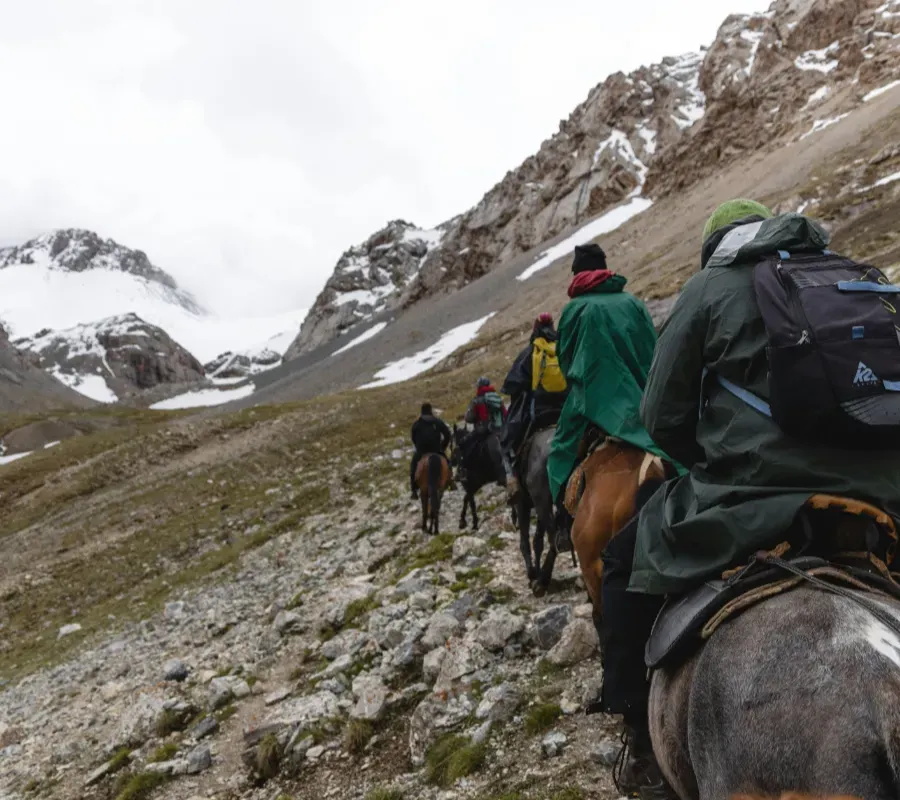
Horseback Riding in Patagonia: 2026 Gaucho Guide & Tours
Horseback riding is the most authentic way to explore Patagonia, offering a rhythmic, slow-travel perspective that motorized tours and hiking cannot match. Whether you are seeking a two-hour trot from a luxury estancia or a ten-day expedition across the Southern Patagonian Ice Field, the horse remains the primary tool for navigating this rugged terrain.
In Patagonia, the horse is not a leisure accessory but a historical necessity. To ride here is to step into a living tradition where the boundary between the rider and the landscape disappears. This guide covers everything you need to plan a riding adventure in 2026, from understanding the unique temperament of the Criollo horse to selecting the right trail for your experience level.
Patagonia Horseback Riding at a Glance
- Prime Season: October to April (Peak: December to February)
- Horse Breed: Criollo (South American native)
- Saddle Style: Recado or Montura Chilena (sheepskin-based)
- Typical Cost (2026/27): $90 to $180 USD (Day rides); $380 to $650+ USD (Expeditions)
- Top Regions: Torres del Paine, El Calafate, Sierra Baguales, Bariloche
- Skill Levels: All levels, from complete beginners to expert expeditioners
While many visitors come to Patagonia to hike the famous granite spires, the view from the saddle provides a sense of scale that is often lost on foot. You can cover greater distances, access more remote valleys, and experience the same trails used by the local herdsmen for over a century.
Why Horseback Riding is the Soul of Patagonia
The history of Patagonia is written in hoofprints. Long before the first hiking trails were blazed in Torres del Paine, the region was the domain of the gaucho in Argentina and the baqueano in Chile. These expert horsemen managed vast sheep estancias, navigating trackless wilderness using only the stars and their intimate knowledge of the terrain.
Today, horses remain essential for life on the estancia. They are used for gathering livestock, patrolling fences, and transporting supplies to remote outposts where no road exists. For the traveler, riding with a local guide provides a direct link to this heritage. It is a functional culture rather than a performance; the person leading your tour is often a working horseman who spends ten hours a day in the saddle.
If you want to understand the deep history and the rugged lifestyle of these iconic figures, you can explore our detailed guide to the gauchos of Patagonia. While this page focuses on the logistics of your ride, the cultural context of the men and women leading you is what makes the experience truly Patagonian.
The Patagonian Steed: Meet the Criollo Horse
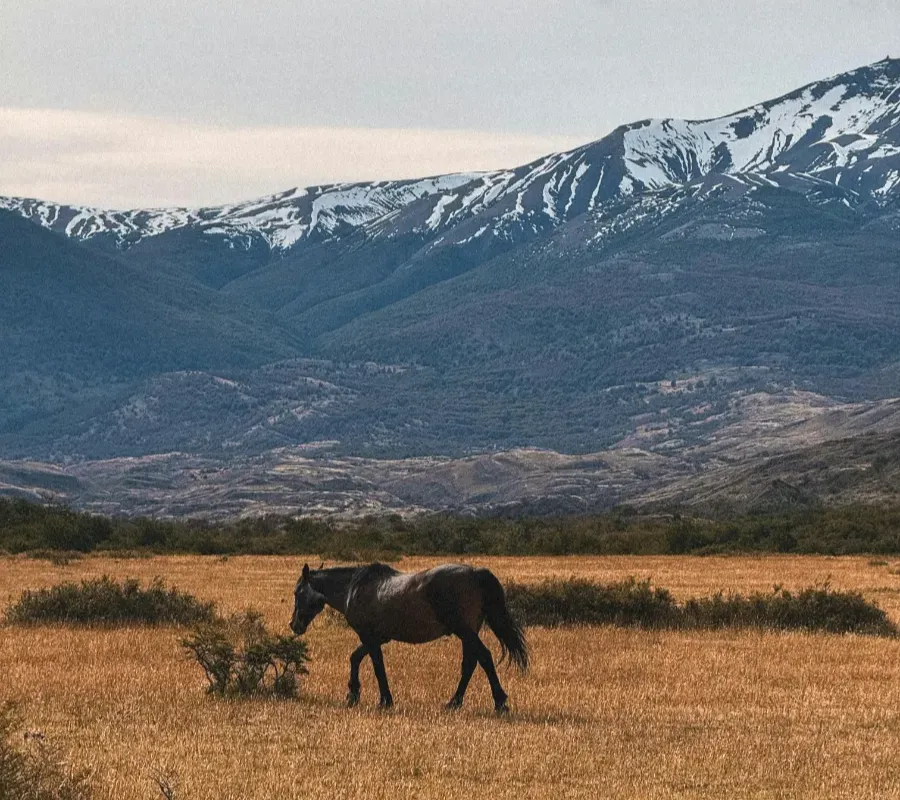
The horses you will ride in Patagonia are almost exclusively Criollos. This breed is the descendant of horses brought to the Americas by Spanish conquistadors in the 16th century. Over hundreds of years, these animals were shaped by the harsh environment of the Southern Cone, resulting in a breed famous for its incredible stamina, intelligence, and sure-footedness.
The Criollo is not a large horse, typically standing between 14 and 15 hands, but it is exceptionally sturdy. Their low center of gravity makes them ideal for navigating steep, rocky mountain passes and boggy river crossings. Perhaps their most valuable trait for travelers is their calm temperament. Even in the face of Patagonia’s legendary 80-100 km/h winds, a well-trained Criollo remains steady and focused.
When you first mount a Criollo, you may notice they feel more “solid” than the lighter-boned horses common in European or North American riding schools. They are built for work, not speed. Most trail horses in the region are gelded males, chosen for their reliability on long-distance treks where consistency is more important than flair.
Understanding the Style: Tack and Technique
Riding in Patagonia feels different because the equipment is designed for 10-hour days in the elements. The traditional saddle, known as a Recado in Argentina or Montura Chilena in Chile, is a masterpiece of layered comfort. Unlike the rigid leather of an English or Western saddle, the Recado is built from the horse’s back up using a series of blankets, a wooden or leather frame, and a thick top layer of natural sheepskin.
This design serves two purposes: it distributes the rider’s weight evenly to prevent sores on the horse during long expeditions, and it provides a soft, wide seat for the rider. Many travelers who find Western saddles “hard” are pleasantly surprised by the cushioned feel of a sheepskin saddle.
The top sheepskin layer of a Recado, called the cojinillo, is often removed at night and used by gauchos as a pillow or extra bedding. If you are on a multi-day expedition, you will quickly learn to appreciate the multi-functional nature of your gear.
The riding technique also differs from English styles. You will likely use neck-reining, a one-handed technique where you press the rein against the horse’s neck to signal a turn, rather than pulling on the bit. This allows the rider to keep one hand free for opening gates, holding a lead rope, or simply adjusting their hat against the wind. The horses are trained to be responsive to light pressure and weight shifts, making them a joy to ride even for those used to more restrictive styles.
Choosing Your Adventure: Day Rides vs. Multi-Day Expeditions
Deciding on the right horseback experience depends on your physical conditioning and how much time you want to spend in the wilderness. It is important to distinguish between “riding tours” and “horse-assisted trekking.” On some famous routes like the W Trek, horses are used specifically to carry gear (portage), but this guide focuses on tours where you are the one in the saddle.
For most travelers, an estancia-based day ride is the perfect introduction. These typically last 2-4 hours and return to a comfortable lodge for a traditional meal. For the more adventurous, multi-day traverses involve crossing the Andes, camping in remote valleys, or moving between rustic outposts.
If you are trying to decide which format fits your trip, the following comparison breaks down the primary differences.
- Duration: 2–6 hours vs. 3–10 days
- Skill Level: Beginner-friendly vs. Intermediate to Advanced
- Accommodation: Luxury Lodge or Hotel vs. Camping or Remote Refugios
- Physical Demand: Low (moderate saddle soreness) vs. High (6+ hours daily in saddle)
- Cost (2026/27): $90–$180 per person vs. $380–$650+ per day
Choose a day ride for scenery and culture without the physical toll; choose an expedition for true wilderness immersion and skill building.
Many travelers find that combining a stay at a traditional ranch with daily rides offers the best of both worlds. You can explore our guide to the best estancias in Patagonia to see which properties prioritize their equestrian programs. For those still weighing horseback riding against other activities, you can compare it to other top Patagonia tours to see how it fits your itinerary.
Top Locations for Horseback Riding in Patagonia
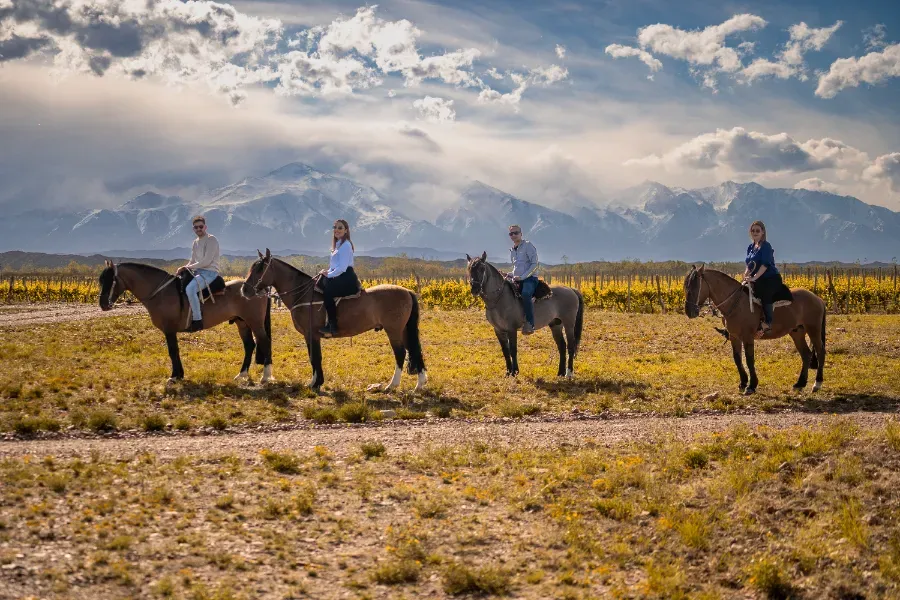
While you can find horses almost anywhere in rural Patagonia, certain regions offer superior terrain and infrastructure for riding.
Torres del Paine (Chile)
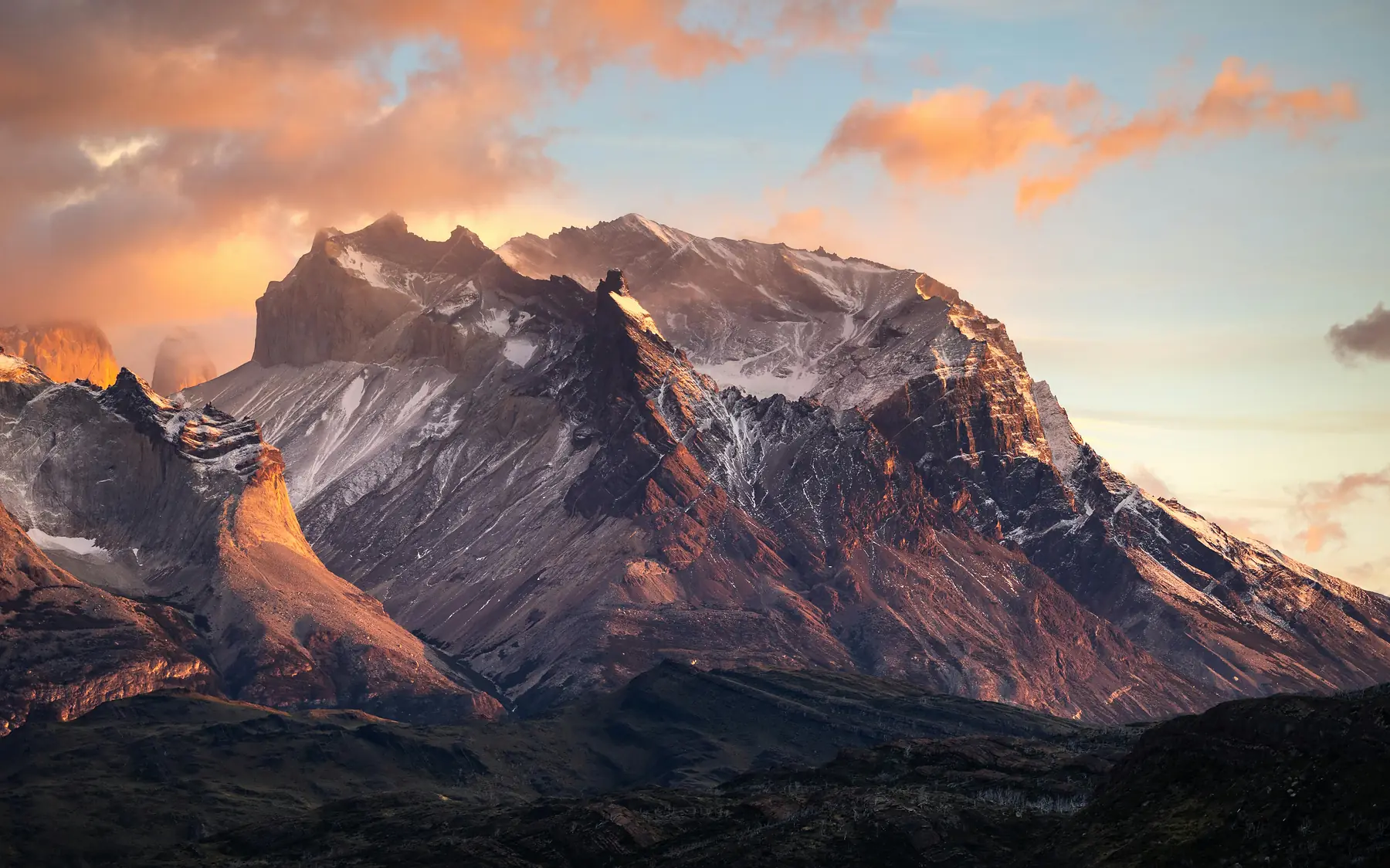
This is the most iconic backdrop for a ride. While riding is restricted on the main trekking paths of the W Trek to prevent trail erosion, massive private concessions and estancias surround the park.
- The Experience: Riding through the Serrano Valley or up to the Ascencio Valley.
- Key Detail: For the 2026/27 season, horses are permitted as far as Refugio Chileno. The final steep ascent to the Base de las Torres lookout must be completed on foot. Park entry tickets must be purchased via pasesparques.cl (CLP 48,500 multi-day, CLP 32,400 day pass).
- Related: See our Torres del Paine destination guide for more on the park’s layout.
El Calafate & Los Glaciares (Argentina)
Riding here is defined by the contrast between the golden steppe and the electric blue of the glaciers.
- The Experience: Several estancias, such as Nibepo Aike, offer rides along the southern arm of Lake Argentino.
- Key Detail: These rides often climb into the hills to provide elevated views of the Perito Moreno Glacier. It is a far more peaceful way to see the ice than the crowded boardwalks.
- Related: If your main goal is seeing ice, check our dedicated glacier tours guide.
Sierra Baguales (Chile/Argentina Border)
For those who want to escape the national park crowds, Sierra Baguales is a rugged, fossil-rich mountain range north of Torres del Paine.
- The Experience: This is “wild” riding. There are no marked trails, and you are likely to see wild guanacos and condors. The terrain is rocky and dramatic, suited for those who want a true frontier experience.
Bariloche & The Lake District (Northern Patagonia)
The northern region offers a different aesthetic: lush forests, volcanic soil, and crystalline lakes.
- The Experience: Rides here often involve climbing through Coihue forests to reach ridgelines with 360-degree views of the Andes. The weather is generally milder than in the south, making for a more relaxed riding environment.
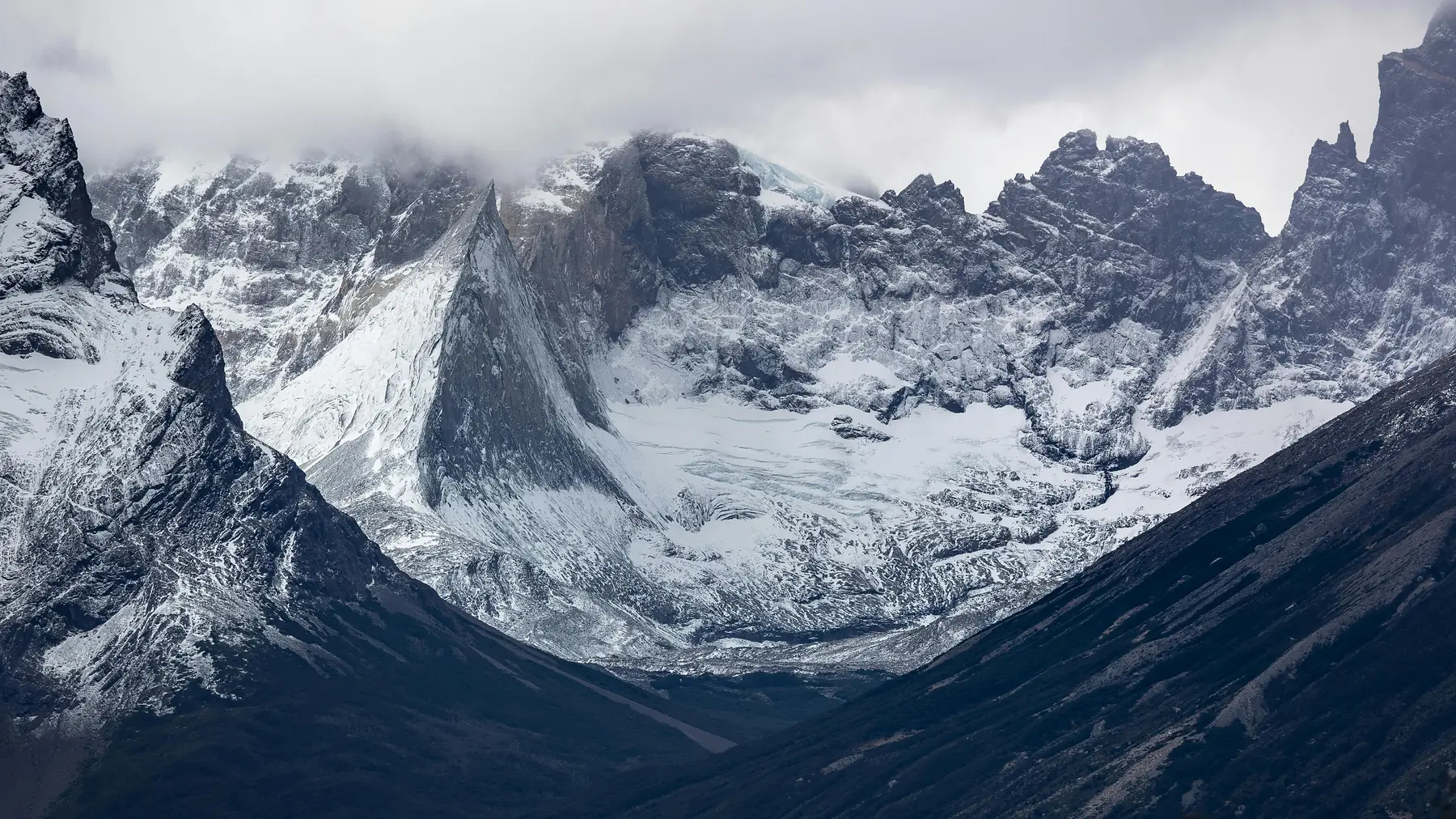
Skill Levels and Physical Requirements
You do not need to be an expert to ride in Patagonia, but you must be honest about your abilities. Most estancia day rides are designed for people who have never sat on a horse. The horses are “bomb-proof” (highly desensitized) and will follow the tail of the horse in front of them with minimal input.
However, multi-day expeditions are a different matter. These require an “Intermediate” level at minimum.
Defining Skill Levels:
- Beginner: Never ridden or has ridden a few times on lead reins. Comfortable at a walk.
- Intermediate: Comfortable at a walk, trot, and occasional canter. Can mount and dismount unassisted and has a stable seat.
- Advanced: Comfortable in all gaits over varied, steep, or boggy terrain. Can spend 6-8 hours in the saddle for multiple consecutive days.
Weight limits are strictly enforced by reputable operators to protect the health of the Criollo horses. The industry standard is typically 90kg to 95kg (200–210 lbs). If you exceed this, you may be restricted to specific horses or shorter trails. Always disclose your weight accurately during booking.
Age limits also apply. Most day rides allow children as young as 6 or 8, provided they can follow instructions. Multi-day expeditions usually have a minimum age of 12 or 14 due to the physical exhaustion and technical nature of the trails.
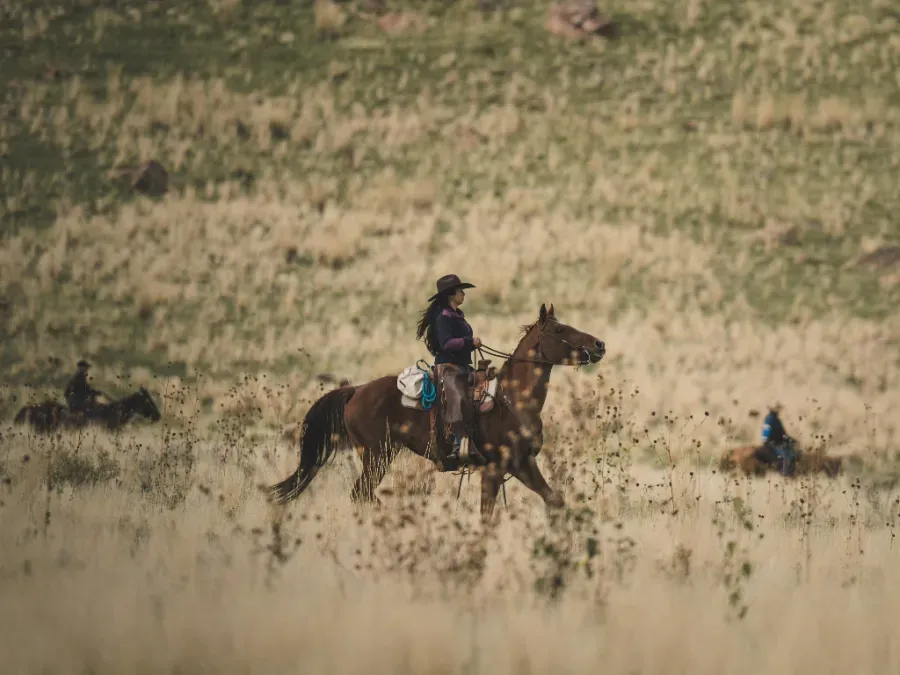
What to Wear: The Essential Patagonia Riding Kit
The biggest mistake riders make is wearing heavy hiking boots. While great for the trail, the thick, lugged soles of hiking boots can get stuck in the narrow traditional stirrups of a Patagonian saddle. If you fall, you want your foot to slide out of the stirrup easily.
The Essential List:
- Footwear: A riding boot or a smooth-soled work boot with a small heel. If you only have hiking boots, some operators provide capachos (hooded stirrups) that prevent the foot from sliding through, but it is better to bring appropriate footwear.
- Trousers: Avoid jeans for long rides; the inner seam can cause painful chafing. Technical riding trousers or “bombachas de campo” (wide-legged gaucho trousers) are ideal.
- Layers: The wind is your constant companion. A high-quality windbreaker and a neck gaiter (Buff) are non-negotiable.
- Gloves: Even in summer, the wind can chill your hands, and leather gloves protect your fingers from the reins.
While traditional gauchos often wear boinas (berets), safety regulations for commercial adventure tourism have tightened. In Chile, Sernatur-registered operators are now required to provide and mandate safety helmets for all riders. In Argentina, while laws vary by province, most professional estancias and expedition leaders now provide helmets as a standard safety requirement.
For a full breakdown of the layers needed for the unpredictable southern weather, refer to our Patagonia packing list.
Costs and How to Book
Horseback riding in Patagonia is a premium experience because of the logistics involved in horse care and guide training. For the 2026/27 and 2026/27 seasons, expect the following price ranges:
- Short Estancia Rides (2-3 hours): $90 – $140 USD.
- Full Day Rides (with Asado lunch): $160 – $260 USD.
- Multi-Day Expeditions: $380 – $650 USD per day. This usually includes all meals, horses, guides, and accommodation (camping or refugios).
Booking Tips:
- Lead Time: For multi-day trips in high season (December–February), book at least 6 to 8 months in advance. These groups are small (often limited to 6-8 riders) and fill up quickly.
- Direct vs. Agency: Booking directly through an estancia often provides a more authentic experience and better rates.
- Tipping: It is customary to tip your baqueano or guide. A standard tip is 10-15% of the tour cost, usually given in local currency (Chilean or Argentine Pesos) or US Dollars.
Most riding experiences are booked through the estancia where you are staying. If you are not staying at a ranch, many operators in Puerto Natales or El Calafate offer day-trip pickups. We recommend browsing our estancia accommodation page to find a base that matches your equestrian goals.
FAQ
Is horseback riding in Torres del Paine safe for beginners? Yes, many estancias near the park borders offer gentle trails on well-trained horses specifically for beginners. However, multi-day traverses through the more rugged sectors usually require previous riding experience due to the steep terrain and long hours in the saddle.
What is the best time of year for horseback riding in Patagonia? The prime season is from October to April. The most stable weather and longest daylight hours occur between December and February, though this is also when the winds are strongest.
Do I need to bring my own riding helmet to Patagonia? Most reputable tour operators provide helmets, and in Chile, it is a legal requirement for registered adventure tourism providers to offer them. If you are a frequent rider, bringing your own ensures a better fit and comfort.
Are there weight limits for horseback riding in Patagonia? Yes, most operators have a weight limit between 90kg and 95kg (200–210 lbs) to ensure the health and safety of the Criollo horses. This limit is strictly enforced for the horse’s welfare.
What kind of saddles are used for riding in Patagonia? Most rides use the traditional “Recado” or “Montura Chilena.” These consist of a frame covered in multiple layers of blankets and sheepskin, providing a much softer and wider seat than English or Western saddles.
Can I see glaciers while horseback riding in El Calafate? Yes, several estancias near El Calafate, such as Estancia Nibepo Aike, offer rides that provide elevated views of the Perito Moreno Glacier and the southern arm of Lake Argentino. These are some of the most scenic trails in the region.