
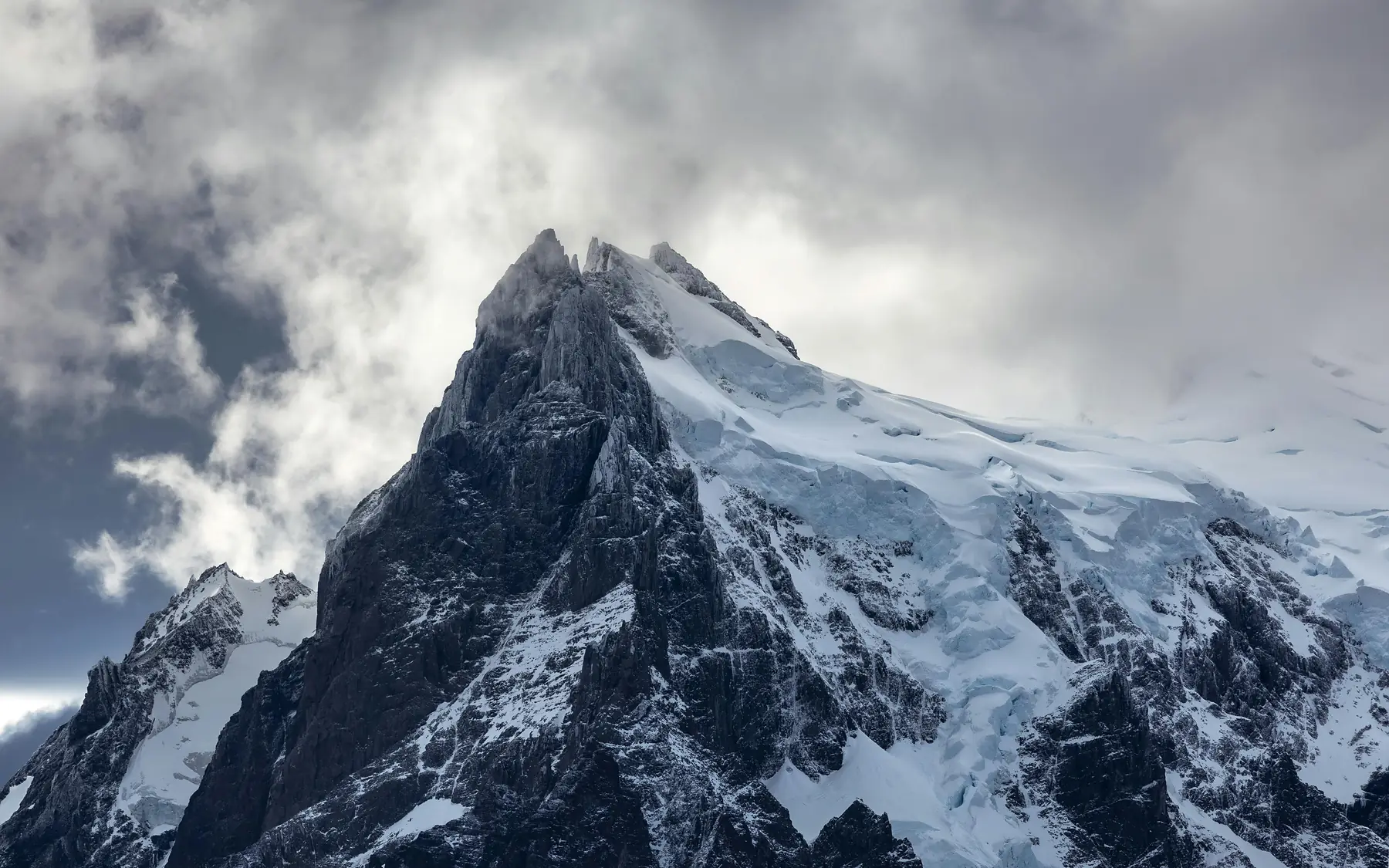
Torres del Paine vs El Chaltén: Which is Better? (2026 Guide)
If you are deciding between Torres del Paine and El Chaltén for your Patagonia trip, the choice comes down to your preference for wilderness immersion versus town-based flexibility. Torres del Paine is the premier destination for multi-day backcountry circuits that require months of planning, while El Chaltén is the world capital of day hiking, offering elite trails that start and end at your hotel doorstep.
For most travellers, the ideal 2026 itinerary does not choose between them but combines both. However, if your time is limited to a single week, you must decide between the regulated, high-cost majesty of Chile’s flagship park and the bohemian, accessible, and rugged atmosphere of Argentina’s trekking village. Both offer the most dramatic granite landscapes on the planet, but the way you experience them is fundamentally different.
At a Glance: TdP vs El Chaltén
- Primary Base: Puerto Natales (Chile) vs. El Chaltén (Argentina)
- Entrance Fee: Paid, tiered by route (Chile) vs. Paid, tiered by duration (Argentina)
- Hiking Style: Multi-day circuits (W and O Treks) vs. Town-to-trail day hikes
- Booking Window: 4-6 months for park accommodation vs. 1-3 months for town hotels
- Best For: True wilderness immersion vs. Flexibility and social atmosphere
- 2026 Season: High demand requires early booking for all TdP refugios
The Quick Verdict: Which One Should You Choose?
The “better” park is entirely dependent on your budget, your physical preparation, and how much logistics you are willing to manage before you leave home. Torres del Paine offers a more diverse landscape of turquoise lakes and massive glaciers, while El Chaltén provides a more concentrated, vertical drama focused on the Fitz Roy massif.
To help you decide between Patagonia’s two premier trekking hubs, consider the following decision matrix based on the current 2026/27 season realities.
- Logistics: Highly complex; requires booking multiple campsites/refugios in sequence months in advance. vs. Simple; no permits required for day hikes, though entrance fees must be paid online in advance.
- Cost: High; park entry (CLP 48,500 multi-day), expensive transport, and refugio prices (Las Torres: USD 230/bed; Vertice: USD 66–114/bed; full board extra). vs. Moderate; park fees (~$45 USD for foreigners) and a wide range of budget to luxury town options.
- Hiking: Dominated by the 4-5 day W Trek or 8-10 day O Trek. vs. Dominated by 8-10 hour day hikes like Laguna de los Tres.
- Landscape: Diverse; includes the iconic Towers, the Cuernos, Glacier Grey, and vast pampas. vs. Focused; legendary granite spires (Fitz Roy and Cerro Torre) rising directly from the forest.
Choose Torres del Paine for a life-list multi-day expedition; choose El Chaltén for world-class hiking paired with craft beer and comfortable beds.
If you want to explore the specific details of either destination before comparing them further, you can find our comprehensive hub guides below.
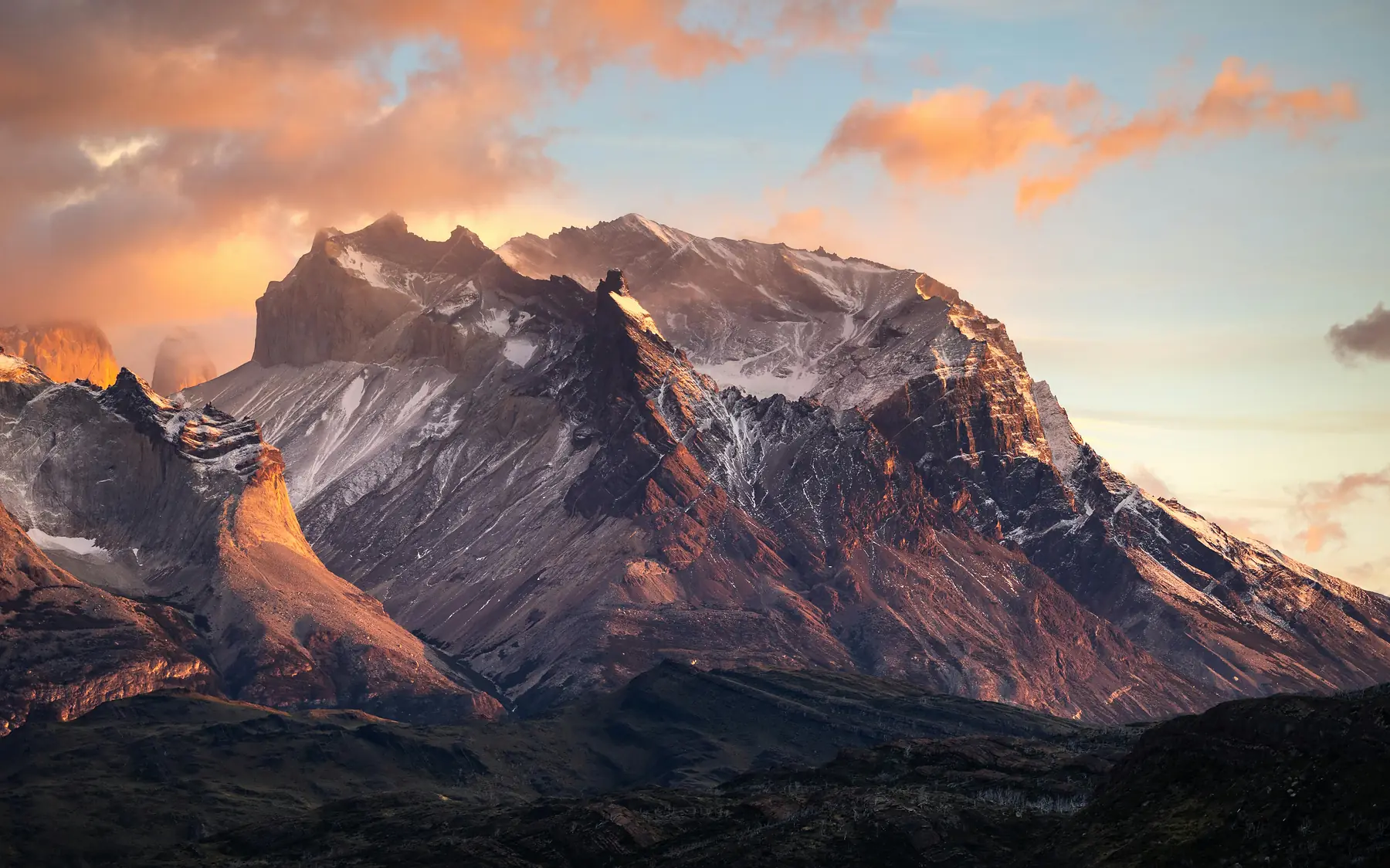
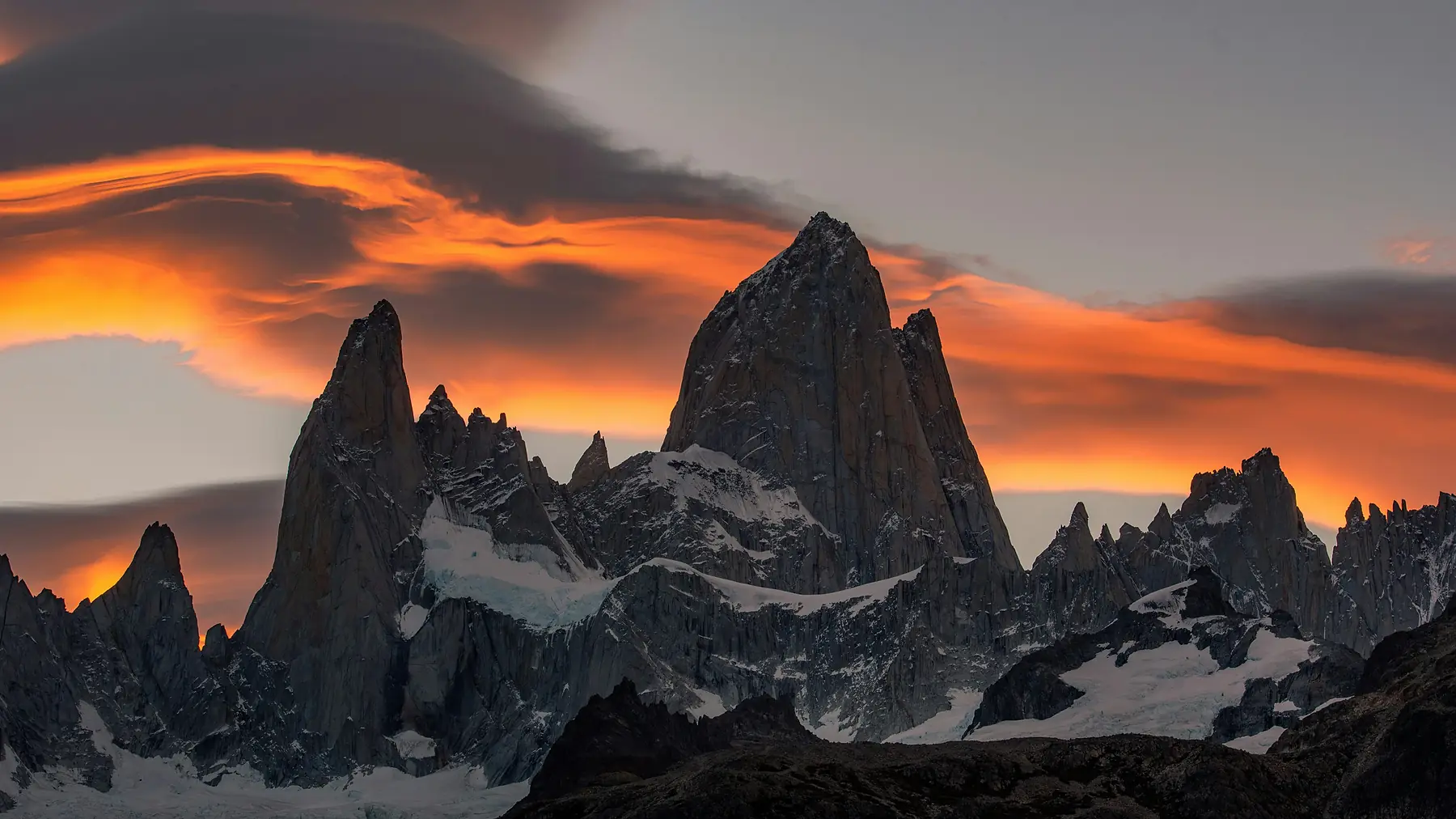
Hiking Style: Multi-Day Circuits vs. Town-to-Trail Day Hikes
The most significant difference between these two destinations is how you physically move through the landscape. In Torres del Paine, the park is designed as a journey. To see the highlights, you generally need to move from one camp to the next, carrying your gear (or paying for a pre-set tent) over several days. The W Trek is the gold standard here, taking you deep into three distinct valleys over 4 to 5 days.
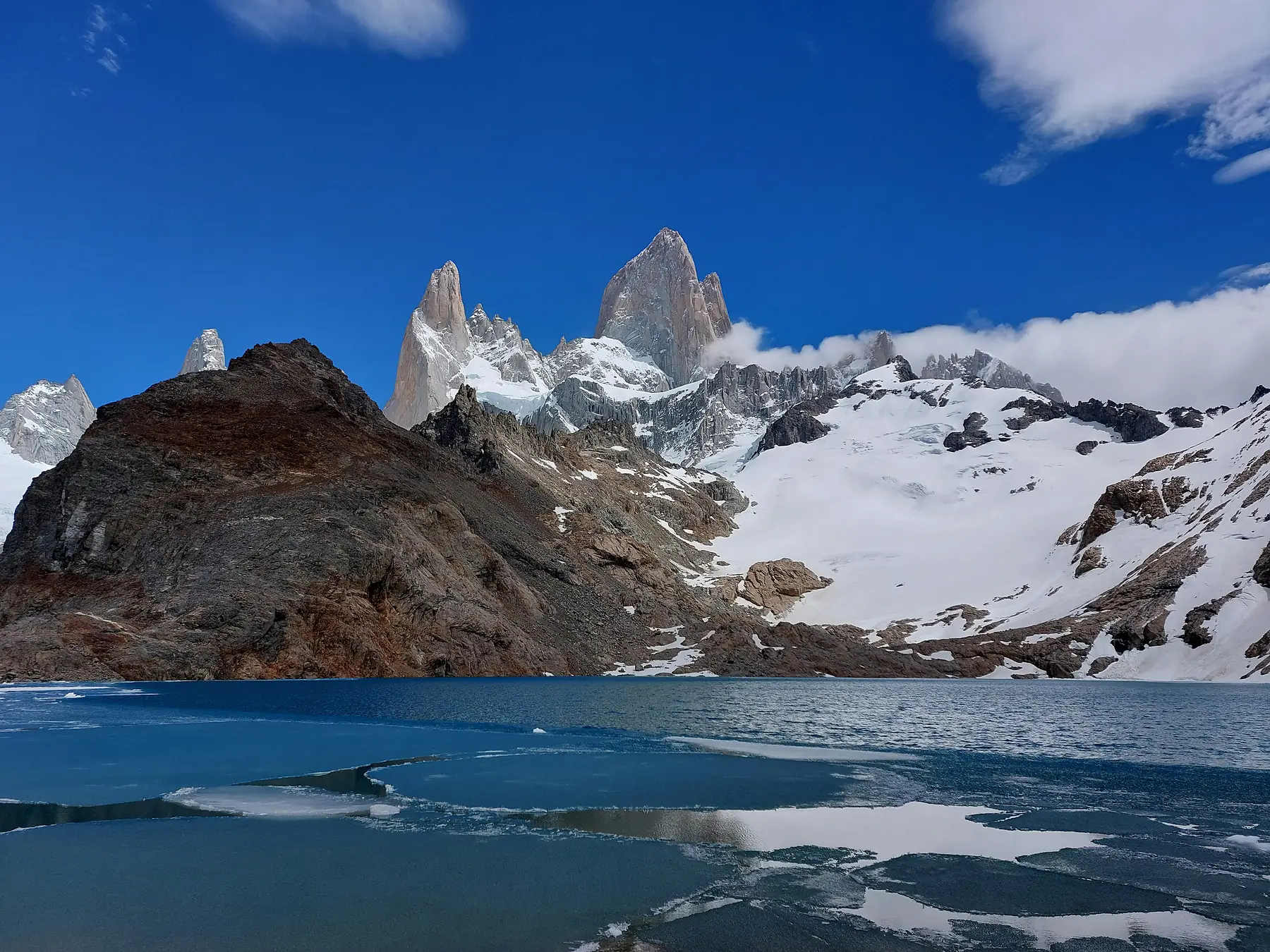
In contrast, El Chaltén operates on a “hub and spoke” model. You stay in a hotel or hostel in the village and walk to the trailhead each morning. There is no need for heavy packs or complex camping logistics because the most iconic views, such as Laguna de los Tres, are achievable as day trips.
Trail difficulty is comparable in both locations, but the cumulative fatigue differs. In Torres del Paine, you are often hiking 15-22km daily for several days in a row. In El Chaltén, you can choose to do a massive 25km day followed by a rest day in a cafe, making it much more forgiving for those who aren’t conditioned for back-to-back trekking.
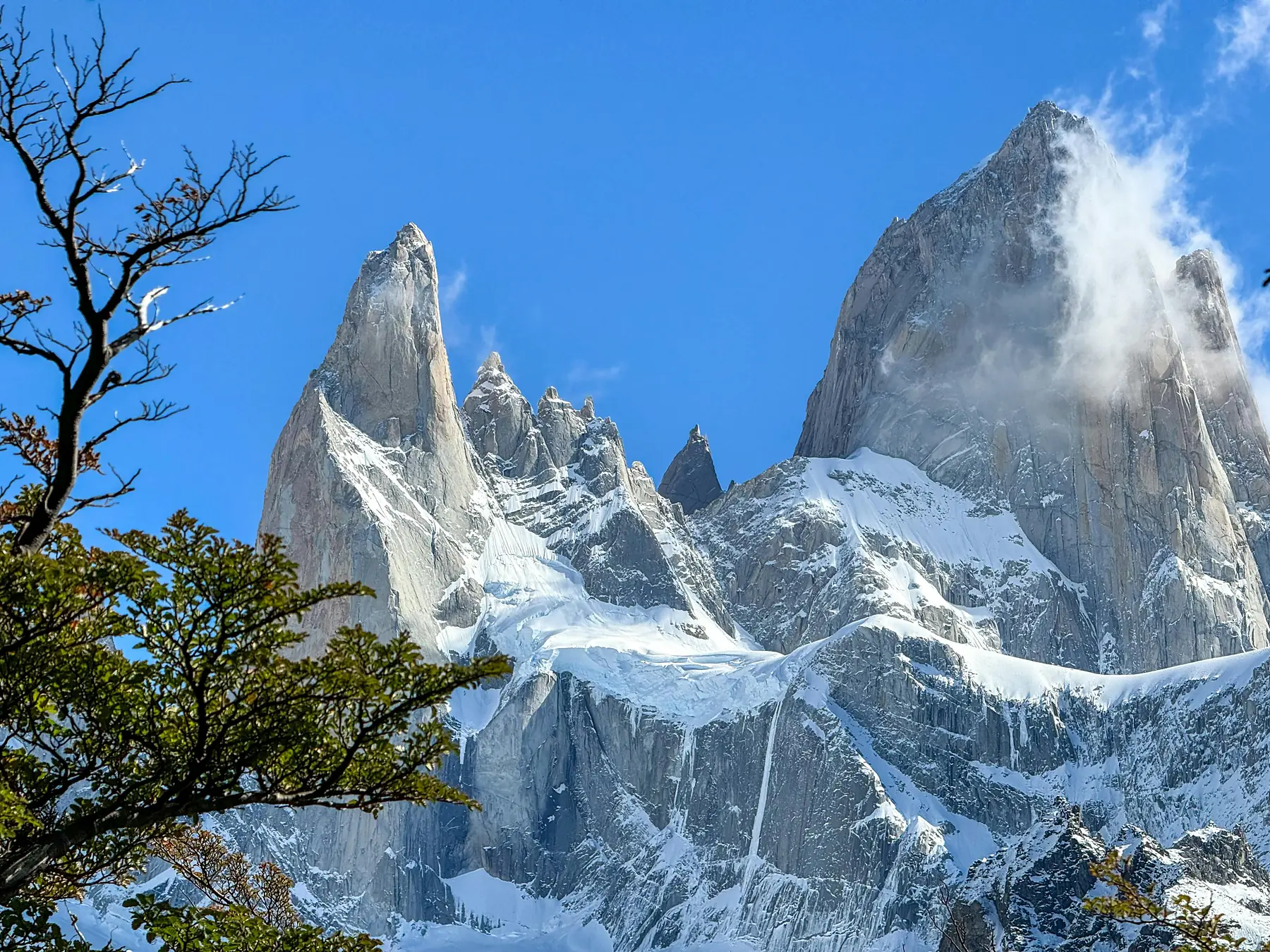
Scenery & Landscape: Granite Towers vs. The Fitz Roy Massif
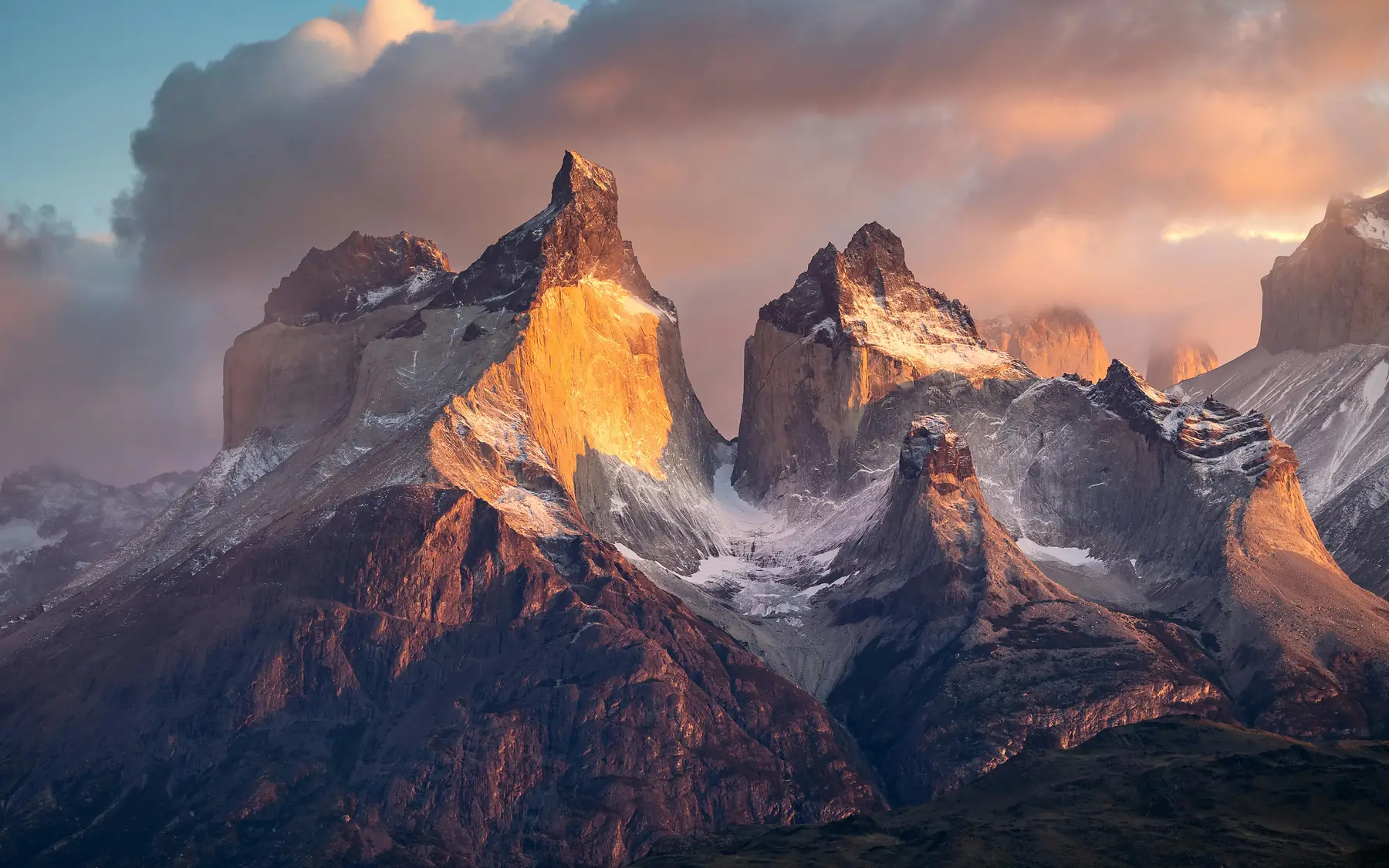
While both parks feature granite spires, the visual experience is distinct. Torres del Paine is a massive, sprawling national park with a vast variety of ecosystems. You will see the famous three towers, but you will also see the “Horns” (Los Cuernos), the French Valley’s hanging glaciers, and the sprawling Southern Patagonian Ice Field at Glacier Grey.
El Chaltén is more visually concentrated. The Fitz Roy range (also known as Chaltén) and Cerro Torre are the undisputed stars. These peaks are more jagged and “spire-like” than the Towers in Chile. Because the town sits at a lower elevation and closer to the mountains, the vertical relief feels more immediate and overwhelming.
If your primary goal is to see glaciers, Torres del Paine has the edge with the easily accessible Glacier Grey. While El Chaltén has the Viedma Glacier nearby, it is harder to see from the main hiking trails. However, El Chaltén is only a three-hour bus ride from El Calafate, the gateway to the world-famous Perito Moreno Glacier.
To help visualize the scale and layout of these regions, you can view our detailed mapping resources.
Logistics & Booking: The “Spontaneity” Test
The 2026 booking reality for Torres del Paine is strict: if you want to stay inside the park during peak season (December to February), you should book as soon as each operator’s booking window opens (staggered between March and June). The system involves coordinating between two private operators — Las Torres and Vertice — on two separate booking platforms. There is no unified system, and the sites are not especially intuitive. If you miss a booking for one night in the middle of your trek, the whole circuit can fall apart.
El Chaltén is the winner for spontaneity. While the best hotels in town still fill up months in advance, you do not need trekking permits to step onto the trails. However, as of the 2026/27 season, you must purchase your national park entrance fee online before arrival. You can wake up, check the weather forecast, and decide which mountain to hike that day. This flexibility is invaluable in Patagonia, where the wind can reach 100 km/h and shut down hiking for days at a time.
A key logistical distinction is the “Gateway Town.” For Torres del Paine, you will likely stay in Puerto Natales, which is a 2-hour bus ride from the park entrance. In El Chaltén, the town is the gateway; you can walk from your breakfast table to the Fitz Roy trailhead in ten minutes.
Cost Comparison: Park Fees, Food, and Beds
Is Argentina cheaper? Generally, yes, but the gap has narrowed significantly due to high inflation and the introduction of new park fees. However, the structure of costs still makes El Chaltén more budget-friendly for many.
- Entrance Fees: Torres del Paine park entry is purchased at pasesparques.cl. A 1-day pass costs CLP 32,400 and a multi-day pass (required for the W Trek) costs CLP 48,500. El Chaltén now requires a paid permit for the Northern Zone of Los Glaciares National Park; for the 2026/27 season, a 1-day pass for foreigners is approximately $45 USD (45,000 ARS), with 3-day “Flexipass” options available for approximately $90 USD.
- Accommodation: A single bed in a Las Torres refugio costs USD 230; a Vertice bunk ranges from USD 66 (basic) to USD 114 (fully equipped). Full board (dinner, breakfast, box lunch) is USD 110/day at Vertice or USD 140/day at Las Torres — meals are not mandatory but most hikers opt for them. In El Chaltén, you can find private hostel rooms or boutique hotels for $80–$150 USD per night.
- Food: In Torres del Paine, you either carry all your food or eat at refugio cafeterias (expect ~USD 20 for a personal pizza, ~USD 8–10 for a beer). In El Chaltén, you have access to standard supermarkets, bakeries, and world-class steakhouses at competitive town prices.
While costs are volatile, we recommend checking our updated Patagonia packing list to ensure you bring the right gear, which can save you significant money on rentals in either location.
The Vibe: Wilderness Immersion vs. Social Trekking Village
The “feeling” of these two places is perhaps the most overlooked factor in the decision. Torres del Paine feels like a true expedition. When you are on the O Circuit or the W Trek, you are “out there.” You are surrounded by fellow trekkers, sleeping under the stars or in remote mountain huts, and the modern world feels very far away. It is a communal, outdoors-focused experience where the shared hardship of the trail creates instant bonds.
El Chaltén has a more “bohemian-chic” or “Après-Hike” culture. It is a social village where hikers gather in craft breweries like La Cervecería or high-end wine bars after a day on the trails. You get the ruggedness of the mountains by day and the comfort of a heated room and a bottle of Malbec by night. It is less of an “expedition” and more of a “hiking holiday.”
Crowds and Connectivity
Both parks are victims of their own success. In Torres del Paine, the trail to the Base of the Towers can feel like a conveyor belt of hikers during the 11:00 to 14:00 window. Similarly, the final steep climb to Laguna de los Tres in El Chaltén is often crowded with day-trippers.
Connectivity is a major differentiator for digital nomads or those needing to stay in touch:
- El Chaltén: WiFi was historically terrible but has improved significantly with the introduction of Starlink in many hotels and cafes.
- Torres del Paine: Expect virtually zero connectivity. Refugios offer approximately 30 minutes of free WiFi (often via Starlink), with paid access beyond that. Cell signal is non-existent across the W Trek. This is a place to unplug.
Can You Do Both? The Transfer Reality
If you have at least 10 to 12 days, you do not have to choose. About half of all visitors to the region combine both parks into a single trip. The logistics are straightforward but require a full day of travel.
The most common route is to take a bus from Puerto Natales (the gateway to TdP) to El Calafate (Argentina), then another bus to El Chaltén. The total journey, including the border crossing, typically takes 5-7 hours depending on the queue at customs.
The Bus Journey
The Border
The Final Leg
If you are planning this cross-border journey, our detailed transport guide provides the specific schedules and booking links you will need.
Recommended Time Split
If you have 10 days in Patagonia, we recommend the following split:
- Days 1-5: Torres del Paine (The W Trek)
- Day 6: Travel day (Bus from Puerto Natales to El Calafate)
- Days 7-9: El Chaltén (Fitz Roy and Cerro Torre day hikes)
- Day 10: Travel to El Calafate airport for departure.
FAQ
Is Torres del Paine or El Chaltén better for beginners? El Chaltén is generally better for beginners because you can choose day hikes of varying lengths and return to a comfortable hotel, whereas Torres del Paine often requires multi-day camping or carrying heavy packs.
Is it cheaper to visit Torres del Paine or El Chaltén? El Chaltén is generally more budget-friendly due to a wider variety of accommodation and dining options, though it now requires a paid national park entrance fee (approx. $45 USD for foreigners) similar to Torres del Paine.
Which park has better views, Torres del Paine or El Chaltén? This is subjective, but Torres del Paine offers more landscape diversity including lakes and glaciers, while El Chaltén offers more dramatic, concentrated mountain views of the Fitz Roy and Cerro Torre massifs.
Do I need a guide for Torres del Paine or El Chaltén? You do not need a guide for the main trails in either Torres del Paine or El Chaltén during the high season, as paths are well-marked. However, Chile requires guides for winter trekking (late April to August).
How much time do I need for Torres del Paine vs El Chaltén? You should plan at least 4-5 days for Torres del Paine to complete the W Trek, whereas 3-4 days in El Chaltén is sufficient to see the major highlights like Laguna de los Tres and Laguna Torre.
Can I visit both Torres del Paine and El Chaltén in one trip? Yes, most travelers visit both by taking a 5-7 hour bus between Puerto Natales (Chile) and El Calafate (Argentina), making it easy to combine these two iconic destinations into a 10-14 day itinerary.