
Peninsula Valdés Guide: Wildlife, Orcas & Tours (2026)
Peninsula Valdés is the premier wildlife sanctuary of Patagonia, a UNESCO-protected site where the arid desert meets the Atlantic to host some of the world’s most dramatic marine encounters. For most travellers, the primary goal is witnessing the “intentional stranding” of orcas or the breeding displays of Southern Right Whales, both of which require precise seasonal timing and logistical planning.
This guide provides the specific details needed to navigate this 3,600 square kilometre reserve, from tide windows for orca sightings to the essential “last fuel” warnings for self-drive explorers.
Peninsula Valdés at a Glance
- Location: 100km northeast of Puerto Madryn, Chubut Province, Argentina.
- Status: UNESCO World Heritage Site (designated 1999).
- Entry Fee: Approximately $30-40 USD (payable in ARS) for international visitors as of the 2026/27 season.
- Primary Hub: Puerto Pirámides (the only village inside the reserve).
- Key Species: Southern Right Whales, Orcas, Magellanic Penguins, Elephant Seals, Sea Lions.
- Top Experience: Boat-based whale watching and shore-based orca monitoring.
Why Peninsula Valdés is a UNESCO World Heritage Site
Peninsula Valdés is a geographical anomaly, a massive “mushroom-shaped” landmass connected to the mainland by the narrow Carlos Ameghino Isthmus. This unique shape creates two distinct, sheltered bodies of water: the Golfo Nuevo to the south and the Golfo San José to the north. These calm, deep gulfs provide a critical sanctuary for marine mammals to breed and calve, away from the turbulent open ocean of the South Atlantic.
The 1999 UNESCO designation was earned not just for the sheer volume of wildlife, but for the global significance of the biodiversity found here. While the region was historically dominated by sheep farming estancias, the last three decades have seen a total transition toward conservation-led tourism. Today, the peninsula serves as a living laboratory for marine biologists and a world-class destination for nature photographers seeking species that are often difficult to spot elsewhere in the Southern Hemisphere.
The Peninsula Valdés Wildlife Calendar: When to Visit
The best time to visit Peninsula Valdés is during the Austral Spring, from September to November, when the greatest number of species overlap. During this “Goldilocks” window, you can see Southern Right Whales in the gulfs, Magellanic Penguins in their nesting colonies, and massive harems of elephant seals along the coastline.
Because this page focuses on biological events, you should consult our Puerto Madryn weather guide for specific temperature and packing advice by month.
- Spring (September - November): Peak biodiversity. Whales are at their most active, penguins are arriving to nest, and elephant seal pups are being born.
- Summer (December - February): Best for terrestrial wildlife like guanacos and maras. Most whales have departed for feeding grounds, but sea lion colonies are full of new pups.
- Autumn (March - May): The primary window for orca sightings at Punta Norte. This is when orcas hunt sea lion pups using their unique stranding technique.
- Winter (June - August): The arrival of the Southern Right Whales. While the weather is cold and windy, the gulfs are quiet, and whale sightings from the shore or boat are frequent. The first whales typically arrive in May, with the official boat-based season beginning in mid-June.
The “Big Five” Marine Encounters
The wildlife here is not just abundant: it is accessible. Unlike many marine hubs where animals remain far offshore, the geography of the peninsula allows for close-up sightings from both boats and coastal cliffs.
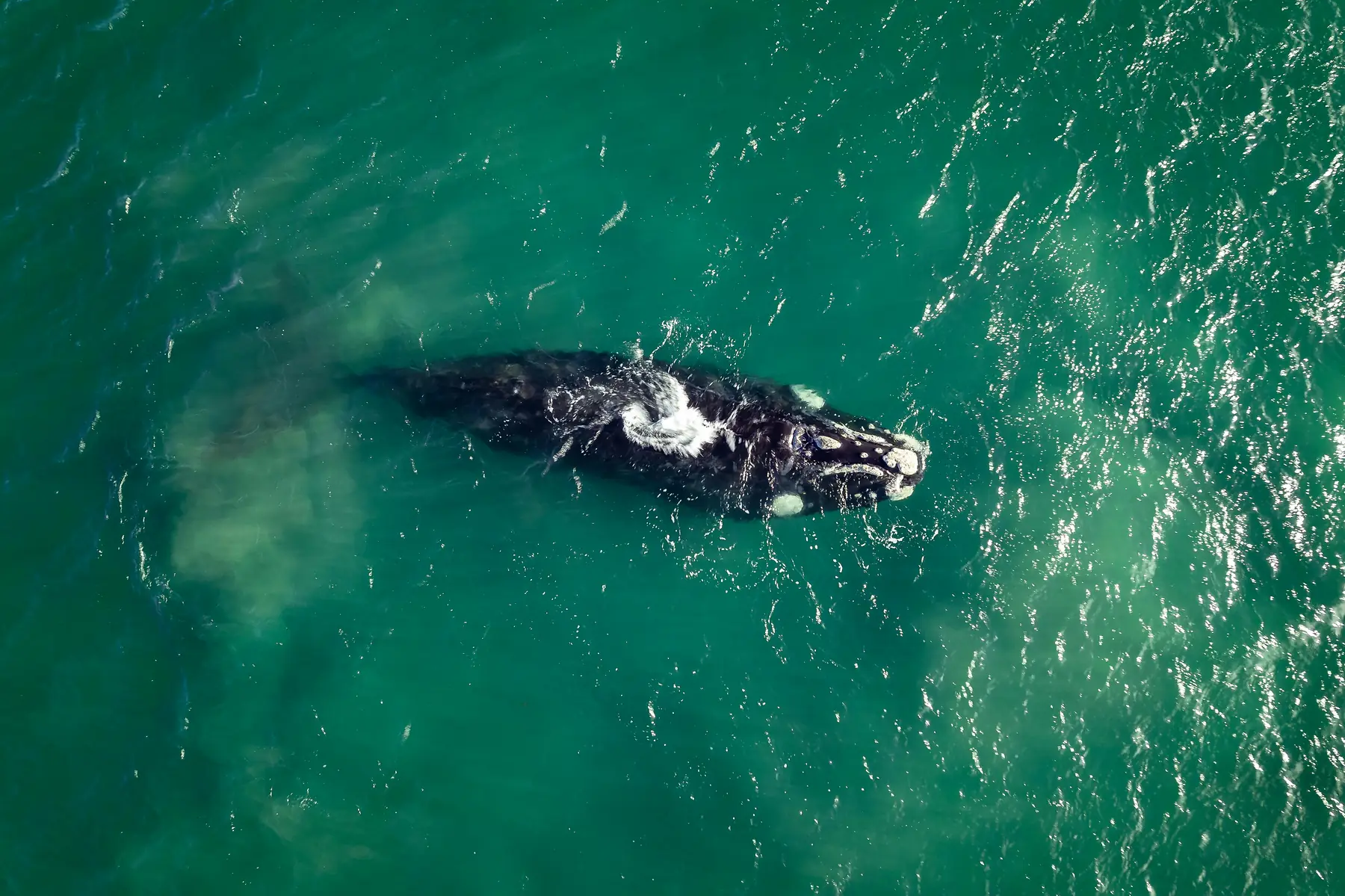
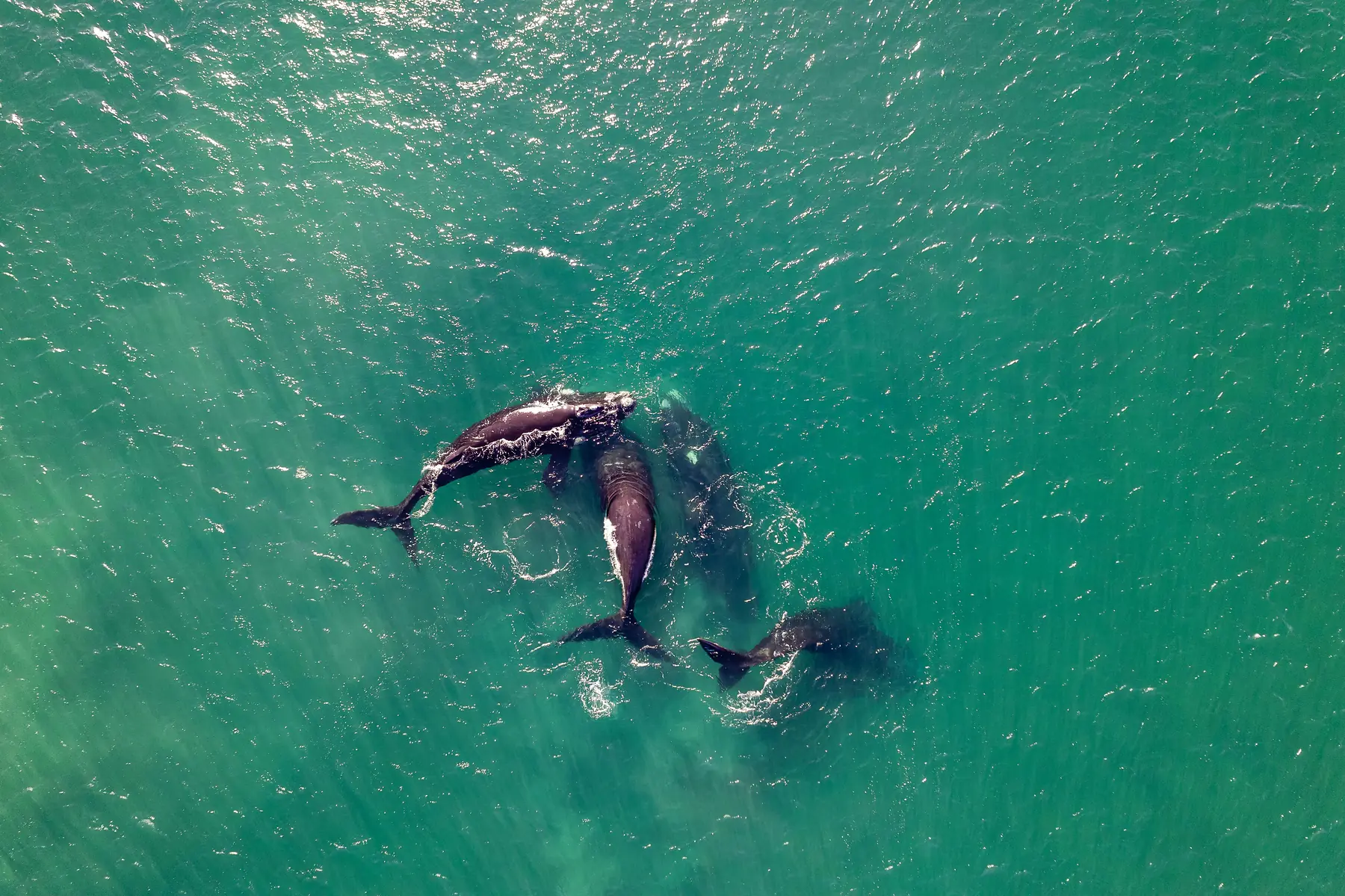
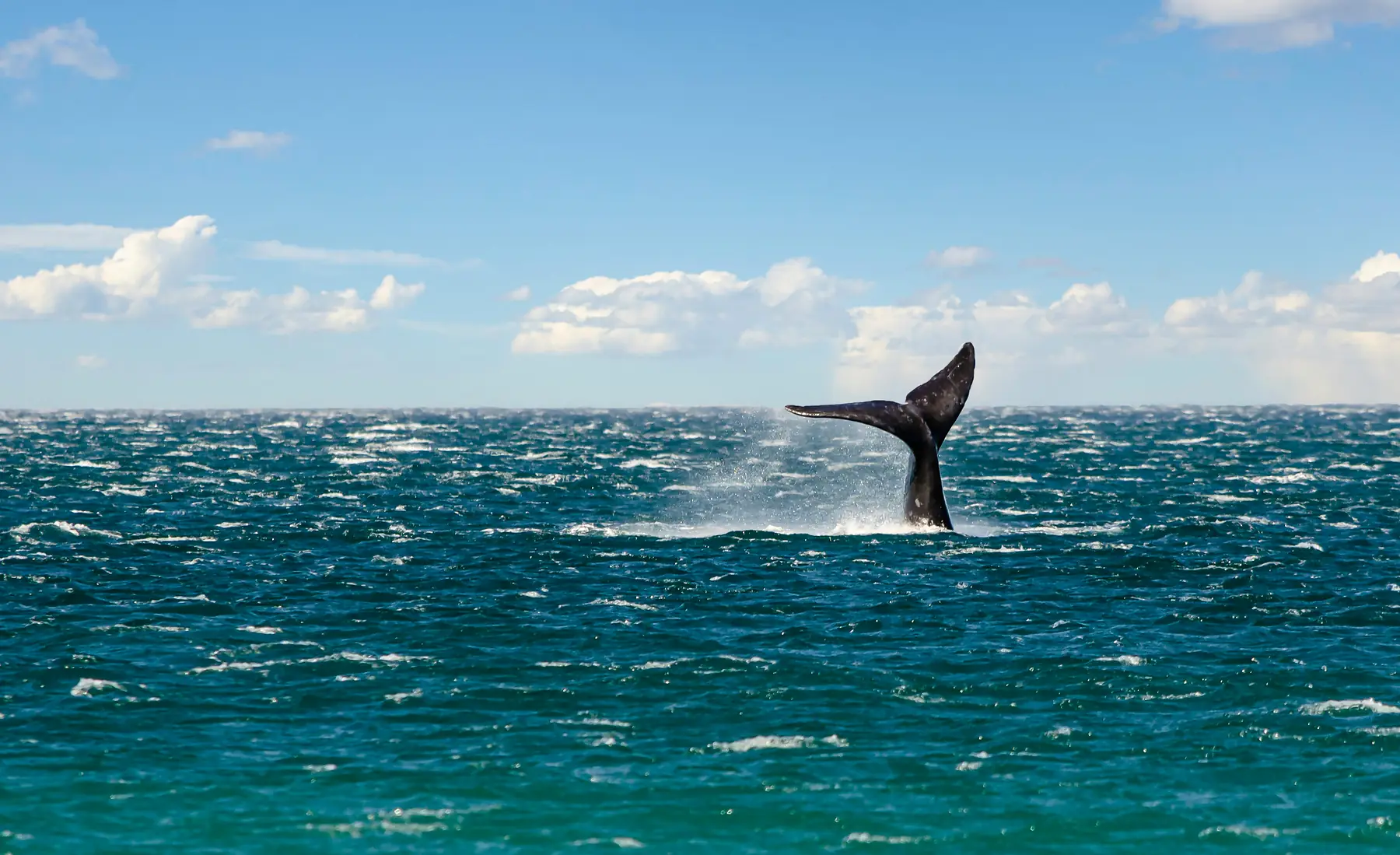
Southern Right Whales are the undisputed stars from June through December. These gentle giants, reaching up to 16 metres in length, enter the Golfo Nuevo to mate and give birth. They are famously curious, often approaching whale-watching boats in Puerto Pirámides. For a deeper look at their biology and conservation, see our guide to Southern Right Whales.
Orcas (Killer Whales) in this region have developed a hunting strategy found nowhere else on Earth: intentional stranding. They accelerate toward the shore, launching themselves onto the beach to snatch sea lion or elephant seal pups before wiggling back into the surf. This is a rare, learned behaviour passed down through specific family pods.
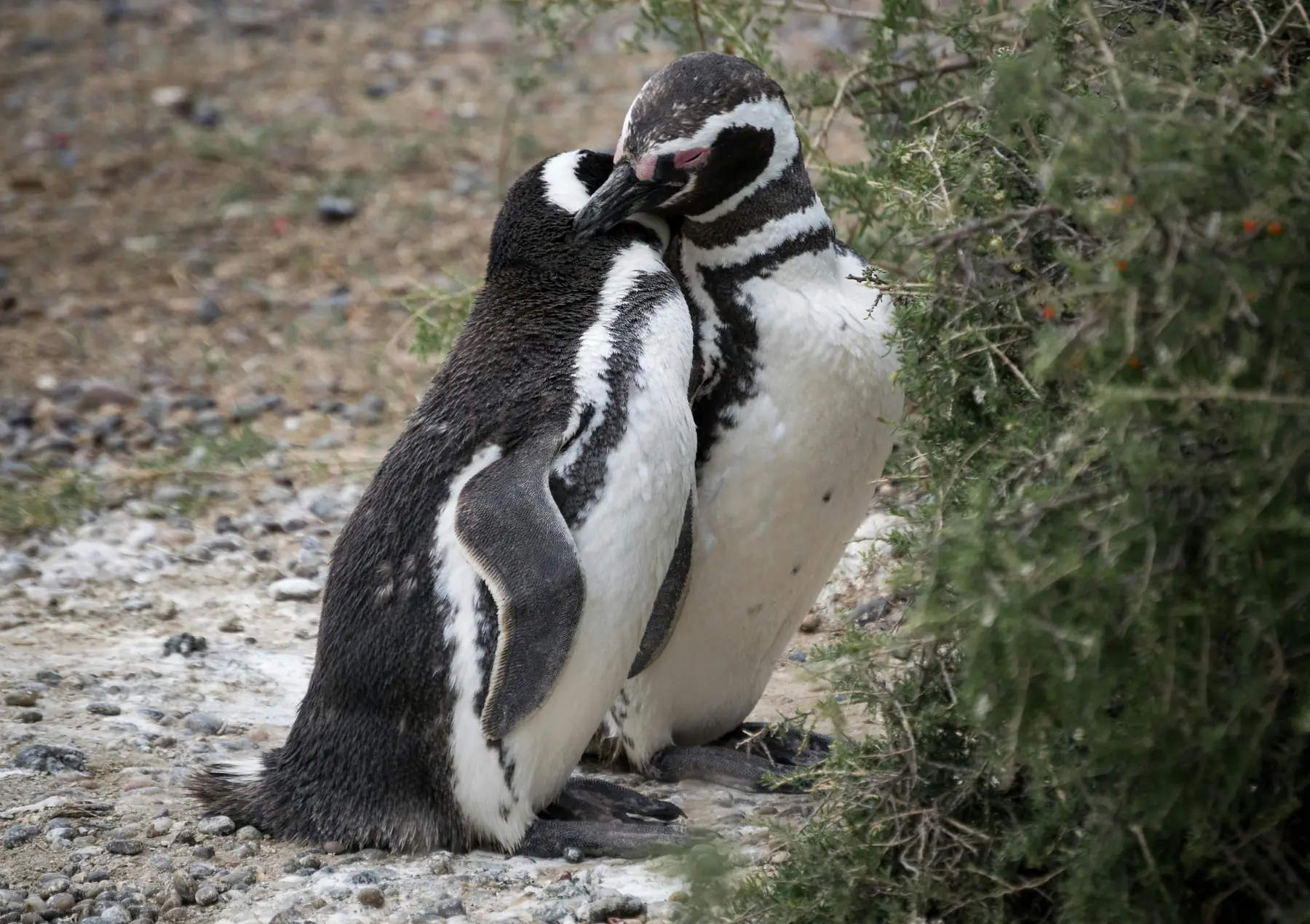
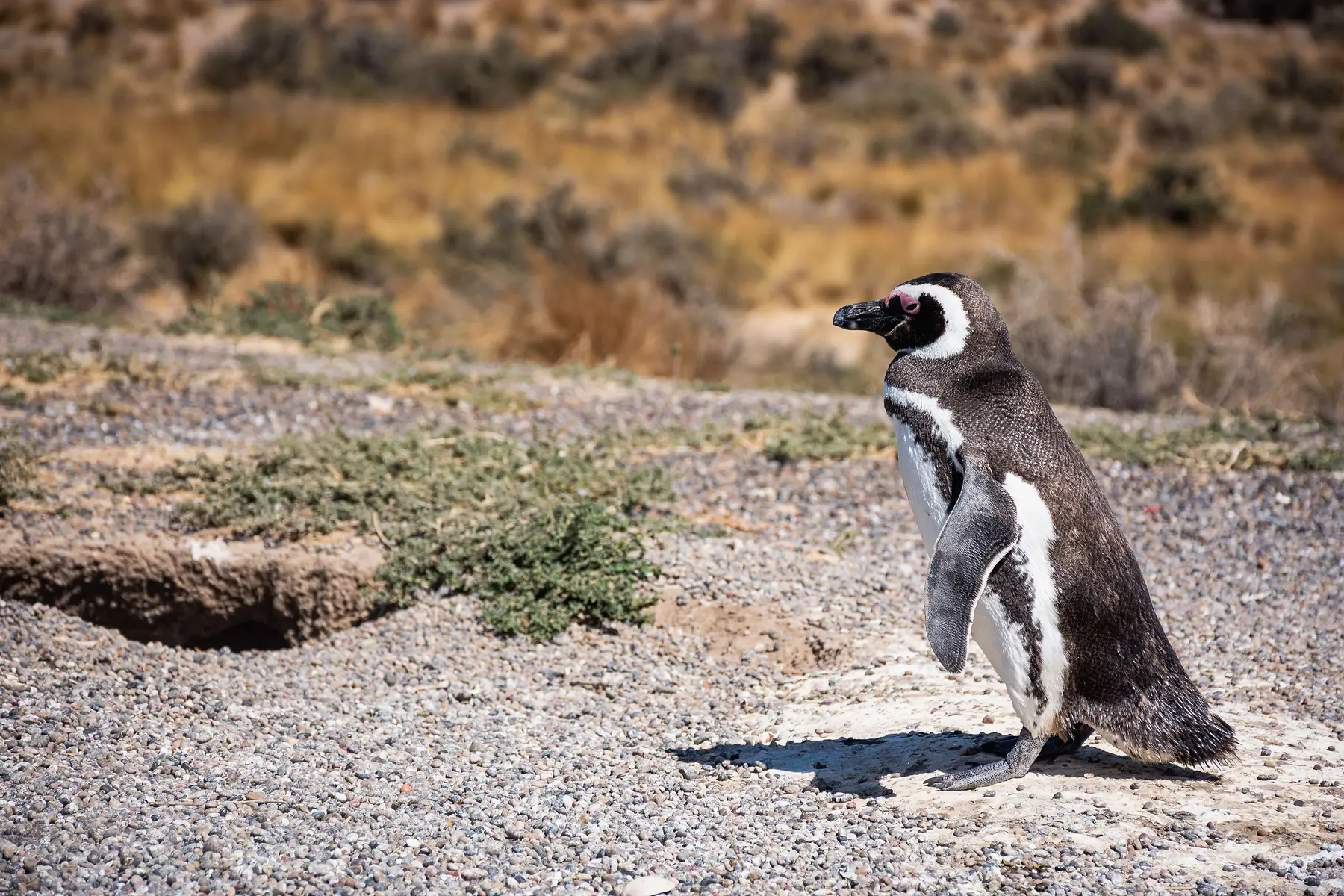
Magellanic Penguins occupy several large colonies on the peninsula, most notably at Estancia San Lorenzo. They arrive in September to burrow and remain until March. While the colonies here are impressive, those seeking the absolute largest population in the region should also consider a trip to Punta Tombo.
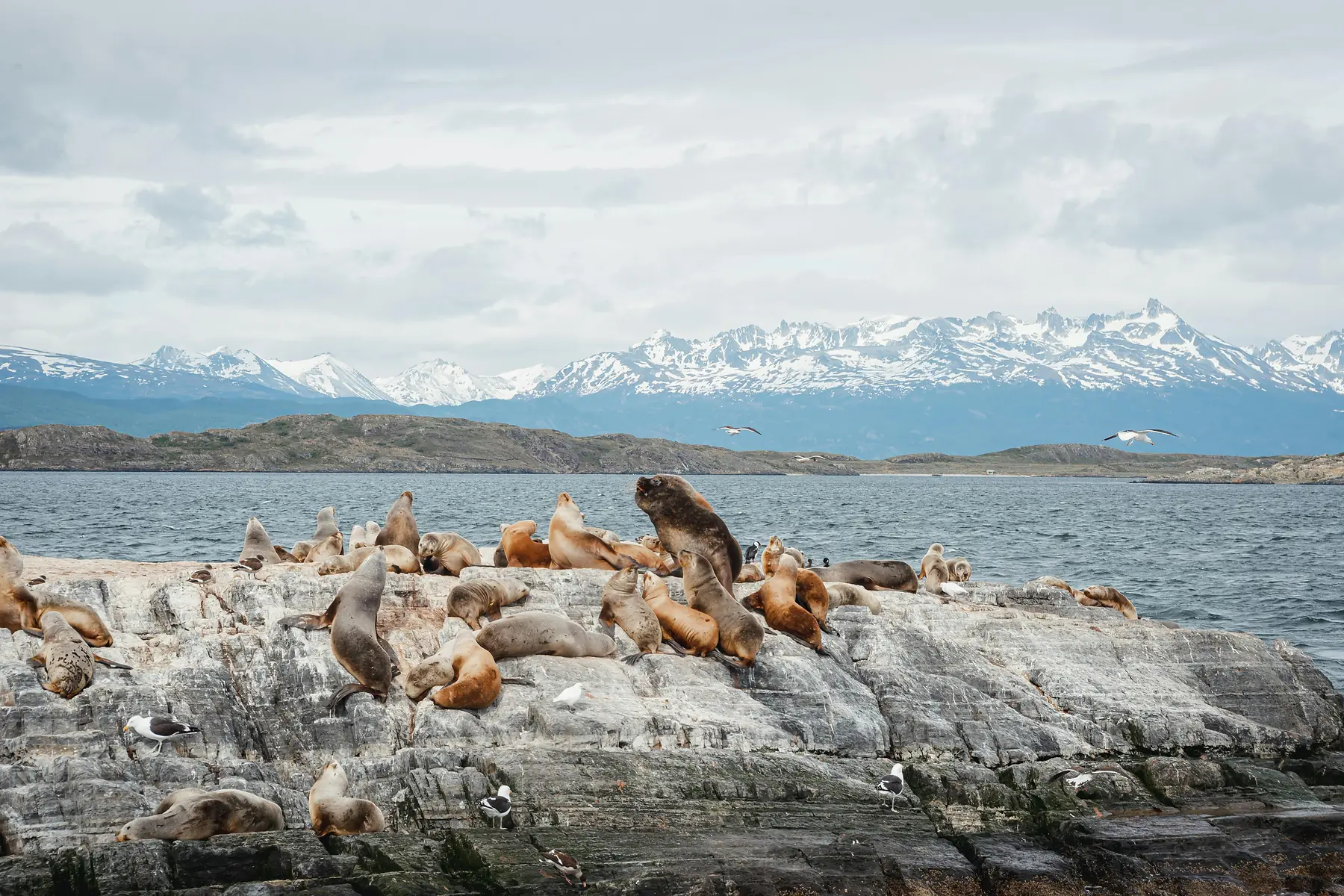
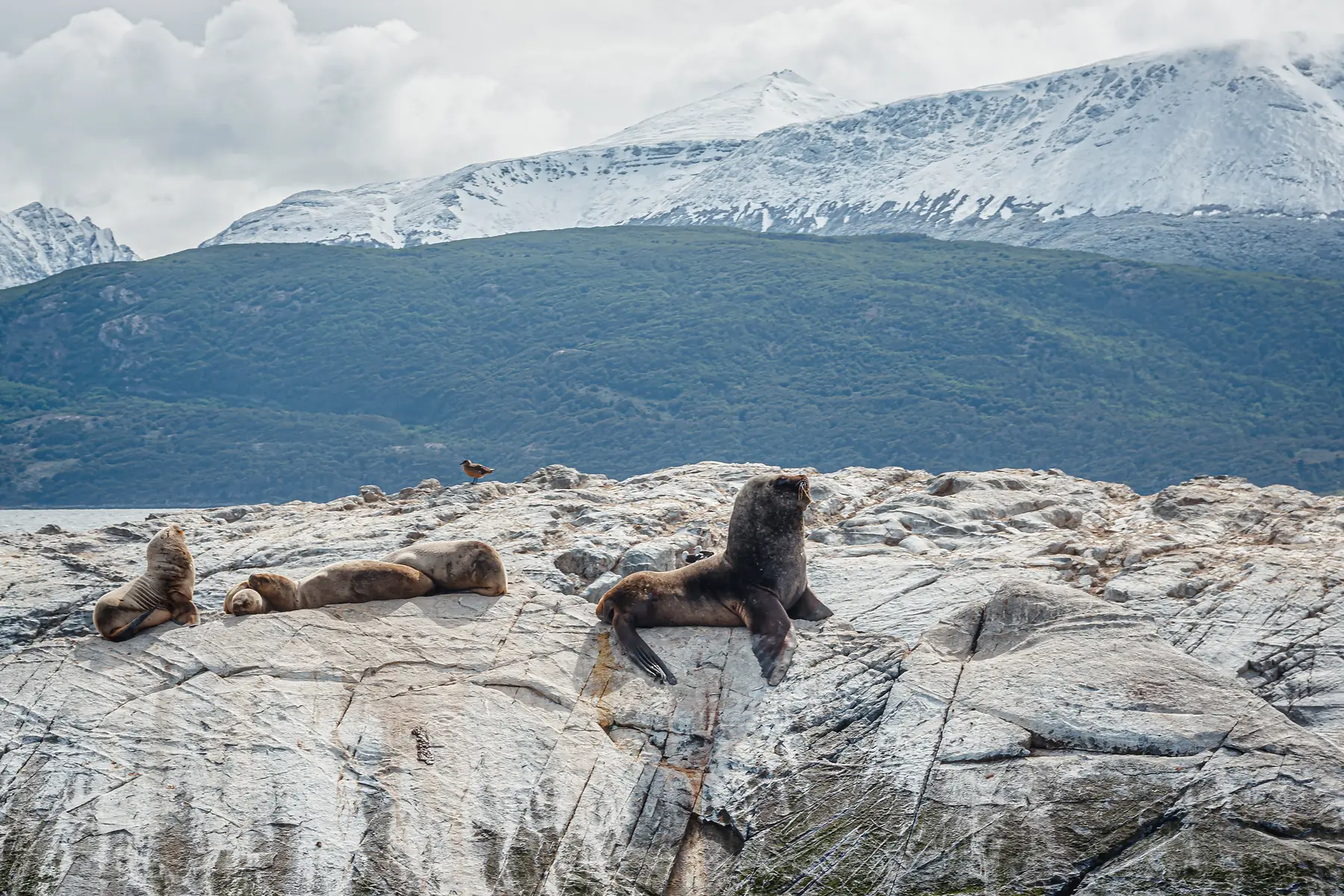
Southern Elephant Seals and Sea Lions are year-round residents. The elephant seals are particularly striking during the spring breeding season, when massive bulls, weighing up to 4,000kg, engage in bloody battles for dominance over harems on the beaches of Caleta Valdés and Punta Delgada.
To help you plan your wildlife viewing, we have compiled detailed resources on the region’s most famous inhabitants.
How to Witness the Orca Hunting Strategy
Witnessing an orca hunt is the “Holy Grail” of Patagonian wildlife photography, but it requires more luck and patience than any other activity on the peninsula. The orcas only hunt when the sea lion pups are young and venturing into the water, and they require a specific depth of water to reach the shore without becoming permanently stuck.
The critical variable is the tide. Sightings almost exclusively occur during high tide and the three hours immediately following it. This is when the water is deep enough for the orcas to “surf” onto the pebbles of Punta Norte (in March and April) or Caleta Valdés (in October and November). Even with perfect tides, a sighting is never guaranteed; the orcas may be elsewhere in the gulf or the water may be too choppy for them to hunt effectively.
Check the official “Tide Tables” (Tablas de Mareas) at the entrance of the reserve or in Puerto Pirámides. Plan to arrive at the Punta Norte lookout at least one hour before high tide and be prepared to wait for four to five hours in the wind.
Key Viewpoints and Locations on the Peninsula
The peninsula is vast, and the distances between viewpoints are often underestimated. Most of the interior is private land, meaning you must stay on the designated gravel roads that lead to specific coastal lookouts.
Puerto Pirámides is the only village inside the reserve and serves as the staging ground for all boat-based whale watching. It has a small selection of restaurants, a gas station, and a few boutique hotels. It is the only place on the peninsula where you can reliably find services.
Punta Norte, located at the northern tip, is the primary site for orca monitoring and home to a massive mixed colony of sea lions and elephant seals. The cliffs here provide an excellent vantage point for scanning the horizon with binoculars.
Caleta Valdés is a stunning 30km-long spit of land that creates a protected turquoise lagoon. It is one of the best places to see elephant seals resting on the shore and has a small, accessible penguin colony. The “Punta Cantor” viewpoint here offers a panoramic look at the lagoon’s mouth.
Isla de los Pájaros (Bird Island) is located near the entrance isthmus. While you cannot walk on the island, the interpretive centre provides powerful telescopes to view the thousands of gulls, cormorants, and flamingos that nest there. Legend has it that this island’s silhouette inspired the “elephant inside a boa constrictor” drawing in Antoine de Saint-Exupéry’s The Little Prince.
For a visual breakdown of how these points connect, see our Peninsula Valdés map and distance guide.
Logistics: Getting to and Around Peninsula Valdés
Most visitors base themselves in Puerto Madryn and visit the peninsula as a day trip. However, because the drive from the city to the far points of the peninsula (like Punta Norte) takes over two hours, your choice of transport significantly impacts how much wildlife you will actually see.
The road from Puerto Madryn to the reserve entrance is paved, but once you pass the Isthmus, the majority of the peninsula’s roads are “ripio” (loose gravel). These roads are well-maintained but require slow, careful driving to avoid skidding or cracked windshields.
Distance and Travel Time Table
| Route | Distance (one way) | Approx. Time | Road Type |
|---|---|---|---|
| Puerto Madryn to Puerto Pirámides | 100 km | 1 hour 15 min | Paved |
| Puerto Pirámides to Punta Norte | 80 km | 1 hour 30 min | Gravel (Ripio) |
| Puerto Pirámides to Caleta Valdés | 75 km | 1 hour 20 min | Gravel (Ripio) |
| Puerto Pirámides to Punta Delgada | 70 km | 1 hour 15 min | Gravel (Ripio) |
To decide whether to drive yourself or book a tour, consider your comfort level with gravel roads and your desire for a professional guide’s wildlife spotting skills.
- Flexibility: High — you can stay at a viewpoint as long as you like (Renting a Car)
- Flexibility: Low — tours follow a fixed schedule (Organized Tour)
- Cost: Higher (Rental + Fuel + Insurance) (Renting a Car)
- Cost: Lower for solo travellers or couples (Organized Tour)
- Stress: High — driving on ripio requires constant focus (Renting a Car)
- Stress: Low — sit back and enjoy the scenery (Organized Tour)
- Expertise: You must spot the wildlife yourself (Renting a Car)
- Expertise: Guides use radios to track whale and orca locations (Organized Tour)
Rent a car if you are targeting orcas and need to stay for the full tide window; take a tour if you want to relax and learn from a naturalist guide.
Puerto Pirámides is the only place on the entire peninsula to get fuel. If you are heading to Punta Norte or Caleta Valdés, ensure your tank is full before leaving the village. There is zero cell service once you leave the village limits.
If you prefer to let a professional handle the logistics and the driving, there are several high-quality options departing daily from the city.
Essential Travel Tips for the Peninsula
The peninsula is a desert environment, and the conditions can be surprisingly harsh even on a sunny day. The wind is the most consistent factor; it can be persistent and strong enough to blow car doors open or sandblast camera lenses.
- Driving Safety: Never exceed 60km/h on gravel (ripio). If you hit a patch of loose stones at high speed, the car can easily slide. If a vehicle is approaching from the opposite direction, slow down to minimize the risk of a flying stone cracking your windshield.
- Dust Protection: The fine Patagonian dust gets into everything. If you are carrying professional camera gear, keep it in a sealed bag when not in use and avoid changing lenses in the open air.
- Supplies: Outside of Puerto Pirámides, there are no shops. Carry at least 2 litres of water per person and enough snacks to last the day, especially if you are waiting for the orca tide window.
- Clothing: Use a layering system. Even in summer, the wind off the Atlantic is cold. A windproof shell and a warm hat are essential, even if it feels warm in Puerto Madryn.
Where to Stay: Puerto Pirámides vs. Estancias
While 90% of visitors stay in Puerto Madryn, staying inside the reserve offers a completely different experience. You trade the city’s restaurants and amenities for silence, starlit skies, and the ability to reach wildlife colonies before the tour buses arrive.
Puerto Pirámides is the most practical choice. It allows you to wake up and walk to the whale-watching piers. The atmosphere is that of a small, dusty outpost that comes alive during whale season. It is perfect for those who want a bit of social life and a choice of 3-4 restaurants.
Private Estancias offer the “luxury of location.” Properties like Estancia San Lorenzo or El Pedral allow you to stay on vast private estates that have their own private access to penguin or sea lion colonies. This is the best option for serious photographers or those seeking total isolation. These stays are often all-inclusive, as there are no other dining options nearby.
For those who prefer the convenience of a larger hub with more variety, you can find our top hotel picks in the main town.
FAQ
QUESTION: Is Peninsula Valdés worth visiting if it’s not whale season?
ANSWER: Yes, Peninsula Valdés offers incredible wildlife year-round, including elephant seals, sea lions, guanacos, and maras, though the specific species you see will change with the season.
QUESTION: Can I see orcas at Peninsula Valdés every day?
ANSWER: No, orca sightings at Peninsula Valdés are rare and highly dependent on tides, weather, and the presence of sea lion pups; the best chance is during the high tide window in March and April.
QUESTION: How much time do I need to see Peninsula Valdés?
ANSWER: While a long day trip from Puerto Madryn is possible, staying 2 nights in Puerto Pirámides is recommended to allow enough time to visit all viewpoints and account for tide timings.
QUESTION: Do I need a 4x4 to drive in Peninsula Valdés?
ANSWER: No, a standard 2WD vehicle is sufficient for the roads in Peninsula Valdés, provided you drive slowly and carefully on the extensive gravel (ripio) sections.
QUESTION: Is there food and water available inside Peninsula Valdés?
ANSWER: Outside of the village of Puerto Pirámides, facilities are very limited; it is essential to carry plenty of water and snacks when exploring distant points like Punta Norte.
QUESTION: Are there penguins in Peninsula Valdés?
ANSWER: Yes, Peninsula Valdés is home to several Magellanic penguin colonies, with the largest accessible populations found at Estancia San Lorenzo and Caleta Valdés.