
Mirador Las Torres Hike: The Ultimate Trail Guide (2026/27)
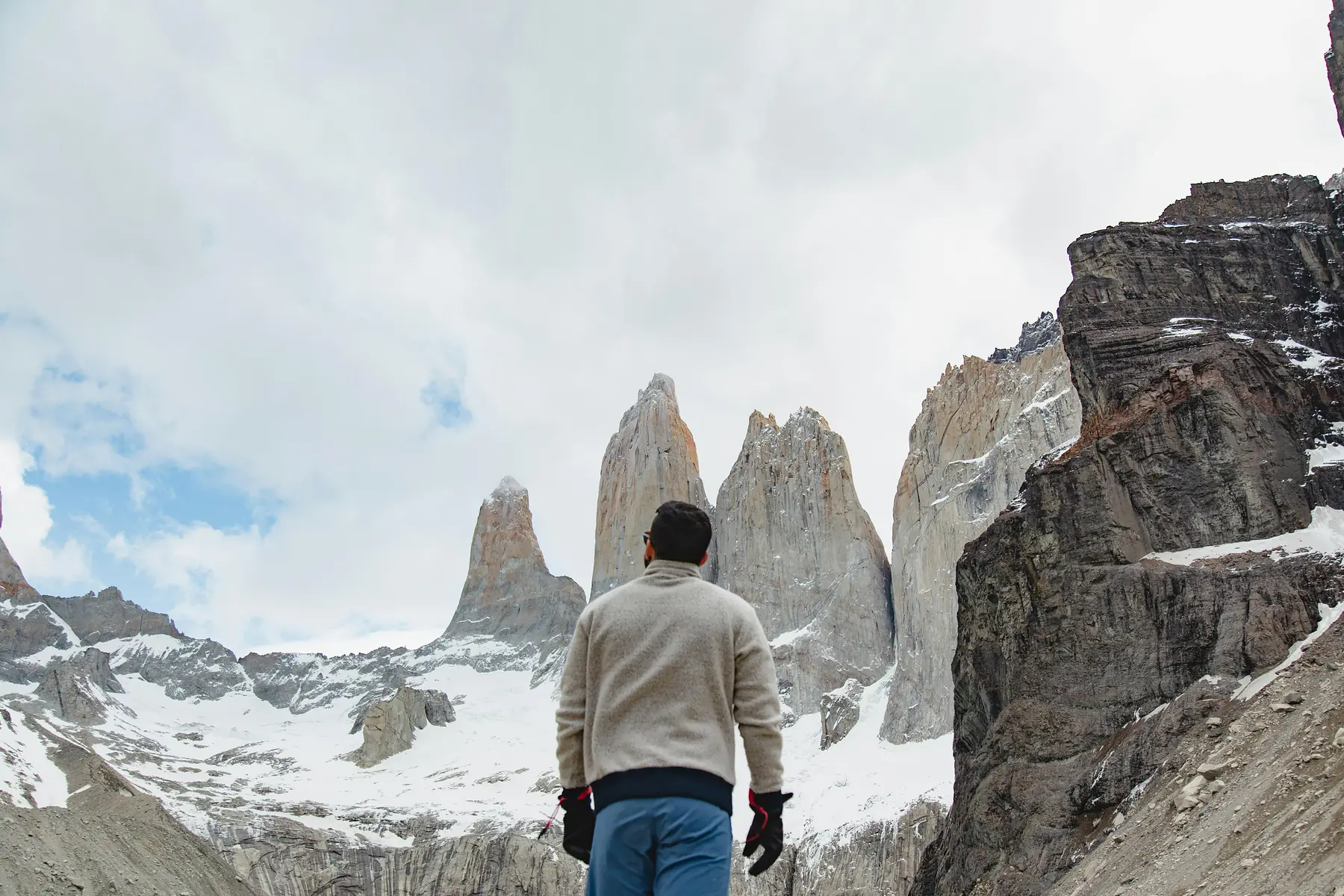
The Mirador Las Torres hike is a strenuous 21km (13-mile) round-trip trek that leads to the iconic base of the three granite towers in Torres del Paine National Park. Plan for 8 to 10 hours of hiking, including a challenging final scramble over a boulder field to reach the turquoise glacial lake at the summit.
For many travelers, this trail is the primary reason for visiting Patagonia. It is the “crown jewel” of the region’s day hikes, offering a direct encounter with the vertical granite spires that give the park its name. However, the path is demanding, involving approximately 900 meters of elevation gain and a technical final kilometer that tests both your fitness and your footwear. This guide is updated for the 2026/27 season to reflect the latest CONAF regulations, including the sector-specific ticketing system, shuttle logistics, and trail safety protocols to ensure you reach the lookout safely and within the mandatory time windows.
Before you lace up your boots, it is essential to understand the broader context of the park. If you are just beginning your research, our Torres del Paine National Park guide provides a high-level overview of the region, while our complete hiking directory can help you compare this trail against other legendary routes in the Andes.
Mirador Las Torres Hike: Fast Facts
The following data points reflect the standard out-and-back route starting from the Welcome Center (Centro de Bienvenida) in the Las Torres sector.
Trail at a Glance
- Distance: 21km (13 miles) round trip
- Elevation Gain: 900m (2,950 ft)
- Duration: 8 - 10 hours
- Difficulty: Strenuous (Hard)
- Trail Type: Out-and-back
- Starting Point: Welcome Center (Las Torres Sector)
- Mandatory Requirement: CONAF Sector-Specific Pass (Base Torres)
Getting to the Trailhead: Logistics from Puerto Natales
To successfully complete the Mirador Las Torres as a day hike from Puerto Natales, you must adhere to a strict morning timeline. The most critical factor is catching the 7:00 AM bus from the Puerto Natales bus station (Terminal Rodoviario). This departure ensures you arrive at the park entrance with enough time to clear the ranger station and begin hiking before the mid-morning crowds.
The bus journey takes approximately two hours to reach the Laguna Amarga ranger station. Upon arrival, all passengers must disembark to show their mandatory CONAF entrance QR code. For the 2026/27 season, CONAF requires visitors to purchase a sector-specific ticket (Base Torres) via the pasesparques.cl platform. You cannot purchase these at the gate; they must be secured online in advance, and daily capacities are strictly enforced. Once cleared, you will not walk from Laguna Amarga to the trailhead. Instead, you will board a local shuttle (transfer) that connects the ranger station to the Welcome Center. This shuttle costs 4,500 - 5,000 CLP (as of the 2026/27 season) and takes 10 - 15 minutes.
If you are driving a rental car, you can bypass the Laguna Amarga shuttle by driving directly to the parking area at the Welcome Center. This saves approximately 30 - 45 minutes of transit time, allowing for a slightly later start or a more relaxed pace on the trail. For a full breakdown of bus companies, rental car advice, and detailed driving routes, see our comprehensive guide on getting to Torres del Paine.
Trail Breakdown Phase 1: The Ascent to Windy Pass
The hike begins at the Welcome Center, where you will follow signs for “Sendero a las Torres.” The first 1.5km is relatively flat, crossing a suspension bridge over the Rio Ascencio and passing near the Hotel Las Torres. Do not be lulled into a false sense of security by this easy start; the incline begins almost immediately after you pass the hotel.
The trail climbs steadily through open, exposed terrain for about 3km. This section is often dusty and offers no shade, making it particularly draining on warm, sunny days. As you gain elevation, the views behind you of Nordenskjöld Lake and the surrounding pampa begin to open up. The goal of this first phase is “Paso de los Vientos” (Windy Pass).
As the name suggests, Paso de los Vientos is a notch in the mountainside where the wind from the Ascencio Valley is funneled with significant force. It is not uncommon to experience gusts of 60 - 80 km/h here. From this vantage point, you get your first look deep into the valley toward Refugio Chileno, with the river snaking far below. The trail then narrows and hugs the side of the mountain as it begins a brief but necessary descent toward the valley floor.
Trail Breakdown Phase 2: Refugio Chileno & The Forest
After descending from Windy Pass, the trail levels out as it approaches Refugio Chileno, the primary rest stop for the hike. This section takes roughly 1.5 to 2 hours to reach from the Welcome Center. For day hikers, Chileno is a vital logistical hub rather than a place to linger.
The facilities at Refugio Chileno are designed primarily for overnight guests, but day hikers can access the public restrooms and a small snack bar. There is a fee of approximately 1,000 CLP to use the toilets for non-guests. This is also the last reliable place to refill water bottles from a tap, though many hikers choose to filter water from the fast-flowing glacial streams further up the trail.
If you are considering staying overnight here to catch the sunrise, you can find more information about the booking process and amenities in our guide to Torres del Paine refugios.
Leaving Chileno, the trail enters a beautiful, old-growth Lenga forest. This is arguably the most pleasant part of the trek, as the canopy provides shade and protection from the wind. The path follows the river, crossing several sturdy wooden bridges. The incline here is moderate and consistent, allowing you to find a steady rhythm. Pay attention to the ground; the trail is often crisscrossed with tree roots that can be slippery when wet. This forested section lasts for about an hour and ends abruptly at the Guardería Las Torres, a small ranger hut that marks the start of the final ascent.
Trail Breakdown Phase 3: The Moraine (The Final Scramble)
The final kilometer of the hike, known as the Moraine, is the most technically demanding and physically exhausting portion of the day. You will emerge from the forest onto a massive field of granite boulders and loose scree. While the distance is short, the elevation gain is nearly 300 meters, and the terrain requires careful foot placement.
The “trail” here is less of a path and more of a suggested route marked by orange or red paint splashes on the rocks. You will need to use your hands for balance in several sections. The boulders range in size from small stones to the size of a small car, and some may be unstable. During peak season, this section can become a bottleneck as hikers move slowly in both directions.
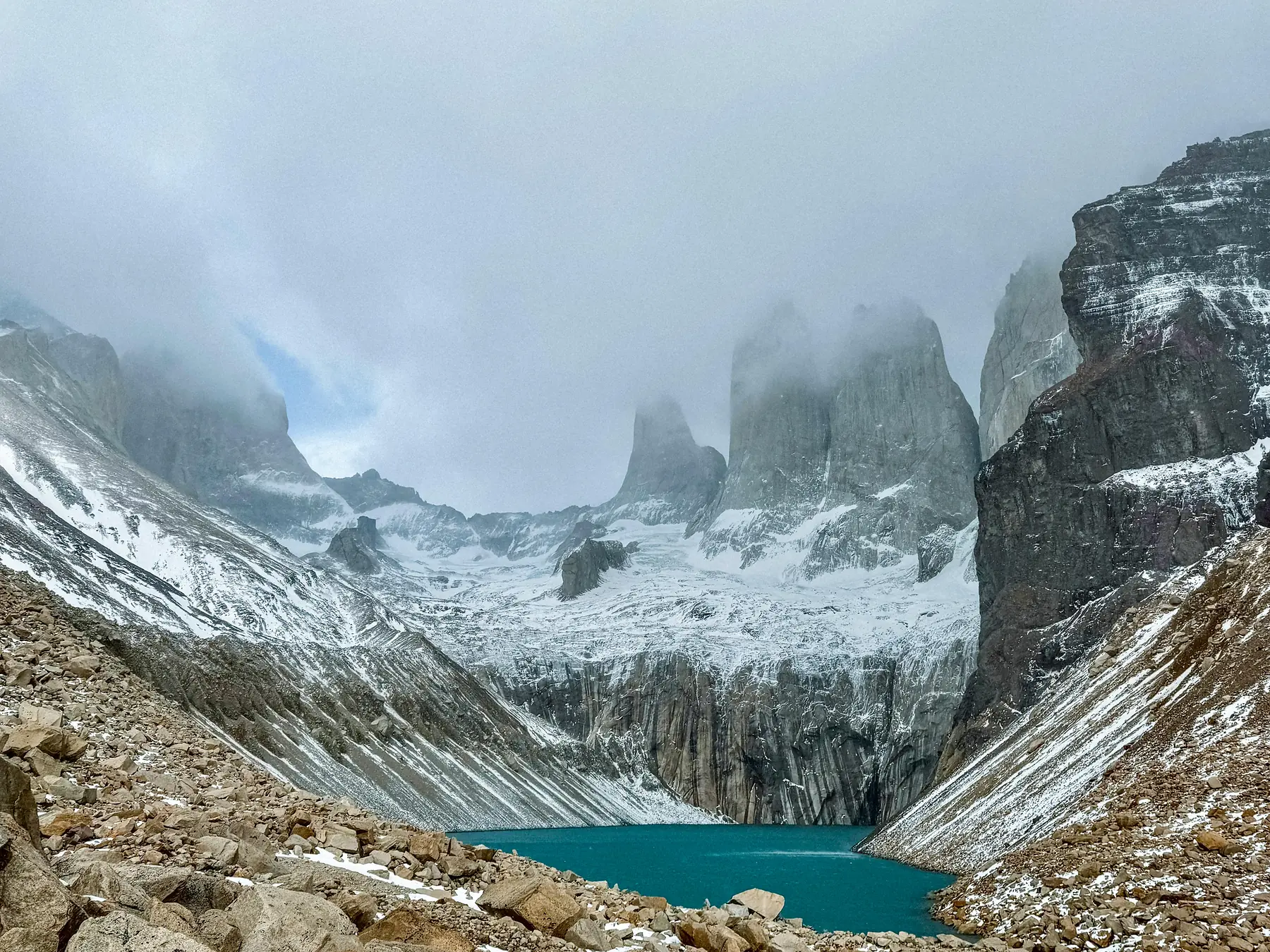
The mental challenge here is significant, as the towers remain hidden behind the crest of the moraine until the very last moment. Keep your eyes on the markers and maintain a slow, steady pace. When the terrain finally levels out, you will crest the ridge and the three towers will suddenly appear in their full, magnificent scale.
At the Mirador: Photography & Ethics
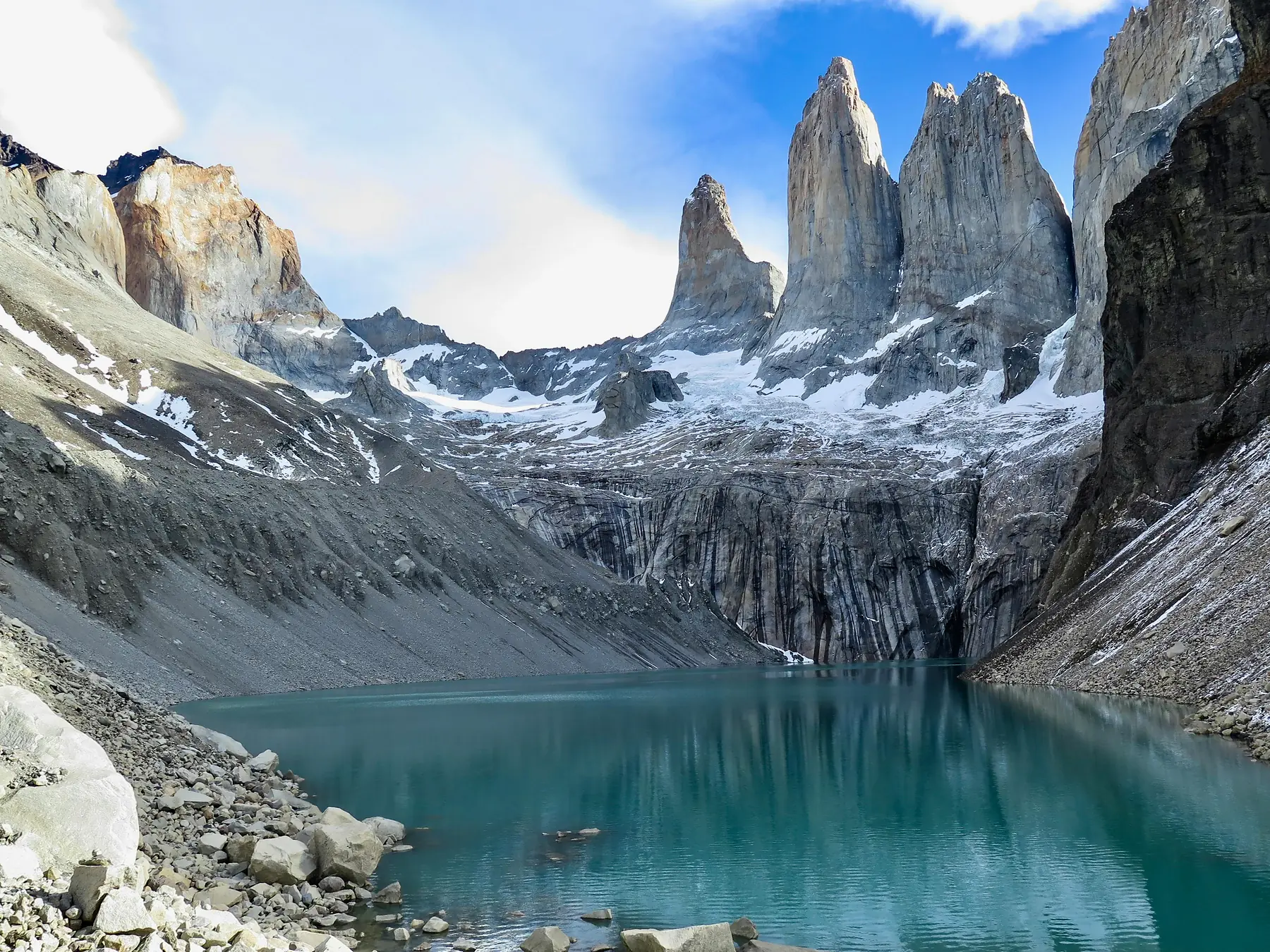
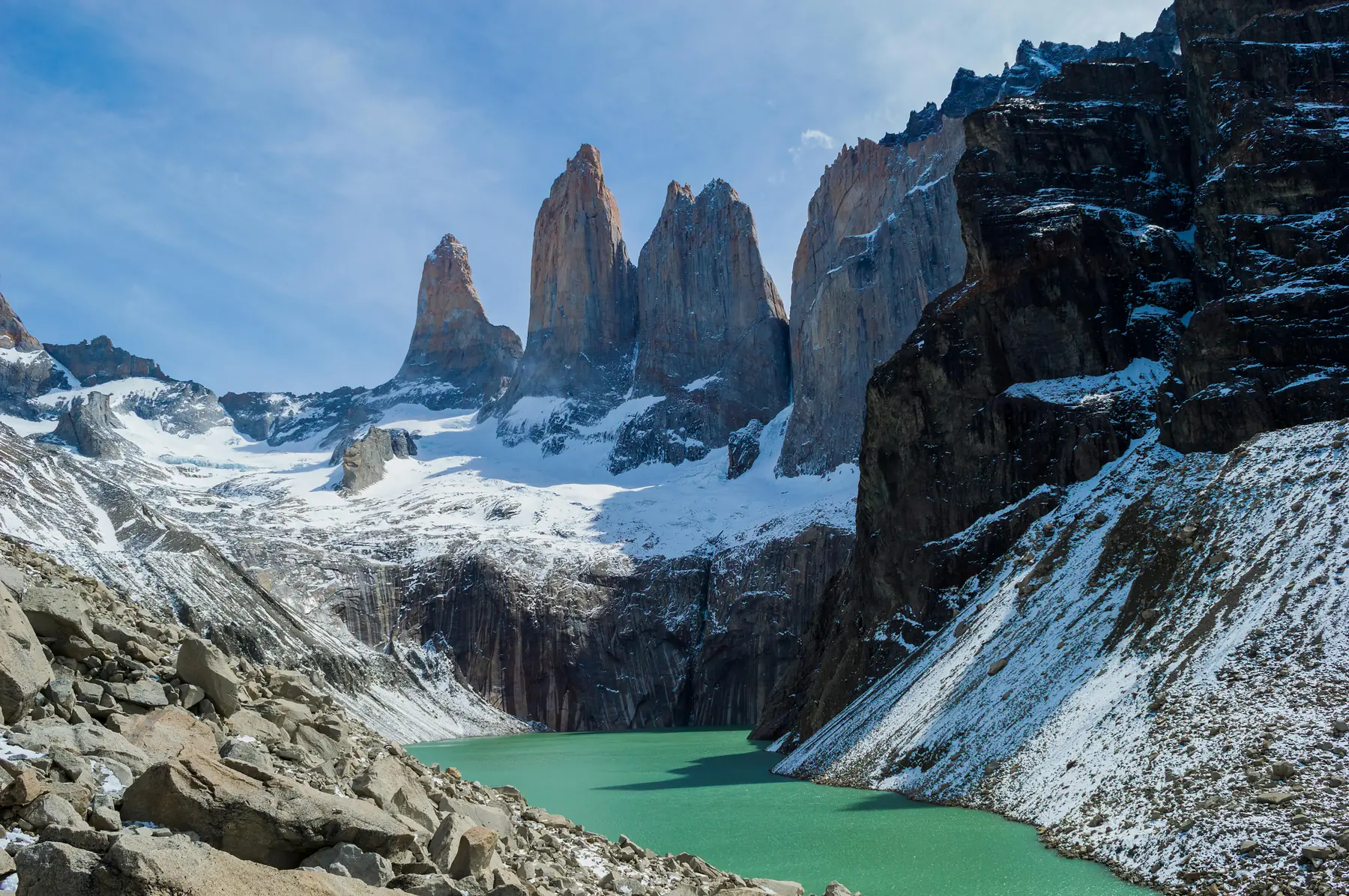
The Mirador sits at the edge of a turquoise glacial lake, directly beneath the North (2,260m), Central (2,460m), and South (2,500m) towers. On a clear day, the reflection of the granite walls in the water is perfect. Most hikers spend 45 - 60 minutes here resting and taking photos before beginning the long descent.
For the best photography, try to find a spot slightly away from the main cluster of hikers at the water’s edge. There are several large, flat boulders further back that offer a more elevated perspective of the entire basin. Be aware that the sun moves behind the towers by mid-afternoon, which can create high-contrast shadows that are difficult to photograph.
Respecting the environment at the Mirador is paramount. This is a fragile alpine ecosystem, and the lake is a primary water source for the valley below.
- Stay on marked areas: Avoid trampling the sparse vegetation near the shoreline.
- Pack it out: There are no trash cans at the summit. Everything you bring up must go back down.
- Water ethics: Do not wash your hands, face, or equipment in the lake. The oils and soaps can damage the delicate balance of the glacial water.
- Wildlife: Do not feed the caracaras (birds of prey) or any other wildlife, regardless of how bold they seem.
The Iconic Sunrise: How to Actually Do It
The “Red Towers” sunrise is the most sought-after experience in Patagonia, but it is physically impossible to achieve as a day trip from Puerto Natales. The park gates do not open early enough, and the shuttle from Laguna Amarga does not run in the middle of the night. To see the sunrise, you must spend at least one night inside the park in the Las Torres sector.
The most common strategy is to book a night at Refugio Chileno. From there, it is a 2 - 2.5 hour hike to the Mirador. You will need to leave the refugio around 3:30 AM or 4:00 AM (depending on the time of year) and hike through the forest and up the moraine in total darkness using a high-quality headlamp.
- Cost: Significantly cheaper — bus + entrance only (Day Trip)
- Cost: High refugio rates (Overnight)
- Sunrise Access: Impossible on a day trip (Day Trip)
- Sunrise Access: Guaranteed, weather permitting (Overnight)
- Physical Strain: 21km in one day is grueling (Day Trip)
- Physical Strain: Splits the distance over two days (Overnight)
- Logistics: Requires only a bus ticket (Day Trip)
- Logistics: Requires booking 6+ months in advance (Overnight)
Stay at Refugio Chileno if your primary goal is the sunrise photo; otherwise, the day trip is more budget-friendly and requires less planning.
If you cannot secure a bed at Chileno, your next best option is Camping Central or the Hotel Las Torres near the Welcome Center. However, this adds another 1.5 - 2 hours to your pre-dawn hike, meaning a 1:30 AM or 2:00 AM start. For more details on these options, see our guide on where to stay in Torres del Paine.
Trail Closures & Safety Regulations (2026/27)
CONAF (the park authority) strictly enforces trail closure times to ensure that all hikers are off the mountain before dark. These times are non-negotiable, and rangers stationed at Refugio Chileno will physically block the path to those who arrive too late.
The Day Hiker’s Cut-off Clock:
- Laguna Amarga Arrival: You should be at the park entrance by 9:00 AM.
- Welcome Center Start: You must begin the hike no later than 10:00 AM.
- Refugio Chileno Cut-off: You must pass Refugio Chileno (heading up) by 3:00 PM. If you arrive after this time, you will be turned back.
- Mirador Departure: Rangers typically begin clearing the summit by 4:30 PM to ensure everyone reaches the shuttle before the last bus back to Puerto Natales.
During the winter season (May to September), these regulations change significantly. The trail is often closed to independent hikers and requires a mandatory mountain guide and crampons. Even in summer, the trail may be closed at a moment’s notice due to extreme wind speeds (exceeding 80 - 100 km/h) or heavy snow on the moraine. Always check the official weather and trail status before leaving Puerto Natales.
Essential Gear for the Towers
Because of the Moraine section, your choice of gear can make the difference between a successful summit and a painful retreat. This is not a trail for casual sneakers or fashion boots.
- Footwear: Mid-height waterproof hiking boots with aggressive tread are highly recommended. The ankle support is vital for the boulder scramble, and the grip is necessary for the descent, which is often harder on the body than the climb.
- Trekking Poles: These are almost essential for the return journey. The descent from the Moraine to Chileno is a “knee-killer,” and poles will reduce the impact on your joints significantly.
- The Three-Layer System: Wear a moisture-wicking base layer, a warm fleece or down mid-layer, and a high-quality windproof/waterproof outer shell. You will be sweating on the climb but freezing while waiting at the summit.
- Headlamp: Even if you aren’t planning a sunrise hike, always carry a headlamp. If you are delayed by injury or weather, you do not want to be on the Moraine after the sun sets.
If the technical nature of this hike sounds intimidating, there are many other ways to see the park’s beauty. You might find a better fit in our list of the best day hikes in Patagonia, which includes several less strenuous alternatives with equally impressive views.
To explore the rest of the park’s highlights, including the French Valley and Grey Glacier, visit our Torres del Paine best hikes directory.
FAQ
How long does the Mirador Las Torres hike take? Most hikers take between 8 and 10 hours to complete the 21km round trip, including time for lunch at the base of the towers.
Is the Mirador Las Torres hike hard for beginners? It is considered a strenuous hike due to the 900m elevation gain and the final hour-long scramble over steep, unstable boulders.
Do I need a guide for the Mirador Las Torres hike? No, the trail is well-marked and a guide is not required during the summer season (October to April), though a park pass is mandatory.
What is the best time of day to start the Mirador Las Torres hike? To avoid the largest crowds and ensure you return before dark, it is best to start by 8:00 AM from the Welcome Center.
Can I see the sunrise at Mirador Las Torres on a day trip? No, park gate hours and shuttle schedules make it impossible to reach the towers for sunrise from Puerto Natales; you must stay overnight at Refugio Chileno or Camping Central.
Are there toilets on the Mirador Las Torres trail? Yes, public restrooms are available at the Welcome Center (start) and Refugio Chileno (roughly halfway), though the latter requires a small fee (approx. 1,000 CLP) for non-guests.