

Most travelers from the US, UK, EU, Canada, and Australia do not need a visa to enter Argentina for tourism. Upon arrival, you are typically granted a 90-day stay under a “Type 24H” tourist designation (officially Artículo 24 inciso h), provided you hold a valid passport and can demonstrate proof of onward travel if requested.
Argentina remains one of the most accessible destinations in South America for international trekkers. However, while the entry process is straightforward for many, the rules regarding passport validity, documentation for minors, and the specific Electronic Travel Authorization (AVE) for certain nationalities are strictly enforced. This guide provides the current 2026 requirements for entering Argentina, extending your stay in Patagonia, and navigating the application process if you are not from a visa-exempt country.
Argentina Entry at a Glance
- Visa-Exempt Nationalities: US, UK, EU, CA, AU, NZ, and most of Latin America.
- Standard Stay: 90 days (extendable once).
- Visa on Arrival: Not available.
- Passport Validity: 6 months recommended (officially valid for duration of stay).
- Entry Fee: Reciprocity fees are currently abolished for all nationalities.
Argentina Visa-Exempt Countries: The 90-Day Rule
Citizens of over 80 countries can enter Argentina for tourism without applying for a visa at a consulate. This exemption applies to travelers from the United States, United Kingdom, Canada, Australia, New Zealand, and all European Union member states. Most Latin American citizens can also enter visa-free, often using only their national ID cards.
When you pass through immigration at an airport like Ezeiza (EZE) in Buenos Aires or a land border near El Calafate, your passport will be swiped or stamped with a 90-day tourist entry. This is officially known as a Type 24H entry. It is important to note that Argentina does not offer a “Visa on Arrival” for those who are not on the exempt list. If your nationality requires a visa, you must secure it through an Argentine embassy or the online AVE system before you arrive at the border.
For a broader look at how these rules compare to neighboring countries as you plan your trip through the Andes, see our comprehensive guide to Patagonia visa requirements.
Passport Requirements for Entering Argentina
While official Argentine regulations state your passport only needs to be valid for the duration of your stay, the 6-month validity rule is the functional safety standard for 2026. Many airlines will deny boarding to passengers with less than six months of validity remaining to avoid the risk of being held liable for your return if Argentine authorities turn you away.
Beyond the expiration date, your passport must be in good physical condition. Argentine border officers are known to be meticulous; a passport with significant water damage, loose pages, or tears may be rejected. You should also ensure you have at least one completely blank page for the entry and exit stamps, though two pages are recommended if you plan on crossing back and forth between Argentina and Chile during your trek.
For a complete checklist of the travel documents and health declarations required for the region, refer to our guide on Patagonia entry requirements.
The Argentina Tourist Visa Application (For Non-Exempt Nationalities)
Travelers from countries not included in the visa-waiver program, such as India or China (who do not qualify for the AVE), must apply for a traditional tourist visa at an Argentine consulate. This process requires significant lead time, often four to six weeks before your intended departure.
The documentation checklist for a standard tourist visa generally includes:
- A completed and signed application form.
- Passport-style photos (typically 4x4cm with a white background).
- A flight itinerary (reservation only; do not purchase non-refundable tickets until the visa is approved).
- Proof of accommodation or an invitation letter from a resident.
- Proof of Economic Solvency: You must demonstrate the ability to fund your trip. Consulates usually require the last three months of bank statements showing a consistent balance.
When providing bank statements, ensure they are original documents stamped by the bank or high-resolution digital versions. “Economic solvency” is a subjective measure, but a general rule of thumb is to show access to at least $50 USD per day of your planned stay.
The standard consular fee for a tourist visa is $150 USD as of the 2026/27 season. This fee is non-refundable, regardless of whether the visa is granted. Following the document submission, you will likely be required to attend a brief in-person interview at the consulate to discuss your travel plans.
Electronic Travel Authorization (AVE) for Specific Nationalities
Argentina offers a streamlined Electronic Travel Authorization (AVE or eTA) for citizens of 70+ countries, most notably India and China, who already hold valid visas for the United States or the European Union. This system replaces the need for a full consular visa and a physical interview.
To qualify for the AVE, you must hold a valid US B1/B2 visa or a Schengen Category C visa. The application is handled entirely online through the Dirección Nacional de Migraciones portal. You will need to upload a digital scan of every page of your passport and pay the processing fee online.
The AVE processing time can be unpredictable, ranging from 10 to 20 business days. Do not wait until the week of your flight to apply, as there is no “expedited” service for this digital authorization.
The cost for the AVE is $200 USD as of 2026. While more expensive than a standard visa, the convenience of avoiding a consular visit makes it the preferred choice for eligible travelers heading to Patagonia.
How to Extend Your Argentina Tourist Visa
If the 90-day window isn’t enough to cover your explorations from the Lake District down to Tierra del Fuego, you can legally extend your stay. The official process is called a Prórroga de Permanencia. You must visit a Migraciones (Immigration) office in person before your initial 90 days expire.
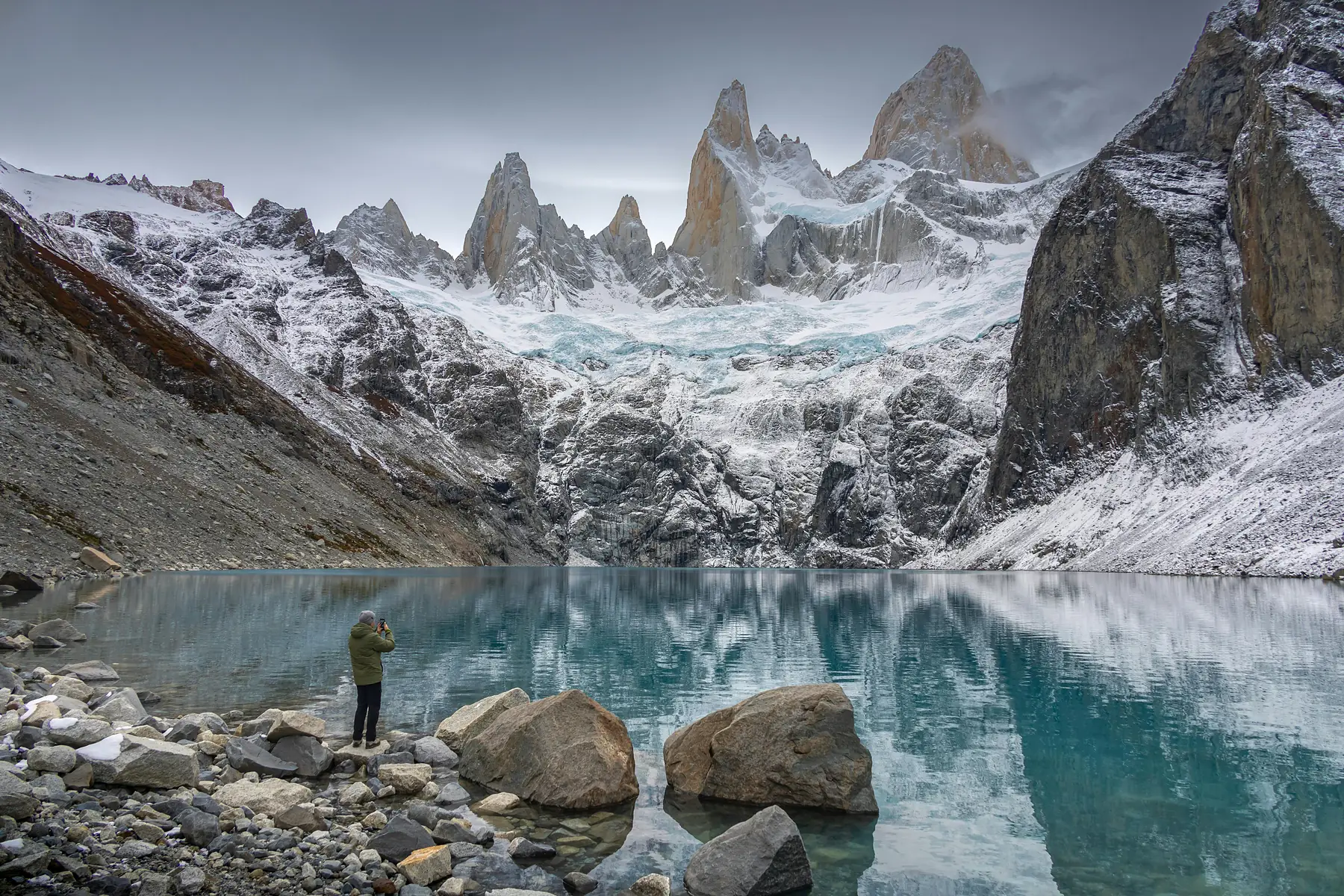
While the main office is in Buenos Aires, there are several regional offices in Patagonia hubs. If you are trekking near the granite towers of the south, you can find offices in:
- El Calafate: Convenient for those finishing the O or W Trek.
- Río Gallegos: A major transit point near the Atlantic coast.
- Puerto Madryn: Ideal for those visiting the Peninsula Valdés.
- Bariloche: The primary hub for the northern Lake District.
The extension grants you an additional 90 days. You will need your passport and a credit or debit card to pay the extension fee. As of early 2026, the fee for non-MERCOSUR citizens is 40,000 ARS (approximately $40–$50 USD, though this fluctuates with the exchange rate). For more on handling payments and navigating the local economy, see our guide on currency and money in Argentina.
Many travelers opt for a “visa run” by crossing the border into Chile for a few days and then returning to Argentina to trigger a fresh 90-day stamp. While this is common, it is technically at the discretion of the border officer. For the logistics of these crossings, refer to our detailed guide on Patagonia border crossings.
Traveling to Argentina with Minors
Argentina has some of the strictest regulations in the world regarding the entry and exit of minors (under 18). These “Autorización de Viaje” rules are designed to prevent international child abduction and are applied to both residents and tourists.
If a child is traveling with both parents, you should carry an original birth certificate (and a certified translation if it is not in Spanish) to prove the relationship. If a child is traveling with only one parent, or with a legal guardian, you must present a notarized authorization from the non-traveling parent(s). This document often requires an Apostille to be recognized by Argentine immigration.
If you are planning a family expedition, we have more practical advice on logistics and gear in our guide to Patagonia with kids.
Reciprocity Fees: A Thing of the Past?
For several years, citizens of the United States, Canada, and Australia were required to pay a “reciprocity fee” before entering Argentina. This fee often exceeded $100 USD and was a significant point of confusion for travelers.
As of 2026, these reciprocity fees remain abolished. You do not need to pay any entry fee online or at the airport. Be wary of third-party “scam” websites that still appear in search results claiming you need to pay a fee to secure an entry voucher. For more on the history and current status of these regulations, visit our page on the Argentina reciprocity fee.
Argentina Entry Procedures: What to Expect at the Border
The physical entry process in Argentina is modern and generally efficient. At major international airports and busy land borders, the officer will take a digital photo and a scan of your right thumbprint. This biometric data is linked to your passport record.
While the “Type 24H” entry is standard, the officer may ask about your itinerary or request “proof of onward travel.” This doesn’t always have to be a flight back to your home country; a bus ticket from El Calafate to Puerto Natales in Chile is usually sufficient.
- Wait Times: 30–90 minutes at EZE; 15–45 minutes at land borders.
- Documentation: High scrutiny of AVE/Visas; physical stamps are more common at land borders.
- Facilities: Full biometric stations; smaller land outposts may use manual entry during power outages.
- Onward Travel: Rarely checked at airports; frequently requested at land crossings.
Air entry is more predictable for visa verification, while land borders are faster but may require more proof of your local itinerary.
If you are planning a trip that loops through both sides of the border, your next step should be checking the requirements for the Chilean side of the region.
To ensure your transition between the two countries is seamless, view our guide to Chile visa requirements.
FAQ
Do I need a visa for Argentina if I am a US citizen? No, US citizens can enter Argentina for tourism for up to 90 days without a visa, provided they have a valid passport. This stay is granted upon arrival at no cost.
How long can I stay in Argentina as a tourist? Most tourists are granted a 90-day stay upon entry, which can typically be extended once for an additional 90 days at a Migraciones office. You must apply for the extension before your initial 90 days expire.
Can I get an Argentina visa on arrival? No, Argentina does not offer visas on arrival; you must either be from a visa-exempt country or apply for a visa at a consulate in advance. Certain nationalities may qualify for the online AVE if they hold US or Schengen visas.
Is a return ticket required for entry into Argentina? While not always checked, immigration officers may request proof of onward or return travel before granting entry into Argentina. A confirmed bus or flight ticket out of the country is usually sufficient.
What is the passport validity requirement for Argentina? Your passport should ideally be valid for at least six months beyond your date of entry into Argentina to avoid any boarding issues. While the law is sometimes flexible, airlines strictly enforce the 6-month rule.
Can I apply for an Argentina visa online? Only citizens of specific countries (such as India and China) who hold valid US or Schengen visas can apply for the Electronic Travel Authorization (AVE) online; all others must visit a consulate for a traditional visa.