
Kayaking Patagonia: 2026 Guide to Glaciers, Fjords & Rivers
Kayaking in Patagonia is the most intimate way to experience the region’s glaciers, fjords, and rivers, offering a water-level perspective that large cruise ships and hiking trails cannot match. For the 2026/27 season, this guide covers the essential hubs from the turquoise Marble Caves of Aysen to the iceberg-choked waters of Grey Lake in Torres del Paine.
While most travelers view Patagonia’s dramatic landscapes from the deck of a catamaran or a mountain pass, paddlers move at the speed of nature. You can glide between house-sized icebergs that drifted from the Southern Ice Field or navigate narrow marble tunnels where motorboats are forbidden to enter. Whether you are looking for a three-hour excursion to cap off a trek or a week-long expedition into the remote Chilean fjords, the silence of the water provides a sensory connection to the landscape that is impossible to find elsewhere.
Why Kayak in Patagonia? The Intimate Perspective
The primary reason to choose a kayak over a standard boat tour is the proximity to the environment. At water level, the scale of a glacier face or a granite fjord feels significantly more imposing, and the lack of engine noise allows you to hear the “white noise” of thousands of tiny air bubbles escaping from ancient melting ice.
Kayaking also grants access to “Hidden Patagonia,” reaching remote glaciers like Tyndall or secluded inlets in the Beagle Channel that are inaccessible by road. While the focus is on the landscape, you will often find yourself at an eye-level perspective with local wildlife, including sea lions, dolphins, and various waterfowl. For those whose primary goal is animal encounters, our guide to Patagonia wildlife tours provides a deeper look at the best regions for specific species.
To help you decide which type of paddling fits your trip, consider the primary environments available across the region.
- Difficulty: Low to Moderate (wind dependent) | Moderate | High (Class III-V)
- Main Draw: Paddling among blue icebergs | Remote fjords and marine life | World-class technical rapids
- Typical Location: Grey Lake, Serrano Glacier | Beagle Channel, Chilean Fjords | Futaleufu River
- Season: Oct - April | Oct - April | Dec - March
Choose Glacial for the 'iconic' Patagonia photo, Sea for remote wilderness, and Whitewater for pure adrenaline.
For travelers who prefer the comfort of a larger vessel but still want to explore the deep fjords, you might consider Patagonia cruises as an alternative way to navigate these waters without the physical exertion of paddling.
Kayaking in Torres del Paine: Icebergs and Glaciers
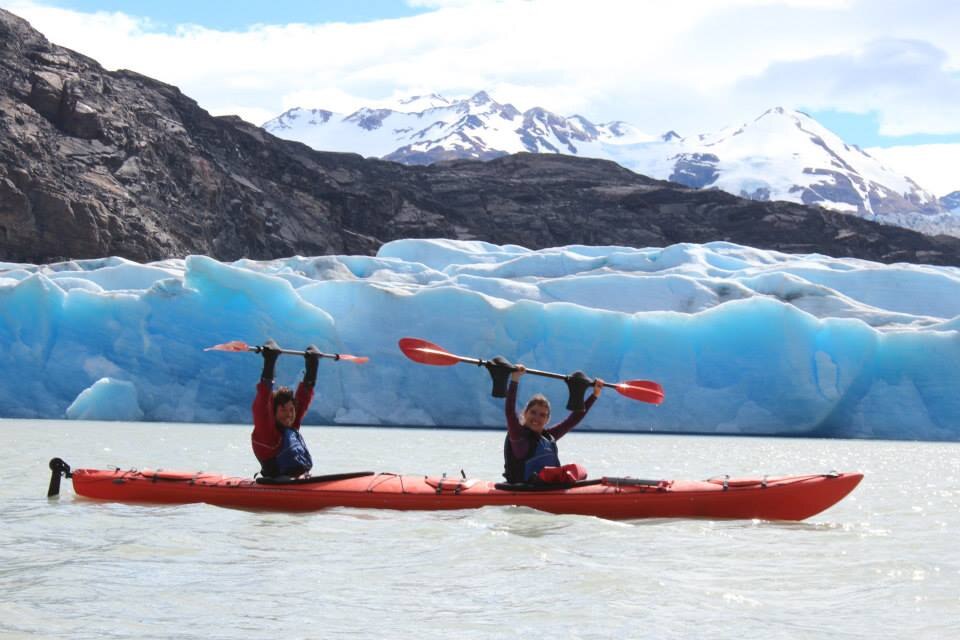
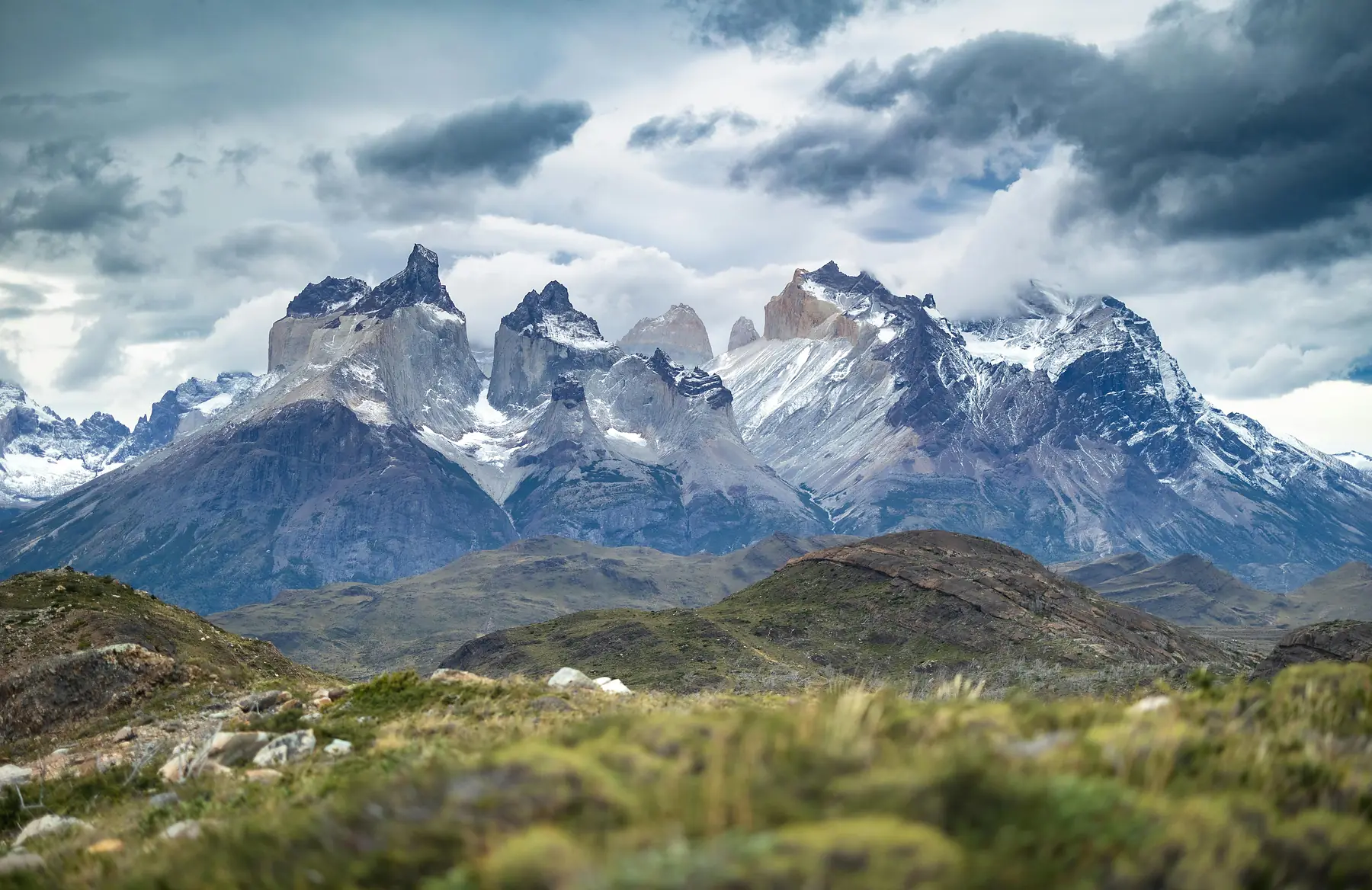
Torres del Paine is the most popular destination for kayaking in South America, primarily because of the opportunity to paddle among the icebergs of Grey Lake. Most tours operate out of the base near Refugio Grey, making it an easy addition for those hiking the W Trek or the O Circuit.
The experience at Grey Glacier is defined by the “blue ice” visual. As icebergs calve from the glacier and drift toward the south end of the lake, they become trapped in shallow areas, allowing kayakers to maneuver safely around them. Guides typically use stable tandem kayaks, and the focus is on the surreal shapes and deep cerulean hues of the ice.
Beyond Grey Lake, the Serrano River offers a different perspective. This route takes you from the southern edge of the park toward the Ultima Esperanza Sound. It is a transitional journey where the mountain scenery gives way to the lush forests of Bernardo O’Higgins National Park. Multi-day trips often connect this river route to the Balmaceda and Serrano glaciers, providing a complete “mountains to sea” experience.
To see how kayaking compares to other ways of experiencing the ice, such as ice trekking or catamaran tours, visit our comprehensive guide to Patagonia glacier tours.
The Marble Caves and Aysen: Turquoise Waters
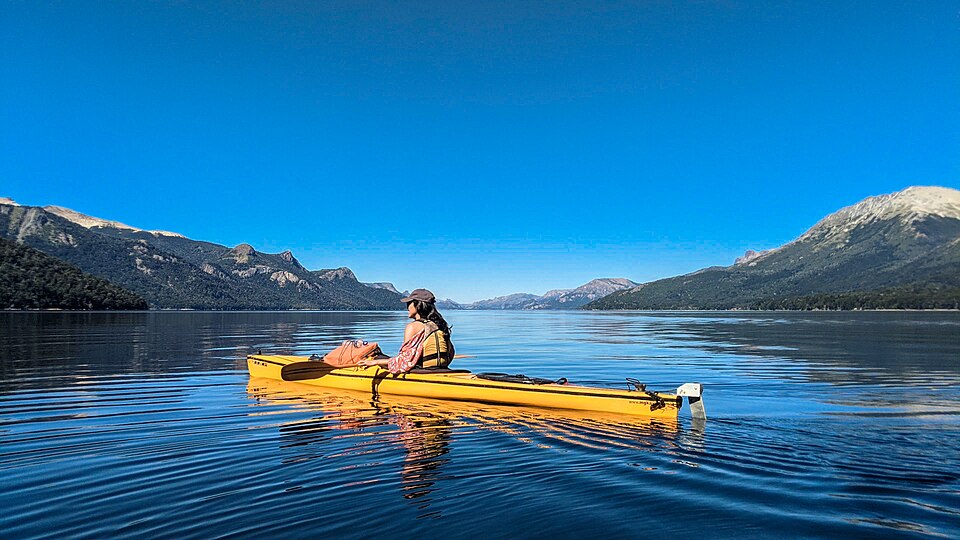
In the Aysen region along the Carretera Austral, the kayaking focus shifts from ice to geology. General Carrera Lake is home to the Marble Caves (Capillas de Mármol), a series of intricate caverns carved into calcium carbonate over thousands of years.
While motorboats also visit the caves, kayaking is objectively superior for exploration. The small footprint of a kayak allows you to enter narrow tunnels and reach the “Marble Cathedral” and “Marble Chapel” formations that larger boats must view from a distance. The water here is a startling, opaque turquoise, caused by glacial silt suspended in the lake.
Most tours depart from the small town of Puerto Rio Tranquilo. While the caves are the main draw, the nearby Baker River offers a more high-energy alternative. The Baker is famous for its massive volume and intense blue color, offering a mix of calm stretches for scenic paddling and more technical sections for experienced kayakers.
Because of the lake’s volatility, you should never attempt to reach the caves without a professional guide. For more information on planning your logistics in this remote region, see our guide to the Aysen region.
Sea Kayaking in Tierra del Fuego: The End of the World
At the southern tip of the continent, kayaking takes on a rugged, frontier character. Based out of Ushuaia, Argentina, sea kayaking trips focus on the Beagle Channel. These excursions often involve paddling near Gable Island or the historic Harberton Ranch, where the waters are generally more protected than the open ocean.
The appeal here is the “End of the World” atmosphere and the high density of marine life. It is common to paddle within sight of sea lion colonies and Magellanic penguins. For those seeking true isolation, multi-day expeditions depart from Puerto Williams in Chile or Punta Arenas, heading deep into the Darwin Range’s fjords. These are some of the most remote waters on Earth, where you are more likely to see a whale than another human.
Whitewater Kayaking: The Futaleufu and Lake District
For high-adrenaline paddlers, the Futaleufu River in Northern Patagonia is a global bucket-list destination. Known simply as “The Fu,” this river is famous for its massive volume and Class III to V rapids. It is not a place for beginners, but for experienced whitewater kayakers, the 2026/27 season offers some of the most pristine technical water in the world.
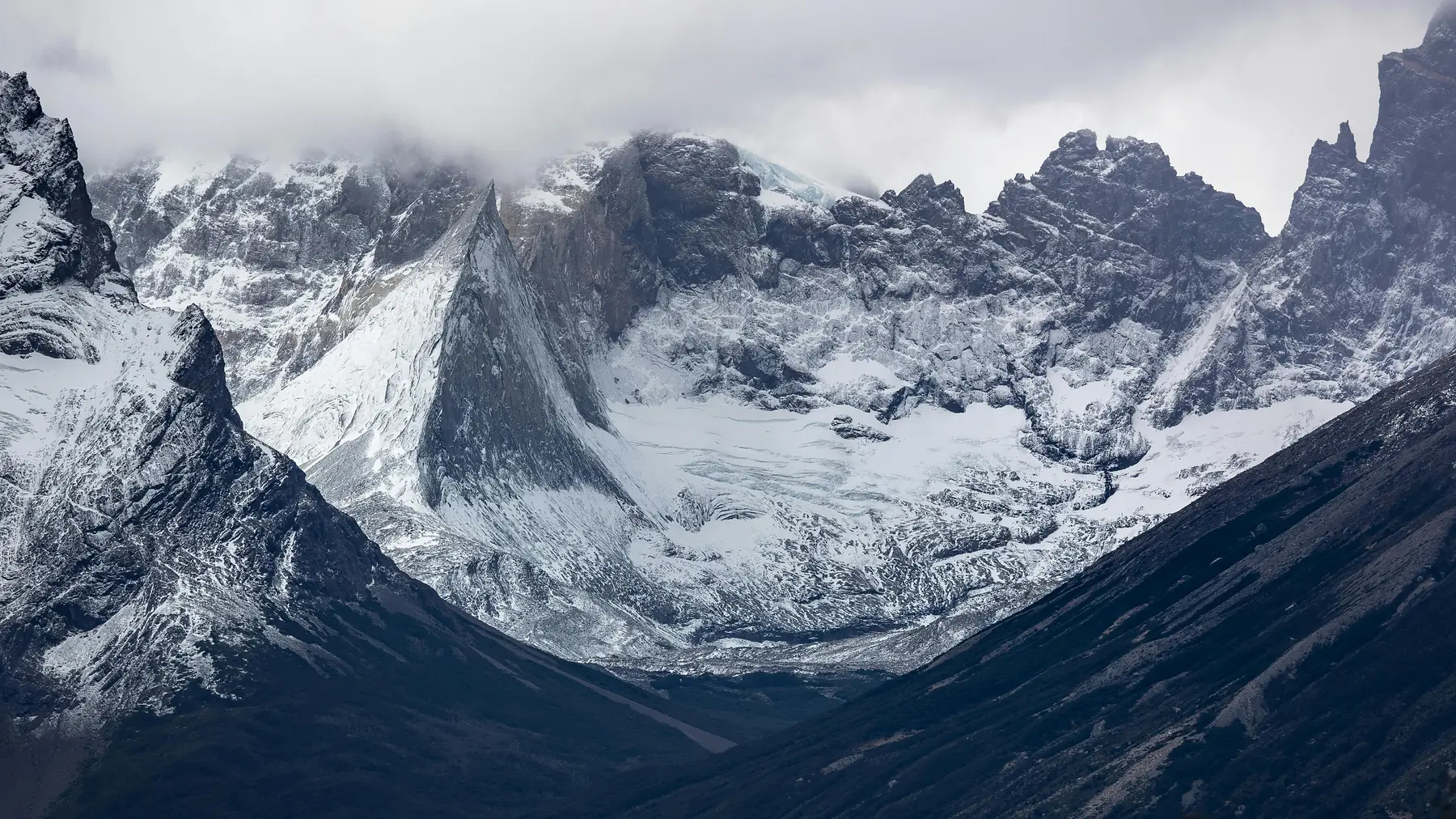
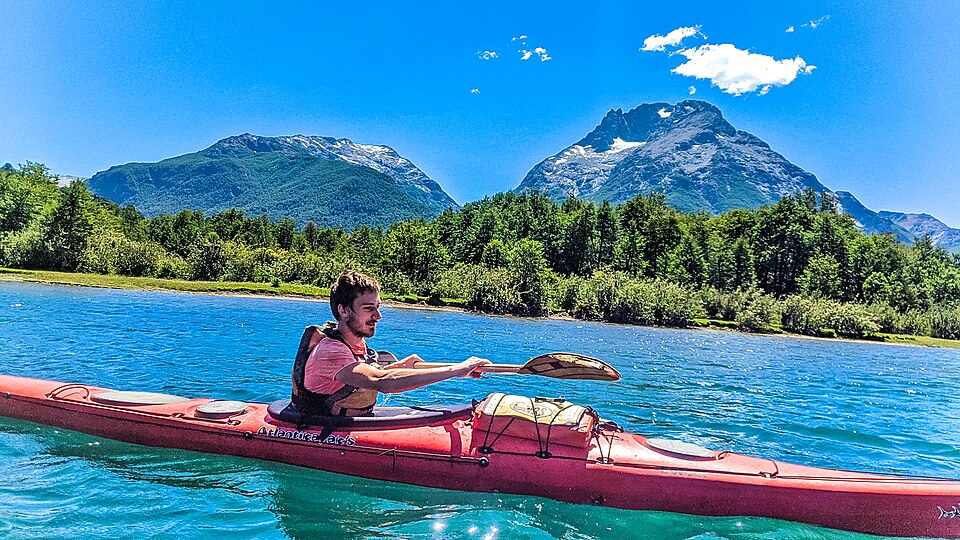
Further north in the Lake District (both the Argentine and Chilean sides), the pace is generally more relaxed. Lakes like Nahuel Huapi and Todos los Santos provide “alpine-style” kayaking with views of snow-capped volcanoes. The season for whitewater is shorter and sharper than lake paddling, typically peaking between December and March when the snowmelt is at its maximum.
Choosing Your Trip: Day Tours vs. Multi-Day Expeditions
Your choice between a quick paddle and a week-long expedition should depend on your overall itinerary and your comfort with wilderness camping.
Day Tours (2-4 hours on water) are the most common choice for visitors. They are easily integrated into a larger trip, such as a day trip from Puerto Natales to Torres del Paine or a stop along the Carretera Austral. All technical gear is provided, and no prior experience is usually required.
Multi-Day Expeditions (2-7 days) involve total immersion. You will carry your gear in dry bags, camp on remote beaches, and often help with camp chores. These trips offer the “Wild Patagonia” experience but require a higher level of physical stamina and a willingness to endure the elements.
Fitness, Skill, and Safety Requirements
Most commercial kayaking tours in Patagonia are designed for beginners, but “beginner-friendly” does not mean “effortless.” The primary challenge is not the technicality of the stroke, but the environmental conditions.
The BMI and Weight Factor: This is a critical planning detail that many travelers overlook. Most major operators, including Big Foot Patagonia (Grey Glacier) and Kayak en Patagonia, enforce a strict weight limit of 100-105kg (220-231lbs) and a maximum BMI of 30. This is a safety requirement: drysuits are manufactured in standard sizes, and a proper fit is essential for the suit to remain watertight. Furthermore, in the event of a capsize, guides must be able to perform a “T-rescue” or a hoist to get you back into the boat quickly in near-freezing water.
The Wind Factor: Patagonia is famous for its wind, which can reach sustained speeds of 60-80 km/h. If winds exceed a certain threshold (usually 15-20 knots for lake paddling), tours will be cancelled or “wind-bound.” On multi-day expeditions, it is common to lose at least one day to the wind, sitting in tents until conditions improve.
If you are concerned that the physical requirements of kayaking might be too restrictive, there are still excellent ways to see the same landscapes.
What’s Included and What to Pack
For any tour involving cold water (glaciers or sea), the operator will provide the technical “outer shell.” This typically includes a professional-grade drysuit (either fabric or neoprene), a life jacket (PFD), a spray skirt, and neoprene boots or gloves.
Your responsibility is the “inner shell.” Because you will be in a drysuit, you need layers that provide warmth without bulk.
- Synthetic or Wool Base Layers: Never wear cotton. If cotton gets damp from sweat or a small leak, it will pull heat away from your body. Use mid-weight polyester or merino wool leggings and tops.
- Thick Wool Socks: Your feet are the part of your body most likely to get cold, as they are closest to the hull of the boat in contact with the water.
- Sunglasses with Retainers: The UV reflection off the ice and water is intense. A “croakie” or retainer strap is essential to prevent losing your glasses during a paddle stroke.
For a complete breakdown of what to bring for the rest of your trip, including trekking boots and weather-proof shells, see our Patagonia packing list.
2026/27 Costs and Booking Advice
Prices for kayaking have seen a steady increase due to the rising cost of high-end gear and safety certifications. For the 2026/27 season, you should budget within the following ranges (all prices as of 2026/27 estimates):
- Day Trips (Marble Caves): $60 – $90 USD per person.
- Day Trips (Grey Glacier): $140 – $180 USD per person.
- Multi-Day Expeditions: $400 – $700 USD per day. This usually includes all food, camping gear, and professional guiding.
Booking Window: For peak season (January and February), you should book at least 6 months in advance. Grey Lake kayaking, in particular, has very limited daily capacity (often only 8-12 people per departure) and sells out alongside the popular refugios.
Park Fees: Entrance fees for national parks like Torres del Paine are not included in the tour price. For the 2026/27 season, you must purchase your park pass in advance via the official pasesparques.cl platform. Tickets are no longer sold at the park gates, and because there is no reliable mobile signal at the entrances, you must have your QR code downloaded or printed before leaving Puerto Natales.
FAQ
Is kayaking at Grey Glacier in Torres del Paine safe for beginners? Yes, most Grey Glacier kayak tours are designed for beginners and use stable tandem kayaks with professional guides, though you must be comfortable in cold, windy conditions.
What is the best month for kayaking in Patagonia? The best months are November through March, when the weather is warmest and the long daylight hours provide the safest conditions for water activities.
Do I need a drysuit for kayaking in Patagonia? For any glacial or sea kayaking in Patagonia, a professional-grade drysuit is mandatory and is almost always provided by the tour operator.
Are there weight or BMI limits for kayaking in Torres del Paine? Yes. Most operators, including Big Foot Patagonia, enforce a weight limit of 100kg (220lbs) and a maximum BMI of 30 to ensure safety and proper drysuit fit.
Can I kayak to the Marble Caves in Chile without a guide? While possible for experts, it is highly discouraged due to the sudden, dangerous winds on General Carrera Lake; hiring a local guide in Puerto Rio Tranquilo is the standard and safest practice.
What should I wear under a drysuit while kayaking in Patagonia? You should wear synthetic or wool base layers (top and bottom) and thick wool socks; avoid cotton, as it loses all insulating properties when damp.