
Patagonia Cruises 2026/27: Best Routes, Costs & Expert Guide
The best way to experience Patagonia’s remote fjords, calving glaciers, and hidden channels is via a multi-day expedition cruise, which offers access to narrow waterways that larger vessels simply cannot navigate. For most travelers, the choice comes down to a four- or five-day expedition between Ushuaia and Punta Arenas, or a longer luxury voyage exploring the deep fjords of the Chilean coast.
While large ocean liners visit major ports like Puerto Madryn and Ushuaia, they remain in the open sea, viewing the landscape from a distance. To truly set foot on Cape Horn or navigate the tight turns of Glacier Alley, you must choose a specialized expedition vessel. This guide breaks down the routes, costs, and logistics for the 2026/27 season to help you select the right journey for your travel style and budget.
Patagonia Cruising at a Glance
- Season: Late September to early April
- Primary Hubs: Ushuaia (Argentina) and Punta Arenas (Chile)
- Duration: 4 to 14+ nights
- Typical Cost: $1,750 - $5,500+ per person for expeditions (2026/27 rates)
- Key Wildlife: Magellanic penguins, humpback whales, elephant seals
- Top Highlight: Landing at Cape Horn (weather permitting)
Choosing Your Patagonia Cruise: Three Main Options
Selecting the right vessel is the most important decision in your planning process, as the ship type dictates exactly where you can go and how much of the landscape you will actually touch. In Patagonia, the maritime experience is divided into three distinct categories: expedition ships, large ocean liners, and luxury explorers.
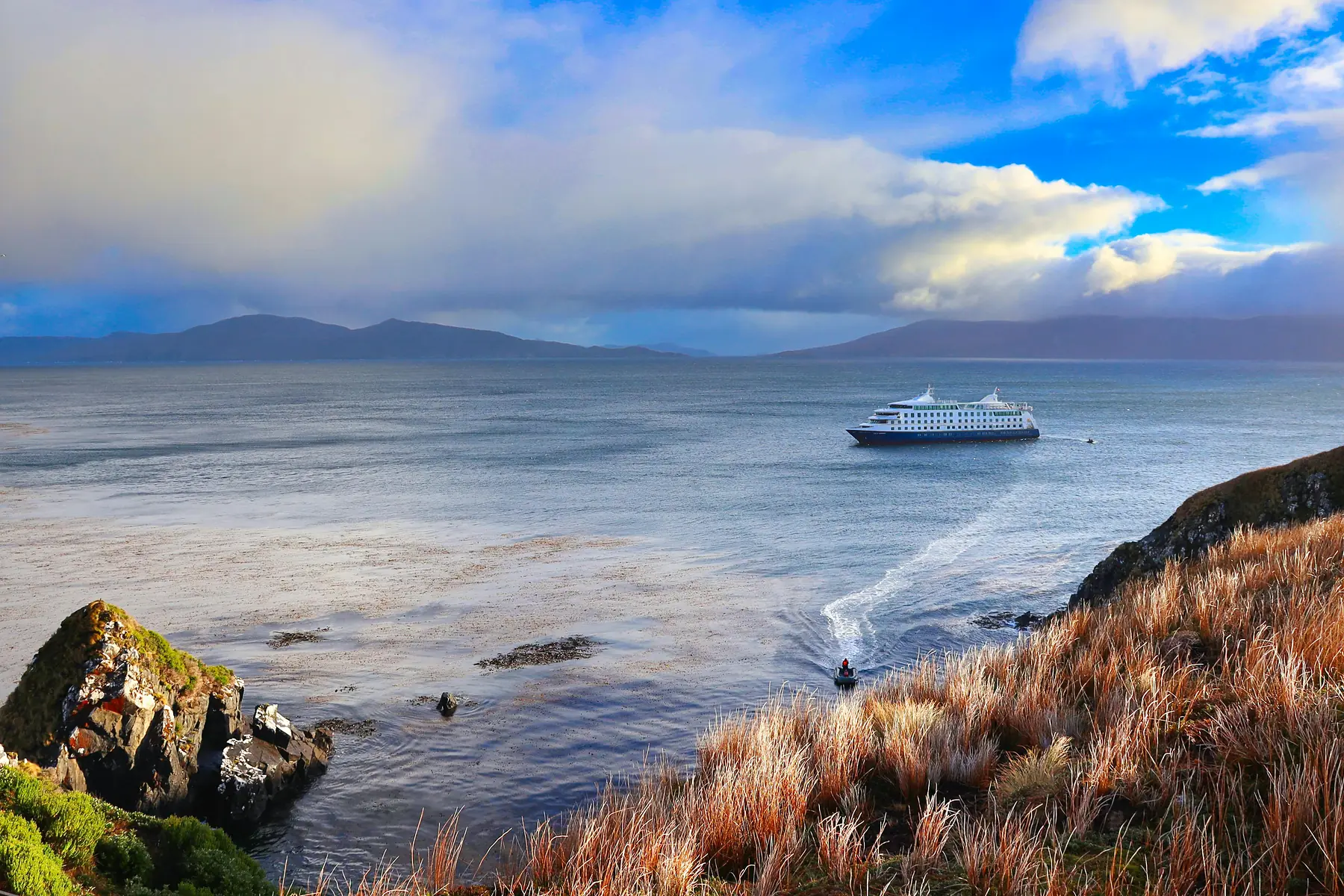
Expedition small ships are the workhorses of the fjords. Carrying between 100 and 200 passengers, these vessels, such as those operated by Australis, are designed specifically for the shallow, narrow channels of Tierra del Fuego. They prioritize shore excursions, using fleets of Zodiac boats to land passengers on remote beaches and glacier faces. If your goal is to hike through sub-antarctic forests or stand at the “End of the World” on Cape Horn, this is your best choice.
Large ocean liners from brands like Celebrity or Princess offer a more traditional cruise experience. These ships often carry over 2,000 passengers and focus on “scenic cruising.” You will see the mountains and the coastline from your balcony or the upper decks, but you will not enter the narrowest fjords or make remote landings. These cruises are ideal for those who prioritize onboard amenities like spas, theaters, and multiple dining venues over physical exploration.
For travelers seeking a middle ground, luxury expeditions from lines like Ponant or Silversea combine the technical capabilities of a small ship with five-star service. These voyages often cover longer distances, sometimes including the Chilean fjords as part of a larger South American or Antarctic itinerary.
- Access: Reaches narrow fjords and remote landings | Limited to major ports and open water | High access with luxury amenities
- Off-ship activity: Twice-daily Zodiac landings and hikes | Port visits only; no remote landings | Guided excursions and Zodiac tours
- Atmosphere: Educational, casual, and adventure-focused | Resort-style with Broadway shows and casinos | Refined, all-inclusive, and high-service
- Price Point: Mid-to-high ($450 - $950/night) | Budget-to-mid ($150 - $400/night) | High ($1,000+/night)
Choose Expedition for the best access to nature, or Large Ship for maximum onboard comfort and lower price points.
For those on a stricter budget who still want to see the fjords, the Navimag ferry offers a functional, no-frills alternative. While it is a cargo ferry rather than a cruise, it navigates the stunning Patagonian channels between Puerto Montt and Puerto Natales, providing a four-day journey through the same scenery at a fraction of the cost.
The Classic Route: Ushuaia to Punta Arenas
The most iconic expedition route in Patagonia is the journey through the Strait of Magellan and the Beagle Channel, connecting the Argentine city of Ushuaia with the Chilean port of Punta Arenas. This route is primarily served by Australis, the only operator with permission to land passengers at Cape Horn.
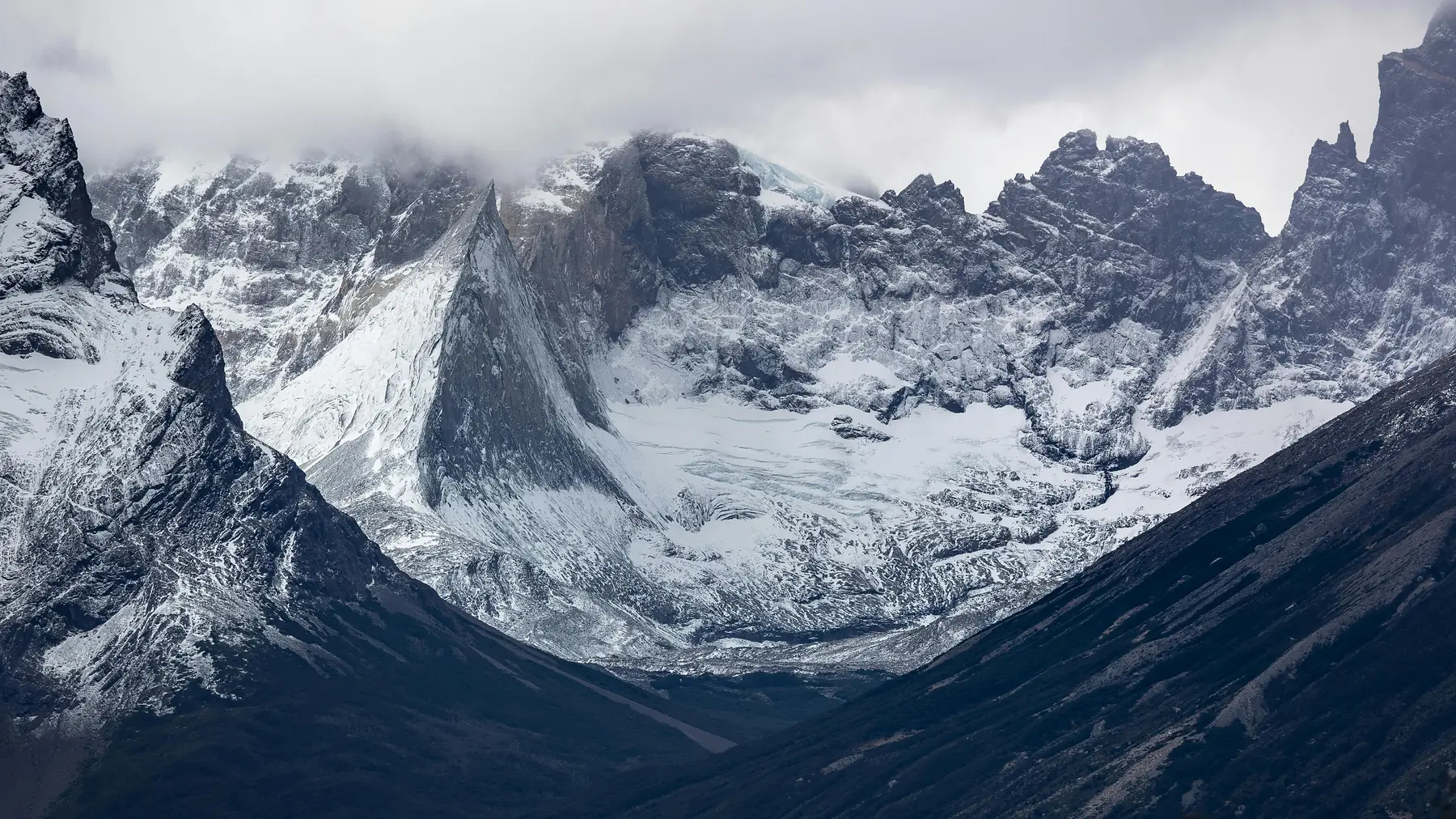
The standard itinerary lasts four nights and five days, winding through a maze of islands that remain largely uninhabited. You will navigate “Glacier Alley,” a stretch of the Beagle Channel where five massive glaciers—named after European nations—tumble down the Darwin Range into the sea. Most voyages include a stop at Wulaia Bay, a site of significant indigenous Yaghan history and the location where Charles Darwin landed during his voyage on the HMS Beagle.
The crowning moment for many is the attempted landing at Cape Horn National Park. This legendary headland marks the point where the Atlantic and Pacific Oceans collide. Because the island is exposed to the full force of the Southern Ocean, landings are never guaranteed; historical data suggests a weather success rate for Cape Horn landings of approximately 70-80%. When conditions allow, passengers disembark via Zodiac to climb the wooden stairs to the lighthouse and the albatross monument, a moving tribute to the sailors who lost their lives in these waters.
To explore the gateway cities where these journeys begin, see our detailed guides:
Logistics Hub: Connecting Your Cruise
Planning a Patagonia cruise requires careful logistical coordination because your start and end points are often in different countries. Most expedition routes are one-way, meaning you will need to fly into one city and out of another.
If you are starting your journey in Ushuaia, you will typically fly from Buenos Aires. If you are disembarking in Punta Arenas, your most direct route out is a flight to Santiago. For the 2026/27 season, Australis operates departures from both cities with high frequency, typically offering 2-3 departures per week across their fleet during the peak months.
Crossing the border between Chile and Argentina by ship is a seamless process compared to land crossings. The cruise staff typically collects passports at the start of the voyage and handles the immigration paperwork with local authorities at the ports. However, you should always check the latest visa requirements for your nationality, as reciprocity fees and entry rules can change.
Chilean Fjord Cruises: Exploring the Remote West
Beyond the classic Ushuaia route lies the vast wilderness of the Chilean fjords in the Aysén and Magallanes regions. These cruises often focus on the deep, narrow inlets of the Pacific coast, where the mountains rise vertically from the water and the rainforest meets the ice.
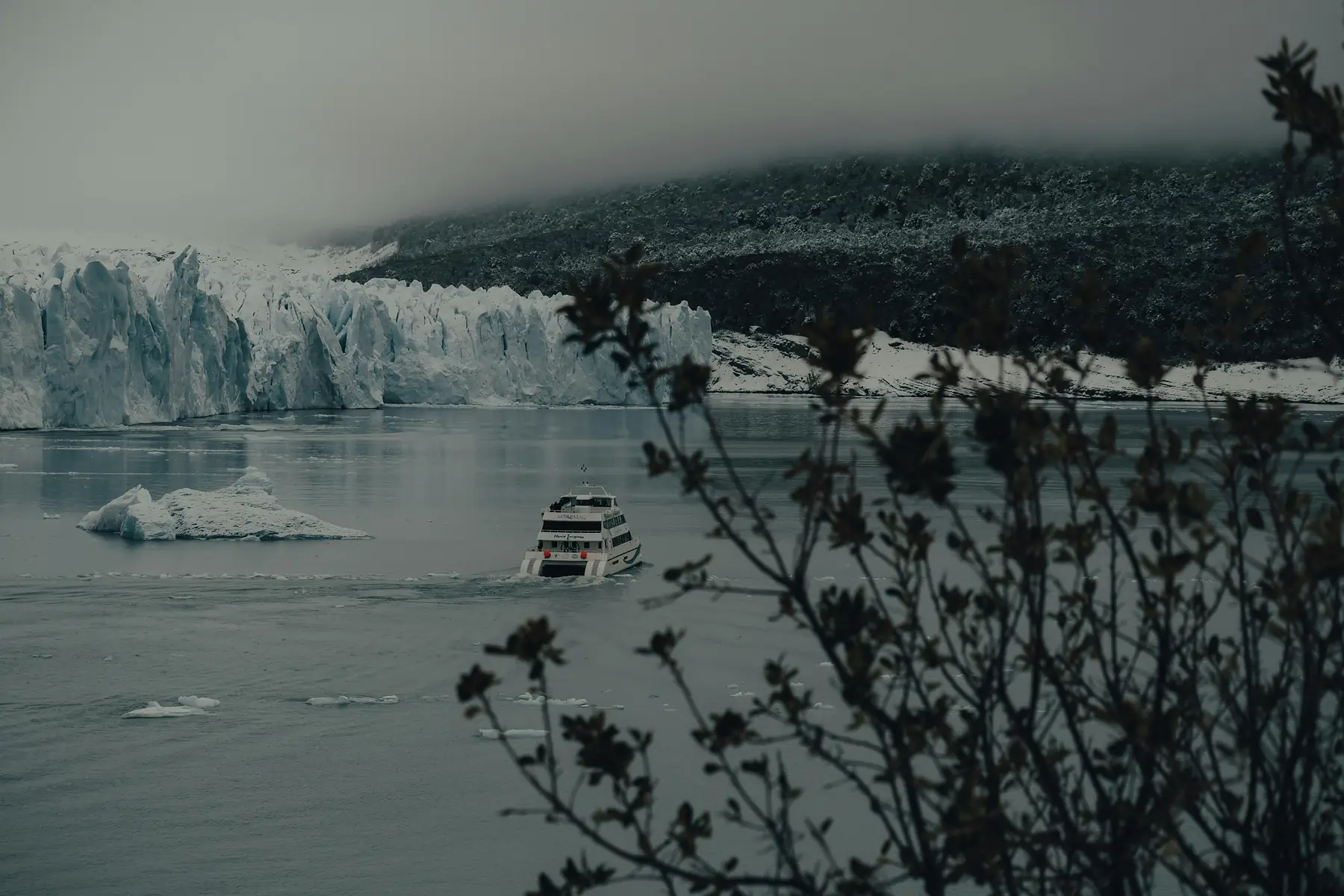
A primary highlight of these western routes is the Pie XI Glacier (also known as the Brüggen Glacier). This is the largest glacier in the southern hemisphere outside of Antarctica and, uniquely, it is one of the few glaciers in the world that is currently advancing rather than retreating. Its face is over six kilometers wide and towers nearly 80 meters above the water. Due to the narrow approach through the Eyre Fjord, the face of Pie XI is typically only accessible to small to mid-sized expedition ships; large ocean liners are unable to navigate these tight channels.
Operators like Skorpios offer specialized routes into these areas. The “Kaweskar Route” departs from Puerto Natales and focuses on the high density of glaciers in the Southern Ice Field, while the “Chonos Route” explores the northern fjords and the San Rafael Glacier. These journeys feel even more remote than the Beagle Channel, often going days without seeing another vessel.
If you are interested in ice but a multi-day cruise isn’t in the budget, consider ice trekking or glacier-specific boat excursions which offer high-impact glacier viewing in a single day.
When is the Best Time for a Patagonia Cruise?
The Patagonia cruising season is strictly limited by the Southern Hemisphere’s weather, running from late September through early April. Outside of these months, the sea conditions are too volatile and the daylight hours too short for safe and enjoyable exploration.
Peak Season (December - February): This is the most popular time to cruise. You can expect the most stable weather and the longest days, with sunset often occurring after 10:00 PM. This is also the most expensive period, and ships book out up to a year in advance.
Shoulder Season (October - November & March): These months offer excellent value. October and November are particularly good for seeing spring flowers and active birdlife, though the winds can be at their most intense during this transition. March brings the stunning autumn colors of the lenga forests, which turn vibrant shades of red and orange.
For those focused on the natural world, the timing of your cruise dictates what you will see. Magellanic penguins are present in large colonies from October through March. If you are hoping to see whales, particularly humpbacks in the Francisco Coloane Marine Park, your best chances are in February and March. For a full breakdown of the best windows for animal encounters, see our dedicated wildlife watching excursions guide.
Life on Board: What to Expect on an Expedition Cruise
Life on an expedition ship is significantly different from the “floating hotel” experience of a large cruise liner. The focus is outward, toward the landscape and the wildlife, rather than inward toward shipboard entertainment.
The daily rhythm is dictated by the tides and the weather. A typical day includes a morning and afternoon excursion, either landing for a hike or cruising in Zodiacs to get closer to a glacier face or a colony of elephant seals. Between excursions, the ship’s naturalists give lectures on the region’s geology, glaciology, and history.
Be prepared to go off-grid. Most expedition ships operating in the deep fjords do not have reliable WiFi, and satellite connections are often reserved for crew operations. Embrace the digital detox—you won’t have a signal once you leave the vicinity of Ushuaia or Punta Arenas.
The dining experience on these ships is generally high-quality and communal. Most expedition cruises are all-inclusive, covering all meals and an open bar featuring regional wines and spirits. You can expect to try Patagonian staples like slow-roasted lamb and fresh seafood, often paired with a Calafate Sour. Accommodation ranges from functional cabins with twin beds to more spacious suites with large observation windows, though even the most basic cabins are designed to be comfortable retreats after a day in the wind.
Patagonia Cruise Costs: A 2026/27 Pricing Guide
Cruising in Patagonia is a significant investment. Because the ships are small and the logistics of operating in remote waters are complex, prices are higher than standard Caribbean or Mediterranean cruises.
For the 2026/27 season, expect the following price ranges:
- Expedition Cruises (4-5 nights): $1,750 to $4,800 per person, based on double occupancy (e.g., Australis).
- Luxury Expeditions (10-14 nights): $8,500 to $16,000+ per person (e.g., Ponant).
- Large Ocean Liners (12-14 nights): $1,300 to $3,800 per person (note that this often excludes many excursions).
Most expedition prices are “all-inclusive,” meaning they cover your accommodation, all meals, drinks (including alcohol), and all daily excursions. However, you must budget for several hidden costs:
- Port Fees: Often $60-$120 per person depending on the route.
- Gratuities: Generally suggested at $15-$25 per passenger, per day.
- Flights: Domestic flights in Argentina and Chile can be expensive if not booked early.
- Pre/Post-Cruise Stays: You will need at least one night in your departure city to ensure you don’t miss the ship.
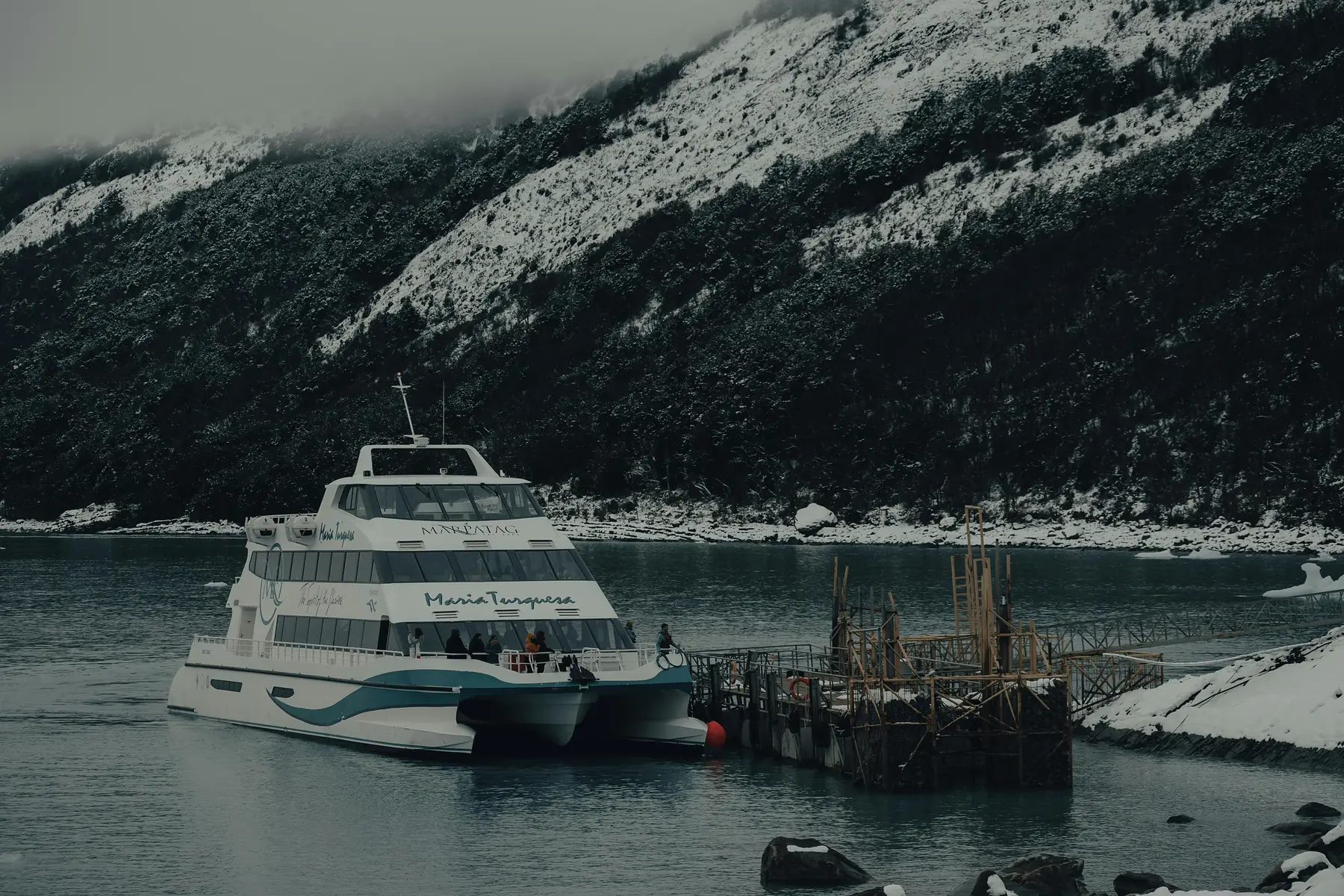
If these prices are outside your budget, you don’t have to miss the water entirely. You can still experience the majesty of the region through day-trips.
Essential Packing List for a Patagonia Cruise
The weather in the fjords can change from bright sunshine to horizontal sleet in minutes. The key to staying comfortable is a strict adherence to the three-layer system. Even in the height of summer, the wind off a glacier can feel freezing.
The Layering System:
- Base Layer: Moisture-wicking thermal tops and bottoms (merino wool is best).
- Mid-Layer: A fleece or light down jacket for insulation.
- Outer Layer: A high-quality, 100% waterproof and windproof shell. Ponchos are useless in Patagonian winds; you need a technical jacket with a hood.
Cruise-Specific Gear:
- Waterproof Trousers: Essential for Zodiac landings. You will often have to step into calf-deep water to reach the beach.
- Footwear: Requirements vary by operator. For the 2026/27 season, Ponant typically provides boots on loan for expedition voyages, whereas Australis requires passengers to bring their own waterproof trekking boots or wellies. You will also want comfortable, non-slip shoes for moving around the ship.
- Protection: High-SPF sunscreen and polarized sunglasses are vital because the sun reflects intensely off the water and ice.
- Seasickness Medication: While most of the cruising is in protected channels, crossing the Beagle Channel or rounding Cape Horn involves open sea. Even if you don’t usually get motion sickness, bring a supply of patches or tablets.
How to Choose: Expedition vs. Large Cruise Ship
If you are still undecided, ask yourself one question: Do I want to see Patagonia, or do I want to experience it?
Choose an expedition ship if:
- You want to stand on the actual ground at Cape Horn.
- You are interested in learning from glaciologists and historians.
- You want to get close enough to a glacier to hear the ice cracking.
- You prefer a smaller, more intimate social environment.
Choose a large cruise ship if:
- You prefer the amenities of a large resort (casinos, gyms, multiple bars).
- You are traveling with a large family with diverse interests.
- You are more interested in the ports of call than the remote wilderness.
- You are on a tighter budget and don’t mind missing the narrowest channels.
It is also important to clarify the “Antarctica Connection.” Many ships that cruise Patagonia also visit Antarctica. While a Patagonia cruise is a spectacular journey in its own right, it is not a substitute for an Antarctic expedition. The landscapes are different—Patagonia is characterized by fjords, forests, and jagged granite, whereas Antarctica is a world of scale, ice, and different wildlife.
If the cost of a multi-day cruise is the primary barrier, remember that you can still see the highlights through short day-trips on the Beagle Channel which depart daily from Ushuaia and cost significantly less.
FAQ
How much does a Patagonia cruise cost for the 2026/27 season? Prices typically range from $1,750 per person for a 4-night expedition to over $15,000 for luxury long-haul voyages, depending on the cabin class and vessel.
What is the best month for a Patagonia cruise? The best months are December and January for the most stable weather, though November and March offer better value and fewer crowds.
Can I see penguins on a Patagonia cruise? Yes, most cruises departing from Punta Arenas visit Magdalena Island, home to one of the largest Magellanic penguin colonies in South America.
Do Patagonia cruises visit Cape Horn? Specialized expedition cruises like Australis include a scheduled landing at Cape Horn, though this is always dependent on safe sea conditions.
Is motion sickness a problem on a Patagonia cruise? While most sailing is in protected fjords, crossing the Beagle Channel or rounding Cape Horn can be rough; travelers are advised to bring medication.
Do I need a visa for a Patagonia cruise between Chile and Argentina? Most Western travelers do not need a visa but must clear immigration in both Ushuaia and Punta Arenas, which is typically handled by the cruise staff.