
Where to Stay in Torres del Paine: 2026 Guide
Figure out your base camp for the park. Compare luxury all-inclusive lodges, trailside refugios, campsites, and hotels inside Torres del Paine.
The best place to stay in Torres del Paine depends entirely on your hiking goals: stay inside the park for direct trail access to the W Trek, or choose the Rio Serrano area for luxury lodges with panoramic views of the massif. Because the park is one of the most sought-after destinations in Patagonia, your choice of accommodation is the single most important factor in determining your daily logistics, your budget, and how much of the landscape you actually see.
Torres del Paine is massive, covering over 1,800 square kilometres of granite spires, glacial lakes, and golden pampas. For most travellers, the decision isn’t just about a specific hotel, but about which “sector” fits their itinerary. Whether you are looking for a bunk in a mountain refugio, a pre-pitched tent on the O Circuit, or an all-inclusive luxury suite with a view of the Cuernos, you must understand the spatial layout of the park before you book.
Torres del Paine Accommodation at a Glance
- Peak Season: December to February (Book 6-10 months in advance)
- Accommodation Types: Luxury lodges, mid-range hosterias, mountain refugios, and campsites
- Primary Operators: Las Torres Patagonia and Vertice Patagonia (for mountain stays)
- Top Budget Strategy: Staying in Puerto Natales and taking the 6:45 or 7:00 bus
- Connectivity: Extremely limited; most hotels use satellite Wi-Fi with slow speeds
The Three Tiers: Inside, Outside, or Puerto Natales?
Choosing your base involves a trade-off between time and money. The park is roughly two hours from the nearest town, Puerto Natales, which creates three distinct tiers of accommodation strategy.
Staying Inside the Park is the gold standard for hikers. By sleeping within the park boundaries, you eliminate the four-hour round-trip commute and gain the ability to start your hikes before the crowds arrive. This convenience comes at a premium, with prices significantly higher than those outside the park. For the 2026/27 season, expect these beds to be the first to sell out.
Staying Outside the Park (Rio Serrano or Sarmiento) offers a middle ground. This area, often called the “Luxury Belt,” sits just across the park boundary. While you still have a 15-20 minute drive to reach the park gates, these hotels often provide the best panoramic views of the entire Paine Massif—something you actually lose when you are standing directly beneath the towers inside the park.
Staying in Puerto Natales is the most flexible and budget-friendly choice. It allows you to choose your hiking days based on the weather forecast and enjoy the town’s excellent restaurant scene in the evenings. However, you must be prepared for a commute of approximately 2 to 2.5 hours each way to the Laguna Amarga entrance, including the mandatory CONAF registration stop.
- Trail Access: Immediate; walk from your door to the trailhead. (Inside)
- Trail Access: 15-30 minute drive to the park entrance. (Rio Serrano)
- Trail Access: 2 to 2.5-hour bus or car ride each way. (Puerto Natales)
- Cost: High; premium prices for remote logistics. (Inside)
- Cost: Mid-to-High; focused on luxury and boutique stays. (Rio Serrano)
- Cost: Low-to-Mid; widest range of hostels and hotels. (Puerto Natales)
- Vibe: Immersive mountain environment; quiet nights. (Inside)
- Vibe: Spacious and scenic; great for photography. (Rio Serrano)
- Vibe: Social town atmosphere; many dining options. (Puerto Natales)
- Booking Window: 6-10 months in advance. (Inside)
- Booking Window: 4-6 months in advance. (Rio Serrano)
- Booking Window: 2-4 months in advance. (Puerto Natales)
Stay inside if you are hiking the W or O Trek. Stay in Rio Serrano for luxury and views. Stay in Natales if you want flexibility and lower costs.
For a deeper look at the logistics of these locations, including gate access and transit times, see our guide on choosing the right base in Torres del Paine.
Luxury Lodges and All-Inclusive Stays
For those seeking a seamless experience, the luxury lodges in and around Torres del Paine offer “all-inclusive” packages that cover everything from airport transfers to guided excursions. This is Patagonia at its most refined, where the focus is on high-end comfort after a day in the elements.
The “Big Four” lodges—Explora, Tierra Patagonia, Awasi, and EcoCamp—define this category. It is important to distinguish their locations: Explora is the only luxury lodge situated truly “inside” the heart of the park, overlooking Lake Pehoé. Tierra and Awasi sit on the eastern edge near the Sarmiento entrance, offering vast, rolling pampas views, while EcoCamp provides a unique sustainable dome experience near the base of the towers.
An all-inclusive stay typically means your meals, an open bar, and twice-daily guided excursions are included in the nightly rate. These excursions are usually conducted in small groups (typically 6-10 guests). However, Awasi Patagonia remains the only lodge in the region to provide a 100% private experience, with a dedicated guide and 4WD vehicle assigned to every single villa.
The Refugio System: Essential for the W Trek
If you are planning to hike the W Trek, you will likely spend your nights in a “refugio.” These are mountain hostels that provide the only indoor accommodation along the trekking trails. They offer a communal, high-energy atmosphere where hikers from around the world share stories over hearty, fixed-menu dinners.
Refugios typically feature dormitory-style rooms with four to eight bunk beds and shared bathroom facilities. While the amenities are simple, they are a significant step up from camping, providing a warm bed and protection from the park’s notorious winds.
Booking these is the most complex part of planning a trip because they are managed by two different private companies:
- Las Torres Patagonia: Operates the eastern side of the park, including Refugio Central, Chileno, Cuernos, Francés, Norte, and Serón.
- Vertice Patagonia: Operates the western and northern sections, including Refugio Grey, Paine Grande, Dickson, and Los Perros.
Because of this split, you often have to coordinate bookings across two different websites to complete a full trek. Most hikers opt for the “Full Board” meal plan, as carrying five days of food and cooking gear significantly increases pack weight.
Camping in Torres del Paine: Budget and Backcountry
Camping is the most immersive way to experience the park and is the only option for many sections of the O Circuit. It is also the most budget-friendly way to stay inside the park boundaries. However, camping in Torres del Paine is highly regulated; wild camping is strictly forbidden and can result in immediate expulsion from the park and heavy fines.
You must stay at established campsites, which are located adjacent to the refugios. For the modern traveller, the “Fully Equipped” camping option is a game-changer. Instead of hauling a tent and sleeping bag from home, you can arrive at a site where a high-quality, four-season tent is already pitched on a wooden platform, complete with an insulated sleeping mat and a thick sleeping bag.
The park’s wind can exceed 100 km/h. If you are bringing your own tent, ensure it is a true four-season model with sturdy poles. Lightweight “ultralight” trekking tents often fail in the Patagonian gusts.
For those tackling the O Circuit, remember that your accommodation is limited exclusively to these campsites and a few remote refugios. The booking urgency for these spots is even higher than for the W Trek, as the number of hikers allowed on the “back side” of the mountain is strictly capped. Note that the “Paso” campsite on the O Circuit is managed by CONAF and requires a separate reservation through their platform.
Mid-Range Hotels and Hosterias
If you aren’t a trekker but want to be close to the action, the park’s “classic” hosterias provide a traditional hotel experience. These are ideal for day hikers who want to tackle the Base Las Torres or French Valley trails during the day but return to a private room, a hot shower, and a wine list in the evening.
Properties like Hotel Lago Grey and Hotel Las Torres are positioned at major trailheads, making them incredibly convenient. Hosteria Pehoé occupies a unique position on a small island in the middle of Lake Pehoé, connected by a footbridge, offering some of the most famous views in the park.
While these hotels are comfortable, they are not “luxury” in the urban sense. They are remote outposts where the value lies in the location rather than high-tech amenities. Wi-Fi is generally limited to communal areas and relies on satellite connections that can be temperamental during storms.
Rio Serrano: The Strategic Southern Gateway
The Rio Serrano sector has become the most popular alternative to staying inside the park. Located just outside the Serrano entrance, this area feels like a small, high-end village. The hotels here, such as the Rio Serrano Hotel & Spa and Pampa Lodge, are built along the banks of the Serrano River, facing north toward the Paine Massif.
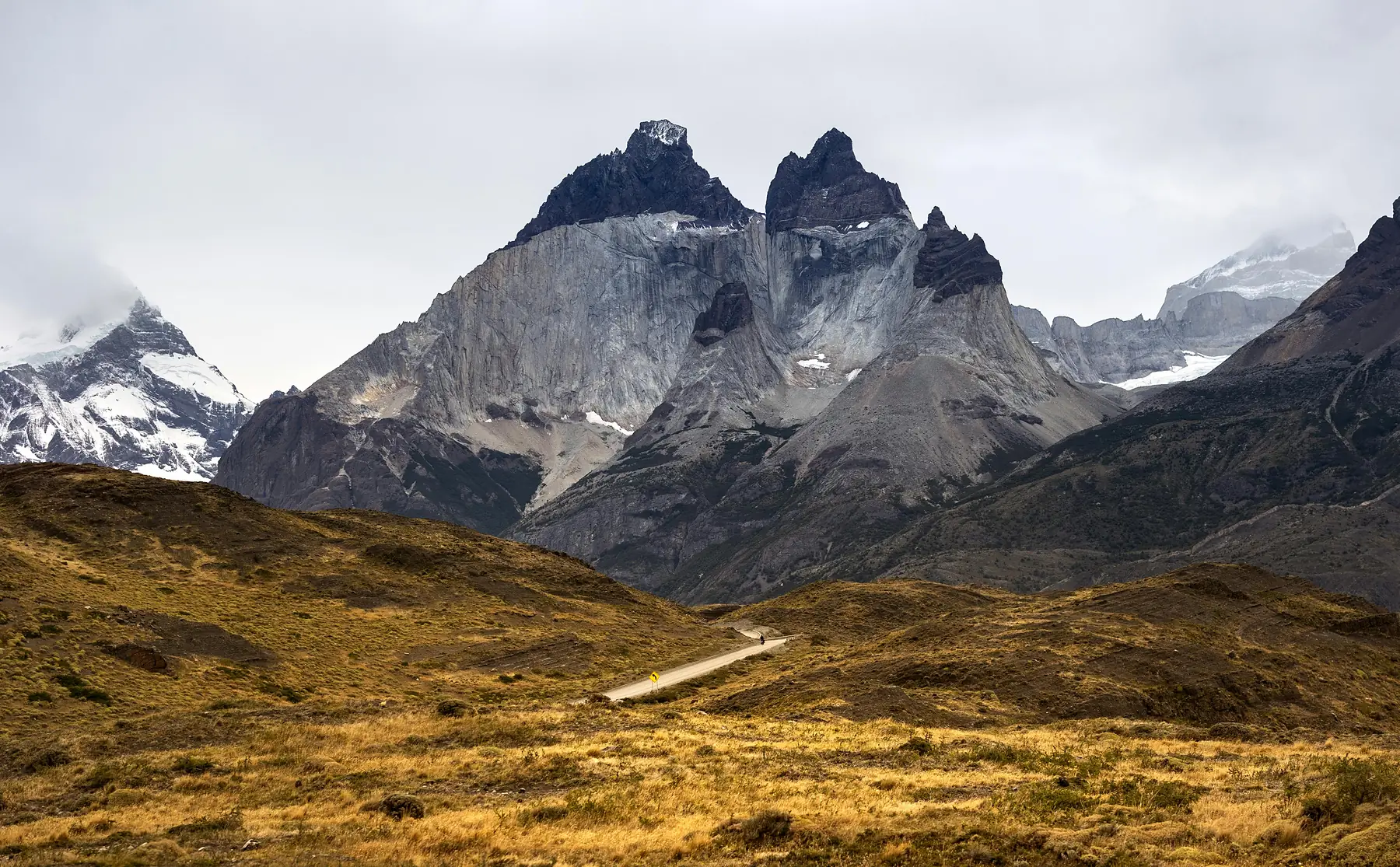
The primary advantage of Rio Serrano is the perspective. Because you are separated from the mountains by a wide river valley, you get a full, unobstructed view of the peaks that you simply can’t get when you are tucked into the valleys inside the park.
However, staying here requires a vehicle. While some hotels offer shuttles, having a rental car gives you the freedom to drive to different sectors of the park—such as the 20-minute drive to the Grey Glacier navigation point or the 45-minute drive to the Laguna Amarga entrance.
QUESTION: Is it better to stay inside or outside Torres del Paine National Park?
ANSWER: Staying inside offers direct access to trails like the W Trek but is significantly more expensive and books out months in advance. Staying outside, particularly in Rio Serrano, offers better panoramic views and more modern hotel amenities but requires a daily drive into the park.
QUESTION: How far in advance should I book Torres del Paine accommodation for 2026?
ANSWER: For the peak season (December–February), you should book refugios and hotels inside the park at least 6 to 10 months in advance. Luxury lodges and popular hosterias often fill up as soon as booking windows open in mid-year (May–July).
QUESTION: Can I stay in Puerto Natales and visit Torres del Paine on day trips?
ANSWER: Yes, staying in Puerto Natales is the most budget-friendly option and offers the best dining, but it requires a 2 to 2.5-hour drive or bus ride each way. This is best for travelers who only plan to do one or two specific day hikes rather than a multi-day trek.
QUESTION: Are there any budget hostels inside Torres del Paine?
ANSWER: The closest thing to a hostel inside the park are the “refugios,” which offer bunk-style dorm accommodation. While cheaper than hotels, they are still more expensive than hostels in Puerto Natales due to their remote mountain locations.
QUESTION: Do I need to bring my own gear to camp in Torres del Paine?
ANSWER: No, most campsites at the park’s refugios offer “fully equipped” camping rentals that include a pre-pitched tent, sleeping mat, and high-quality sleeping bag. This is highly recommended for travelers who don’t want to carry heavy gear on the flight to Chile.
QUESTION: Is there free camping available in Torres del Paine?
ANSWER: No, free or “wild” camping is strictly prohibited within Torres del Paine to protect the environment and prevent forest fires. You must have a confirmed reservation at an official CONAF, Vertice, or Las Torres Patagonia campsite to stay overnight.