
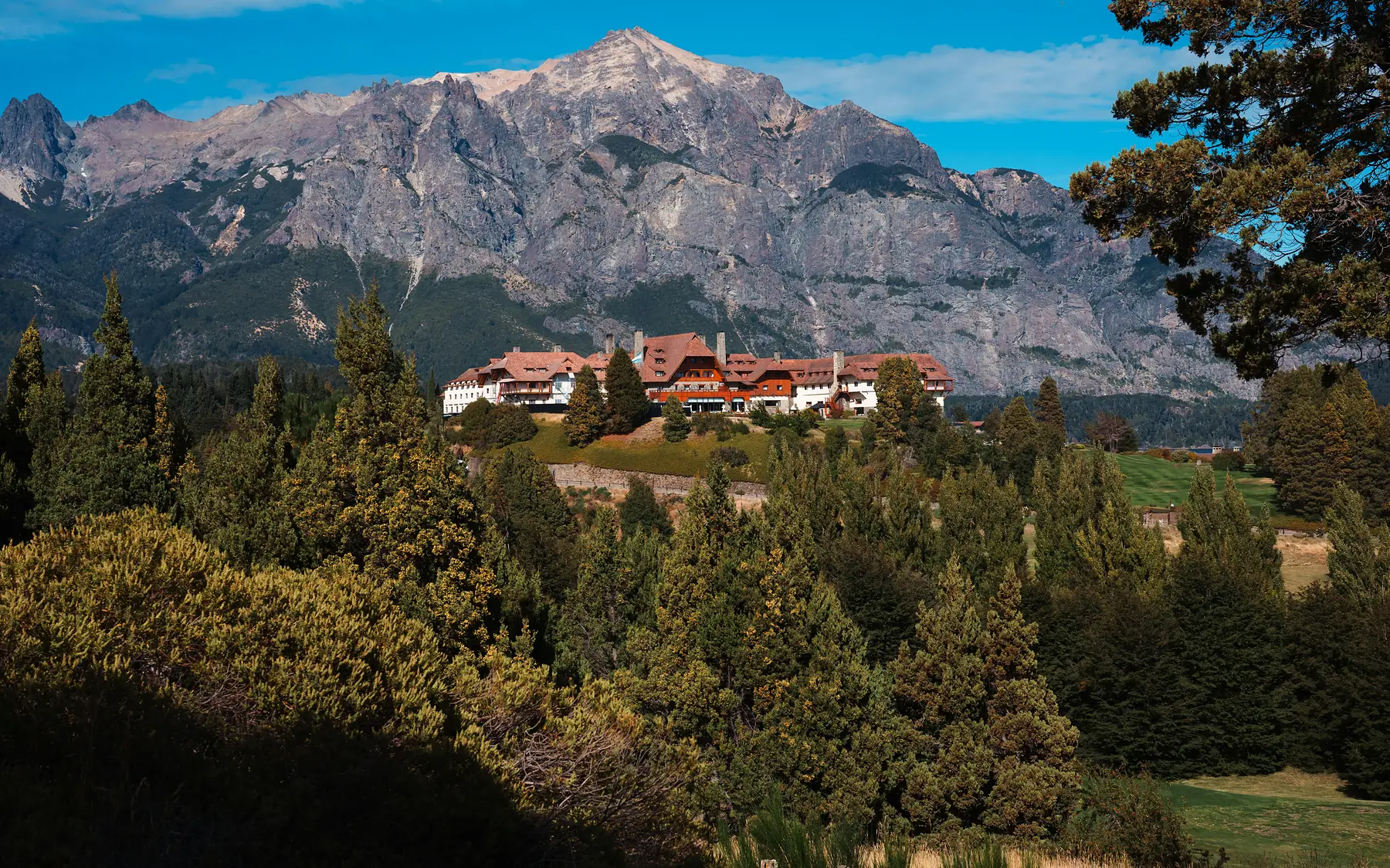
Where to Stay in Ushuaia: Best Areas & Hotels
Plan your trip to the End of the World. Discover the best neighborhoods, central streets, and top-rated hotels in Ushuaia for any travel style.
Choosing where to stay in Ushuaia depends on whether you value immediate access to the cruise port and restaurants or prefer the dramatic Beagle Channel views found in the forested hillsides. For most first-time visitors, staying in the downtown core provides the most practical base, while those seeking a retreat should look to the luxury enclaves in the surrounding mountains.
As the southernmost city in the world, Ushuaia serves as the primary gateway for Antarctica or Australis cruises and a rugged base for exploring Tierra del Fuego. However, the city’s geography is deceptively challenging. Because it is built on a steep glacial moraine, your choice of neighborhood determines not just your view, but whether you will spend your trip walking or relying on a steady stream of taxis.
Ushuaia Accommodation At-a-Glance
- Best for Cruises: Downtown Centro (within 3 blocks of the waterfront).
- Best for Luxury: Eastern Hills (Cerro Alarkén area).
- Best for Hiking: Road to Glacier Martial.
- Booking Window: 4-6 months in advance for November to February.
- Transport: Taxis and Remises are the primary way to reach hillside hotels.
- Terrain: Very steep; “Upper Town” starts just four blocks from the coast.
The Ushuaia Accommodation Framework: Town vs. Mountains
The fundamental decision in Ushuaia is between the convenience of the “Centro” and the isolation of the “Montaña.” The city is laid out in a grid that climbs sharply away from the Beagle Channel. While the map might show your hotel is only five blocks from the main street, those five blocks can involve a 15 percent incline that is difficult to navigate with heavy luggage.
For a clear visual of how the city’s elevation affects your stay, consult our Ushuaia neighborhood map.
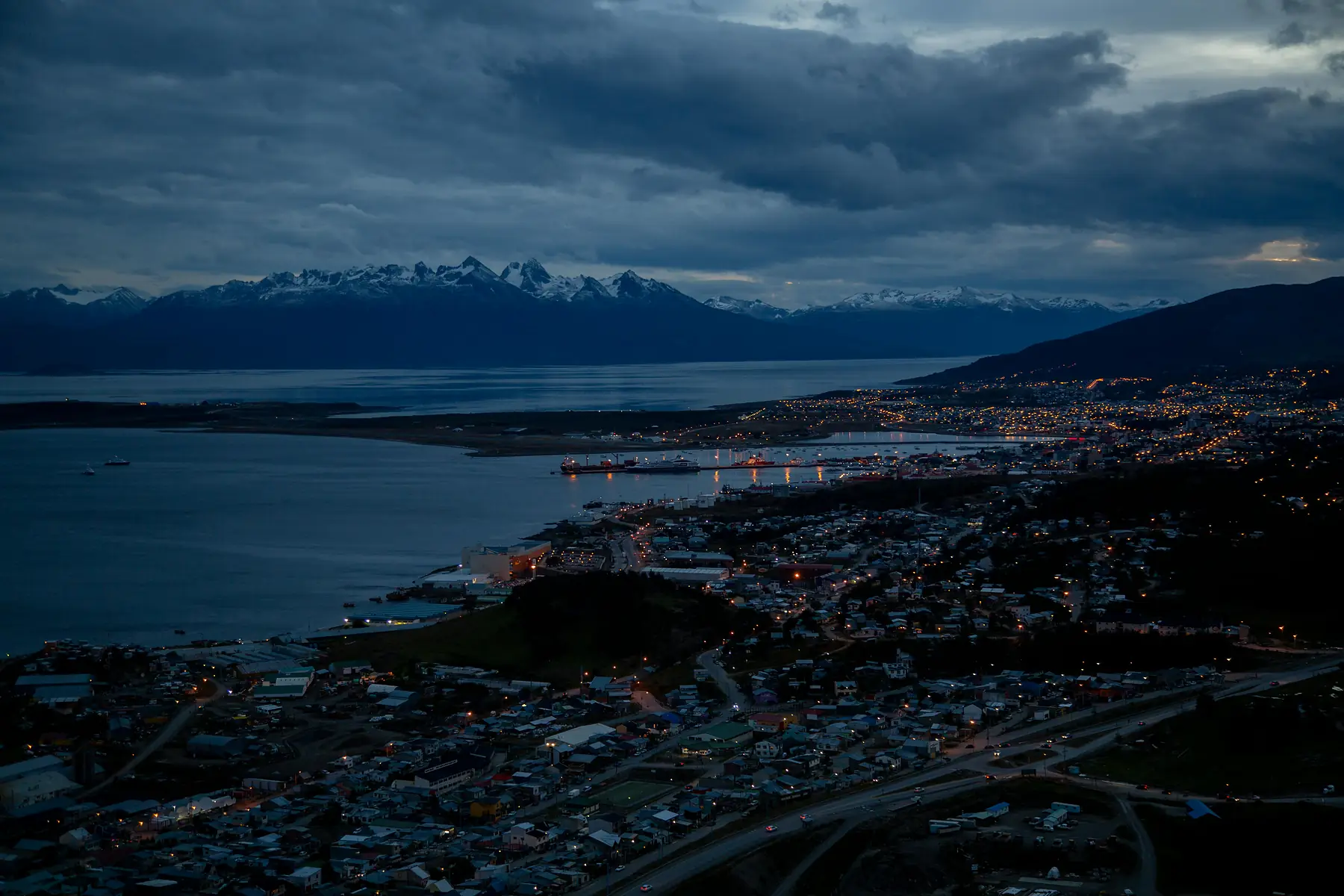
If you choose a mountain lodge, you are trading walkability for silence and panoramic views. Most high-end resorts in the hills provide shuttles, but these often run on a fixed schedule. Outside of those times, a taxi from the city center to the upper hotels costs approximately $7–12 USD (estimated for the 2026/27 season).
Seasonality also dictates your strategy. During the peak Antarctica season from November to February, demand for downtown hotels is extreme. Prices for 2026 are expected to remain high, often tripling compared to the shoulder months of October or April. If you are planning a trip during this window, securing a room in your preferred neighborhood is more important than hunting for a last-minute deal.
Downtown Centro: Best for First-Timers & Cruise Passengers
Staying in the Downtown Centro area puts you within walking distance of the Port of Ushuaia, the primary embarkation point for every Antarctica or Australis cruise. This area is defined by Avenida San Martín, the main commercial artery filled with gear shops, restaurants specializing in Fuegian king crab, and the historic prison museum.
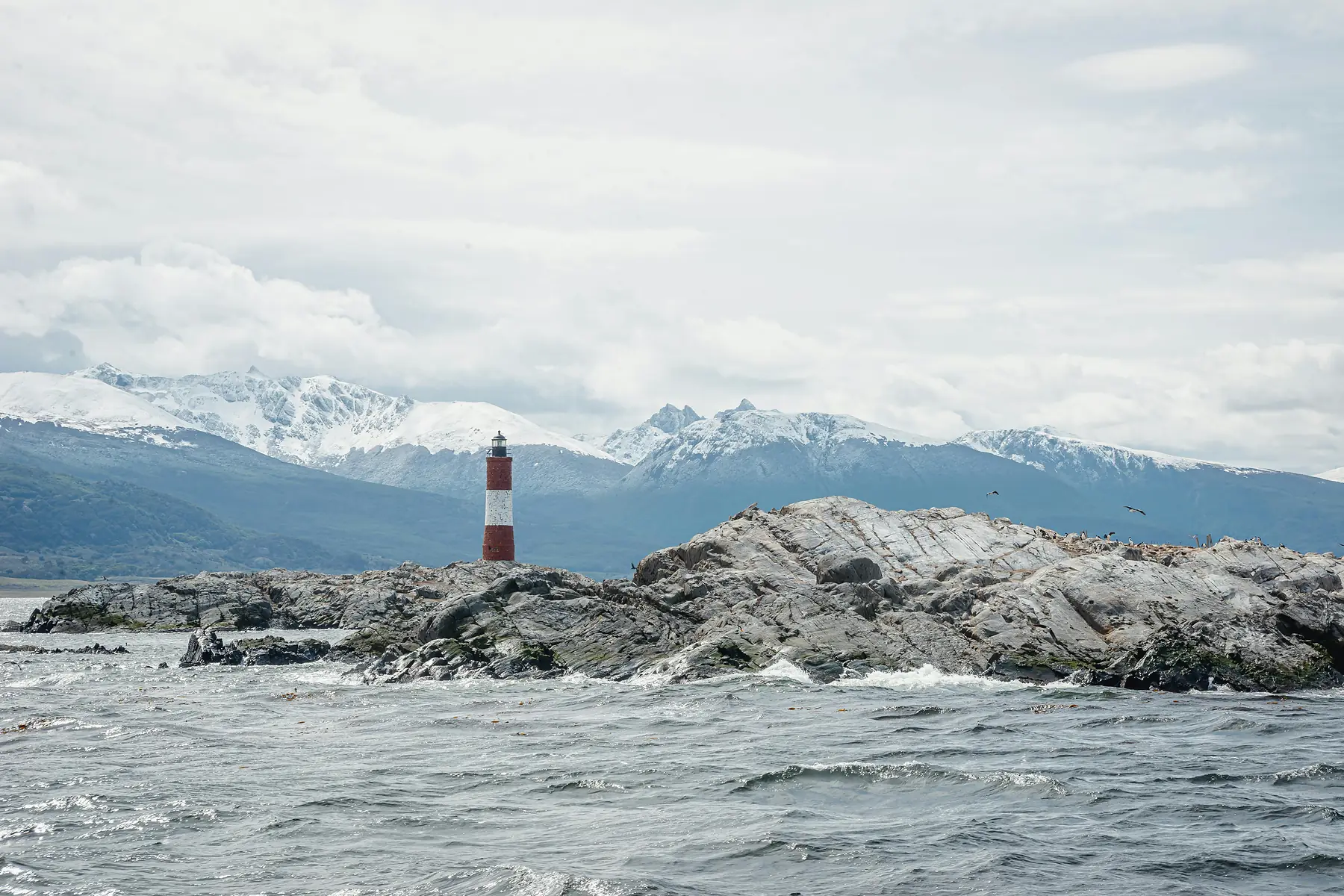
The primary benefit here is logistics. If you are arriving by bus or preparing for a sea voyage, being able to walk to your vessel or the tourism office saves significant stress. The trade-off is the atmosphere: the center can feel crowded and noisy when two large cruise ships are in port simultaneously, and the views are often obscured by commercial buildings.
If you are staying downtown before a cruise, check if your hotel offers “port-day” luggage storage. Many hotels like Albatros (located less than 100 meters from the pier entrance) will hold your main bags after check-out so you can explore the town unencumbered before your afternoon boarding time.
For those who want a reliable, high-standard stay in this zone, we recommend looking at a curated list of best hotels in Ushuaia, which includes stalwarts like the Albatros and the more modern Canal Beagle.
The Road to Glacier Martial: Best for Hikers & Nature Lovers
To the west of the city, the terrain rises into the sub-antarctic forest along the winding road toward the Martial Glacier. This area feels like a traditional alpine village, characterized by thick lenga forests and significantly cooler temperatures than the waterfront.
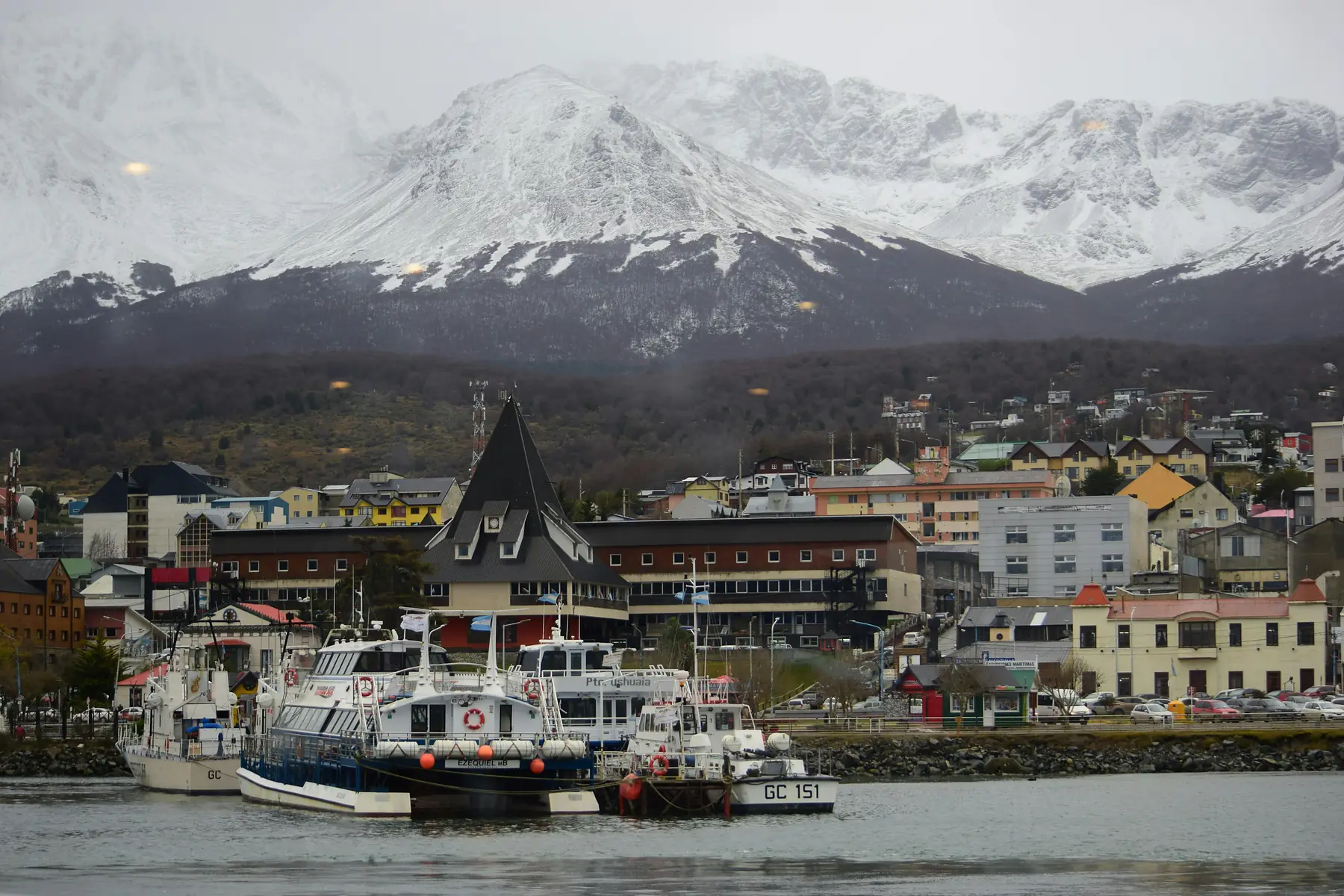
This is the best area for travelers who want immediate trail access. You can walk from your hotel lobby directly onto the paths leading to the glacier or the various mountain ridges without needing a vehicle transfer. However, you are effectively “off the grid” for dining. While hotels like Las Hayas and Los Acebos have excellent on-site restaurants and typically offer complimentary guest shuttles to the city center, a dinner in town requires a 10-15 minute drive.
While some hotels in this area claim to be “walkable” to town, the return journey is a relentless uphill climb. Do not rely on walking back after dinner in the center; ensure your hotel’s shuttle runs late or keep a taxi app like Uber or a local Remis number ready.
If you are looking for a resort-style experience in this forested zone, explore our guide to the top luxury resorts in Ushuaia.
Eastern Hills & Mirador Arakur: The Luxury Enclave
The Eastern Hills, specifically the area around the Reserva Natural Cerro Alarkén, represent the most exclusive part of Ushuaia. This neighborhood is dominated by high-end resorts that prioritize architectural integration with the landscape.
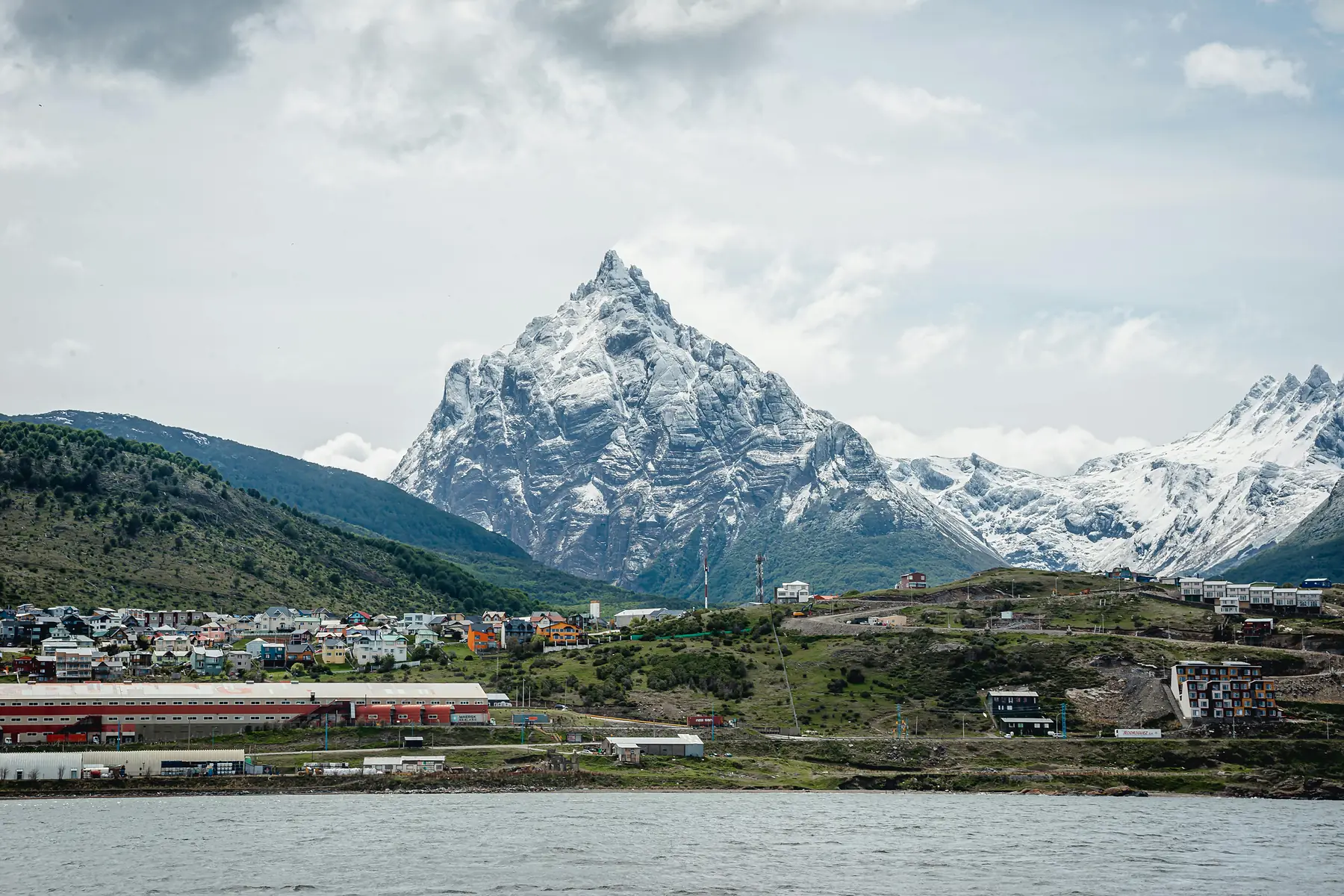
The geography here is the main draw. Being situated on a high ridge east of the city center, these hotels offer 360-degree views that encompass the Beagle Channel, the city lights, and the jagged peaks of the Olivia and Cinco Hermanos mountains. It is a secluded experience, best suited for honeymooners or travelers who want a “destination” resort where the hotel itself is a primary part of the itinerary. Arakur, the anchor resort here, provides a robust shuttle service to the downtown area, typically running every hour during peak times.
- Walkability: High (flat near the port). (Downtown Hotels)
- Walkability: Low (requires shuttles/taxis). (Mountain Resorts)
- Views: Harbor and street life. (Downtown Hotels)
- Views: Panoramic channel and forest views. (Mountain Resorts)
- Dining: Dozens of restaurants within 5 minutes. (Downtown Hotels)
- Dining: Limited to hotel dining. (Mountain Resorts)
- Noise Level: Moderate (port activity). (Downtown Hotels)
- Noise Level: Very Low (nature sounds). (Mountain Resorts)
Choose Downtown for cruise logistics and dining variety; choose the Mountains for scenery, quiet, and luxury amenities.
Western Waterfront & Plaza Malvinas: The Balanced Middle Ground
For travelers who want a quieter experience than the downtown core but refuse to pay for mountain taxis, the area around Plaza Malvinas is the ideal compromise. Located just west of the main port, this neighborhood is notably flatter than the rest of the city, making it easier to navigate with luggage.
Staying here allows for scenic evening strolls along the coastal path and easy access to the “Ushuaia” photo sign. You are roughly a 10-15 minute flat walk from the main restaurant hub on San Martín. Hotels like Hotel Las Lengas and Hotel Monaco offer a more residential feel while keeping you connected to the city’s destination highlights.
Budget Stays: Hostels and Guesthouses in the “Upper” Town
Ushuaia’s budget accommodation is concentrated in the “Upper Town,” the residential streets located 4-8 blocks uphill from the waterfront. This neighborhood offers a more authentic Fuegian vibe, away from the souvenir shops of the main drag.
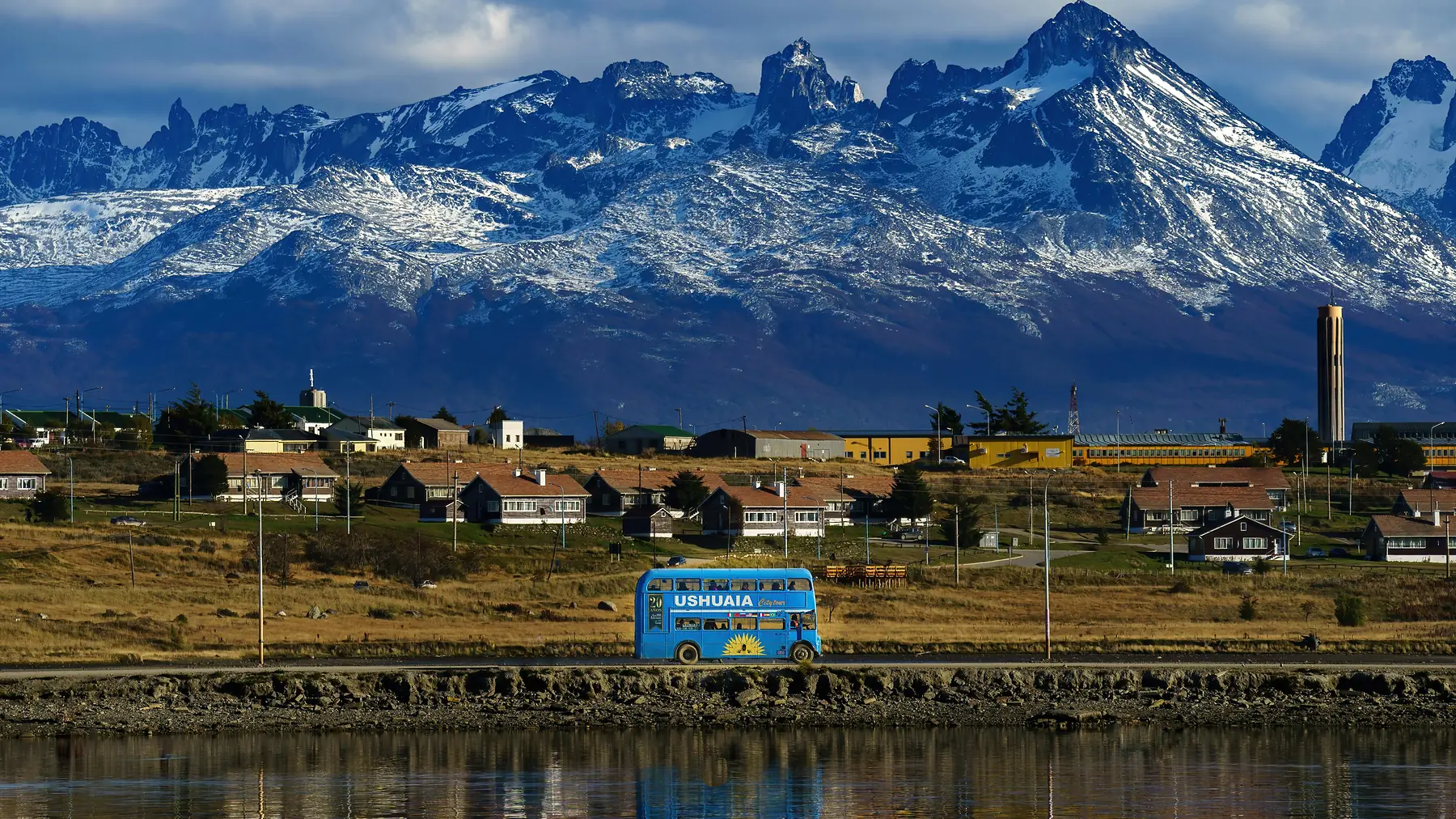
The reason hostels are clustered here is simple: the land is steeper and further from the port, making it more affordable for guesthouses (Hosterías) and backpacker hubs. You will find the best value for money in this zone, provided you don’t mind the daily leg workout of climbing back to your room. For the 2026/27 high season, expect dorm beds to range between $25–45 USD depending on the facility. To find the right social environment or a private room in a local home, see our guide to the best hostels and budget-friendly guesthouses.
Camping in Ushuaia: Municipal and National Park Options
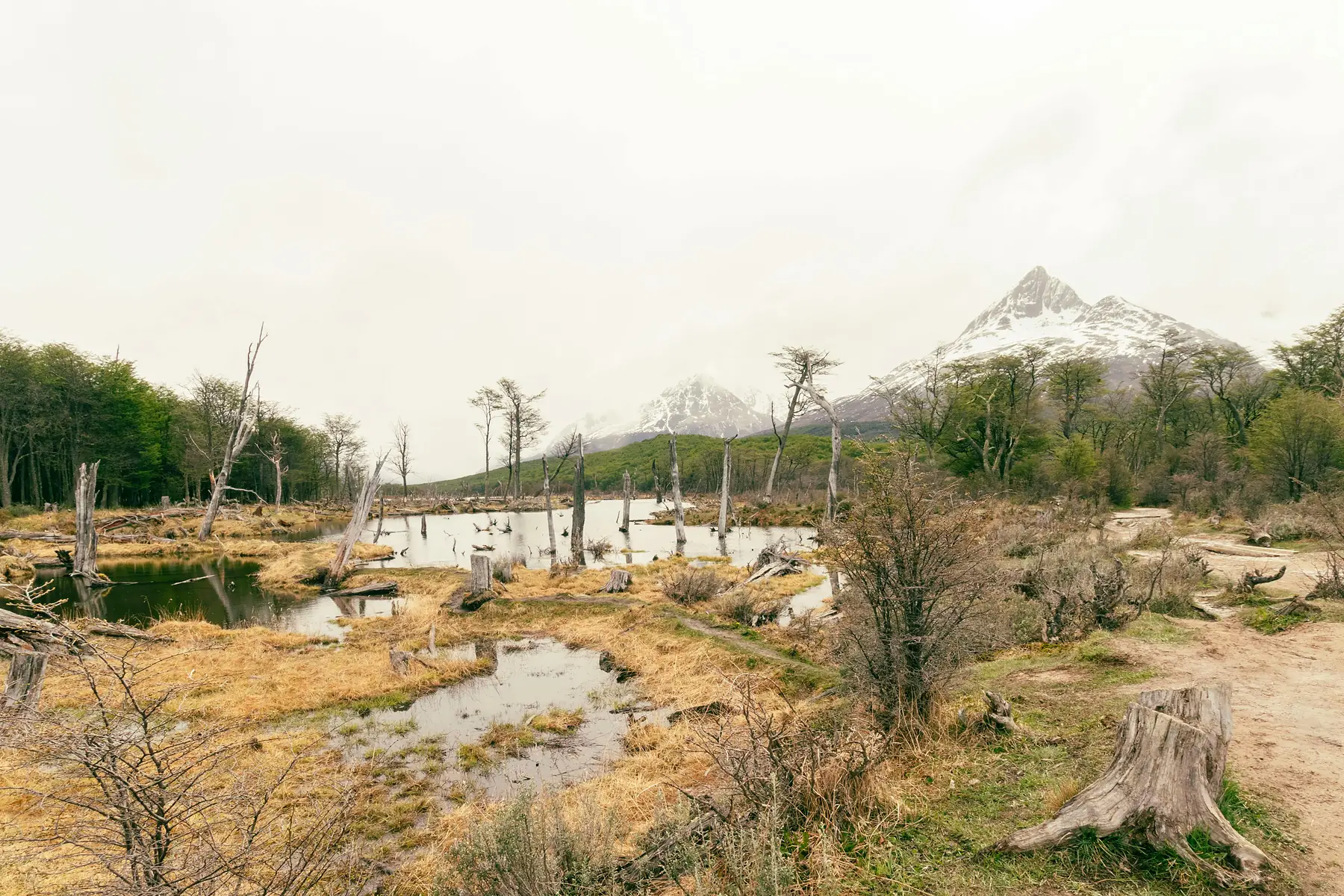
Camping in Tierra del Fuego is a rugged experience dictated by the sub-antarctic climate. Even in mid-summer, overnight temperatures can drop toward freezing, and the famous Fuegian winds are a constant factor.
There are two primary ways to camp here:
- National Park Camping: Located within Tierra del Fuego National Park (about 12km from town). The main serviced site is Camping Los Coihues (near Lago Roca). Other “wild” sites like Ensenada Zaratiegui may require mandatory free registration at the park entrance or online via the National Parks website.
- Municipal and Private Sites: Closer to the city, sites near the Pipo River provide basic facilities for those with their own tents or campervans.
Most organized campsites only operate from November to March. For a breakdown of which sites offer hot showers versus those that are “wild,” refer to our complete guide to camping in Ushuaia.
Bahía Golondrina: Best for Short Layovers & Early Flights
Bahía Golondrina is the residential area located near the Ushuaia International Airport (USH). It is a quiet, wind-swept neighborhood that sits on the western edge of the bay.
This area is not recommended for those who want to experience Ushuaia’s culture or history, as it is isolated from the town center. However, for a traveler arriving on a late flight with an early morning departure the next day, the five-minute taxi ride to the terminal is an unbeatable convenience. Hotels like Tolkeyen and Los Ñires are the primary options in this quiet corner of the world.
To plan the rest of your stay, including what to see once you’ve dropped your bags, read our full Ushuaia Destination Guide.
QUESTION: Is it better to stay in downtown Ushuaia or in the mountains?
ANSWER: Downtown is best for those without a car who want easy access to restaurants and the port, while mountain lodges offer superior views and quieter surroundings but require taxis or shuttles.
QUESTION: How far in advance should I book my Ushuaia accommodation?
ANSWER: For the peak season (November to February), you should book at least 4 to 6 months in advance to secure the best rates and availability.
QUESTION: What is the best area to stay in Ushuaia for cruise passengers?
ANSWER: Downtown Centro is the best area, specifically hotels within three blocks of the Port of Ushuaia, such as Hotel Albatros or Hotel Canal Beagle.
QUESTION: Can I walk to the Tierra del Fuego National Park from my Ushuaia hotel?
ANSWER: No, the park is approximately 12 kilometers (7.5 miles) from the city center and requires a bus, taxi, or shuttle to reach the entrance.
QUESTION: Are there budget-friendly hostels in Ushuaia?
ANSWER: Yes, Ushuaia has a vibrant hostel scene, with most budget options located in the residential streets just above the main commercial district of Avenida San Martín.
QUESTION: Is there a luxury resort in Ushuaia with a view of the Beagle Channel?
ANSWER: Arakur Ushuaia Resort & Spa and Los Cauquenes Resort are the premier luxury options offering panoramic views of the Beagle Channel.