Bariloche Weather Guide: Month-by-Month Climate (2026/27)
Bariloche is a genuine four-season destination where the best time to visit depends entirely on whether you want to trek through wildflower meadows or ski down Andean peaks. For most travelers, the peak summer months of January and February offer the most stable weather for outdoor exploration, while the winter window of July and August provides the most reliable snow cover for the ski season at Cerro Catedral.
Unlike the more consistent maritime climates of Southern Patagonia, Bariloche sits in a transition zone. The weather here is defined by the interaction between the humid air masses from the Pacific and the dry, high-altitude rain shadow created by the Andes. This results in a microclimate where a 30-minute drive east or west can mean the difference between a temperate rainforest and an arid steppe. Whether you are planning a trip for the 2026 or 2027 season, understanding these shifts is the key to a successful itinerary.
Bariloche Weather at a Glance
- Warmest Month: January (Average high 22°C / 72°F)
- Coldest Month: July (Average high 6°C / 43°F)
- Wettest Month: June (Average 160-210mm rainfall)
- Ski Season: Late June to September
- Peak Wind Season: October to February
Bariloche Climate: A High-Level Overview
Bariloche’s climate is classified as “Sub-Oceanic,” characterized by cool, wet winters and dry, mild summers. The single most important factor influencing the local weather is the rain shadow effect. As moisture-laden clouds travel from the Pacific Ocean across Chile, they are forced upward by the Andes. This causes heavy precipitation on the western slopes and the border regions, while the city of San Carlos de Bariloche—located further east—remains significantly drier.
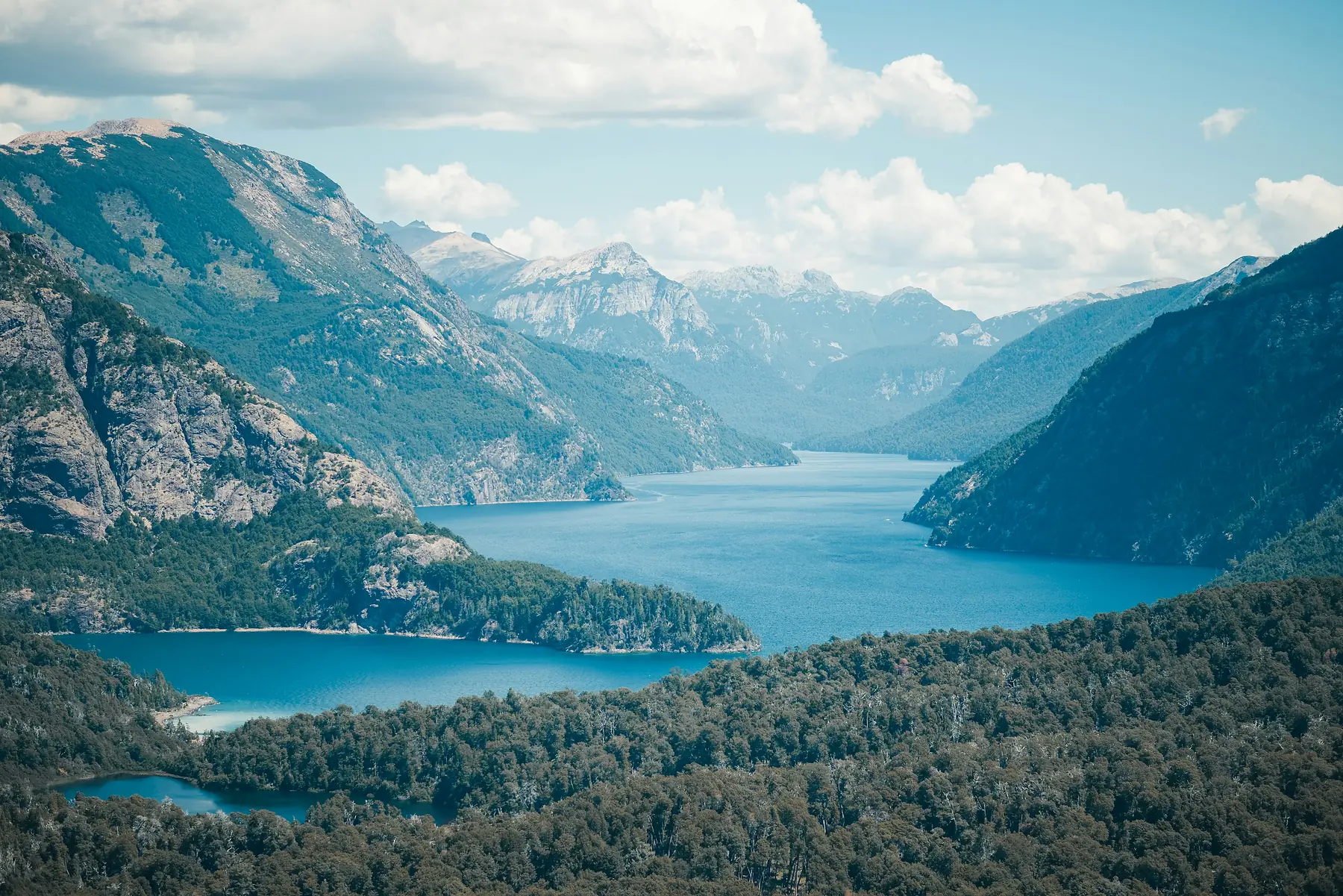
The difference in rainfall across this short distance is dramatic. Average annual precipitation in Puerto Blest is approximately 3,000mm, while Bariloche city center receives only about 800mm to 900mm annually. This means that while it may be drizzling during a boat tour to the western end of Lake Nahuel Huapi, the sun could be shining back in town.
When compared to other Patagonian hubs, Bariloche is considerably milder. While destinations like El Calafate experience harsher, windier conditions with less vegetation, Bariloche’s “Lake District” climate supports lush forests and a more defined four-season cycle. This climate is largely shared with its northern neighbor, San Martín de los Andes, though Bariloche tends to receive slightly more snow due to its specific topography. To see how these conditions compare to the far south, read our guide on Bariloche vs El Calafate.
Bariloche Weather by Month: A Detailed Breakdown
The transition between seasons in Bariloche is sharp, with the landscape changing color and character almost monthly.
Summer: January & February
These are the most predictable months for travel. You can expect long days with up to 15 hours of daylight, average highs of 22°C (72°F), and very low rainfall. This is the peak window for high-altitude trekking, as the snow has finally cleared from the mountain passes. However, even in summer, nighttime temperatures can drop to 6°C (43°F), so a warm layer is always necessary after the sun sets.
Autumn: March & April
March is a favorite for many locals; the crowds thin out, and the wind begins to die down. By mid-April, the “Autumn Colors” peak. The lenga and ñire forests on the mountain slopes turn vibrant shades of deep red and orange. Temperatures begin to cool, with highs around 14°C (57°F), and the first significant rains of the year typically arrive in late April.
Winter: May & June
This is the transition into the rainy season. May is often the gloomiest month, characterized by persistent drizzle and shortening days. June marks the official start of winter, with temperatures typically hovering between 0°C and 7°C (32°F - 45°F). Snow begins to accumulate on the peaks, though it rarely settles in the city center for more than a day or two.
Peak Winter: July & August
These are the coldest months and the height of the ski season. Expect freezing temperatures overnight and frequent snow on the mountains. While the city may experience rain, the ski base at Cerro Catedral is typically in full swing. This is also the period with the least amount of sunlight, so plan for early starts if you are heading to the slopes.
Spring: September & October
The “Spring Thaw” brings unpredictable weather. You might experience a warm, sunny morning followed by a sudden sleet storm. September remains cold enough for skiing, while October sees the start of the wildflower bloom in the lower valleys. This is also the start of the “windy season,” as thermal differences between the mountains and the plains create strong afternoon gusts.
Late Spring: November & December
Days lengthen significantly, and the weather begins to stabilize. November is excellent for seeing the famous red “Notro” flowers in bloom. While the high mountain passes may still have lingering snow patches, the lower trails are perfect for hiking in Bariloche.
The Rainy Season in Bariloche: What to Expect
The wettest period in Bariloche runs from May through August, with June historically recording the highest precipitation levels. Unlike the intense, short-lived thunderstorms seen in tropical climates, rain in the Lake District is often a persistent, fine drizzle that can last for several days.
Monthly rainfall averages for May, June, and July typically range between 130mm and 210mm. This moisture is what keeps the region’s “Valdivian” forests so lush. It is important to note that rain in the city center almost always translates to snow at higher elevations. If it is a wet, grey day at lake level, conditions are likely excellent for skiing or snowshoeing at the top of the mountains.
For days when the rain is too persistent for the trails, Bariloche is well-equipped for indoor life. The city’s culture is built around cozy spaces designed to escape the damp.
To plan your indoor escape, see our recommendations for the best things to do in Bariloche or explore the city’s famous chocolate shops and breweries.
Snowfall and the Bariloche Ski Season
The ski season at Cerro Catedral, widely considered the largest and most developed ski resort in the Southern Hemisphere by lift capacity, generally runs from late June through September. For the 2026 and 2027 seasons, the most reliable snow cover for all levels of the mountain is typically found in August.
Bariloche’s snow is often “wet” snow due to the relatively high humidity and proximity to the lakes. This makes it excellent for building a solid base, though it lacks the ultra-dry “powder” feel of the Northern Rockies. A defining climatic factor for skiing here is the wind. High winds frequently lead to the closure of the upper lifts (the “Nubes” sector), even on sunny days.
It is also important to distinguish between “town snow” and “mountain snow.” While the city of Bariloche sits at 770m, the ski base is at 1,030m and the summit reaches over 2,100m. It is common for it to be raining at the lake shore while a blizzard is occurring on the mountain. For more on winter sports, check our guide to skiing in Bariloche.
Wind and the Lake District Factor
Wind is a defining feature of the Patagonian climate, and Bariloche is no exception. The prevailing winds come from the west, funneling through the Andean passes and picking up speed as they cross the vast surface of Lake Nahuel Huapi.
The “Viento” effect is most pronounced from October through February. These winds can create significant “whitecaps” on the lake, which occasionally leads to the cancellation of boat excursions like the Cruce Andino or trips to Isla Victoria. If you are prone to motion sickness, the afternoon lake crossings are generally choppier than the morning departures.
The wind also dictates the experience for those camping in Bariloche. Lakeside sites are beautiful but can be punishing during a wind storm. If you are camping, look for “protected” sites tucked into the forest rather than those directly on the water’s edge. For those planning water-based activities, the calmest conditions are usually found between 7:00 AM and 11:00 AM.
Before booking a boat trip, you can check which lake tours are most resilient to wind to avoid last-minute cancellations.
What to Pack for Bariloche Weather
The secret to comfort in Bariloche is the “Three-Layer System.” Because temperatures can swing by 15°C in a single day, you need a wardrobe that can be adjusted on the fly.
- The Base Layer: Moisture-wicking synthetic or merino wool. Avoid cotton, which stays wet and cold if you sweat or get caught in the rain.
- The Insulation Layer: A fleece or a “puffy” down jacket. This traps heat. Even in January, you will want this for the evenings.
- The Shell Layer: A high-quality waterproof and windproof jacket (Gore-Tex or similar). In Bariloche, the wind is often the primary cause of cold, so a shell is your most important piece of gear.
Footwear should be chosen based on the season. In summer, lightweight hiking boots or trail runners are sufficient for most paths. In winter and spring, however, the trails become notoriously muddy as the snow melts. Waterproof boots with good ankle support are essential if you plan to step off the pavement between May and October.
For a broader look at how to integrate these weather patterns into your full itinerary, visit our Ultimate Guide to Bariloche.
FAQ
What is the warmest month in Bariloche? January is typically the warmest month in Bariloche, with average daily highs of 22°C (72°F) and long, sunny days perfect for lake activities.
When is the rainy season in Bariloche? The rainy season in Bariloche runs from May through August, with June historically being the wettest month of the year.
Does it snow in Bariloche city center? While it does snow in the Bariloche city center during winter (July-August), it rarely stays on the ground for long; however, the surrounding mountain peaks remain snow-capped for several months.
What is the best month for hiking in Bariloche? February is the best month for hiking in Bariloche due to stable weather, minimal rainfall, and the most reliable access to high-altitude mountain refugios.
Is Bariloche windy in the summer? Yes, Bariloche can be quite windy in the summer, especially in the afternoons when the thermal difference between the mountains and the steppe creates strong breezes across Lake Nahuel Huapi.
When can I see the autumn colors in Bariloche? The best time to see the autumn colors in Bariloche is from mid-April to early May, when the lenga and ñire forests turn vibrant shades of red and orange.