Best Backpack for Patagonia: 2026 Trekking Guide & Reviews
The best backpack for Patagonia trekking is a technical internal-frame rucksack with a capacity between 50L and 65L, featuring a high-stability harness designed to handle sustained 60-100 km/h winds. Your choice depends entirely on whether you are staying in serviced refugios on the W Trek or carrying a full camping kit on the O Circuit.
While many travelers search for the Patagonia brand specifically, the region’s extreme environment demands a focus on technical suspension over lifestyle aesthetics. This guide breaks down the specific requirements for the Southern Patagonian Ice Field’s fringe, compares the top models for 2026, and clarifies the volume you actually need for your specific itinerary.
At a Glance: Patagonia Backpacking
- W Trek (Refugio full board, no camping gear or food): ~40L
- W Trek (Carrying own food, no camping gear): 50–60L
- W Trek (Carrying food + camping gear): ~75L with external attachments for roll mats
- O Circuit (Self-supported): 65–75L
- Key Feature: High-stability harness for wind resistance
- Weather Protection: Internal dry bags + external rain cover
- Top Brands: Osprey, Gregory, Patagonia (Technical line)
If you are planning day hikes in El Chaltén or short walks from a hotel rather than a multi-day trek, you may be looking for a smaller daypack for short walks. You can find those recommendations in our comprehensive Patagonia gear guide or our dedicated daypack guide.
Patagonia Trekking Requirements: Why Your Pack Choice Matters
Choosing a backpack for Patagonia is different from choosing one for the Appalachian Trail or the Alps. The primary antagonist here is the wind. On exposed sections like the Paso John Gardner or the trek to Base Torres, Patagonia’s notorious 100km/h+ winds can catch a high-profile, poorly fitted pack and literally pull you off your feet.
A streamlined, low-profile pack that sits close to your center of gravity is essential. Beyond the wind, the terrain is often a mix of muddy forest tracks and loose rocky scree. A pack that shifts or wobbles during these transitions increases fatigue and the risk of ankle injuries.
Rain in this region is rarely vertical; it is often driven horizontally by the wind, finding its way into every zipper and seam. While most technical packs come with a rain cover, they can act like a parachute in high winds. We recommend using a combination of a rain cover and internal dry bags or a heavy-duty waterproof liner to ensure your sleeping bag and dry layers remain protected during the rigors of the O Circuit.
The Great Debate: 50L vs. 65L Backpack for Patagonia
The most common mistake trekkers make is over-packing for the W Trek. If you are staying in refugios on the W Trek, you do not need to carry a tent, sleeping pad, or a week’s worth of food. Food and accommodation are the two variables that make the biggest difference to pack size. Bringing all your food versus going full board is almost as impactful as bringing camping gear versus having it set up for you. A 40L works for refugio full board; 50–60L if carrying your own food; 75L if carrying food and camping gear.
- Best For: Refugio full board — no food or gear to carry (40 Liter)
- Best For: Carrying own food but no camping gear (50–60 Liter)
- Best For: O Circuit / Fully self-supported with food + gear (65–75 Liter)
- Weight Capacity: 12-15kg comfortably (50 Liter)
- Weight Capacity: 18-22kg comfortably (65 Liter)
- Wind Profile: Narrower and lower; better stability (50 Liter)
- Wind Profile: Taller; requires careful compression (65 Liter)
- Gear Load: Clothes, sleeping bag, personal essentials (50 Liter)
- Gear Load: Tent, stove, fuel, 7+ days of food (65 Liter)
Choose ~40L for refugio full board; 50–60L if carrying your own food; 75L if carrying food + camping gear.
Carrying a pack larger than 70L is generally a mistake for Patagonia. Not only does the extra weight make the steep climbs to the French Valley more difficult, but the increased surface area makes you significantly more vulnerable to being pushed around by the wind.
Best Backpacks for the W Trek (Refugio-to-Refugio)
For those enjoying the relative luxury of the refugios, your pack only needs to hold your clothing layers, toiletries, a sleeping bag liner, and daily snacks. A 35L to 45L pack is ideal for this style of trekking. You should prioritize ventilation in the back panel, as even in Patagonia, the afternoons can become surprisingly warm during the ascent to the base of the towers.
The Osprey Stratos 44 is a top performer for this category. As of the 2026/27 season, it weighs approximately 1.65 kg (3 lbs 10 oz) and features a highly adjustable torso length (18-22 inches) and a ventilated back panel that keeps the load off your spine. Alternatively, the Patagonia Terravia 36L offers a more streamlined aesthetic with enough technical features for a supported trek.
To ensure you don’t overfill these smaller packs, consult our complete W Trek packing list for a breakdown of exactly what you need to carry versus what you can leave behind.
Best Backpacks for the O Circuit & Self-Supported Treks
When you are carrying a full kitchen, a shelter, and food for eight days, the suspension system of your pack becomes the most important feature. You need a harness that transfers the weight effectively to your hips rather than your shoulders.
The Osprey Aether 65 and the Gregory Baltoro 65 are the two “Gold Standard” packs seen most frequently on the trails of Torres del Paine. The Baltoro is widely praised for its robust suspension system; for the 2026 model, it maintains a maximum recommended carry weight of 22.7 kg (50 lbs) without the frame sagging.
If you are flying from overseas and don’t want to check a massive 65L bag, you can rent high-quality technical packs in Puerto Natales. Shops like Rental Natales or Lili Patagonicos offer 60L-70L models for approximately $6-10 USD per day, though you should book these in advance during the peak months of January and February.
For those who want to stick with the Patagonia brand for their technical gear, the Ascensionist 55L is an excellent, albeit minimalist, choice. It is designed for alpine climbing, meaning it is incredibly light and stripped of unnecessary “dangly” bits that catch the wind. However, it lacks the plush cushioning of a Gregory Baltoro, so it is best suited for experienced hikers with a refined, lighter gear list. For more on the specific gear required for the longer trek, see our detailed O Circuit gear requirements.
Critical Features to Look for in a Patagonia Rucksack
Before purchasing a pack, evaluate it against the specific environmental challenges of the Southern Andes. A pack that works well for a weekend in the woods might fail when faced with a Patagonian storm.
- Harness Adjustment: Ensure the pack allows for micro-adjustments. A perfect fit that locks the pack to your torso is the only way to combat “wind-sway” on exposed ridges.
- Water Bottle Access: You should be able to reach your water without taking the pack off. Opening your pack in 80 km/h winds risks losing gear to the wind or letting rain soak your internal contents.
- External Attachment Points: You will frequently need to transition between using trekking poles and having your hands free for rock scrambling. Look for “stow-on-the-go” loops or secure side straps.
- Compression Straps: These are vital for Patagonia. When your food bag shrinks halfway through the trek, you need to be able to compress the pack to keep the center of gravity stable.
Do not rely solely on the built-in rain cover. In Patagonia, the wind often blows the cover right off the pack or drives rain behind it. Always use internal dry bags for your most critical items: your sleeping bag and your “at-camp” dry clothes.
Fit and Sizing: How to Measure for Your Trek
A backpack is like a pair of boots; if it doesn’t fit your specific anatomy, it will cause pain regardless of how expensive it was. When measuring for a pack, your torso length is the only metric that matters, not your overall height.
To measure your torso, find the bony bump at the base of your neck (the C7 vertebra) and the top of your hip bones (the iliac crest). The distance between these two points determines whether you need a Small, Medium, or Large frame. For most major brands in 2026, standard torso ranges are: Small (15–17 inches), Medium (17–19 inches), and Large (19–21+ inches).
For women, gender-specific packs like the Osprey Ariel 65 are highly recommended. These packs feature narrower shoulder harnesses and hip belts canted to fit the angle of female hips. More importantly, they are designed with a shorter torso range and a center of gravity that accounts for female anatomy, which is crucial for staying balanced when the wind tries to push you off a narrow trail.
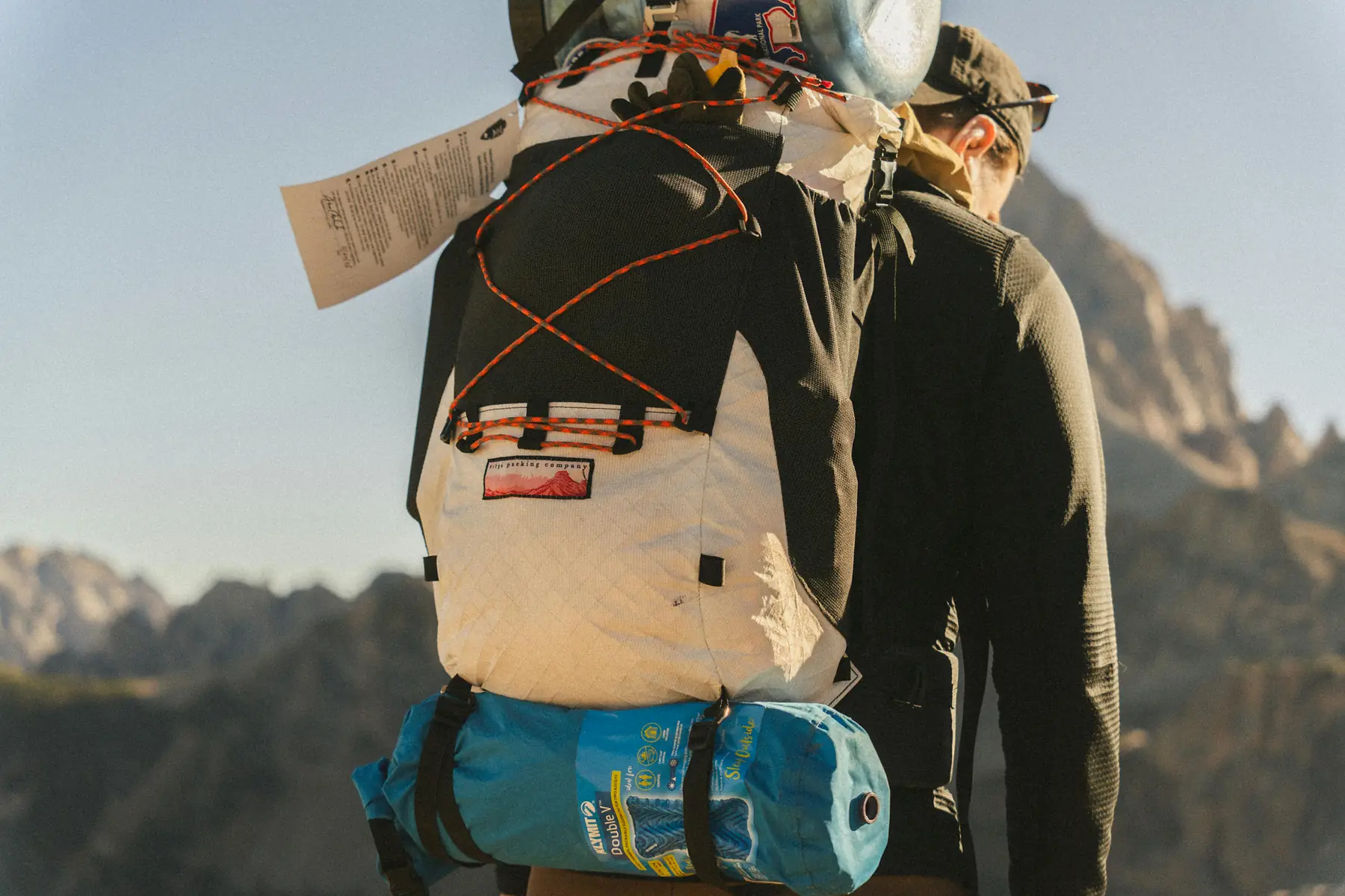
Patagonia Brand Backpacks: Are They Actually Good for Trekking?
The Patagonia brand is synonymous with the region, but it is important to distinguish between their lifestyle gear and their technical trekking equipment. For a multi-day trek, you must look specifically at their technical lines.
The Terravia line is Patagonia’s primary trekking offering for 2026. These packs are excellent for the W Trek, featuring 100% recycled nylon primary fabric and 100% recycled polyester lining. They are comfortable and durable, but they generally lack the heavy-duty, load-bearing suspension required for the 20kg+ loads often carried on the O Circuit.
Avoid the “Black Hole Trap.” The Patagonia Black Hole 25L, 32L, and 45L packs are iconic travel bags, but they are not trekking rucksacks. They lack the internal frame and padded hip belts necessary for multi-day hiking. Use them for your luggage in Puerto Natales, but do not take them on the W Trek.
One major advantage of choosing a Patagonia brand pack is their “Ironclad Guarantee.” If your pack sustains damage during a rugged trip through the park, the company is famous for repairing or replacing gear, which provides significant peace of mind for an investment that will likely see years of hard use.
Related guides to help you prepare
- Best Hiking Boots for Patagonia
- W Trek vs O Circuit: Which is right for you?
- Complete Patagonia Packing List
FAQ
What size backpack do I need for the W Trek in Torres del Paine? For a refugio-based W Trek with full board (no food to carry), a ~40L pack is sufficient. If carrying your own food but no camping gear, 50–60L. If carrying both food and camping gear, aim for ~75L with external attachments for roll mats.
Is a 65L backpack too big for Patagonia trekking? A 65L pack is the standard size for the O Circuit or a self-supported W Trek, but it may feel unnecessarily bulky and catch more wind if you are staying in refugios.
Do I need a waterproof backpack for Torres del Paine? While fully waterproof backpacks are rare, you must have a high-quality rain cover or use internal dry bags to protect your gear from Patagonia’s horizontal rain.
Is the Patagonia Black Hole pack good for the W Trek? No, the Black Hole series is designed for travel and commuting; for the W Trek, you should choose a technical hiking pack like the Patagonia Terravia which has a proper suspension system.
How should a trekking backpack fit for Patagonian winds? Your pack should sit tight against your back with the weight distributed to your hips to prevent the wind from pulling you off balance on exposed ridges.
Can I rent a trekking backpack in Puerto Natales? Yes, many gear shops in Puerto Natales rent 60L–70L backpacks for approximately $6-10 USD per day, though it is always better to bring your own to ensure a proper, tested fit before starting the trek.