
Lago del Desierto Guide: Hikes, Boats & Logistics (2026)
Lago del Desierto is the wilder, greener frontier of El Chaltén, offering a dramatic shift from the dry granite spires of the Fitz Roy range to lush, sub-antarctic forests and emerald waters. For most travellers, it is absolutely worth visiting as a day trip if you have more than three days in the region or if you are looking for an alternative to the crowded trails of Los Glaciares National Park.
While the “Big Two” hikes (Laguna de los Tres and Laguna Torre) define the Chaltén experience, this lake at the end of Provincial Route 23 provides a different perspective of the Andes. It serves as a gateway for those crossing into Chile via Villa O’Higgins, a base for exploring hanging glaciers, and a site of significant historical tension. This guide covers the logistics of reaching the lake, the specific trails available on its shores, and the practicalities of the border crossing.
Getting to Lago del Desierto: The Journey via Route 23
Reaching Lago del Desierto requires travelling 37 kilometres north from El Chaltén along Provincial Route 23. While the distance is short, you should expect the drive to take between 90 minutes and two hours due to the variable conditions of the gravel road and the inevitable stops for photography along the Río de las Vueltas.
The road is a scenic destination in its own right. As you head north, the north face of Mount Fitz Roy remains visible for much of the journey, offering a profile rarely seen by those who stay on the main trekking trails. Approximately 12 kilometres into the drive, you will pass the trailhead for Chorrillo del Salto, a popular waterfall that makes for an easy stop on the return journey.
Route 23 Logistics
- Distance: 37km from El Chaltén.
- Road Surface: Unpaved gravel (ripio); 4x4 is not required but high clearance is recommended due to frequent washboarding and potholes.
- Shuttle Cost: Approximately $45–$65 USD for a round-trip ticket (as of the 2026/27 season).
- Cycling Time: 3–5 hours one way depending on wind and fitness.
For those without a rental car, several shuttle operators run daily services during the peak season (November to March). Companies like Las Lengas and Zona Austral typically offer departures from the main bus station or central pickup points in town at 8:00 or 9:00, returning from the lake in the late afternoon. If you are a fit cyclist, the 74-kilometre round-trip is a classic Patagonian bike ride, though the washboard surface of the road and the frequent headwind can make the return leg exhausting.
The Huemul Glacier Hike (Laguna Huemul)
The hike to Laguna Huemul is the most popular short excursion at the lake, providing a high-impact view of a hanging glacier for relatively little effort. The trail begins near the southern pier and parking area, clearly marked by the visitor centre of Estancia Lago del Desierto.
Do not confuse this short day hike with the “Huemul Circuit.” The Huemul Circuit is a demanding 4-day expedition that starts near the park ranger station in El Chaltén. The Huemul Glacier hike described here is a 2km return walk that takes roughly one hour.
Because this trail is located on private estancia land, you must pay an entrance fee in cash at the trailhead. This fee is separate from any national park permits and is used by the owners to maintain the path and the surrounding forest.
The path climbs steeply through a dense Lenga forest that is often muddy, even in mid-summer. Sturdy hiking boots with good traction are essential here, as the tree roots and damp soil can be slippery. The reward at the top is a vibrant emerald lagoon fed directly by the Huemul Glacier, which clings to the mountainside above. From the ridge, you also get an expansive view back across the length of Lago del Desierto toward the north face of the Fitz Roy massif.
The estancia office only accepts cash for the entrance fee, which is approximately $15–$20 USD (payable in Argentine Pesos) as of the 2026/27 season. Ensure you have enough cash before leaving El Chaltén, as there is no ATM and no cell service for digital transfers at the lake.
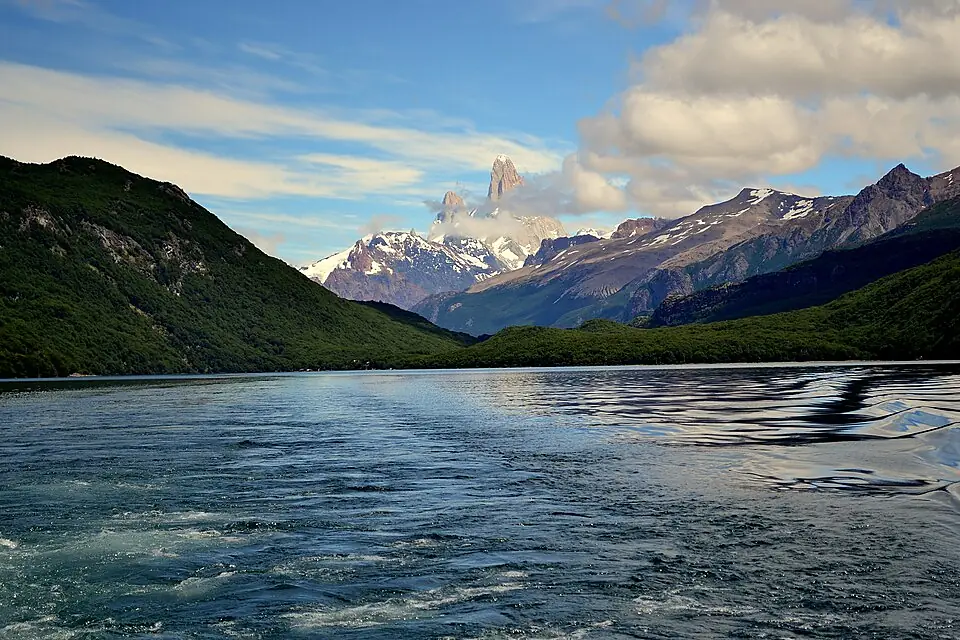
Lago del Desierto Boat Navigation
For those who prefer to see the landscape from the water, boat navigations offer access to the more remote northern reaches of the lake and the Vespignani Glacier. The primary operator, Zona Austral, provides two main types of service.
The most comprehensive option is the Vespignani Glacier excursion. The boat drops passengers at a private reserve halfway up the lake, where a network of well-maintained trails allows you to choose your level of activity. You can take an easy 15-minute stroll to the base of the glacier or a more strenuous 45-minute climb to a panoramic viewpoint that overlooks the entire valley.
To help you decide which water-based option fits your itinerary, consider the primary goal of your visit:
- Purpose: Sightseeing and glacier access vs. Point-to-point transport.
- Time Required: 4–6 hours including hiking vs. 45 minutes one way.
- Difficulty: Choice of easy to moderate trails vs. No hiking involved.
- Scenery: Close-up glacier views vs. Full lake perspective.
Choose the Vespignani excursion for sightseeing and short hikes; use the Punta Norte shuttle only if you are crossing to Chile or hiking the shoreline.
During the peak months of December through February, boats typically sail two to three times per day. However, in the shoulder seasons of October and April, frequency drops to a single daily departure or may be cancelled entirely if passenger numbers are low. It is highly advisable to book your tickets at an agency in El Chaltén at least 24 hours in advance to secure your spot.
The Shoreline Trek: Southern Pier to Punta Norte
Independent hikers who want to avoid the cost of the boat or seek total solitude can follow the 14-kilometre trail that traces the eastern shore of the lake. This is not a flat lakeside stroll; the path is a rugged, undulating trek through old-growth forest that requires significant effort.
The trail involves constant elevation changes as it climbs over rocky bluffs and drops back down to small, hidden beaches. Stream crossings are common, and in years with high rainfall, the “up and down” sections can become notoriously muddy. Most hikers with a standard day pack complete the one-way journey to Punta Norte in 4 to 6 hours.
If you choose this route, you will experience the deep silence of the Lenga forest and have the chance to spot the Magellanic woodpecker, identifiable by its bright red head and rhythmic drumming on the trees. The trail ends at the Gendarmería (Argentine Border Guard) post at Punta Norte. There is a basic, unsheltered camping area here for those who wish to stay overnight before either hiking back or continuing into Chile.
While registration is not strictly mandatory for day hikers staying on the Argentine side, it is a safety best practice to check in with the Gendarmería post if you arrive at Punta Norte, especially if you intend to camp.
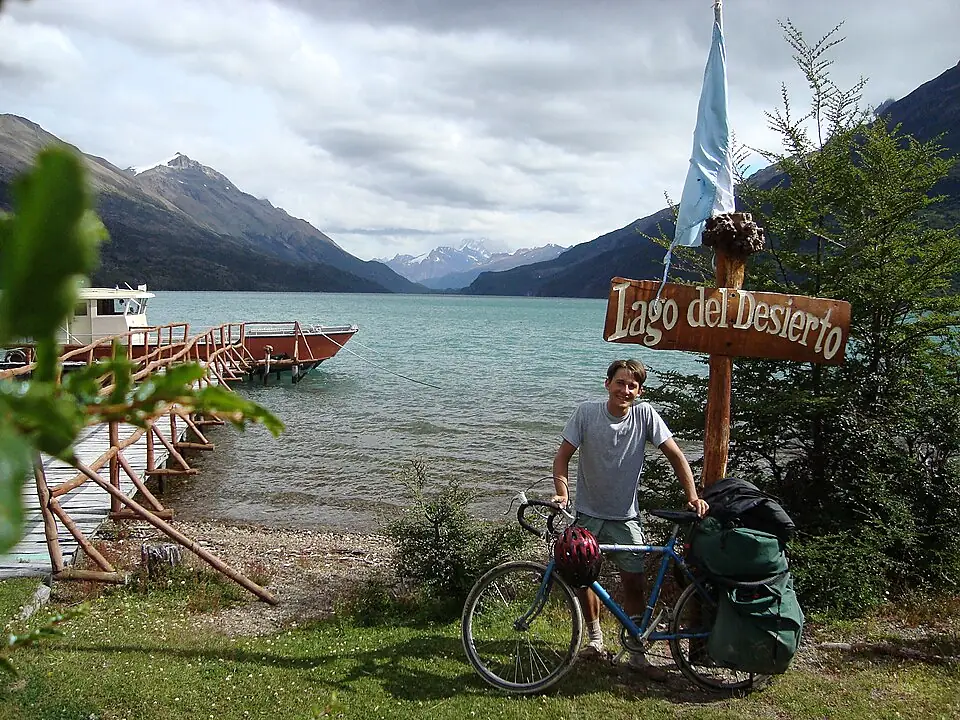
Crossing the Border: Lago del Desierto to Villa O’Higgins
Lago del Desierto is a critical link in one of Patagonia’s most famous multi-modal border crossings. This route connects El Chaltén with Villa O’Higgins, the southern terminus of Chile’s Carretera Austral. It is a journey reserved for backpackers and cyclists, as it is impossible to take a vehicle across this section of the border.
The process begins by reaching Punta Norte, either via the 45-minute boat shuttle or the 14-kilometre shoreline trek. Once at Punta Norte, you must visit the Argentine Gendarmería office to “stamp out” of the country. From there, a 6-kilometre trail leads through a forested “no man’s land” to the Chilean border post at Candelaria Mansilla.
Punta Norte Arrival
Arrive at the northern end of the lake via boat or trail and clear Argentine customs.
The 6km Hike
Trek the 6 kilometres to the Chilean post. This section is a wide track but can be extremely muddy after rain.
Chilean Customs
Clear Chilean immigration at Candelaria Mansilla. There is a small estancia here that offers basic lodging and camping.
Lago O'Higgins Crossing
Take a second, longer boat trip (2.5–3 hours) across the often-turbulent Lago O’Higgins to reach the town of Villa O’Higgins.
The success of this crossing depends entirely on the schedule of the boat on Lago O’Higgins (operated by Robinson Crusoe or Hielo Sur). These vessels are notoriously weather-dependent and typically only operate from November through March, with limited departures in April. Because of the logistics involved, you should never attempt this crossing without a confirmed boat booking and a flexible schedule that allows for a 24–48 hour delay due to wind.
History: The 1965 Border Conflict
The peaceful atmosphere of the lake today belies a violent past. In October 1965, Lago del Desierto was the site of a significant territorial clash between the Argentine Gendarmería and the Chilean Carabineros. The dispute centered on a 500-square-kilometre area of forest and mountains that both nations claimed as their own.
The incident resulted in the death of a Chilean officer, Lieutenant Hernán Merino Correa, and sparked a wave of nationalism in both countries. For decades, the “Laguna del Desierto” issue remained a point of high diplomatic tension. It was eventually settled in 1994 by an international tribunal, which awarded almost the entire disputed territory to Argentina.
This conflict is the reason why El Chaltén exists. The town was founded in 1985 as a strategic move by the Argentine government to establish a permanent civilian presence in the region and bolster their claim to the nearby border lands. Today, a monument at the southern end of the lake commemorates the 1965 event, serving as a reminder of the geopolitical importance of this remote valley.
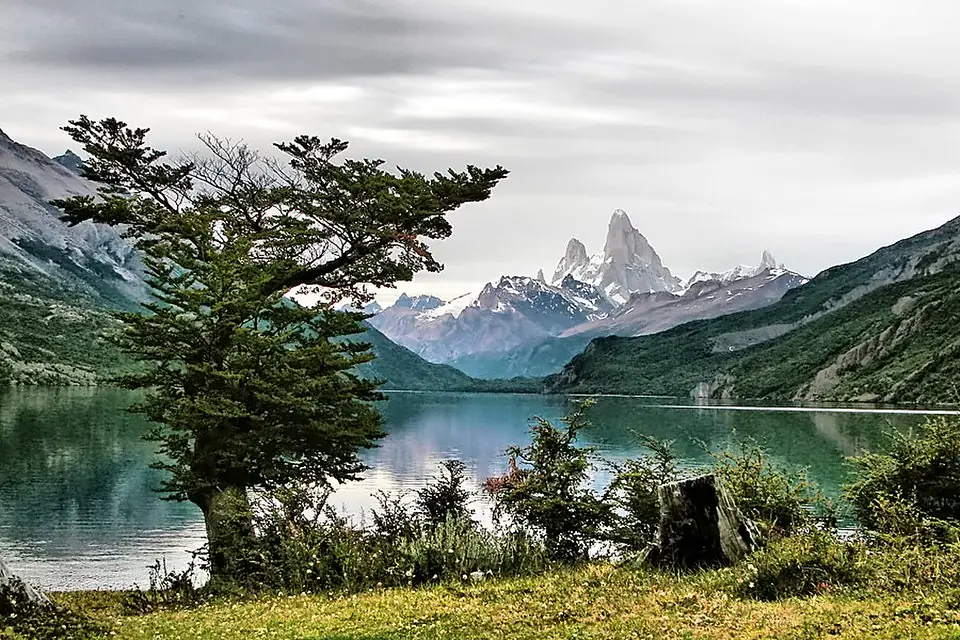
Planning Your Visit: Timing, Weather & Gear
The best time to visit Lago del Desierto is between November and March, when the shuttle services are frequent and the boat navigations are most reliable. Outside of these months, the road can become difficult to navigate due to snow or heavy mud, and many services in El Chaltén shut down.
The lake sits in a north-south valley that acts as a natural wind funnel. Even if the town of El Chaltén feels relatively calm, the lake can experience high winds that create white-capped waves, occasionally leading to boat cancellations. For the most accurate regional forecast, you should consult the El Chaltén weather guide before departing.
When packing for the day, prioritize the following:
- Cash: Essential for the estancia fee and any small purchases at the lake.
- Waterproof Layers: The “emerald” green of the forest is a result of high rainfall; expect showers even on clear days.
- Food and Fuel: There are no grocery stores or gas stations at the lake. You must bring everything you need for the day from town.
- Offline Maps: There is no cell service or Wi-Fi. Download your maps and transport confirmations before leaving El Chaltén.
To see how this area compares to the other major trails in the region, explore our guide to the best day hikes in El Chaltén.
FAQ
Is Lago del Desierto worth visiting if I only have three days in El Chaltén? If you have limited time, prioritize Laguna de los Tres and Laguna Torre first; however, Lago del Desierto is the best “off-the-beaten-path” alternative for those seeking lush forests and fewer crowds.
Can I drive a rental car to Lago del Desierto from El Chaltén? Yes, you can drive the 37km via Route 23, but be prepared for a bumpy gravel road that takes about 90 to 120 minutes each way.
Do I need to book the Lago del Desierto boat in advance? During the peak season (December–February), it is highly recommended to book your navigation in El Chaltén the day before to ensure a spot on the limited daily sailings.
How much does it cost to hike to the Huemul Glacier? The trail is on private property and requires a cash entrance fee (approx. $15–$20 USD, payable in Argentine Pesos) at the Estancia visitor center near the parking lot.
Is there cell service or Wi-Fi at Lago del Desierto? No, there is no cell service or public Wi-Fi at the lake, so ensure you have downloaded maps and arranged your return transport before leaving El Chaltén.
Can I cross from Lago del Desierto to Chile with a bicycle? Yes, many cycle-tourists take the boat to Punta Norte and then push their bikes through the 6km mountain trail to the Chilean border, though it is physically demanding.