
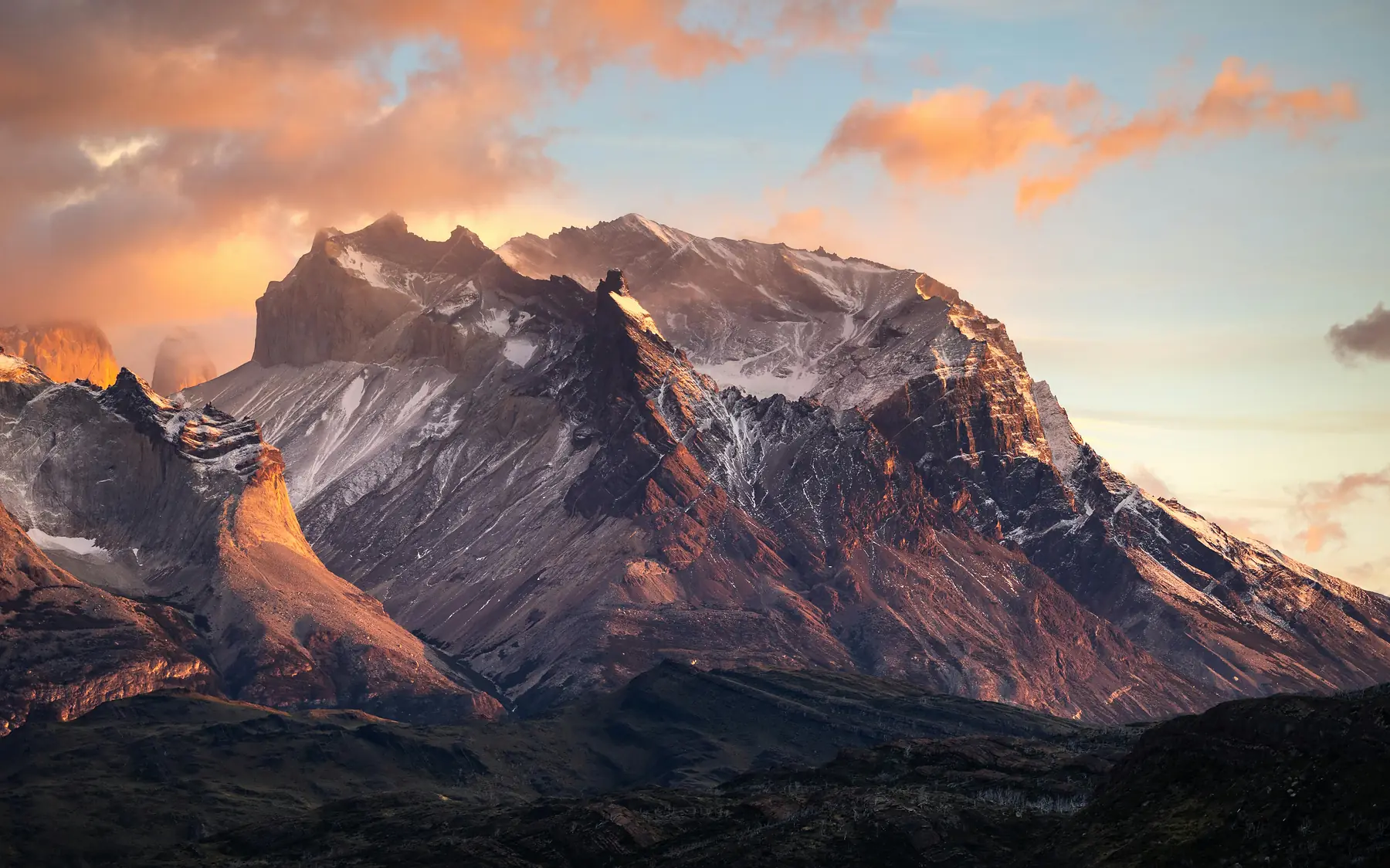
Patagonia Photography Guide: Best Spots, Gear & Pro Tips (2026)
Patagonia is the ultimate proving ground for landscape photography, offering a combination of granite spires, calving glaciers, and atmospheric light that is found nowhere else on Earth. To successfully photograph this region, you must balance creative vision with technical survival - specifically managing the high winds and extreme dynamic range that define the southern Andes. This guide covers the essential gear, timing, and locations you need to move beyond snapshots and capture professional-grade images of the edge of the world.
For most photographers, the single best window for a trip is the month of April. During this time, the wind speeds drop significantly, the Lenga forests turn a vibrant red, and the sun rises late enough to allow for a reasonable sleep schedule between golden hour sessions.
The Photographer’s Calendar: When to Visit Patagonia
Choosing when to visit Patagonia depends entirely on the visual “look” you want to achieve. Unlike standard travel planning, photography planning here is dictated by sun angles, the state of the flora, and the stability of the atmosphere for long exposures.
Patagonia Photography Seasonal Cheat Sheet
- April (Autumn): Peak fall colors, low wind, 11 hours of daylight. Best for reflections.
- November (Spring): Wildflowers, high snow-capped contrast, 15 hours of daylight. Best for peak-and-petal compositions.
- January (Summer): 17-hour days, harsh midday light, high winds. Best for “extended” 10:00 PM golden hours.
- July (Winter): Low sun angles all day, heavy snow, 8 hours of daylight. Best for puma tracking and minimalist landscapes.
In the height of summer (December and January), the sun barely dips below the horizon, creating a “golden hour” that can last for nearly 120 minutes. However, the Patagonian weather is at its most volatile during these months, with sustained winds often exceeding 80 km/h. If you are chasing the mirror-like reflections of the Cuernos del Paine in the mountain lakes, the calmer air of April is a far more reliable bet. For a deeper dive into seasonal logistics and crowds, see our guide on the best time to visit Patagonia.
Essential Camera Gear for the Edge of the World
The scale of Patagonia is deceptive. You will often find yourself needing a wide-angle lens to capture the sheer breadth of a glacier, only to immediately require a long telephoto to compress the distant granite spires against the sky. Most professionals carry the “Holy Trinity” of zooms: a 16-35mm, a 24-70mm, and a 100-400mm.
Do not rely on a lightweight “travel” tripod. In Patagonia, a tripod is not just for long exposures - it is an anchor. Use a high-quality carbon fiber model with a minimum load capacity of 10kg and ensure it has interchangeable spiked feet to grip the loose scree and weathered rock found at most viewpoints.
Beyond the glass, your most important tools are filters. A Circular Polarizer is non-negotiable for cutting the glare on glacial lagoons and deepening the “electric blue” of the ice. Neutral Density (ND) filters, particularly 6-stop and 10-stop versions, are essential for blurring the fast-moving lenticular clouds that often form over the peaks, turning a chaotic sky into a painterly streak of motion. For advice on carrying this gear alongside your trekking equipment, refer to our Patagonia packing list.
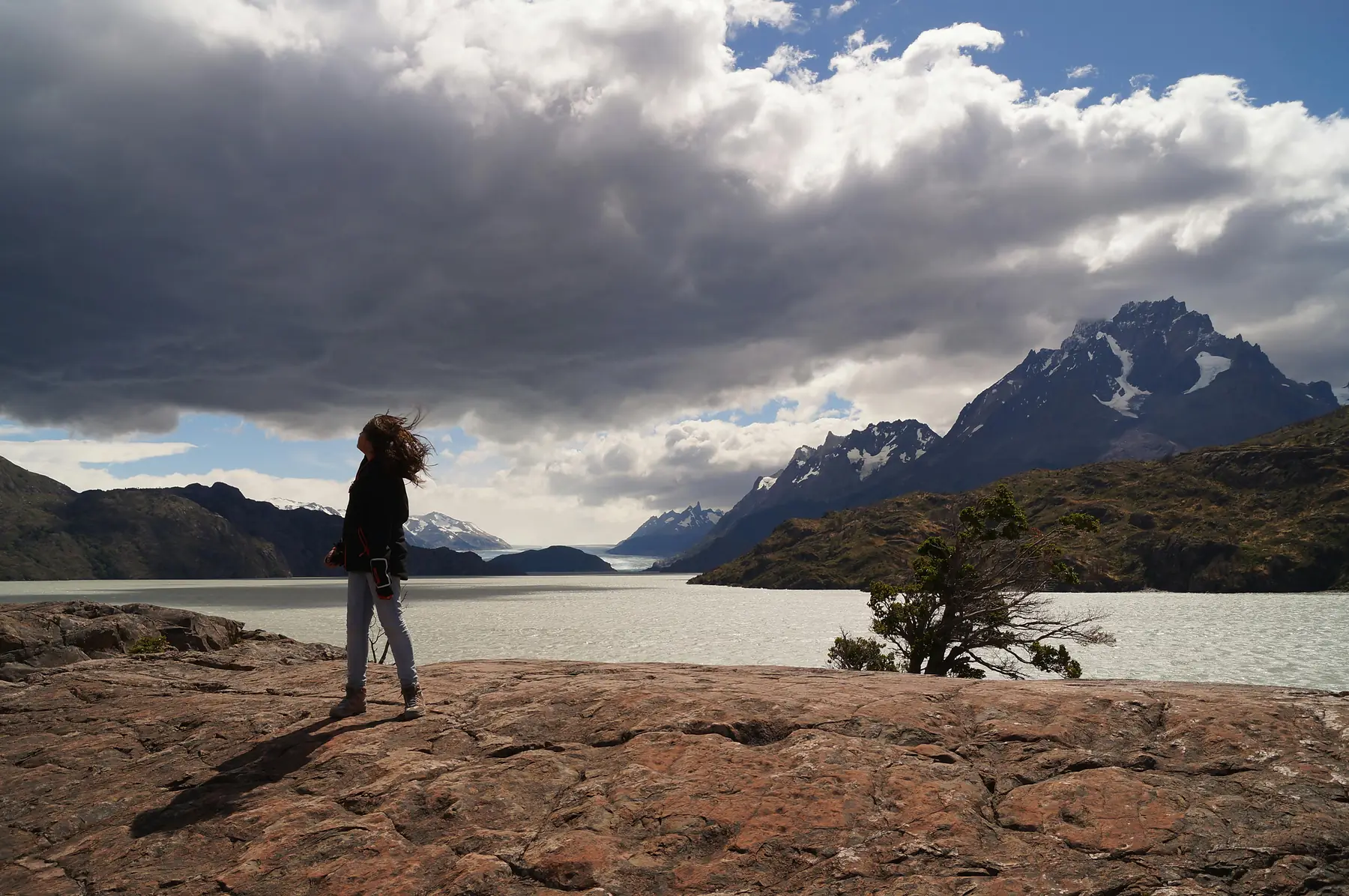
Top Photography Spots: Torres del Paine (Chile)
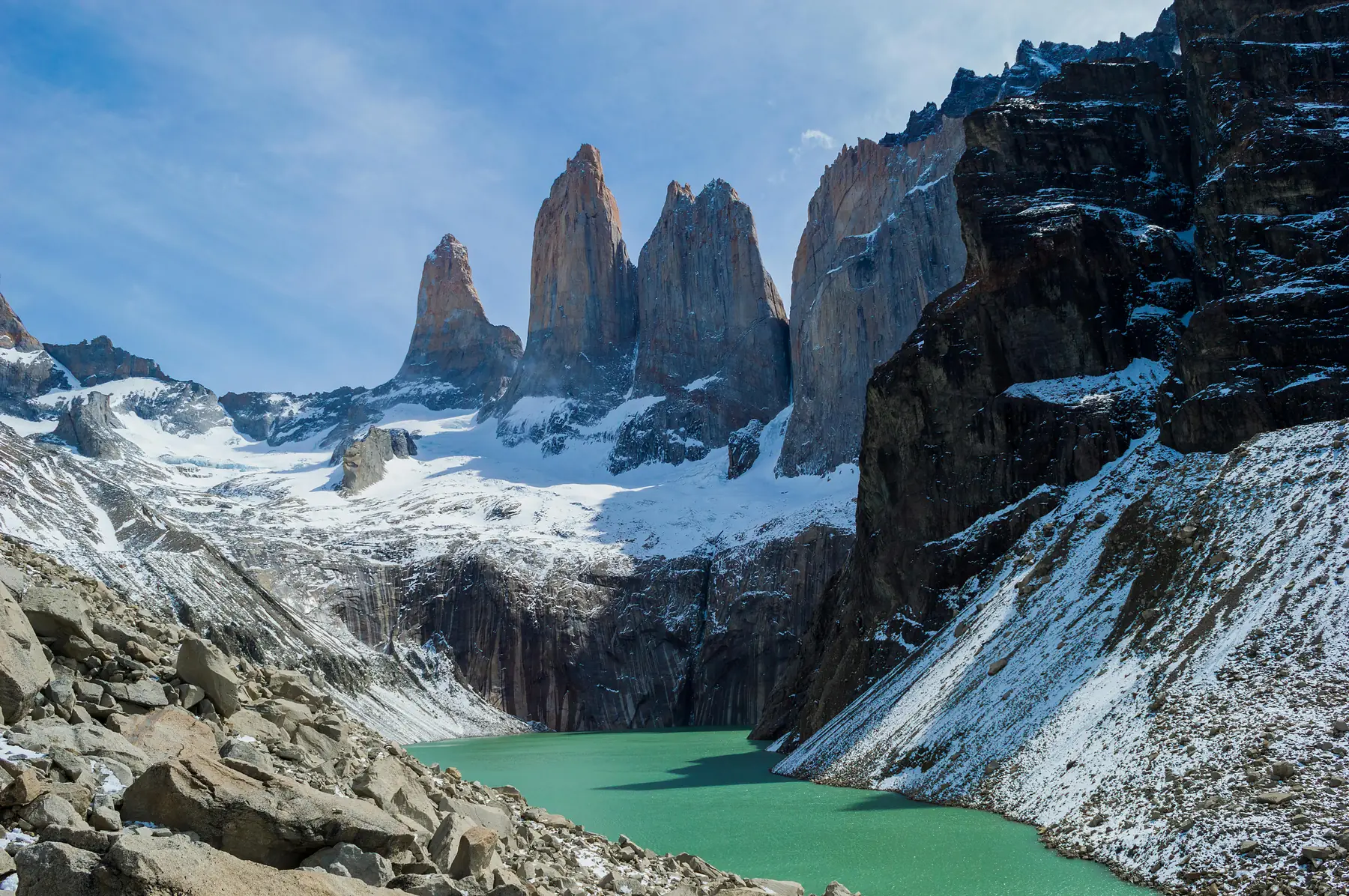
Torres del Paine is defined by its accessibility to world-class vistas. Many of the park’s most famous shots require less than an hour of hiking, provided you are positioned correctly for the light.
- Laguna Amarga: This is the primary sunrise location for the “Three Towers.” The lake’s high pH levels often create a white crust on the shoreline that provides a perfect foreground frame. For the 2026 season, park gates typically open at 8:00 AM, which is after sunrise for much of the peak season. To capture the first light here, it is highly recommended to stay at accommodations inside the park boundaries.
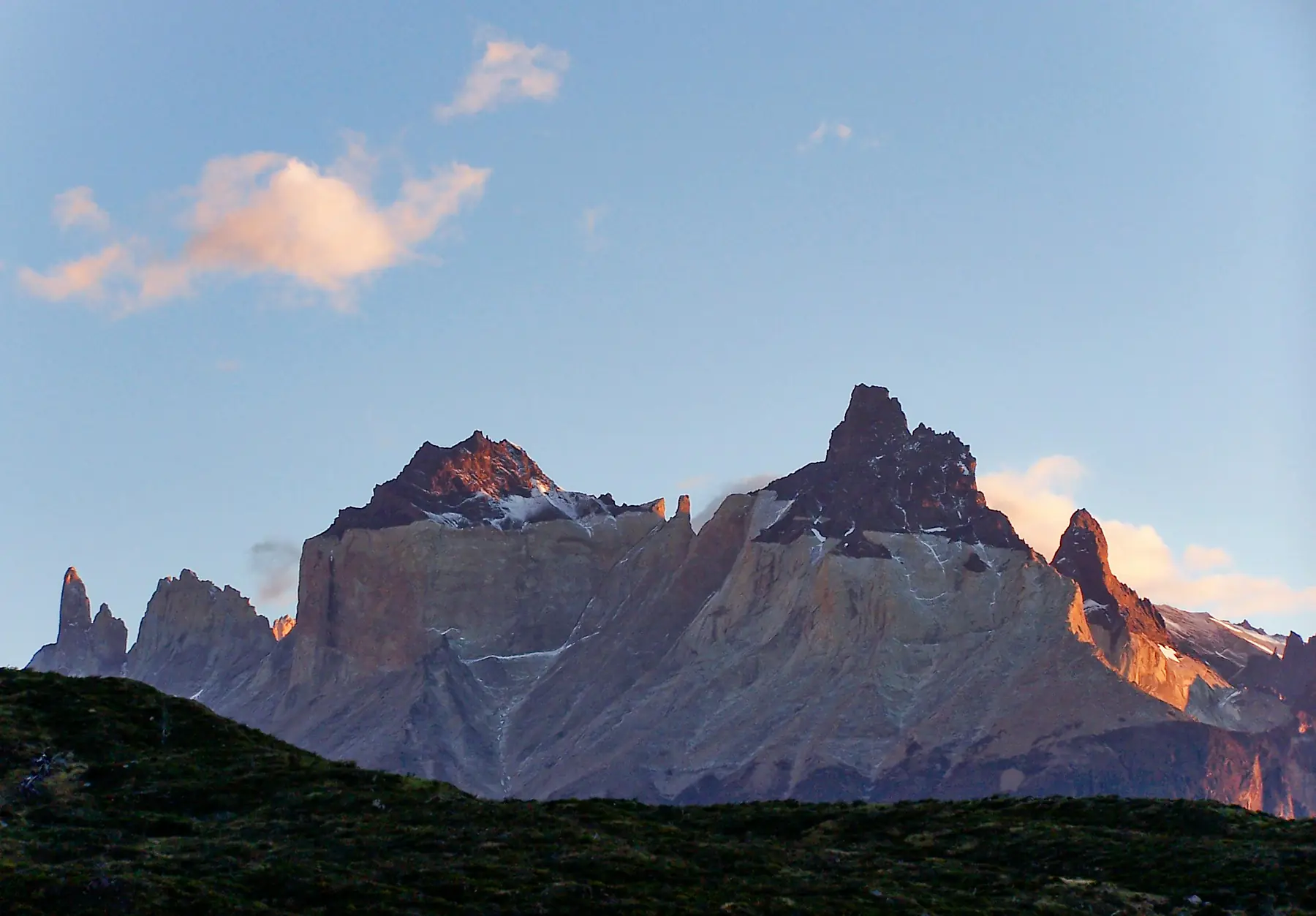
- Lago Pehoé: The shoreline near Hosteria Pehoé offers the classic view of the Cuernos (Horns). The turquoise water provides a vivid color contrast against the dark granite and lighter sedimentary “caps” of the mountains.
- Salto Grande: A powerful waterfall that connects Lago Nordenskjöld and Lago Pehoé. Use a wide-angle lens and a slow shutter speed (0.5 to 2 seconds) to capture the water’s power with the Paine Grande massif looming in the background.
To help you plan your movements between these iconic locations, we have compiled a deeper resource on the park’s layout.
Top Photography Spots: Los Glaciares (Argentina)
While Chile offers “the horns,” Argentina offers “the spires.” The photography here is more demanding, often requiring significant hiking to reach the best vantage points.
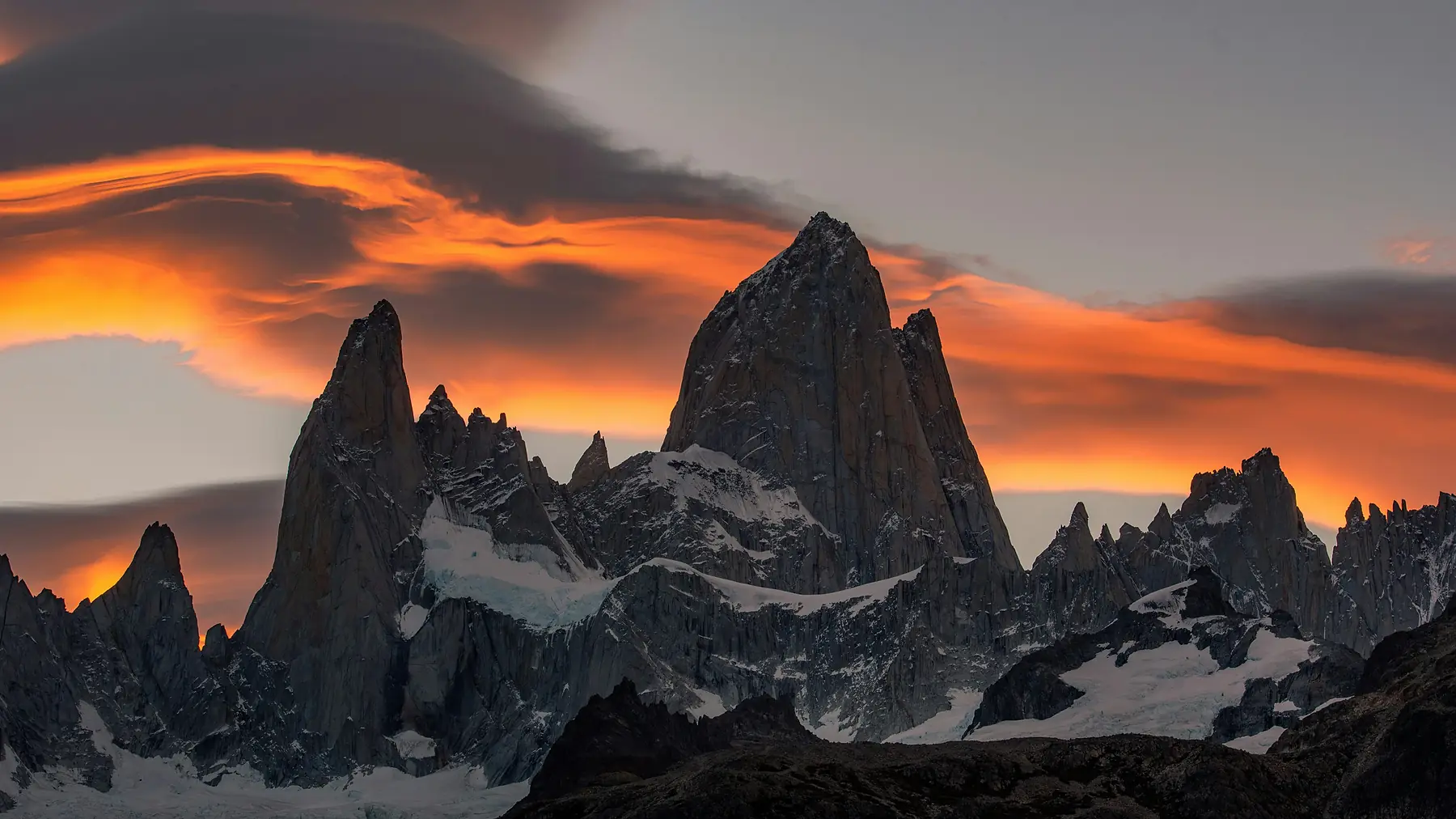
- Laguna de los Tres: The iconic Fitz Roy view. To catch the “alpenglow” where the granite turns deep orange, you must be at the shore before the first light hits. This typically requires a 3.5 to 4 hour hike from El Chaltén in the dark for a fit hiker.
- Perito Moreno Glacier: Unlike other glaciers, you view this from a series of steel boardwalks. Focus on long-lens photography here - use a 400mm lens to isolate the deep blue “shards” of ice and the textures of the terminal face, which rises over 70 meters above the water.
- The Road to El Chaltén (Route 23): The long, straight approach road with Fitz Roy in the distance is a classic shot.
When shooting on Route 23, do not stop your vehicle on the road or the shoulder in blind curves. This is a high-speed transit route for buses and supply trucks. Use the designated pull-offs and walk back to your composition. For more on regional transit safety, see our safety guide.
If you are basing yourself in the trekking capital to chase these shots, you will want to choose your accommodation based on trail access.
Mastering the Patagonian Elements: Wind, Light, and Dust
Technique in Patagonia is about mitigation. The wind is your primary enemy - it creates camera shake, even on heavy tripods, and carries fine glacial dust that can ruin a sensor in seconds.
To protect your gear in the field, follow the “Jacket-Sleeve Protocol” for lens changes:
Seek Shelter
The Jacket Shield
Verify and Seal
When shooting in high winds, avoid hanging a heavy bag from your tripod’s center column if it can swing. A swinging bag acts like a pendulum, actually increasing vibration. Instead, use your body to shield the tripod or use a “low-profile” setup by spreading the tripod legs to their widest angle, keeping the camera as close to the ground as possible.
Wildlife Photography: Pumas and Condors
Patagonia’s wildlife requires a different technical mindset. While landscapes are about patience and filters, wildlife is about reach and shutter speed.
For pumas, a lens with at least 500mm of effective focal length is mandatory. Official park protocols for the 2026 season require maintaining a minimum distance of 50 meters from active pumas and 100 meters from females with cubs or pumas engaged in hunting behavior. You will often be shooting in the low light of dawn or dusk when pumas are most active, so a lens with a wide aperture (f/4 or f/5.6) or a camera with excellent high-ISO performance is a major advantage.
For condors, head to Mirador Condor in Torres del Paine or the cliffs near Estancia Alice in El Calafate. Use “Shutter Priority” mode and keep your speed high to capture the detail in their nearly 3.2-meter wingspan. For more on the ethics and logistics of these encounters, visit our pumas in Patagonia page.
Night Photography and the Patagonian Sky
Patagonia contains some of the darkest skies on the planet, particularly within the national park boundaries where light pollution is virtually non-existent. The air is exceptionally clear, but the window for the “perfect” night shot is narrow.
The Galactic Core of the Milky Way is visible in the Southern Hemisphere from approximately March to October. In the peak summer months (December-January), the sky never gets truly dark enough for high-end astrophotography due to the high latitude.
Planning for the 2026/27 Night Sky
To get the best results, you must time your trip with the New Moon. For the 2026/27 season, the most favorable windows for dark sky photography are October 10, November 9, and December 8 in 2026, and January 7, February 6, March 8, and April 6 in 2027. Staying inside the park at Refugios or campsites is essential, as park gates are closed at night, preventing you from driving in for a shoot.
Digital Workflow and Field Maintenance
If you are trekking the W or O Circuits, your biggest challenge isn’t storage - it’s power. Cold temperatures can reduce lithium-ion battery capacity by 30-50% in a single night.
Keep your spare batteries in an internal pocket close to your body heat. At night, sleep with your batteries in your sleeping bag. Charging opportunities are limited in the backcountry; while major hubs like Refugio Paine Grande and Refugio Grey provide USB and outlet charging in common areas, availability is typically restricted to generator hours (usually 7:00 AM to 11:00 PM) and can be highly competitive. For more on power standards, see our guide to electricity and adapters.
Finally, carry a “Patagonian Kit” in your shoulder bag: a Rocket Blower, a sensor loupe, and at least five high-quality microfiber cloths. You will spend as much time wiping glacial spray and dust off your front element as you will composing shots.
FAQ
What is the single best lens for Patagonia photography? A 24-70mm f/2.8 is the most versatile lens for Patagonia photography, but a 100-400mm telephoto is essential for compressing the massive scale of the granite peaks.
Can I fly a drone for photography in Patagonia? Drones are strictly prohibited in all Chilean and Argentine National Parks, including Torres del Paine and Los Glaciares, to protect wildlife and the wilderness experience. For more on local regulations, visit our responsible travel guide.
Is a tripod necessary for Patagonia photography? Yes, a sturdy tripod is mandatory for Patagonia photography to handle the high winds and to allow for long exposures of waterfalls and moving clouds.
When is the best time for fall colors in Patagonia photography? Mid-to-late April is the peak window for fall colors in Patagonia photography, when the Lenga forests turn a vibrant fiery red.
How do I protect my camera from the wind in Patagonia? Protect your camera from the wind in Patagonia by using a low tripod profile, shielding the setup with your body or a boulder, and avoiding lens changes in the open to prevent sensor dust.
Where is the best place to photograph pumas in Patagonia? The eastern side of Torres del Paine National Park in Chile is the premier location for puma photography in Patagonia due to the high density of guanacos.