
Condors in Patagonia: Best Places to See the Andean Giant (2026)
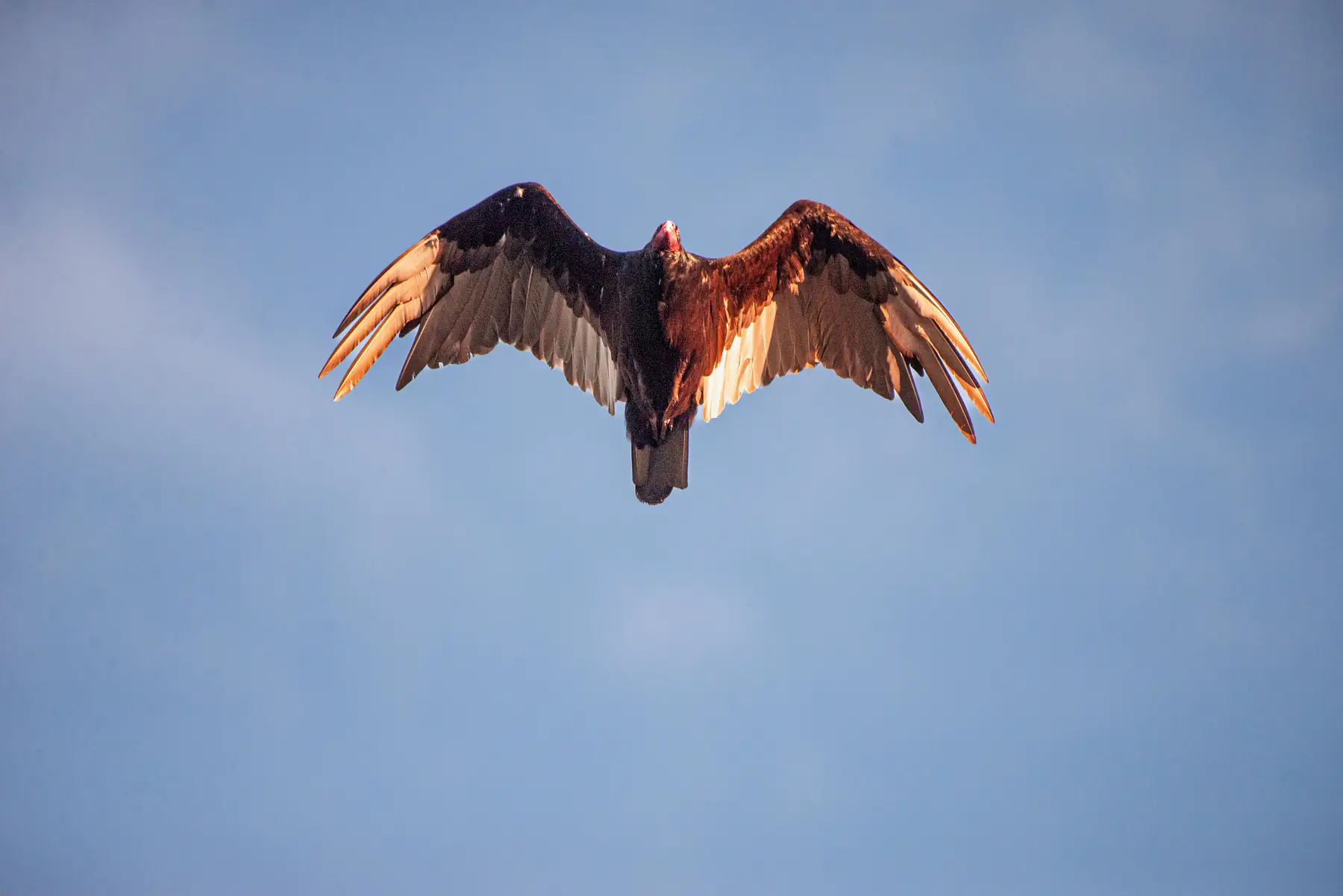
Yes, you can reliably see Andean condors throughout Patagonia, with the most consistent sightings occurring at dedicated roosting sites like Estancia Olga Teresa near Punta Arenas or along high-elevation ridges in Torres del Paine and El Chaltén. As the largest flying land bird in the world by combined weight and wingspan, the Andean condor is the undisputed “King of the Skies” and a cornerstone of the Patagonia wildlife experience.
For many travelers, the condor is a member of Patagonia’s “Big Five,” a list of iconic species that includes pumas, guanacos, huemul deer, and rheas. Unlike the elusive puma, the condor is relatively easy to spot if you understand the specific geography of the Andes and the timing of the region’s powerful thermal winds. This guide provides the exact coordinates, trail names, and behavioral insights you need to witness these prehistoric giants in flight.
The Majesty of the Andean Condor: Quick Stats
Before heading into the field, it helps to understand the sheer scale of Vultur gryphus. These birds are not just large; they are heavy, which dictates almost everything about how they move and where they live.
Andean Condor at a Glance
- Wingspan: Up to 3.2 meters (10.5 feet)
- Weight: Between 11 and 15 kg (24 to 33 lbs)
- Longevity: 50 to 70 years in the wild
- Classification: New World Vulture
- Reproduction: One egg every two years; pairs mate for life
- Sexual Dimorphism: Males have a fleshy “caruncle” (comb) on their head and yellow-brown eyes; females have no comb and red eyes.
Despite their regal appearance in flight, condors are nature’s cleanup crew. As scavengers, they lack the powerful, piercing talons of eagles or hawks. Instead, their feet are more like those of a chicken, designed for walking on the ground near a carcass rather than snatching live prey.
Where to See Condors in Patagonia: Top Sighting Locations
Finding condors requires looking for two things: vertical rock faces for nesting and wide-open valleys where rising heat creates the lift they need to fly. While they can appear almost anywhere in the southern Andes, certain locations offer significantly higher success rates.
To plan a trip focused on these sightings, you should coordinate your itinerary around the major wildlife hubs of the region.
Beyond these primary hubs, several other locations provide exceptional opportunities:
- Punta Arenas (Chile): Home to the most reliable roosting site in Southern Patagonia at Estancia Olga Teresa.
- Patagonia National Park (Chile): The Chacabuco Valley is a primary site for rewilding efforts, where you can see condors soaring over recovering grasslands.
- Bariloche (Argentina): The cliffs surrounding Lake Nahuel Huapi and the nearby “Condoreras” offer frequent sightings for those exploring the northern Lake District.
If you are planning a broader itinerary to see multiple species, you can find more details on how to combine these locations in our guide to the best wildlife spots in Patagonia.
Condor Sightings in Torres del Paine National Park
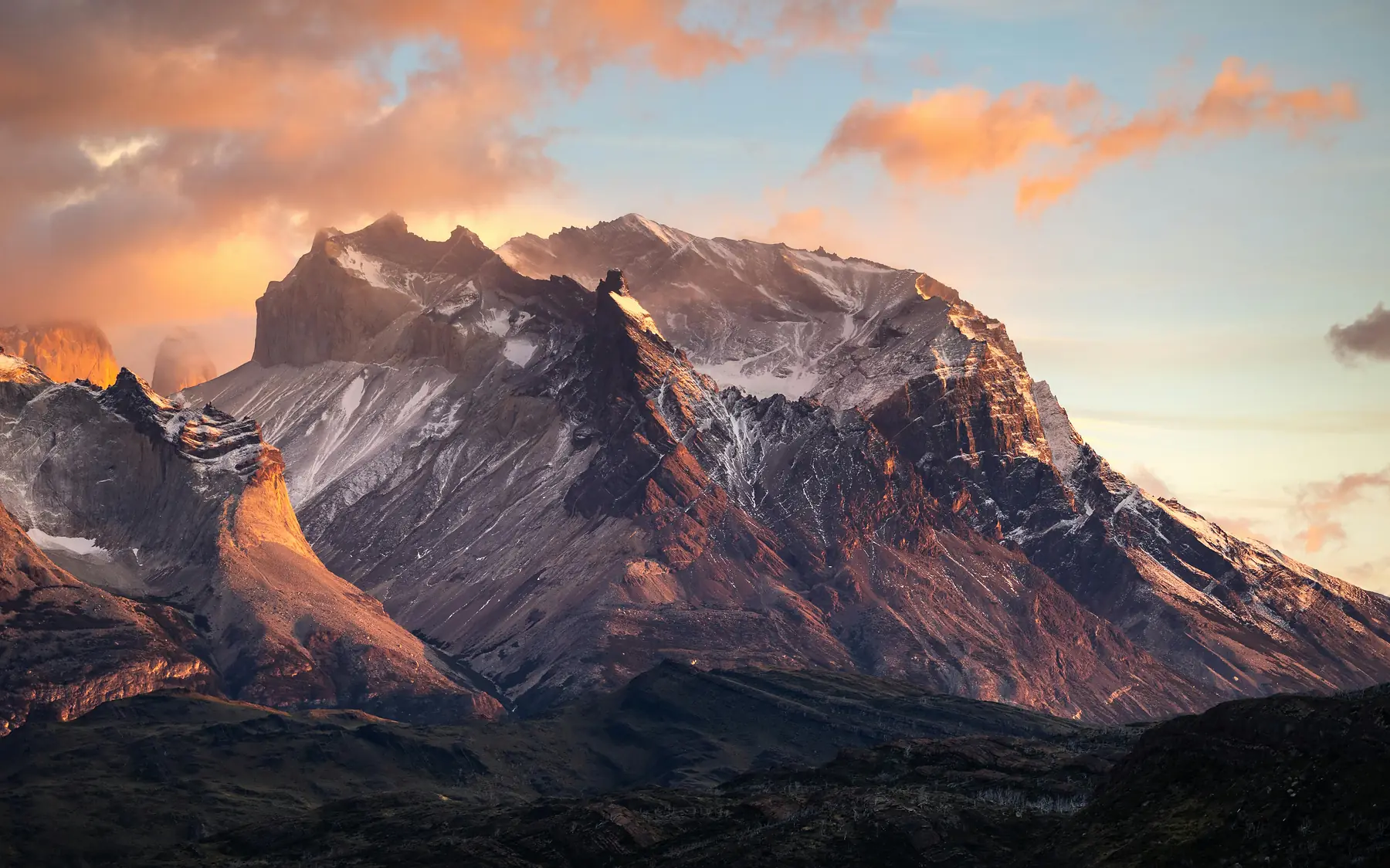
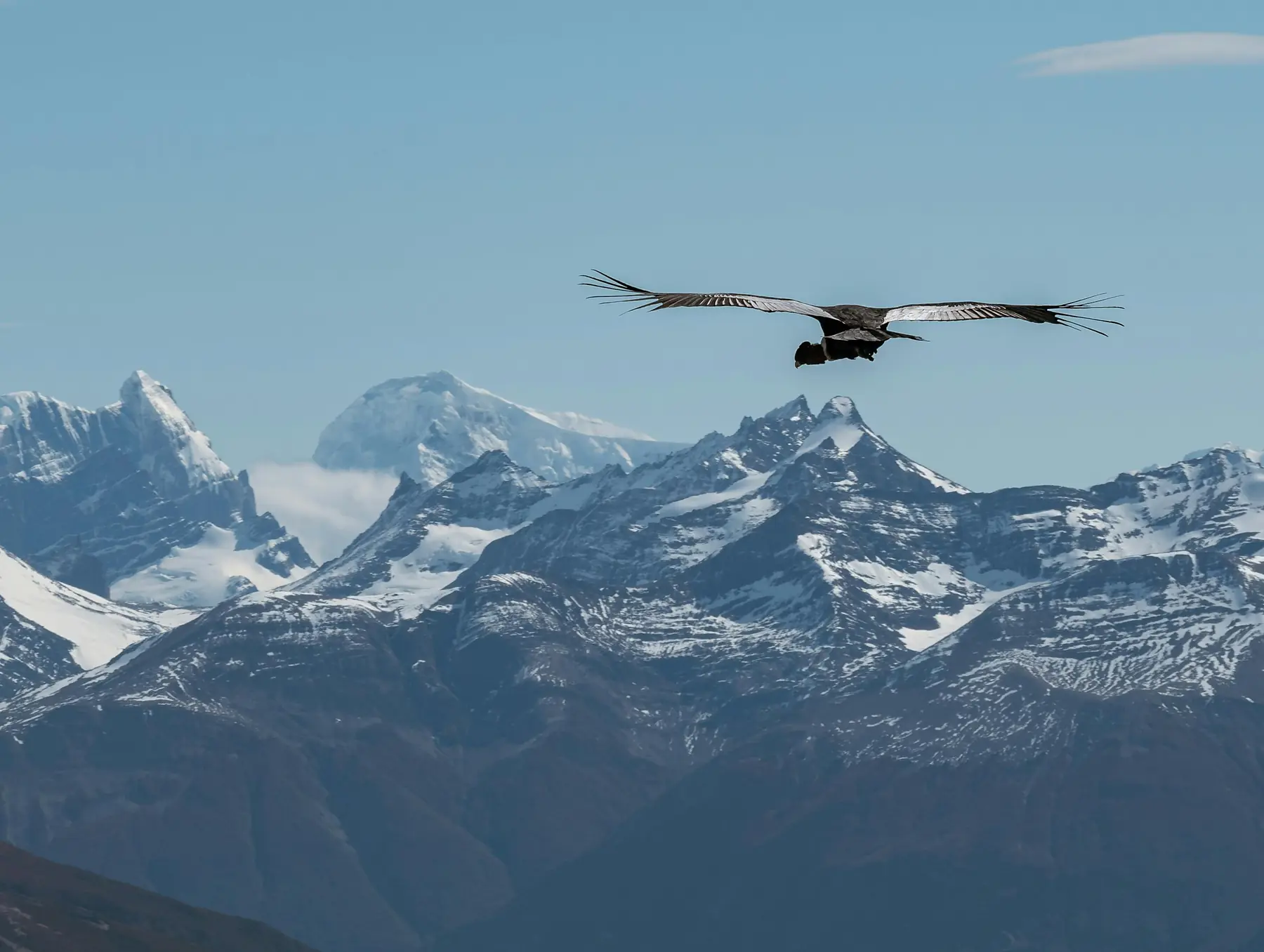
Torres del Paine is arguably the most dramatic place to see a condor. The park’s massive granite towers and deep valleys create a complex system of thermals that allow condors to glide for hours with minimal effort.
The premier location for a dedicated sighting is the Mirador del Condor trail. The trailhead is located directly across from the Pehoé campsite and Hosteria Pehoé. This is a relatively short but steep hike of about 1.5 to 2 hours round trip, gaining roughly 250 meters in elevation. At the summit, you reach a natural balcony overlooking Lake Pehoé and the Cuernos del Paine. Because the viewpoint sits on a ridge, condors often catch the wind currents and fly directly past the cliffs at eye level, providing a perspective that few other trails can match.
For those not looking for a specific hike, the road between Laguna Amarga and Porteria Sarmiento is a hotspot for activity. This area is home to large populations of guanacos. When a puma makes a kill in these open plains, you will often see dozens of condors circling above or waiting on nearby fences for their turn to feed.
While you will likely see condors while trekking the W Trek or the O Circuit, they are most frequently spotted near the Grey Glacier lookouts and the high passes, such as Paso John Gardner, where the wind compression against the mountains creates ideal soaring conditions.
The Estancia Olga Teresa Roost: A Guaranteed Encounter
If your goal is to see a high volume of birds in a single location, Estancia Olga Teresa is the most reliable site in Patagonia. Located in the Rio Verde area, approximately 78 kilometers north of Punta Arenas, this private estancia contains a massive vertical rock face known as Cerro Palomares.
This cliff serves as a communal roosting site for a local population that often exceeds 100 individuals. This is not a trekking destination but a guided wildlife experience where you can observe the birds from the base of the cliff using spotting scopes or long lenses.
The best time to visit Estancia Olga Teresa is in the late afternoon, between 16:00 and 19:00. This is when the condors return from their daily foraging trips to settle on the cliff for the night.
As of the 2026/27 season, the entry fee for a guided visit is approximately $50-70 USD per person. Because it is a private site, you must book in advance or visit as part of a tour from Punta Arenas.
Understanding Condor Behavior: When and How They Fly
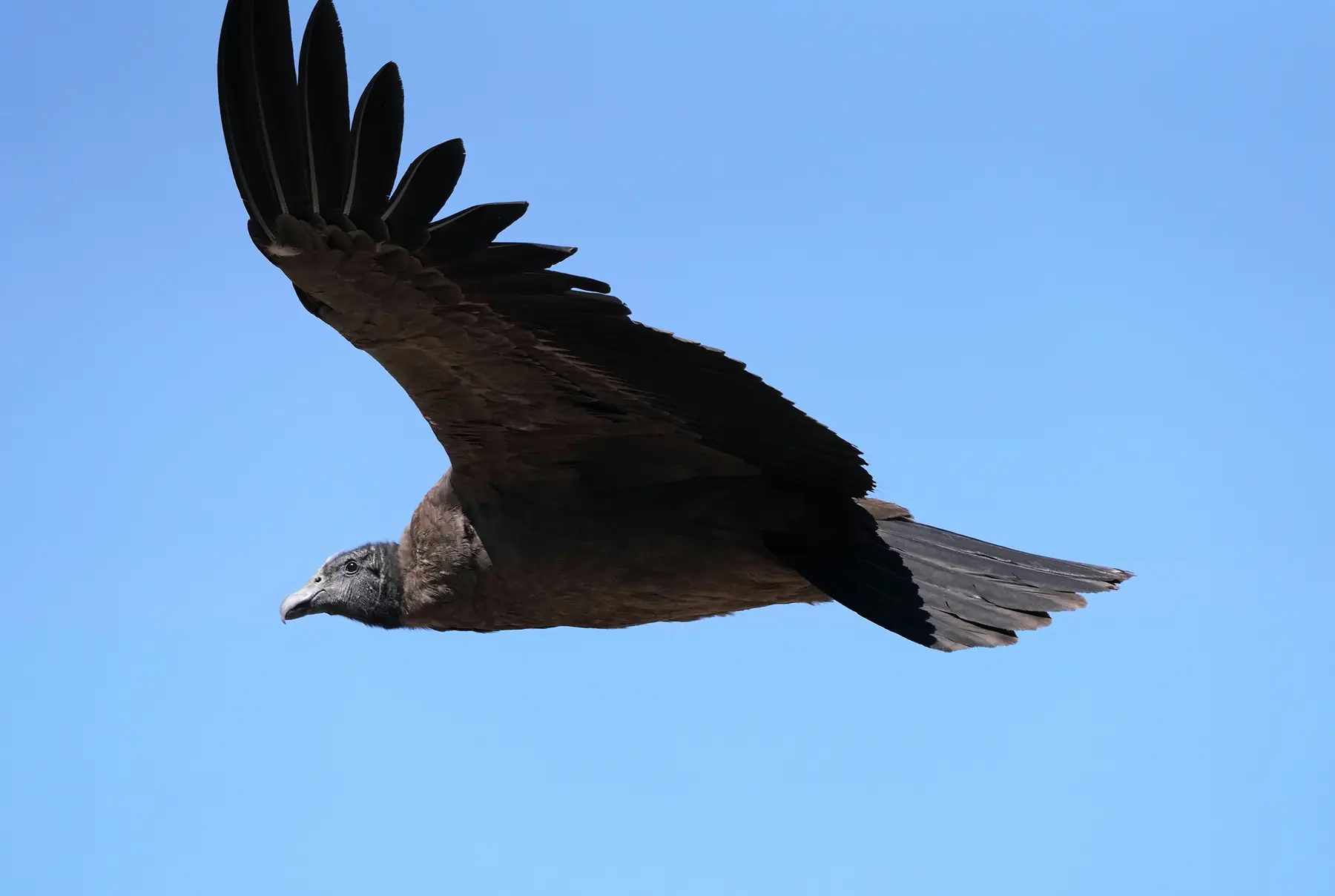
To see a condor, you have to think like a bird that weighs 15 kilograms. They are too heavy for continuous flapping flight; instead, they rely almost entirely on “passive soaring.”
They wait for thermals (columns of rising warm air) or ridge lift (wind hitting a mountain and going up). This means you will rarely see condors in the air at sunrise. They usually wait until the sun has warmed the valley floors enough to create lift, typically starting around 9:00 or 10:00 AM. If it is raining or heavily overcast, condors will often remain perched for the entire day, as the air lacks the energy to support their weight.
Their social structure is equally fascinating. Condors have a strict hierarchy at a carcass. The dominant adult males with the largest combs eat first, followed by females, and finally the juveniles, who are easily identified by their duller brown plumage compared to the crisp black and white of the adults.
Because they are scavengers, their movements are often tied to pumas. If you see a group of condors sitting patiently on a hillside or a fence line, they are likely waiting for a puma to finish its meal. You can learn more about this relationship in our guide to Patagonia pumas.
Photography Tips for Andean Condors
Capturing a clear shot of a condor in flight is a highlight for any wildlife photographer, but the conditions in Patagonia present unique challenges.
- Mobility: High — easy to track birds diving or turning (Handheld Shooting)
- Mobility: Limited — slow to reposition for fast-moving subjects (Tripod Use)
- Stability: Difficult in high winds; requires high shutter speeds (Handheld Shooting)
- Stability: Superior in calm conditions but vulnerable to wind vibration (Tripod Use)
- Weight: Tiring for long periods with 600mm lenses (Handheld Shooting)
- Weight: Offloads lens weight but adds tripod to your pack (Tripod Use)
- Wind Resistance: Lower profile; you can use your body to block gusts (Handheld Shooting)
- Wind Resistance: High profile; can topple or vibrate in 60 km/h winds (Tripod Use)
Handheld is generally superior for condors in Patagonia due to the speed of the birds and the restrictive nature of tripods in 60 km/h winds. Use a lens with high-quality Image Stabilization (IS).
For the best results, consider the following technical setup:
- Lens Choice: A focal length of at least 400mm is standard. If you are shooting at Estancia Olga Teresa, a 500mm or 600mm lens is ideal for capturing portraits of the birds on the cliff.
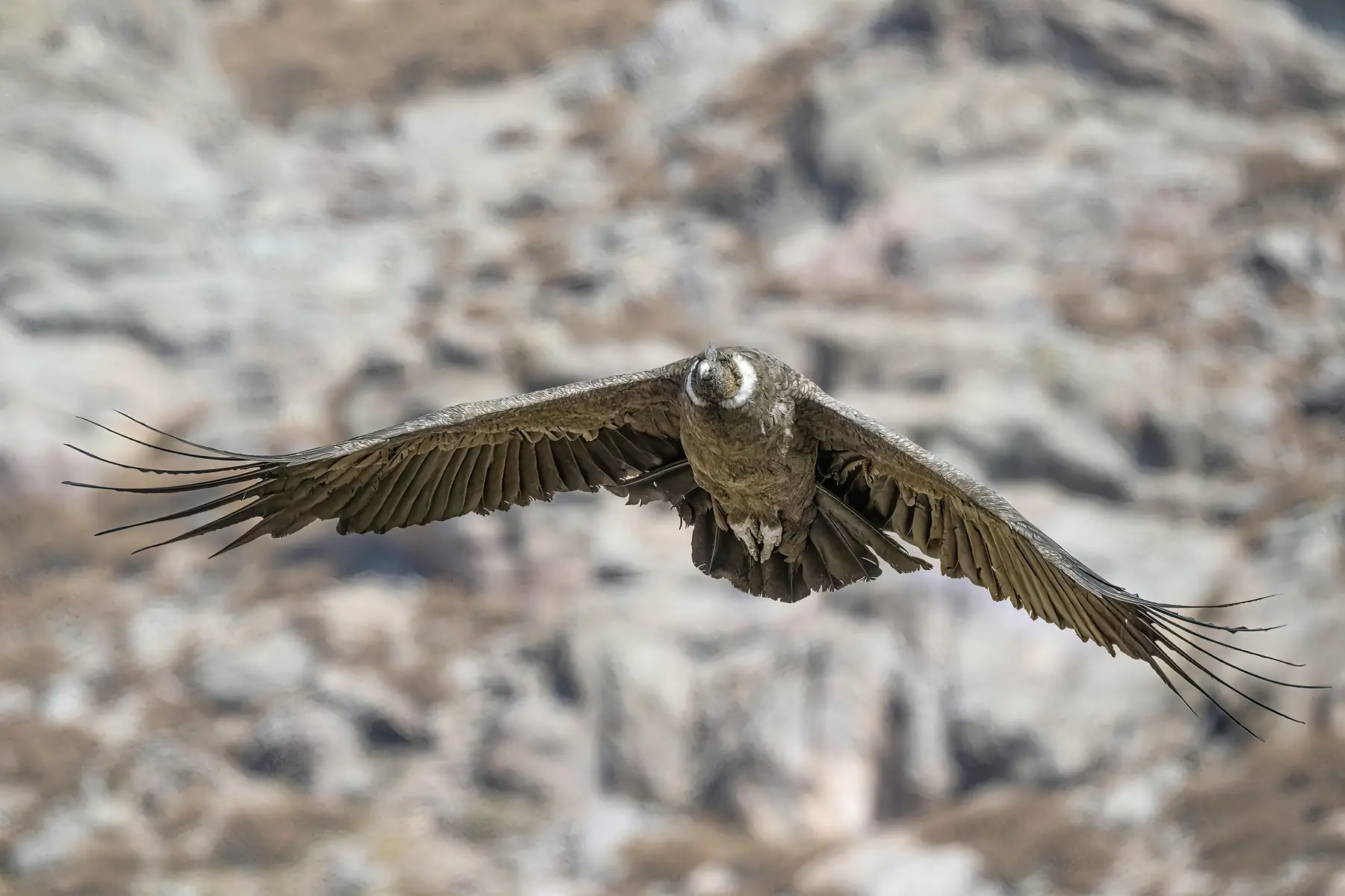
- Shutter Speed: Even when they appear to be gliding slowly, condors move fast relative to the sensor. Keep your shutter speed at 1/1600s or higher to ensure the eye is sharp.
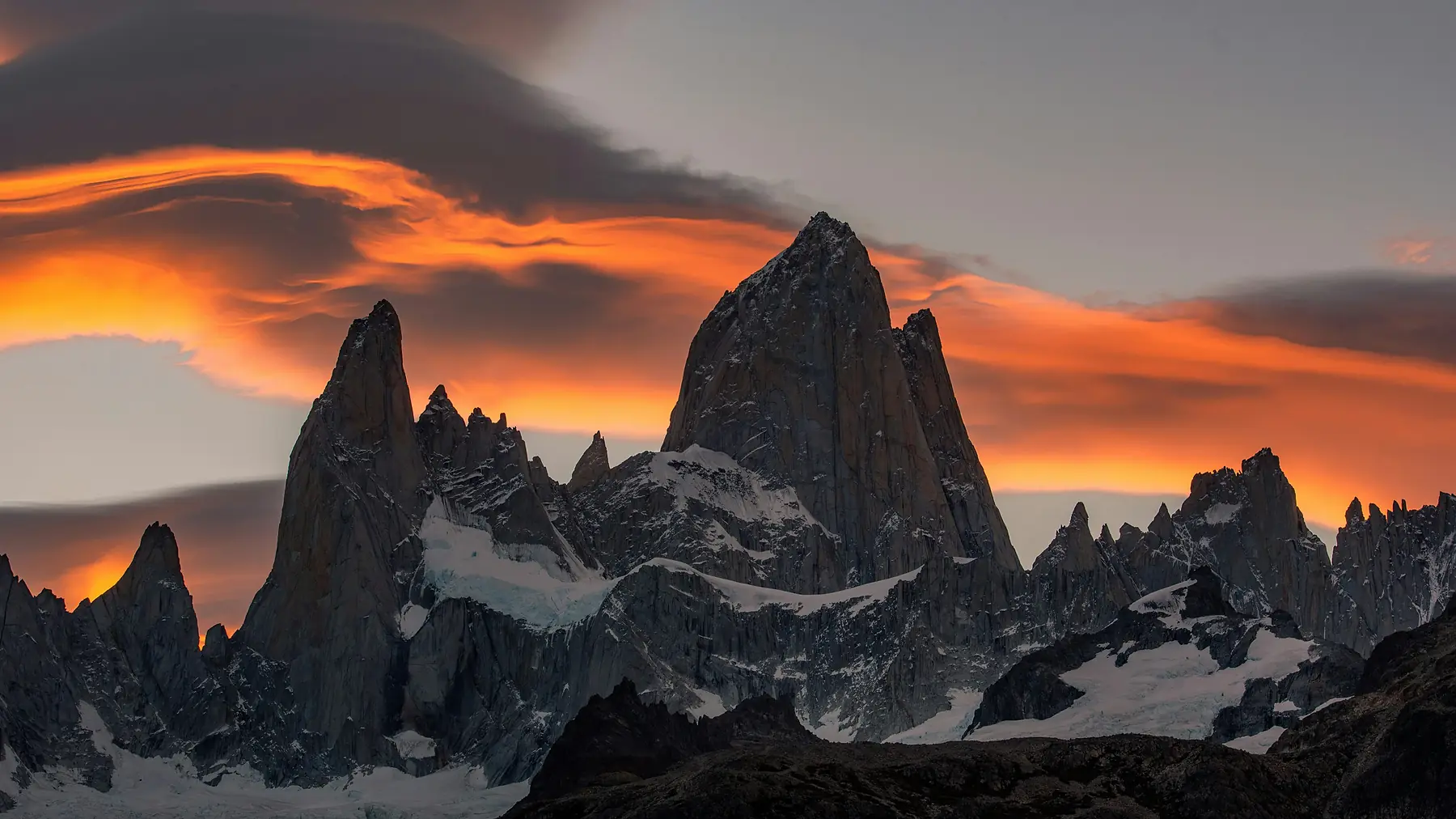
- Composition: Don’t just zoom in on the bird. Some of the most impactful images capture the condor as a small silhouette against the massive scale of the granite peaks of Torres del Paine or Fitz Roy.
Ethical Viewing Guidelines
As tourism in Patagonia grows, the pressure on nesting and roosting sites increases. Condors are sensitive to human presence, particularly during their slow reproductive cycle.
The use of drones is strictly prohibited in all Chilean (CONAF) and Argentine (APN) National Parks. Drones cause extreme stress to condors, who may perceive them as territorial intruders, potentially leading the birds to abandon nests or collide with the device.
- Maintain Distance: Stay at least 50 meters away from perched birds. If a condor starts stretching its wings or looking restless, you are too close.
- Stay on Trails: At viewpoints like Mirador del Condor, stay within the marked areas. Scrambling off-trail to get closer to the cliff edge can disturb nesting sites located just below the rim.
- Silence is Key: At roosting sites like Estancia Olga Teresa, keep noise to a minimum. Loud voices can prevent birds from landing, forcing them to spend valuable energy circling until the area is quiet.
Conservation & The Future: Rewilding Patagonia
The Andean condor is currently listed as Vulnerable by the IUCN, with populations in steep decline in the northern Andes. However, Patagonia remains a stronghold for the species.
The primary threats today are human-driven. Lead poisoning occurs when condors eat the remains of animals shot with lead ammunition. Additionally, some ranchers still use poisoned carcasses to target pumas and foxes, which inadvertently kills entire groups of condors.
Conservation groups like Rewilding Chile and the Manku Project (Proyecto Manku) are working to mitigate these threats. In the Chacabuco Valley of Patagonia National Park, these organizations have successfully released rehabilitated condors and are working with local communities to replace lead shot with non-toxic alternatives.
By visiting these parks and supporting ethical wildlife tours, you contribute to a local economy that values the condor as a living icon rather than a competitor to livestock. To see how these efforts fit into the broader ecosystem, explore our complete Patagonia wildlife guide.
FAQ
- QUESTION: Can you see condors in Patagonia year-round?
- ANSWER: Yes, Andean condors are non-migratory and remain in Patagonia throughout the year, though they are most active during the warmer months of October to March when thermals are strongest.
- QUESTION: What is the best place to see condors in Torres del Paine?
- ANSWER: The Mirador del Condor trail near Lake Pehoé is the premier location in Torres del Paine, offering high-elevation views where condors frequently soar at eye level.
- QUESTION: How big is the wingspan of an Andean condor in Patagonia?
- ANSWER: The Andean condor boasts a massive wingspan of up to 10.5 feet (3.2 meters), making it the largest flying land bird in the world by combined weight and wingspan.
- QUESTION: Are Andean condors in Patagonia dangerous to humans?
- ANSWER: No, Andean condors are scavengers that feed exclusively on carrion (dead animals) and lack the powerful talons of predatory raptors, posing no threat to people.
- QUESTION: Do I need a professional camera to photograph condors in Patagonia?
- ANSWER: While a smartphone can capture condors at roosting sites like Estancia Olga Teresa, a camera with at least a 300mm–400mm zoom lens is recommended to capture clear detail of them in flight.
- QUESTION: Where can I see condors near El Chaltén?
- ANSWER: The Mirador Los Cóndores is a short, 1-hour hike from the El Chaltén town center that leads to a natural balcony where condors are frequently spotted gliding over the valley.