
Penguins in Patagonia: 2026 Guide to Species & Best Colonies
Patagonia is home to approximately 1.5 million breeding pairs of penguins across five distinct species, with the largest concentrations found between September and March. From the massive Magellanic colonies in Northern Argentina to the rare King penguins of Tierra del Fuego, the region offers the most accessible penguin viewing in the Southern Hemisphere.
This guide provides the updated logistics, seasonal calendars, and location details required to plan a penguin encounter in 2026. Whether you are navigating the Strait of Magellan or exploring the Beagle Channel, understanding the specific behaviors and timing of these colonies is the difference between seeing a few stray birds and witnessing a thriving city of millions.
Patagonia Penguin Fast Facts
- Peak Season: December to January (chick rearing)
- Best Hubs: Punta Arenas (Chile), Ushuaia and Puerto Madryn (Argentina)
- Species Present: Magellanic, King, Gentoo, Humboldt, Southern Rockhopper
- Total Population: Estimated 1.3 - 1.5 million breeding pairs globally
- Viewing Window: September through early April
- Top Colony: Punta Tombo (up to 1,000,000 Magellanic penguins)
The 5 Species of Penguins in Patagonia
Identifying the five species of penguins in Patagonia depends on spotting key facial markings, beak colors, and neck bands. While the Magellanic penguin is the most ubiquitous, the region’s geography allows for rare overlaps where multiple species can be seen in a single day trip.
Magellanic Penguins
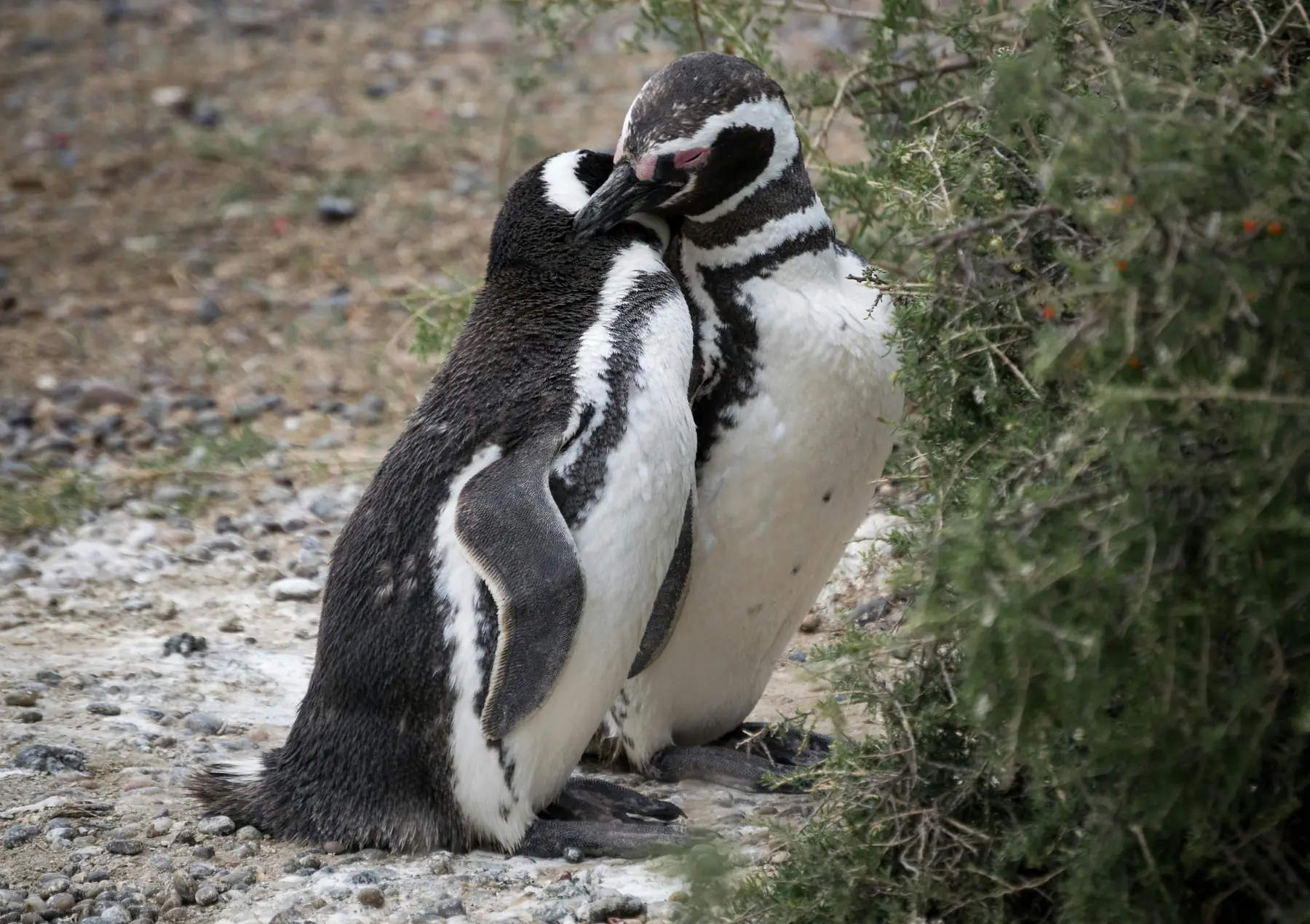
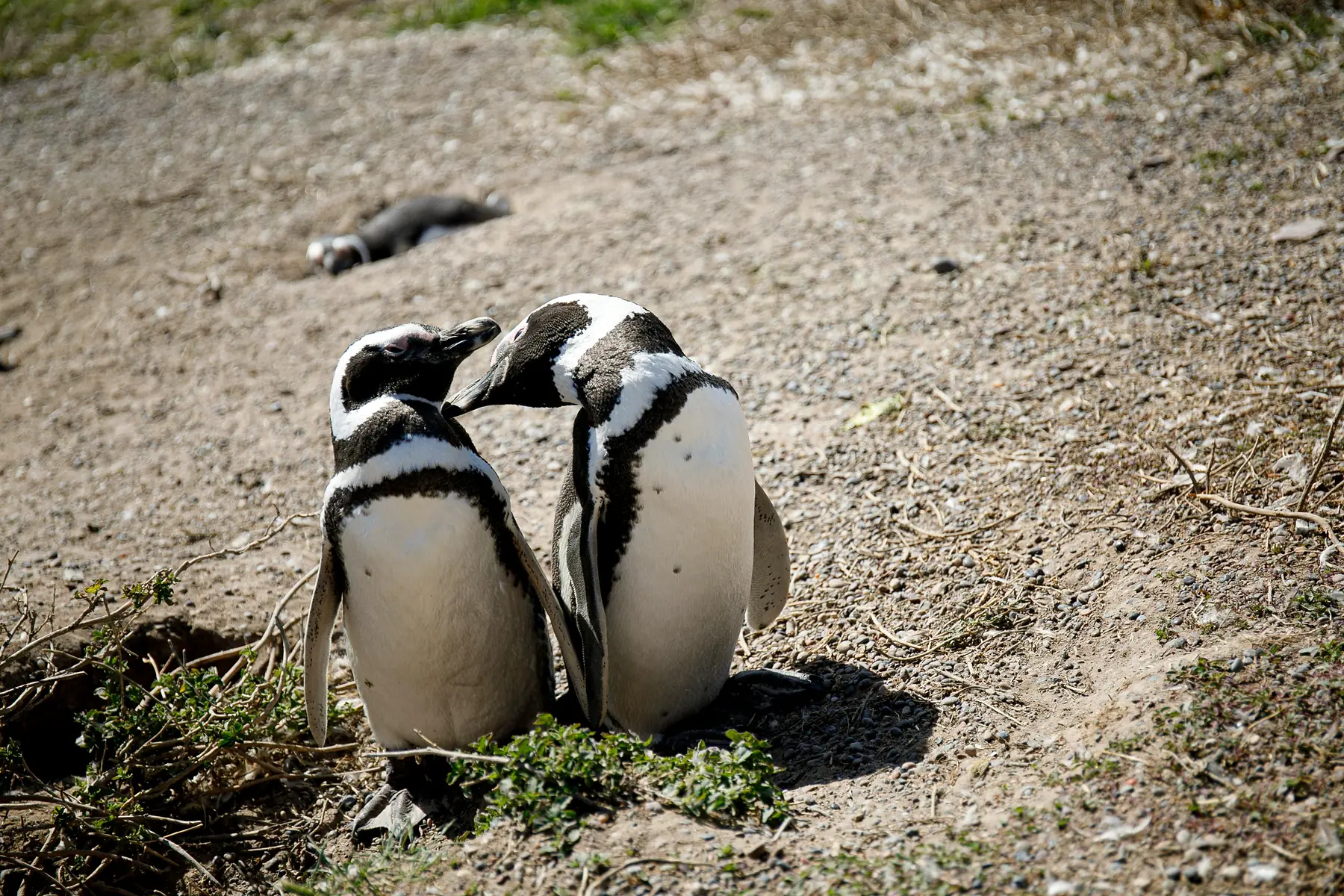
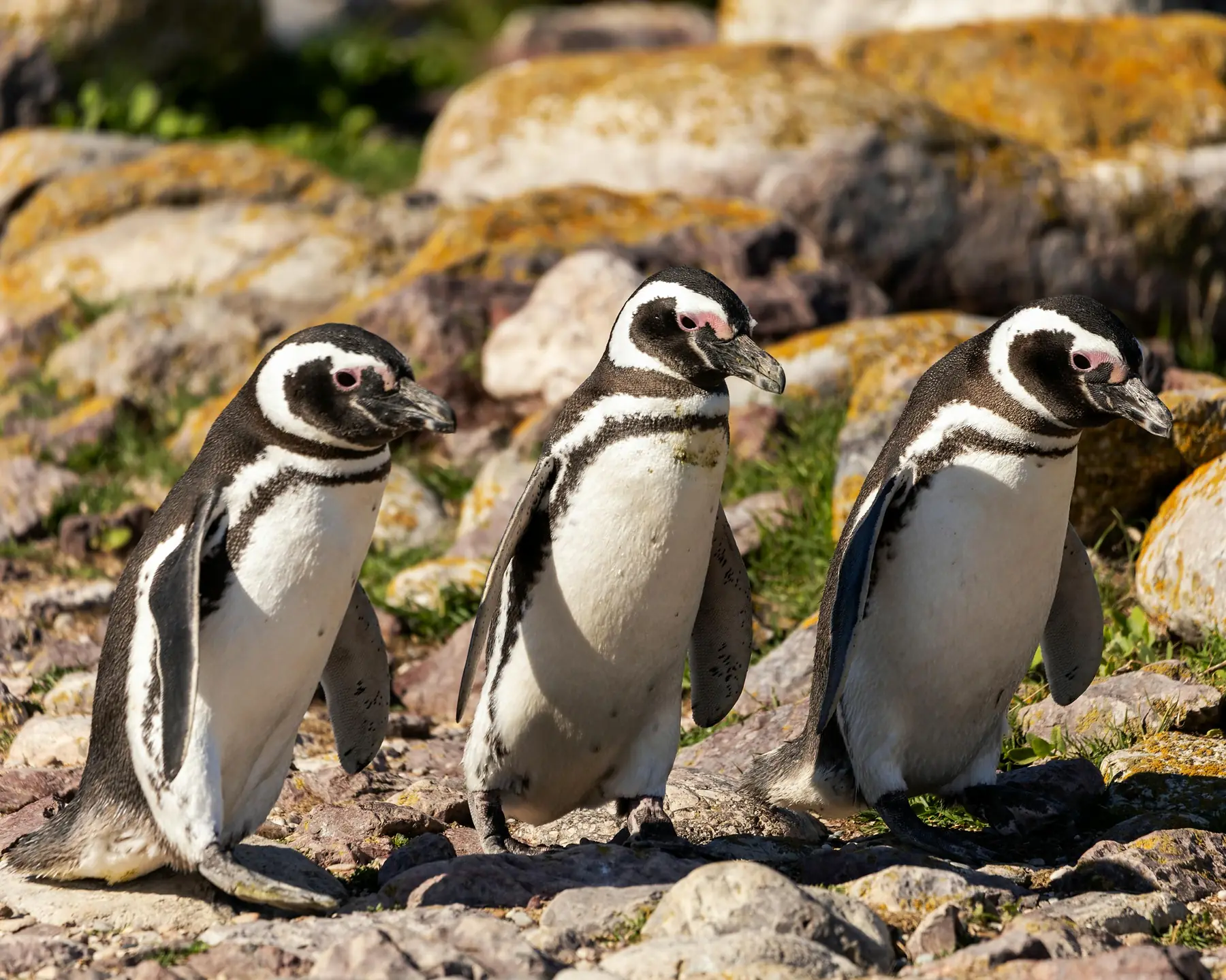
The Magellanic is the hallmark species of Patagonia. You can identify them by the two black bands between their head and breast: one thick “horseshoe” and a thinner band below it. They are burrow-nesters, meaning they spend much of their time on land excavating holes under bushes or in the soft earth. They are known for their loud, donkey-like braying, which can be heard across the colonies at dawn and dusk.
King Penguins
As the second-largest penguin species in the world, King penguins are the “showstoppers” of the region. They are easily distinguished by their bright orange-gold patches on the sides of their heads and upper breasts. Unlike other Patagonian species, they do not build nests; they carry their single egg on top of their feet, protected by a fold of skin. They are found in only one permanent colony on the South American continent, located at Bahia Inutil.
Gentoo Penguins
Gentoos are the fastest underwater swimmers of all penguins, reaching speeds of 36 km/h. They are recognized by a prominent white “bonnet” marking across the top of their heads and bright orange-red beaks. In Patagonia, they are almost exclusively found on Isla Martillo in the Beagle Channel, where a small but stable colony has established itself among the more numerous Magellanics.
Humboldt Penguins
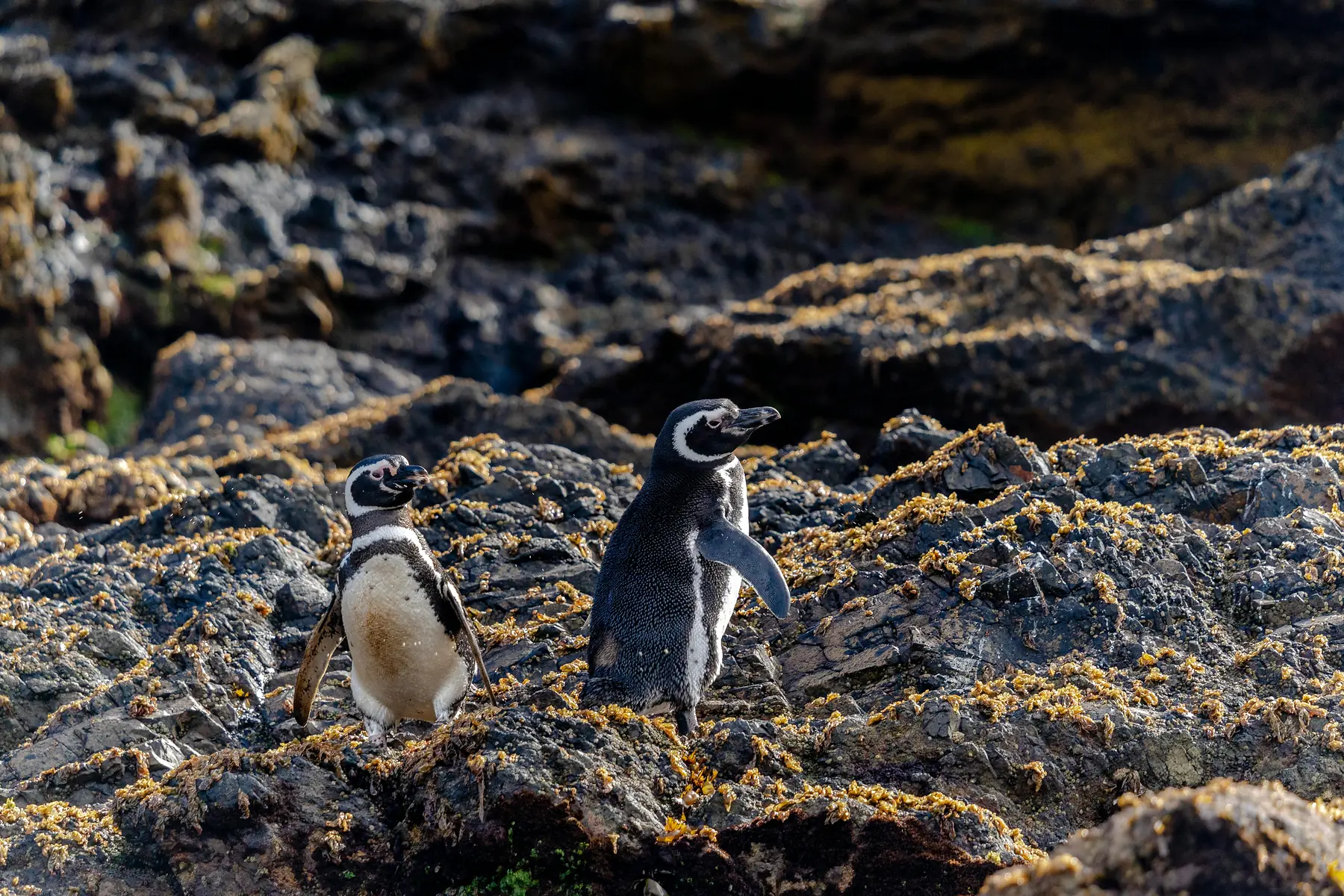
Humboldt penguins are often confused with Magellanic penguins at a distance. To tell them apart, look for a single black neck band (rather than two) and a patch of pink fleshy skin at the base of the beak. They are primarily found further north along the Pacific coast, but they famously overlap with Magellanic penguins at the Punihuil islets on Chiloé Island.
Southern Rockhopper Penguins
The “punks” of the penguin world, Rockhoppers are smaller birds with dramatic yellow crest feathers that sweep back from their red eyes. They are the most elusive species in the region, preferring the steep, rocky cliffs of remote fjords and islands in the far south. They are occasionally spotted on specialized boat tours through the Chilean fjords or at specific colonies near Puerto Deseado in Santa Cruz, Argentina.
Where to See Penguins in Patagonia: Top 5 Locations
The best places to see penguins in Patagonia are Punta Tombo for sheer scale, Isla Magdalena for accessibility, and Isla Martillo for the unique opportunity to walk among Gentoos. Each location offers a different viewing experience, ranging from boat-based observation to walking on designated boardwalks that cut directly through the nesting grounds.
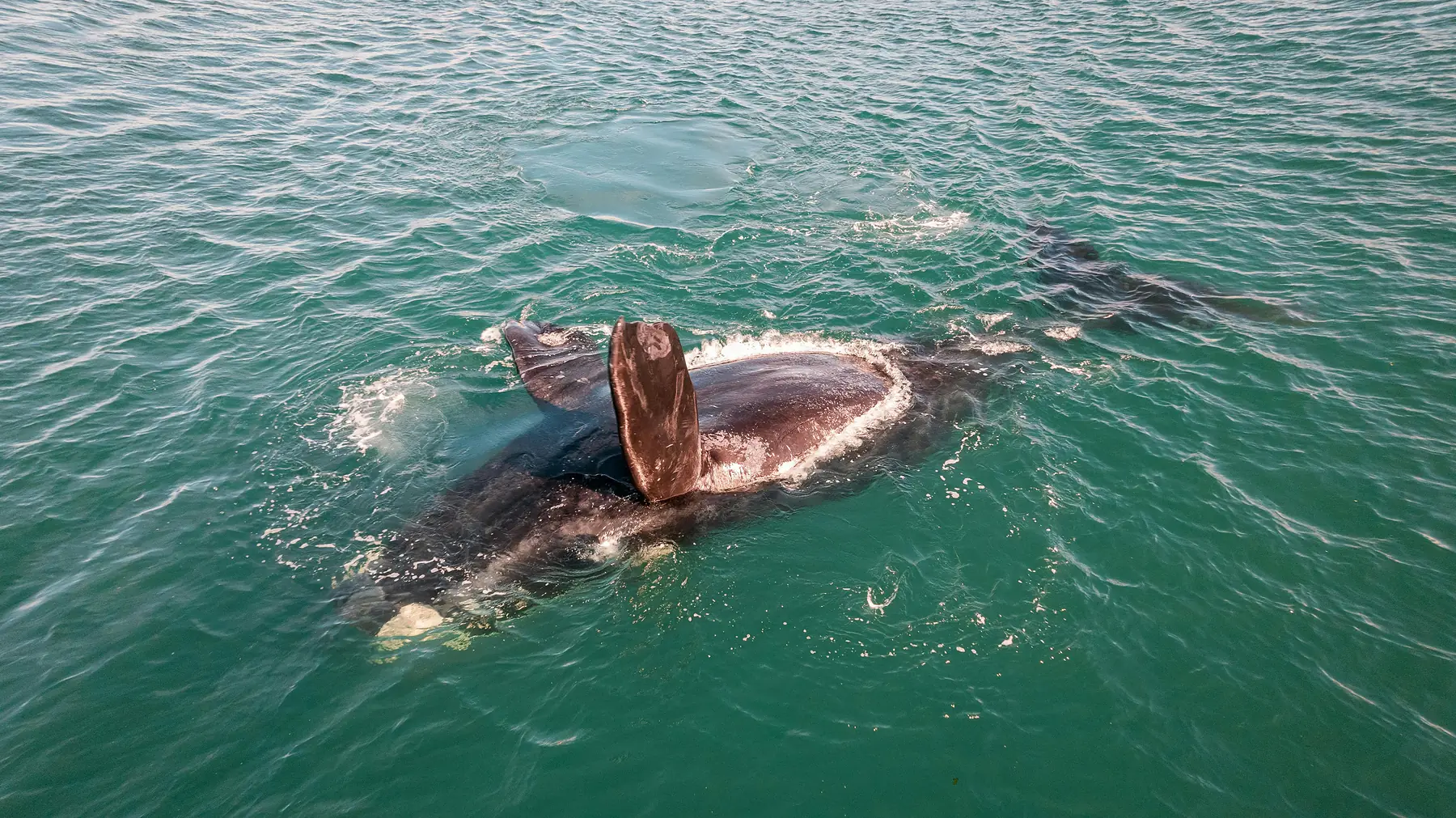
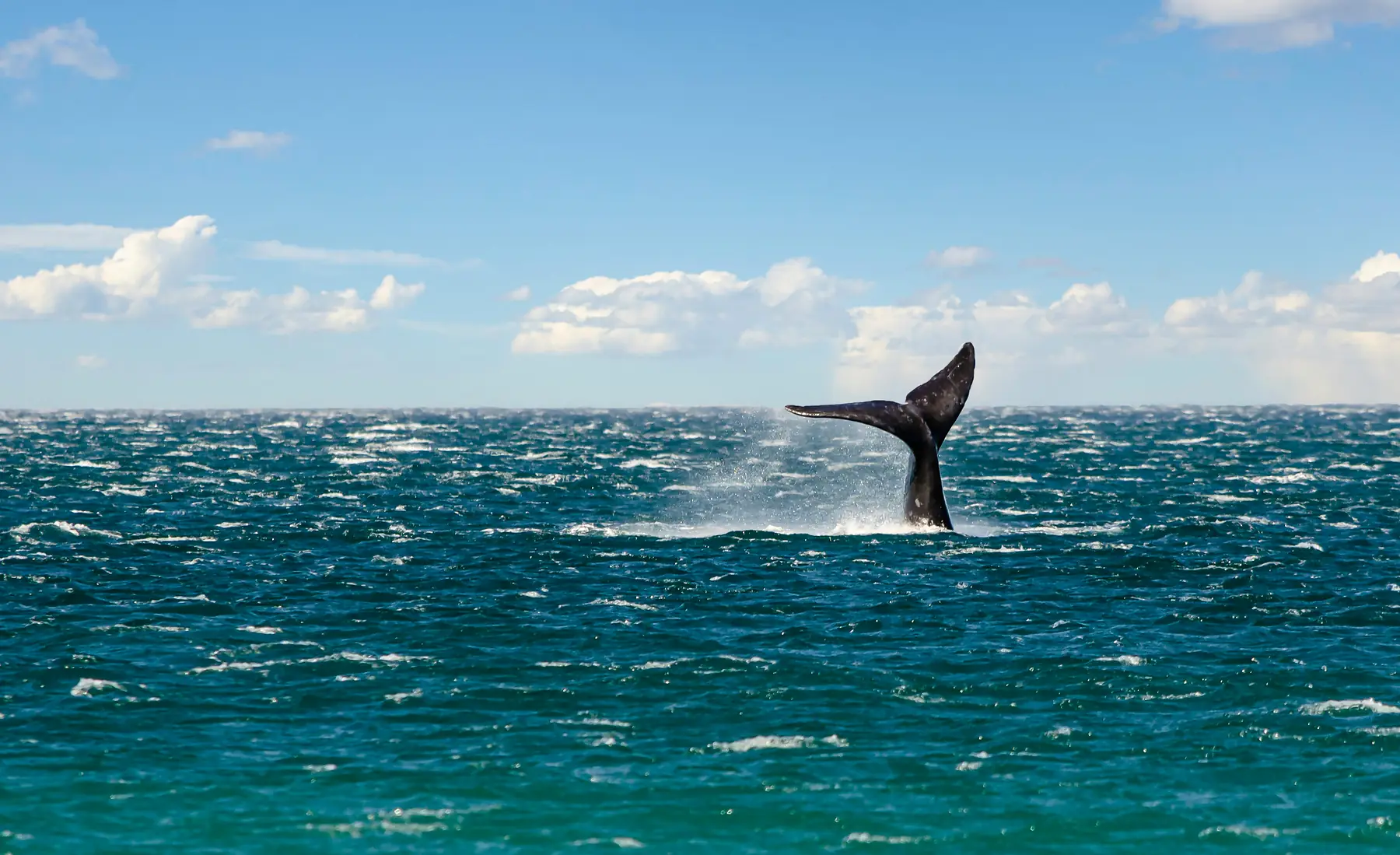
Punta Tombo, Argentina Located roughly 170 kilometers south of Puerto Madryn, Punta Tombo is the world’s largest Magellanic penguin colony. The scale here is difficult to comprehend until you are standing on the boardwalks, surrounded by hundreds of thousands of birds. Because the colony is so dense, penguins often cross the walking paths, giving them the absolute right of way. While here, you can also plan to see the Southern Right Whales that frequent the nearby Peninsula Valdés.
Isla Magdalena, Chile This island in the middle of the Strait of Magellan is a protected national monument housing roughly 60,000 breeding pairs (120,000 individuals). It is the most popular trip from Punta Arenas. The experience is defined by a 800-meter roped path that leads from the pier up to a historic lighthouse, offering a 360-degree view of the burrows.
Isla Martillo, Argentina Accessible via the Beagle Channel from Ushuaia, this island is unique because it hosts both Magellanic and Gentoo penguins. It is one of the few places in the world where you can see these two species nesting side-by-side. For a deeper look at the logistics of visiting this area, see our guide to things to do in Ushuaia.
Bahia Inutil (Useless Bay), Chile This is the only place in South America to see a permanent colony of King penguins. Located on the western side of Tierra del Fuego, it is a remote and wind-swept site that requires a dedicated day trip from Punta Arenas involving a ferry crossing.
Punihuil, Chile Located on the northwestern coast of Chiloé, these three islets are the only place in the world where Humboldt and Magellanic penguins nest together. Tours here are conducted in small boats that circle the islets, as landing is prohibited to protect the fragile nesting sites.
To help you decide which hub to use for your wildlife journey, consider how these locations fit into a broader itinerary.
Visiting the King Penguins at Parque Pingüino Rey
The King penguin colony at Bahia Inutil is the only one of its kind outside of the sub-Antarctic islands like South Georgia. Unlike the Magellanic colonies where you might see hundreds of thousands of birds, the King penguin population here is smaller—usually numbering between 40 and 100 individuals—but their size and vibrant coloring make them the most sought-after sighting in Tierra del Fuego.
The viewing experience at Parque Pingüino Rey is strictly controlled to ensure the birds remain undisturbed. Visitors observe the colony from behind a series of wooden fences and “hides” (viewing shelters) located about 20 to 50 meters from the birds. Because the penguins are large and their orange markings are bright, the distance does not diminish the impact, but bringing binoculars or a camera with a 300mm lens is highly recommended.
Visiting this colony from Punta Arenas is a significant logistical undertaking that requires a full day.
The Strait of Magellan Crossing
Take the morning ferry (operated by TABSA) from Punta Arenas to Porvenir. The crossing takes approximately two hours and can be quite rough; it offers your first chance to spot Commerson’s dolphins in the wake of the ship.
The Drive to Bahia Inutil
From Porvenir, it is a 1.5- to 2-hour drive on mostly unpaved (gravel) roads to reach the park. If you aren’t on a guided tour, a 4x4 vehicle is recommended for the “ripio” surfaces.
Park Entry and Viewing
You must book your entry time in advance, as the park has strict capacity limits. For the 2026/27 season, the park is closed on Mondays for maintenance and wildlife rest. Expect to spend about 1-1.5 hours at the site.
The King Penguin colony is permanent, meaning you can visit year-round. However, the ferry schedule from Punta Arenas is much more limited in the winter (May-August). If visiting in the shoulder season, always check the TABSA ferry schedule 48 hours in advance.
Isla Magdalena & the Strait of Magellan
Isla Magdalena is the most reliable and popular penguin encounter for those staying in Punta Arenas. The island is part of the Los Pingüinos Natural Monument and is managed by CONAF (Chile’s national forest service). Because the island has no trees or high brush, the visibility is exceptional, allowing you to see the sheer density of the 60,000+ breeding pairs.
When booking a tour to Isla Magdalena, you generally have two choices for transport, each offering a very different experience of the Strait.
- Travel Time: 2 hours each way vs. 45 minutes each way
- Stability: High - handles the Strait’s swell well vs. Low - can be a bumpy, wet ride
- Stops: Isla Magdalena only vs. Includes a pass by Isla Marta (Sea Lions)
- Cost (2026/27): Approximately $100-105 USD vs. $130-145 USD
Choose the large ferry if you are prone to seasickness or traveling with children; choose the speedboat if you want to see sea lions at Isla Marta and save time.
The main attraction on the island is the “Lighthouse Hike.” A roped-off gravel path winds through the heart of the colony. The penguins here are remarkably indifferent to humans and will frequently waddle across the path just inches from your boots.
Tours to Isla Magdalena are frequently canceled due to high winds. The Strait of Magellan is notorious for sudden gusts exceeding 80 km/h. If your tour is canceled, operators will usually try to rebook you for the following morning, so try to schedule your penguin trip for your first available day in Punta Arenas.
Isla Martillo: Walking with Penguins in Ushuaia
Isla Martillo, located in the Beagle Channel, offers an experience that is distinct from the Argentinian mainland colonies. While most boat tours from Ushuaia will sail past the island to let you photograph penguins from the deck, only one operator—PiraTour—has the exclusive permit to actually land on the island and lead guided walks.
The walk on Isla Martillo is limited to small groups and follows a specific trail that brings you close to the nesting sites of both Magellanic and Gentoo penguins. The Gentoos are the stars here; they are larger than the Magellanics and much more curious. Occasionally, a stray King penguin from the further-south colonies will “haul out” on Isla Martillo to molt, providing a lucky bonus for visitors.
The tours typically depart from downtown Ushuaia and drive to Estancia Harberton, a historic ranch, where you board a semi-rigid boat for the short hop to the island.
Because PiraTour is the only company with landing rights for 2026, their “Penguin Walk” often sells out 3-4 months in advance for the peak December-January season. If they are fully booked, a catamaran tour that views the island from the water is a viable second choice, but you will not be able to get off the boat.
For more details on coordinating this with your stay in the world’s southernmost city, check our Ushuaia destination guide.
Penguin Season in Patagonia: A Month-by-Month Calendar
Penguins are migratory, and their presence in Patagonia follows a strict biological clock. If you arrive in June, you will find the great colonies of Punta Tombo and Isla Magdalena completely empty.
September / October: The Arrival The males arrive first to reclaim their burrows from the previous year, followed shortly by the females. This is a period of high drama, with frequent fights over territory and nesting sites. By late October, most pairs have laid two eggs.
November: Incubation and Hatching This is a transition month. One parent stays on the nest to keep the eggs warm while the other heads to sea to feed. In Chubut (Punta Tombo), the first chicks typically begin to hatch in mid-to-late November.
December / January: Chick Rearing (Peak Season) This is the best time to visit. Chicks are covered in fluffy gray down and grow rapidly. By January, the colonies are chaotic and loud as parents constantly return from the ocean to regurgitate food for their hungry offspring.
February: The Molting Phase The chicks begin to lose their gray down and grow their waterproof adult feathers. The colonies are covered in “penguin fluff” during this month. The adults also undergo a “catastrophic molt,” where they lose all their feathers at once and cannot enter the water to feed for about 2-3 weeks.
March / April: Departure As the southern autumn sets in, the penguins head back to the ocean. By the end of March, the colonies are thinning out, and by mid-April, they are largely deserted as the birds migrate north toward the warmer waters of Brazil and Uruguay.
May – August: The Winter Gap The major Magellanic colonies are empty. The only exception is the King Penguin colony at Bahia Inutil, which remains populated year-round because King penguin chicks take over a year to fledge.
Photography & Ethical Viewing Tips
Photographing penguins is a lesson in patience. While they may look like slow, waddling birds on land, they are surprisingly fast and erratic in their movements. To get the best shots while respecting the wildlife, follow these guidelines:
- The 2-Meter Rule: Always maintain a distance of at least two meters (six feet). If a penguin approaches you, stand still and let it pass. Never block a penguin’s path to the water.
- Right of Way: In colonies with boardwalks, penguins always have the right of way. If a penguin is standing on the path, wait for it to move or find a wide berth if the terrain allows.
- Camera Gear: A telephoto lens (70-300mm) is your best tool. It allows you to capture tight “portrait” shots of the penguins’ facial expressions without having to physically crowd them.
- Silence and Behavior: Avoid sudden movements or loud shouting. If a penguin starts “head-flagging” (swinging its head from side to side), it is a sign of stress. Back away slowly.
Penguin Tours: How to Choose and What to Pack
When selecting a tour, the most important factor is group size. Smaller groups (10-15 people) offer a much more intimate experience and allow the guides to provide better context on the birds’ behavior. Large catamarans are cheaper but can feel like a “commuter” experience where you are jostling for a spot at the railing.
For a complete look at how to integrate these tours into a wildlife-focused trip, see our guide to the best wildlife spots in Patagonia.
Essential Gear for Penguin Watching
- Windproof Layers: Even on a sunny day, the wind on the Strait of Magellan or the Beagle Channel can be biting. A high-quality windbreaker or hardshell is essential.
- Waterproof Camera Protection: If you are taking a zodiac or speedboat, salt spray is a guarantee. Bring a dry bag or a waterproof sleeve for your camera.
- Sturdy Footwear: You will be walking on gravel, sand, and occasionally muddy paths. While you don’t need heavy hiking boots, sturdy sneakers or light trail shoes are a must.
- Sun Protection: The ozone layer is thin in the far south. Even if it feels cold, the sun can cause severe burns during a two-hour walk in the colony.
FAQ
What is the best month to see penguins in Patagonia? The best time is between December and early February when the chicks have hatched and the colonies are at their most active.
Where can I see King Penguins in Patagonia? The only colony is at Parque Pingüino Rey in Bahia Inutil, Tierra del Fuego, which can be reached via a day trip from Punta Arenas.
Are there penguins in Patagonia during the winter? No, most species migrate north to Brazil or Peru from May to August; only the King Penguin colony remains in Tierra del Fuego year-round.
Can you see penguins in Torres del Paine? No, there are no penguin colonies within Torres del Paine National Park; the nearest colonies are located near Punta Arenas.
Is it better to see penguins in Ushuaia or Punta Arenas? Punta Arenas offers larger colonies (Isla Magdalena), while Ushuaia (Isla Martillo) offers the unique chance to see Gentoo penguins.
Do I need to book penguin tours in Patagonia in advance? Yes, especially for landings on Isla Martillo or trips to the King Penguin colony, which have strict daily visitor caps and often sell out months in advance.