
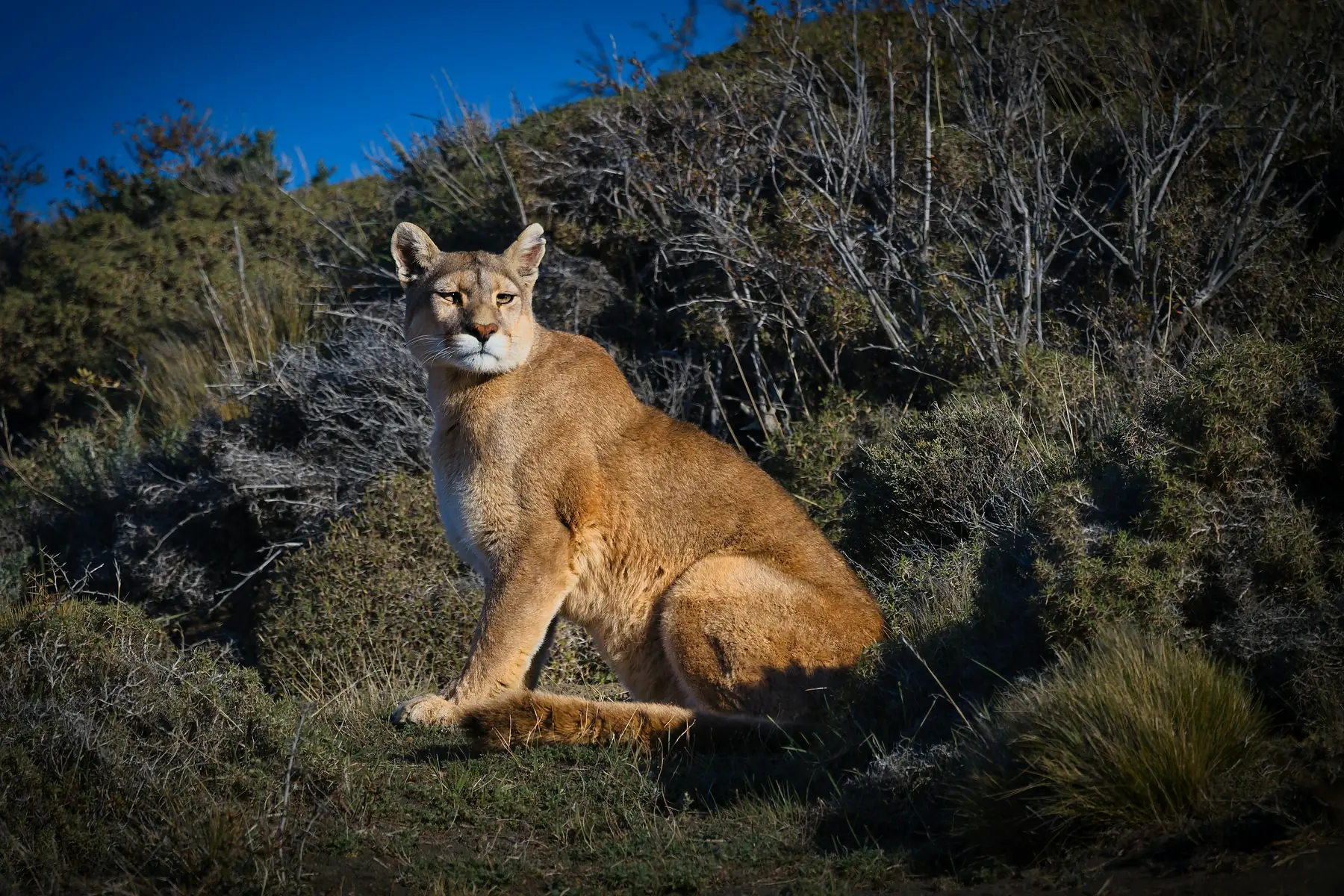
Pumas in Patagonia: 2026 Guide to Tracking & Sightings
Patagonia is the best place on Earth to see pumas in the wild, specifically within the eastern sectors of Torres del Paine National Park where the density of these apex predators is higher than anywhere else in the Americas. While pumas are found from the Canadian Yukon to the Strait of Magellan, the combination of protected habitats, abundant prey, and a unique social tolerance makes the Patagonian landscape the premier destination for tracking the “Ghost of the Andes.”
Planning a puma safari in the 2026/27 season requires more than just a pair of binoculars. It involves understanding the delicate balance between public park regulations and private estancia access, the rhythm of the seasons, and the ethical standards that keep both the cats and the visitors safe. This guide provides the practical logistics and biological context needed to turn a potential sighting into a definitive encounter.
As you explore the broader ecosystem of the region, it’s helpful to understand how these predators fit into the landscape. For a wider look at the animals you might encounter alongside the puma, see our guide to wildlife in Patagonia.
Puma Sightings at a Glance
- Primary Location: Torres del Paine National Park and surrounding private estancias.
- Success Rate: 80-90% on a dedicated 3-day tracking tour.
- Best Time: June to August (tracking in snow) or November (cub season).
- Average Size: 70-100kg for males, significantly larger than tropical subspecies.
- Key Prey: Guanacos (primary) and Magellanic penguins (coastal regions).
The Patagonia Puma: A Different Kind of Cat
The pumas of Southern Patagonia (Puma concolor puma) are a testament to Bergmann’s rule, a biological principle stating that populations of a species living in colder, higher-latitude climates tend to be larger than those in warmer regions. In the windswept plains of the south, these cats have evolved into formidable hunters that dwarf their tropical counterparts.
While a mountain lion in the United States might average 60-80kg, a dominant male in Torres del Paine can exceed 100kg. This massive build is necessary for taking down their primary prey: the guanaco. These wild camelids are significantly larger than the puma, and a successful hunt requires immense power and specialized technique. You will often hear the high-pitched, rhythmic “alarm call” of a guanaco before you see the cat itself; it is the soundtrack of the Patagonian hunt.
The diet of the Patagonian puma is also shifting in fascinating ways. While guanacos remain the staple, researchers have documented pumas in coastal Santa Cruz, specifically near Monte Leon National Park, hunting Magellanic penguins. This behavioral adaptation highlights the puma’s status as a highly intelligent generalist, capable of exploiting whatever protein source the rugged landscape provides.
Perhaps most surprising to visitors is the social behavior observed in the Torres del Paine region. Pumas are traditionally solitary, but in areas of high prey density, “social tolerance” has been documented. It is not uncommon for a mother and her nearly grown cubs, or even unrelated individuals, to share a single guanaco carcass. This lack of extreme territorial aggression is part of what makes the region so successful for wildlife photography; the cats are less stressed by the presence of others, including humans, provided ethical distances are maintained.
Best Places to See Pumas in Patagonia
While pumas roam nearly every corner of the region, three specific locations stand out for the 2026/27 season. Each offers a different experience, ranging from high-probability tracking to remote, wild encounters.
Torres del Paine (Chile) remains the undisputed capital. Within the park, the Sarmiento and Laguna Amarga sectors are the “golden triangle” for sightings. The open, rolling hills (pampa) provide little cover for a stalking cat, making them easier to spot against the golden grass. However, the most consistent sightings actually happen just outside the official park boundaries on private land, where professional trackers have more freedom to operate. Recent estimates suggest a density of approximately 10 to 12 pumas per 100 square kilometers in these eastern sectors, one of the highest recorded densities in the world.
Patagonia National Park (Chile), specifically the Chacabuco Valley, is the rising star of the region. Following a massive rewilding project that removed sheep and fences, the puma population has rebounded. It offers a much quieter experience than Torres del Paine, though the terrain is more rugged and sightings require more patience.
Monte Leon National Park (Argentina) offers the most unique sighting opportunity in South America. Here, the pumas have learned to hunt penguins along the Atlantic coast. It is a niche experience, best suited for those who have already seen the “mountain” pumas and want to witness a rare ecological phenomenon.
To see how these locations compare to other wildlife hotspots for condors or whales, explore our guide to the best wildlife spots in Patagonia.
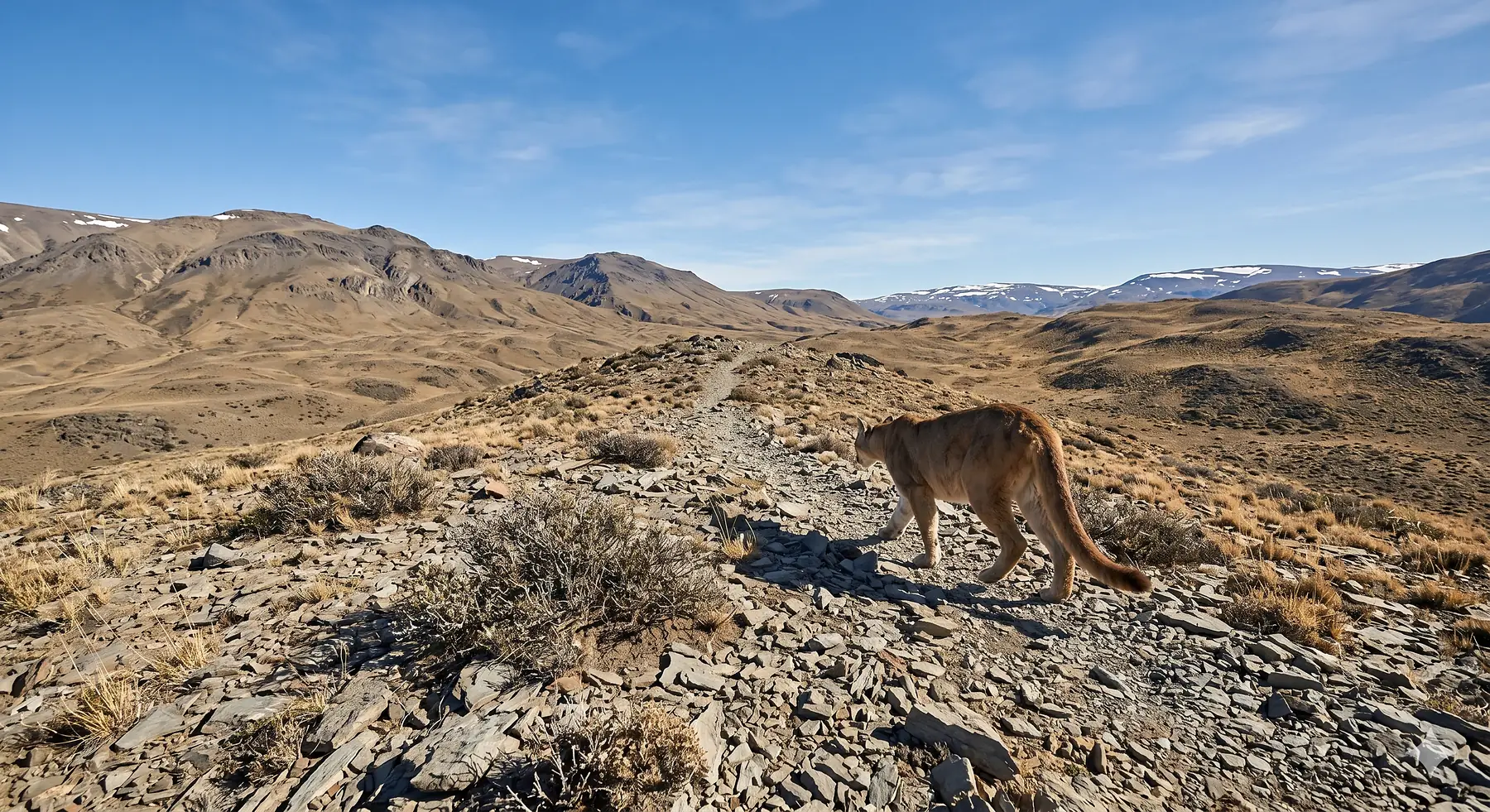
Puma Tracking in Torres del Paine: How it Works
Understanding the difference between a “guide” and a “tracker” is the first step in planning a successful trip. A guide manages your logistics and safety, but a tracker is a specialist who spends their life studying individual cats, their territories, and their habits.
In the 2026/27 season, most high-end puma safaris utilize a “pre-scout” system. At roughly 4:00 AM, while you are still at your hotel, professional trackers head out into the Laguna Amarga or Sarmiento sectors. They use high-powered optics to scan the ridges for movement or look for the tell-tale signs of a fresh kill. By the time you finish breakfast, the trackers have usually located a cat, and you are driven to the closest possible point to begin your approach.
One of the most important distinctions for visitors is the legal landscape of tracking. Within Torres del Paine National Park, you must stay on marked trails or on the road. If a puma is 500 meters away in a valley where there is no trail, you cannot legally approach it. On private land, such as the Estancia Laguna Amarga, off-trail walking is permitted under the supervision of a licensed tracker.
- Access: Restricted to official trails and roads - Off-trail walking allowed with trackers
- Crowds: Higher vehicle traffic on main roads - Limited to a few permit holders
- Cost: Standard park entrance fee - Significant daily conservation/access fee
- Proximity: Often distant sightings through binoculars - Controlled, closer approaches on foot
For serious tracking and photography, private estancias are worth the premium price. For casual sightings, the National Park roads are sufficient.
Success rates for these tours are remarkably high. If you dedicate three full days to tracking with a professional team, your chances of a quality sighting are between 80% and 90%. A typical day involves an early start, a midday break when the cats are often sleeping in the shade, and a second session in the late afternoon as the “golden hour” light hits the granite peaks.
The 2026/27 Season: When to Go
The “best” time to see pumas depends entirely on what you want to experience. While the cats do not hibernate and are present year-round, the changing Patagonian weather dramatically alters the tracking experience.
Winter (June–August) is widely considered the “insider” season. As snow blankets the high peaks, guanacos descend to the lower valleys to find grazing land. The pumas follow their food source, concentrating the population in the easily accessible pampa. Furthermore, fresh snow makes tracking paw prints significantly easier, and the low sun provides beautiful photographic light all day long. On the winter solstice (June 21st), expect approximately 8 hours and 20 minutes of daylight in Torres del Paine.
Spring (September–November) is the season of new life. This is when you are most likely to see mothers with cubs. Puma cubs usually stay with their mothers for up to two years, but seeing them as small, spotted kits in the spring is a highlight for many. This is also when the “rut” for guanacos begins, leading to dramatic displays of territorial behavior that often attract pumas looking for a distracted target.
Summer (December–February) offers the most daylight, with the sun setting as late as 10:00 PM. On the summer solstice (December 21st), the region enjoys over 16 hours of daylight. However, this is also the windiest season, and the high volume of hikers on the W and O treks can make pumas in the public park sections more elusive. During the heat of the day, cats will often tuck themselves into deep thickets or caves, making them harder to spot.
Autumn (March–May) is the favorite of professional photographers. The deciduous lenga forests turn deep shades of red and orange, providing a stunning backdrop. The winds begin to die down, and the pumas remain active during the daylight hours as the temperatures drop.
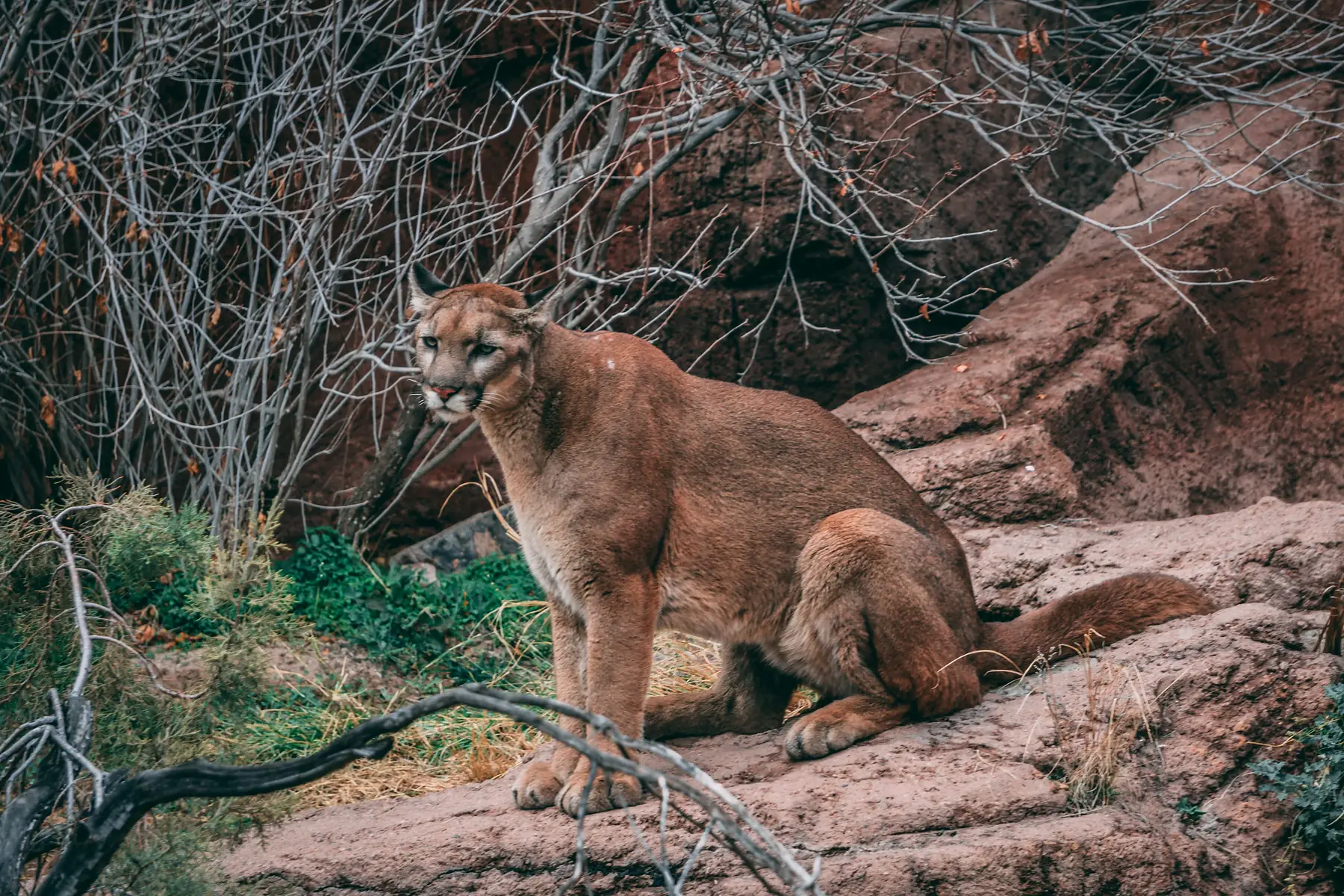
Safety and Ethics: Encountering a “Ghost”
Pumas are apex predators, but they generally view humans with a mix of indifference and caution. In the history of Torres del Paine, recorded predatory attacks on humans are almost non-existent. The only significant recorded incident occurred in 1998, involving a non-fatal encounter with a park ranger’s child. However, maintaining this peaceful coexistence requires strict adherence to safety protocols and ethical viewing distances.
If you encounter a puma while hiking, the most important rule is: do not run. Running triggers a predatory chase instinct. Instead, stand your ground, make yourself look as large as possible by raising your arms or opening your jacket, and maintain eye contact. Speak in a firm, loud voice. Slowly back away, but never turn your back on the cat.
Ethical tracking also means respecting the animal’s space. The standard “Code of Conduct” in Patagonia suggests a minimum distance of 50 meters (approx. 165 feet). If the puma stops what it is doing (grooming, sleeping, or eating) to look at you, you are too close. Reputable trackers will also never approach a known den site, as disturbing a mother with young kits can lead to den abandonment or maternal stress.
From Hunting to Tourism: The Conservation Story
The abundance of pumas in Patagonia today is a relatively recent success story. For most of the 20th century, pumas were hunted as vermin. Large-scale sheep ranching was the backbone of the regional economy, and a single puma could kill dozens of sheep in a single night. Estancias employed “leoneros” (puma hunters) specifically to eradicate the cats.
The shift began as tourism grew. Landowners realized that a single living puma, seen by hundreds of tourists over its lifetime, was worth significantly more than a dead one. Today, many estancias have completely removed their livestock to focus on “Puma Tourism.”
One of the most innovative projects is at Estancia Cerro Guido, where they are pioneering a coexistence model. Instead of killing pumas, they use Great Pyrenees guardian dogs to protect their sheep. This allows the pumas to roam the estancia and hunt guanacos naturally, while the ranchers maintain their livelihoods. It is a blueprint for predator conservation that is being watched by biologists worldwide.
If you are interested in supporting these conservation efforts through a guided encounter, you can browse our vetted wildlife tours.
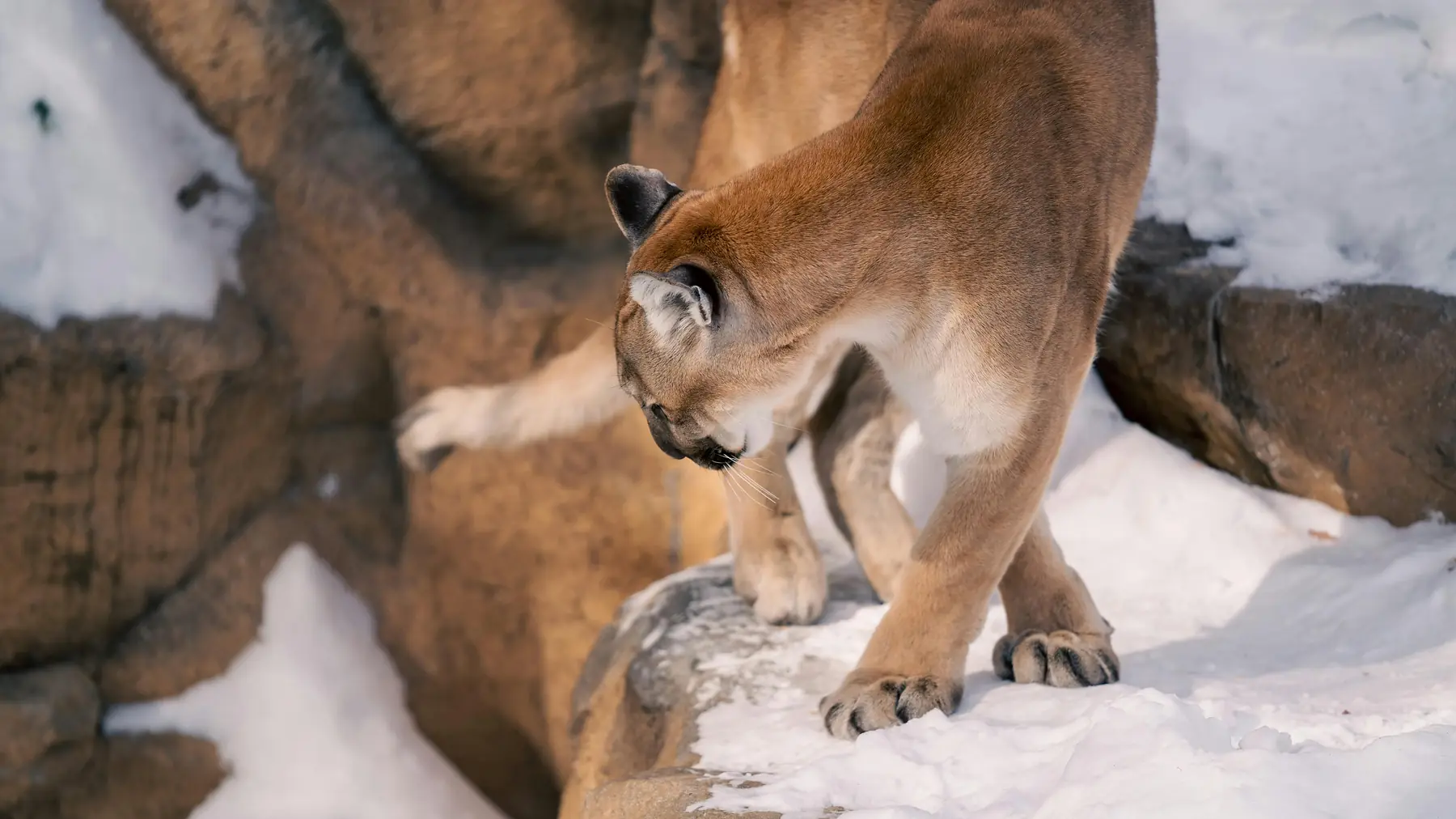
Photography Gear for a Puma Safari
Capturing a “Ghost of the Andes” on camera requires specific gear and a great deal of patience. Because of the 50-meter ethical distance rule, your smartphone or a standard kit lens will not be sufficient for high-quality portraits.
Lenses: A minimum focal length of 400mm is required. Most professional photographers prefer a 600mm prime or a 150-600mm zoom lens. This allows you to fill the frame with the cat without encroaching on its personal space.
Stability: The Patagonian wind is legendary and can easily shake a long lens. A sturdy tripod is essential for on-foot tracking. If you are spotting from a vehicle, a “beanbag” mount for the window sill is a highly effective way to stabilize your camera.
Clothing: Avoid the bright “safety” colors common in trekking gear. Pumas have excellent vision; muted tones like olive, brown, or grey help you blend into the pampa. More importantly, choose “quiet” fabrics. The “swish-swish” sound of some high-end Gore-Tex jackets can be startling to a cat in a silent valley.
The Spot
Wait for the trackers to confirm a sighting and assess the cat’s behavior. If the cat is moving, your tracker will attempt to “intercept” it at a distance rather than following it from behind.
The Approach
Walk in a single file line behind your guide. This makes the group appear as a single, less-threatening entity to the puma.
The Sit
Once you reach a safe distance, sit down. Lowering your profile makes you appear smaller and less like a threat or a competitor, often resulting in the puma relaxing and returning to its natural behavior.
To help you decide if a dedicated safari is the right choice for your trip, we have curated several options for the upcoming season.
Related guides for your planning:
FAQ
Are pumas in Torres del Paine dangerous to hikers? Puma attacks in Torres del Paine are extremely rare. There has only been one significant recorded incident (1998) which was non-fatal; the cats generally avoid humans, though hikers should always follow safety protocols like not running if a cat is spotted.
What is the best month to see pumas in Patagonia? While sightings happen year-round, the winter months of June through August offer the best tracking conditions due to snow and pumas descending to lower elevations, while November is ideal for seeing mothers with cubs.
Do I need a guide to see pumas in Torres del Paine? While you can technically spot a puma from the road or a hiking trail on your own, your chances increase from roughly 10% to over 90% when hiring a professional tracker who knows the cats’ specific territories.
How much does a puma tracking tour in Patagonia cost? As of the 2026/27 season, dedicated puma tracking programs typically range from $800 to $1,500 per day including expert trackers, private transport, and access to exclusive private reserves. Prices for 2026/27 are expected to remain in this range.
Can you see pumas in Patagonia National Park? Yes, the Chacabuco Valley in Patagonia National Park is one of the best places in Chile to see pumas outside of Torres del Paine, thanks to extensive rewilding efforts and a high density of guanacos.
Are the pumas in Patagonia larger than North American mountain lions? Yes, pumas in Patagonia are among the largest of the species, with males often weighing 70-100kg (155-220 lbs). While large North American males can reach similar weights, the Patagonian subspecies is significantly heavier than those found in tropical regions.