
Queulat National Park Guide: See the Hanging Glacier (2026)
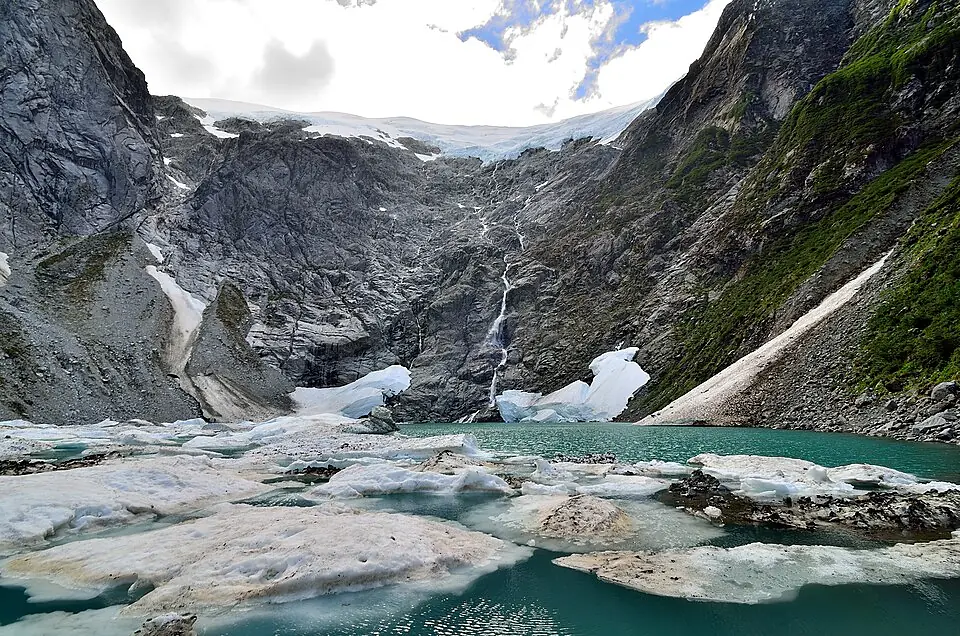
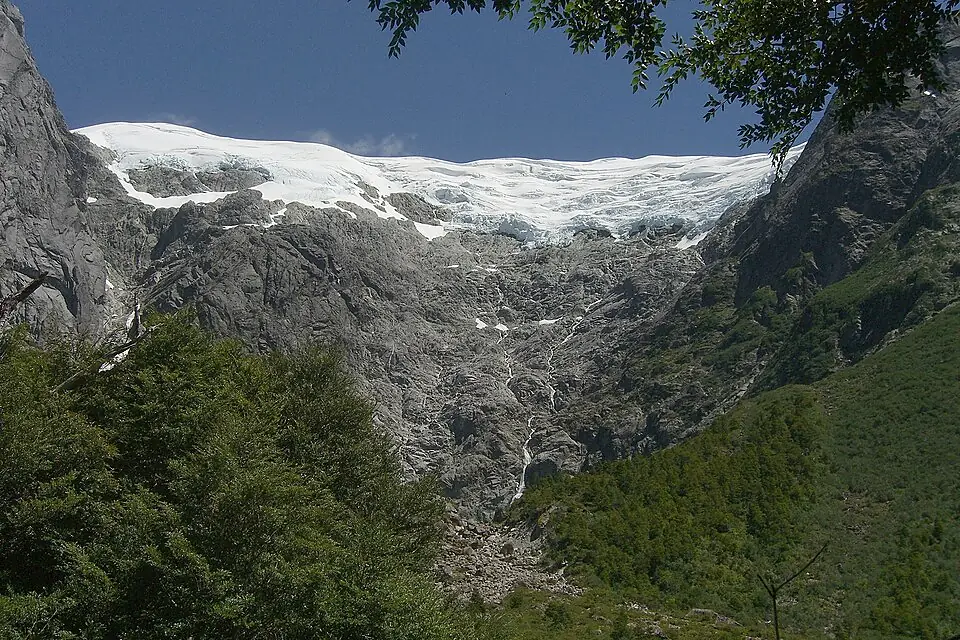
Queulat National Park is the premier destination on the Carretera Austral for witnessing the Ventisquero Colgante - a massive hanging glacier that suspends two silver waterfalls over a 200 meter granite precipice. Known as the “Evergreen Jewel” of the Aysén Region, this park protects one of the few places on Earth where ancient glacial ice meets the dense, temperate Valdivian rainforest.
The name Queulat translates to “Sound of Waterfalls” in the language of the ancestral Chonos people, a description that becomes literal the moment you step onto the trails. Visiting in 2026 requires more planning than in previous years, as the park now operates under a strict digital reservation system and faces frequent trail closures due to the region’s extreme rainfall. Whether you are driving the Carretera Austral or basing yourself in the nearby town of Puyuhuapi, this guide provides the logistical depth needed to navigate the park’s rugged terrain and unpredictable weather.
At a Glance: Planning Your 2026 Visit
To visit Queulat National Park, you must secure a digital permit in advance through the official PasesParques platform. There are no ticket sales at the park gate, and because the park has zero cellular reception, you must download or print your QR code before leaving your accommodation.
Queulat National Park Essentials
- Location: Aysén Region, Chile (22km south of Puyuhuapi)
- Primary Attraction: Ventisquero Colgante (Hanging Glacier)
- 2026 Opening Hours: 9:00 AM to 5:30 PM (Last entry to the main trail at 2:30 PM)
- Mandatory Booking: PasesParques.cl (No cash accepted at gate)
- Connectivity: No cell service or Wi-Fi inside park boundaries
- Nearest Services: Puyuhuapi (Gas, Food, ATM, Lodging)
Success in Queulat depends on timing and preparation. Most visitors arrive from the north, using Puyuhuapi as a base. Before you depart for the park, ensure you have completed the following checklist to avoid a wasted journey.
The Puyuhuapi Departure Checklist: Before leaving town, verify you have your PasesParques QR code saved offline, a full tank of fuel, and all the food and water you need for the day. There are no stores or restaurants inside the park, and the nearest services are 22 kilometers away.
How to Get to Queulat National Park
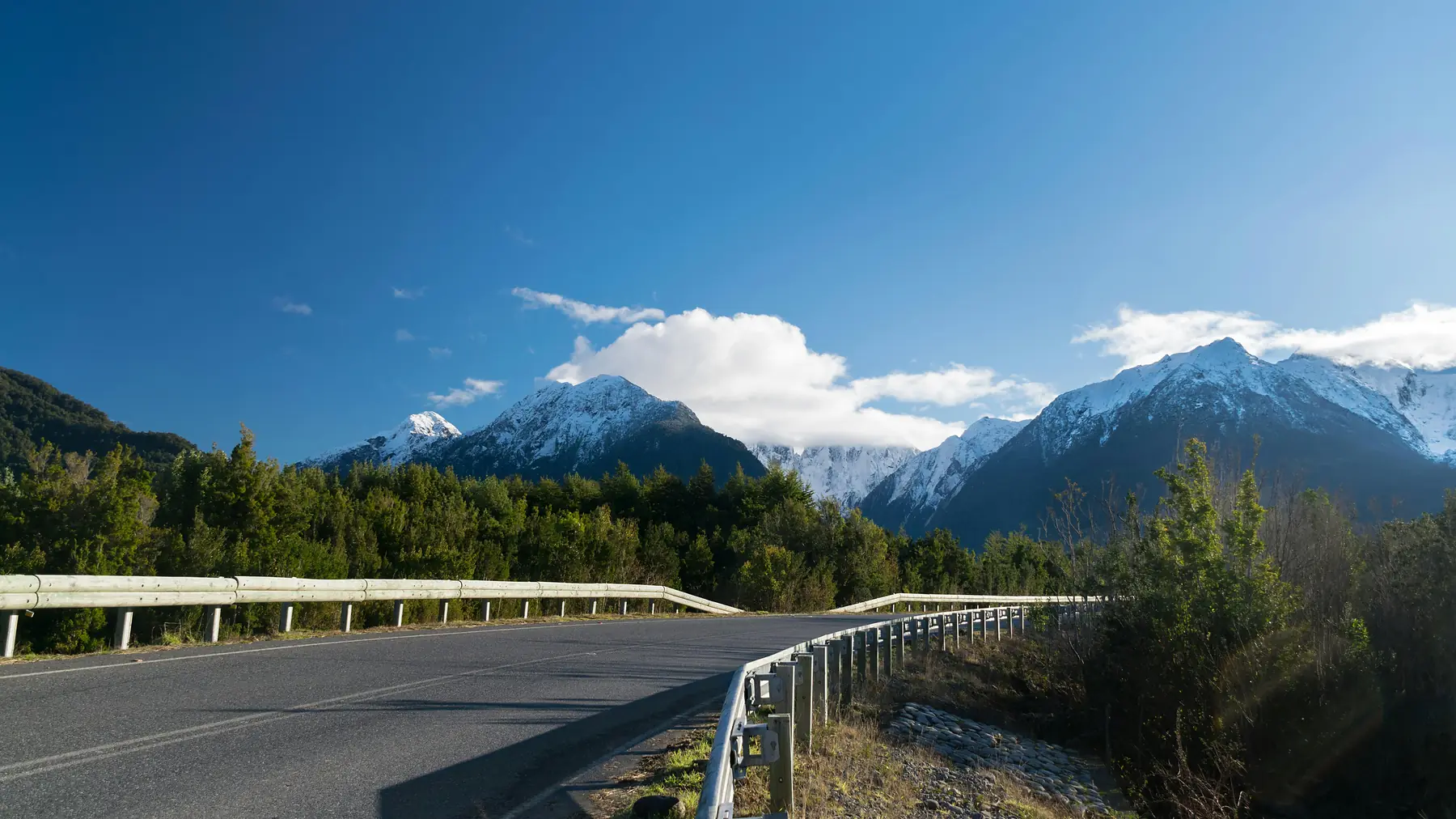
Queulat is situated in a remote stretch of Northern Patagonia, roughly midway between Chaitén and Coyhaique. Most travelers access the park via Route 7, the Carretera Austral, which remains unpaved and narrow in several sections surrounding the park.
Reaching the Park by Car
If you are driving from the north, the park entrance is a 30-minute drive (22km) from Puyuhuapi. If you are coming from the south, it is approximately 200km from Coyhaique, a journey that takes 4 to 5 hours due to road conditions. The turn-off for the main Ventisquero sector is well-marked on Route 7.
Navigating the “33 Curves” (Cuesta Queulat)
Just south of the main glacier entrance, the Carretera Austral climbs the Cuesta Queulat. This section consists of 33 steep, unpaved switchbacks that gain significant elevation over a short distance.
The Cuesta Queulat is one of the most dangerous stretches of Route 7. Heavy trucks and buses often take up the entire width of the road on corners. Cyclists should use extreme caution on the descent, as the gravel is loose and the gradient exceeds 10 percent in several sections.
Heading South? Once you crest the Cuesta Queulat and pass the Portezuelo sector, the road continues toward the junction for Puerto Cisnes and eventually toward the regional capital of Coyhaique. For a broader look at how to reach the Aysén region via ferry or flight, see our guide on how to get to the Carretera Austral.
Public Transport and Hitchhiking
Bus travel to Queulat is functional but requires precision. Most buses traveling between Puyuhuapi and Puerto Cisnes or Coyhaique can drop you at the “Cruce Ventisquero” (the park entrance). You must inform the driver when boarding that you intend to get off at the park.
For the return journey, you will need to wait at the park entrance and flag down passing buses. Because these buses are often full during the peak season (January and February), many travelers opt to hitchhike. The “hot spot” for catching a ride is the junction where the park road meets Route 7. If you prefer a more reliable option, local operators in Puyuhuapi coordinate shared van transfers. As of the 2026/27 season, private shuttle rates from Puyuhuapi typically range from $15,000 to $25,000 CLP per person for a round trip.
Seeing the Ventisquero Colgante (Hanging Glacier)
The Ventisquero Colgante is the centerpiece of the park. This glacier sits perched on a high plateau, its face terminating at the edge of a cliff. As the ice melts, it forms two massive waterfalls that plunge into the Ventisquero Sound, a branch of the Puyuhuapi Fjord.
Sendero Mirador Ventisquero Colgante
This is the primary trail for those seeking the classic view of the glacier. The hike is 3.3 kilometers each way (6.6km round trip) and typically takes 2.5 to 3 hours to complete.
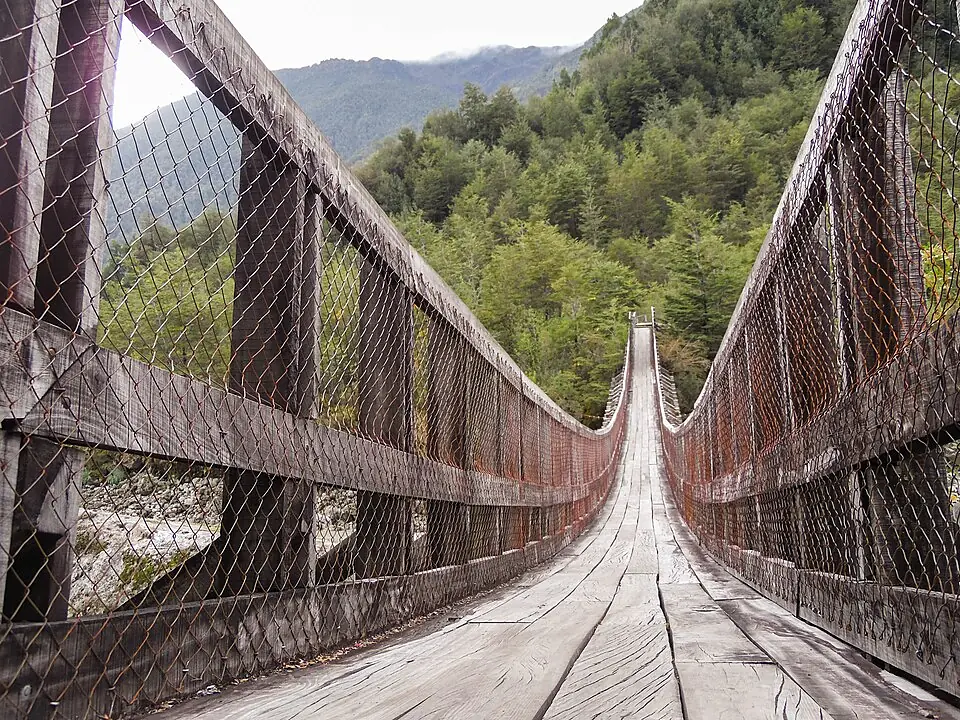
The trail begins by crossing a long suspension bridge over the Rio Ventisquero. From there, the path climbs steadily through the rainforest. Expect a terrain dominated by exposed tree roots and deep mud. While the elevation gain is moderate, the humidity and uneven footing make it feel more strenuous than the statistics suggest. The trail ends at a wooden platform with a direct, head-on view of the hanging glacier across the valley.
Sendero Laguna Témpanos
For those who prefer a flatter walk or have limited time, the Laguna Témpanos trail is the best alternative. This 600 meter path is almost entirely flat and leads to the edge of the glacial lagoon. While you are at a much lower elevation and the view of the glacier is more distant, you get a better sense of the scale of the waterfalls and the milky, silt-laden water of the lagoon.
Boat Tours (Nautical Experience)
During the summer months, a local concessionaire operates small boat tours across Laguna Témpanos. These trips allow you to get significantly closer to the base of the waterfalls than any of the hiking trails.
The boat tours are highly weather-dependent. In heavy rain or high winds, they do not operate. Tickets are purchased on-site at a small kiosk near the lagoon edge. For the 2026/27 season, prices are approximately $12,000 to $18,000 CLP per person.
Other Hiking Trails in Queulat National Park
While the hanging glacier draws the crowds, Queulat offers several other trails that showcase the diversity of the Valdivian rainforest. To see how these compare to other treks in the region, consult our guide to the best hikes on the Carretera Austral.
Sendero Los Pumas
Located near Lake Risopatrón in the northern sector of the park, this trail is a steep, 5.6km round-trip hike. It climbs through exceptionally dense forest before emerging into an alpine environment with views of the surrounding peaks and the lake below. It is far less crowded than the glacier trails and offers a more solitary experience of the Patagonian wilderness.
Sendero El Aluvion
This short, 1.5km interpretive loop tells the story of a massive 1989 landslide that reshaped the valley. It is an excellent trail for families or those interested in forest regeneration, as it passes through areas of “pioneer” forest where new life is reclaiming the path of the slide.
Salto Padre García
Located in the Portezuelo sector (the highest point of the road), this is a quick roadside stop. A steep, 150 meter staircase leads down to the base of a powerful 30 meter waterfall named after a Jesuit explorer. It is an ideal place to stretch your legs if you are driving the Cuesta Queulat.
Sendero Bosque Encantado (The Enchanted Forest)
The Enchanted Forest trail is located south of the Cuesta Queulat. It is famous for its moss-covered trees and fairy-tale aesthetic, leading to a hidden lagoon at the base of a glacier cirque.
As of 2026, the Sendero Bosque Encantado remains officially closed to the public due to high landslide risks and environmental restoration efforts. Do not rely on old blog posts stating it is open. You must check the current status at the CONAF office in Puyuhuapi or at the main park entrance before driving to the trailhead.
The Valdivian Rainforest: Flora and Wildlife
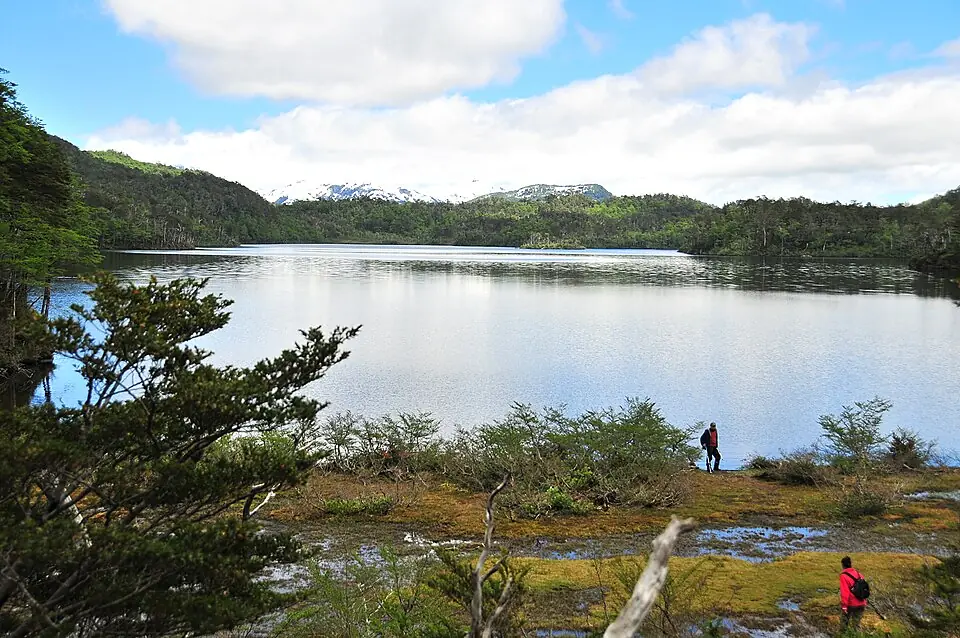
Queulat is a prime example of the Valdivian temperate rainforest, one of the few places on Earth where a rainforest exists at such a high latitude. The ecosystem is defined by staggering levels of precipitation, which supports an incredible density of life.
Flora of the “Evergreen Jewel”
The most striking plant in the park is the Nalca, also known as Chilean rhubarb. These plants have massive, sandpaper-textured leaves that can reach up to two meters in diameter. You will also see ancient Coigüe trees, Tepu, and an endless variety of ferns and mosses that grow on every available surface, including other trees (epiphytes).
Birdwatching and Marine Life
The park is a haven for birdwatchers. Keep an eye out for the Chucao Tapaculo, a small, orange-breasted bird that lives on the forest floor. Local legend says that if a Chucao sings to your right, it is a sign of good luck for your journey. You may also see the Magellanic Woodpecker, with its distinct red head and rhythmic drumming on the trunks of old-growth trees.
Near the park’s coastal boundaries, particularly where the Ventisquero Sound meets the Puyuhuapi Fjord, it is common to see Toninas (Chilean dolphins) or even larger marine mammals during the migration seasons.
Where to Stay: Camping and Nearby Lodging
Deciding where to stay depends on whether you want the immersive experience of the park or the comforts of a nearby town.
Camping in Queulat
There is one official campground located in the Ventisquero sector, managed by a private concessionaire (Experiencia Queulat). The sites are wooded and provide a high degree of privacy, but the facilities are basic.
- Amenities: Picnic tables, cold showers, and basic pit toilets.
- Price: For the 2026/27 season, rates are approximately $15,000 CLP per person per night.
- Note: This is a “pack-it-in, pack-it-out” campground. You must take all your trash back to Puyuhuapi.
Puyuhuapi Base
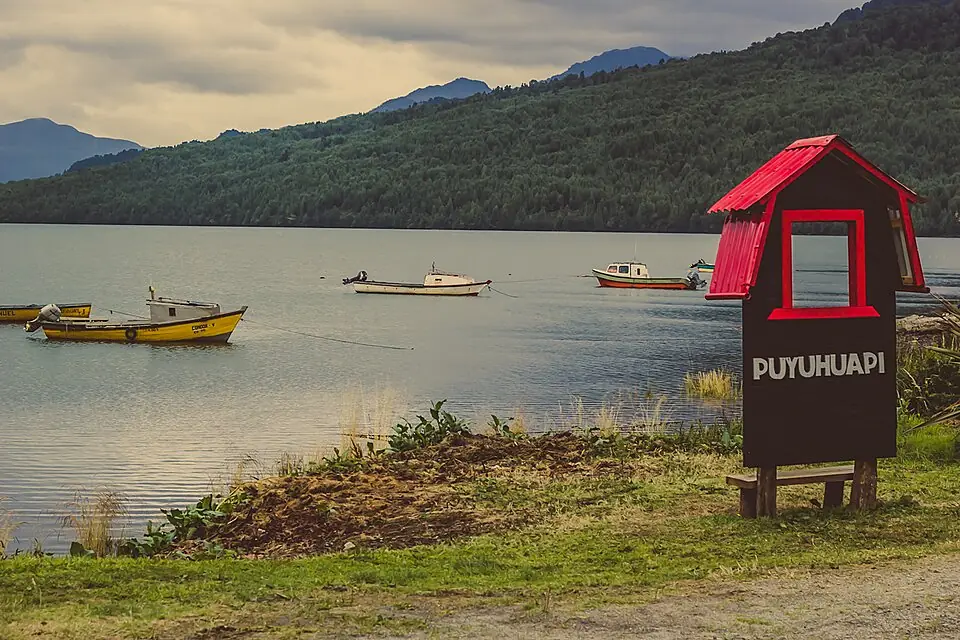
Most travelers choose to stay in Puyuhuapi, which is 22km north of the park. The town offers a range of hostals, cabins, and small hotels, as well as several restaurants and a grocery store. It is the most logical base for exploring the park over several days.
Luxury Options
For those seeking a high-end experience, the Puyuhuapi Lodge & Spa is located across the fjord from the park. It is accessible only by boat and features hot springs and a full-service spa. While it is not inside the park boundaries, it offers guided excursions into Queulat for its guests.
Essential Gear and Weather Preparation
In Queulat, the question isn’t whether it will rain, but how hard. The park sits in a topographical funnel that captures moisture from the Pacific, resulting in some of the highest rainfall totals in Chile.
The 4,000mm Rule
The park receives nearly 4,000mm of rain annually. This means the environment is perpetually damp. For detailed context on how this fits into the broader regional climate, see our guide to Carretera Austral weather.
What to Pack
- Hard Shell Layer: A high-quality GORE-TEX jacket is non-negotiable. Softshells will be saturated within an hour.
- Footwear: Leave the trail runners at home. You need waterproof hiking boots with deep lugs. The mud on the Ventisquero trail is often ankle-deep and exceptionally slippery.
- Pack Cover: Ensure your backpack has a rain cover, or better yet, use dry bags for your electronics and spare layers inside the pack.
- Synthetic Layers: Avoid cotton at all costs. Synthetic or wool base layers will keep you warm even when damp from the high humidity and perspiration during the climb.
For a complete list of everything you need for this environment, refer to our Patagonia packing list.
To go deeper
If you are planning a larger journey through the Aysén region, these guides will help you connect the dots:
FAQ
Do I need to book tickets for Queulat National Park in advance?
Yes, for the 2026/27 season, all visitors must purchase tickets via the PasesParques.cl website before arriving, as there is no cell service or cash ticket sales at the park entrance.
Can I see the Queulat Hanging Glacier without hiking?
You can see the glacier from the Laguna Témpanos viewpoint after a very short, flat 15-minute walk, or from the road at the Mirador Panorámico, though the best views require the 2.5-hour Mirador Ventisquero hike.
Is the road to Queulat National Park paved?
The Carretera Austral through Queulat National Park is largely unpaved and includes the steep, gravel switchbacks of the Cuesta Queulat, which require cautious driving, though 4WD is not strictly necessary in summer.
What is the best month to visit Queulat National Park?
The best time to visit is from November to March for the warmest temperatures, though you should expect rain regardless of the month, as Queulat is one of the wettest regions in Patagonia.
Are there bathrooms and food inside Queulat National Park?
Basic bathroom facilities are available at the Ventisquero sector parking lot, but there are no restaurants or stores inside the park; you must bring all food and water from Puyuhuapi or La Junta.
Is the Enchanted Forest trail in Queulat National Park open?
The Sendero Bosque Encantado remains officially closed due to landslides and environmental sensitivity; visitors should check the latest status at the CONAF office in Puyuhuapi or the park entrance before heading to the trailhead.