

Huemul Circuit Guide: Hiking El Chaltén
Tackle El Chaltén's most challenging backcountry trek. Learn about zip-lining over mountain rivers, navigating steep scree fields, and ice field views.
The Huemul Circuit is El Chalten’s most challenging and rewarding multi-day trek, a 65km loop that provides the only non-technical access to views of the Southern Patagonian Ice Field. Unlike the more famous Fitz Roy day hikes, this circuit requires river crossings via Tyrolean traverse, off-trail navigation across glacial moraines, and the self-sufficiency to carry all gear through a rugged backcountry environment with no refugios.
While Patagonia’s most challenging treks often require crampons or ice axes, the Huemul Circuit is a trekking route that pushes the boundaries of the “hiking” category. It is designed for experienced backpackers who want to escape the crowded trails of Torres del Paine and stand before the world’s third-largest continental ice mass in near-total solitude.
Huemul Circuit At-A-Glance
- Distance: 65km (40 miles) loop
- Duration: 4 days (recommended)
- Technicality: High (2 Tyrolean traverses, off-trail navigation)
- Total Elevation Gain: Approx. 2,800m (as of 2026/27 data)
- Permit: Free but mandatory (online registration)
- Best Window: December to March
What Makes the Huemul Circuit Unique?
The defining feature of the Huemul Circuit is the unparalleled vantage point from Paso del Viento (Windy Pass), where the Southern Patagonian Ice Field stretches to the horizon as a seamless white expanse. This is not just a view of a single glacier: it is a view of the source itself, a massive ice mass that remains the largest outside of Antarctica and Greenland.
Beyond the scenery, the trek is defined by its “filters,” which are technical obstacles that keep the trail from becoming overcrowded. The most notable are the two Tyrolean traverses across the Rio Tunnel and Bahia Tunnel. These require hikers to clip into a fixed steel cable and pull themselves and their packs across the water using a harness and pulley system. Because of these requirements, you will rarely encounter more than a handful of other trekkers per day, maintaining a sense of wilderness that has been lost on more commercialized routes.
The convenience of the loop also sets it apart from other top multi-day treks in Patagonia. The trail begins and ends at the Guardaparque Ceferino Fonzo visitor center on the edge of the trekking capital of El Chalten. This eliminates the need for expensive catamaran transfers or complex bus shuttles, allowing you to walk from your hotel directly into the backcountry and return four days later for a celebratory steak and craft beer.
Huemul Circuit Difficulty: Is It Right for You?
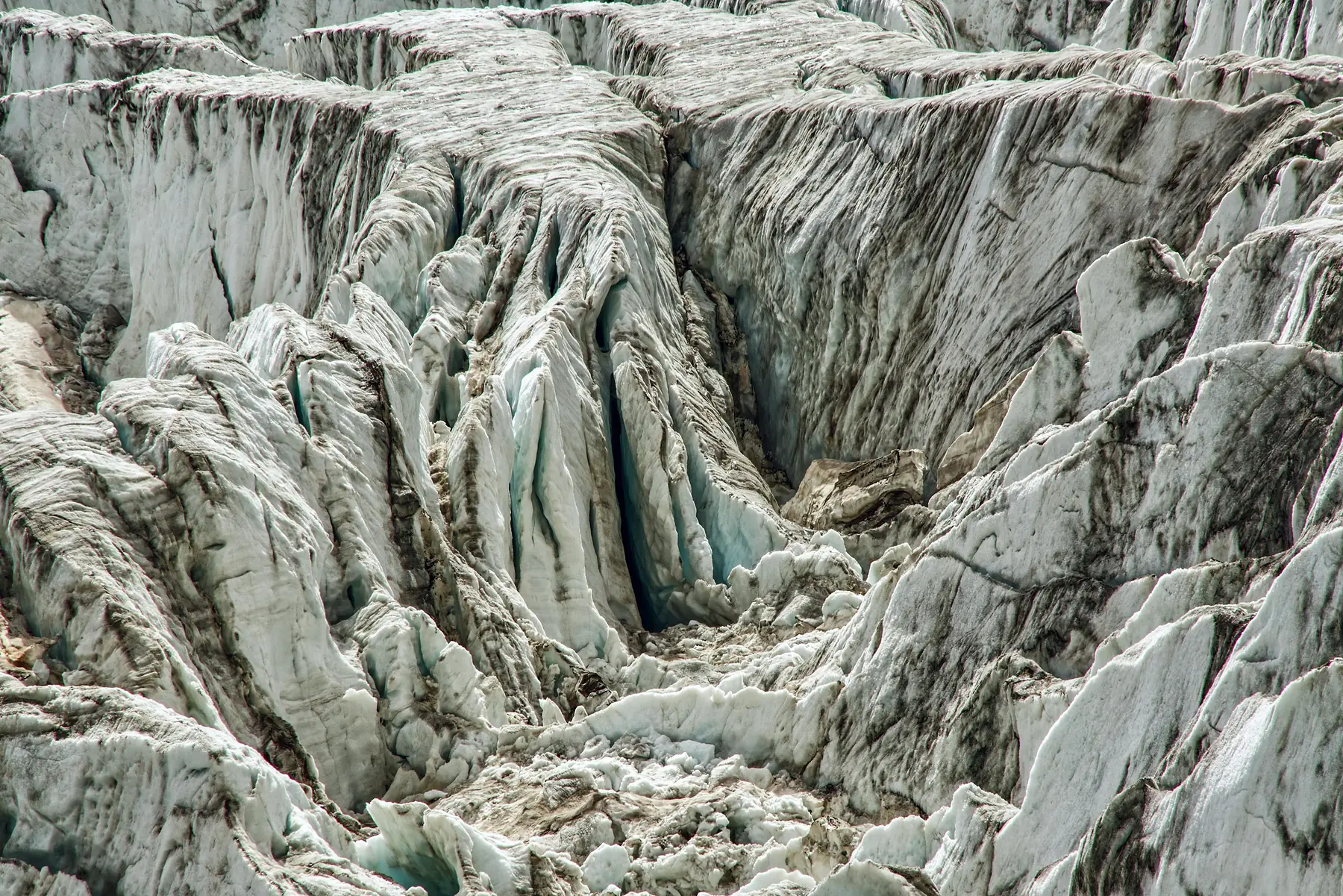
The Huemul Circuit is categorized as a technical trekking route and is significantly more difficult than the W Trek or the O Circuit in Torres del Paine. While those treks feature well-maintained paths and frequent signage, the Huemul requires you to navigate through boulder fields, cross rivers on steel cables, and descend slopes that are steep enough to require “veggie belays” (grabbing onto roots and shrubs for stability).
The physical demand is cumulative, driven by a total elevation gain of approximately 2,800 meters and a pack weight that must include four days of food and technical climbing gear. The most notorious section is the descent from Paso Huemul on Day 3, a 50-degree slope of loose dirt and scree that drops nearly 800 meters to the shores of Lago Viedma. This section is a test of knee strength and balance, especially if the typical Patagonian winds are blowing.
If you are trying to decide how it compares to the W Trek, consider your comfort level with self-sufficiency. There are no heated dorms or prepared meals here. You must be confident in your ability to find a route when the cairns disappear and remain calm while suspended over a freezing river.
- Navigation: Off-trail with GPS required; expect cairns to disappear in glacial terrain. (Huemul Circuit)
- Navigation: Highly signed and well-maintained paths throughout. (W Trek)
- Accommodation: Primitive camping only with no services or facilities. (Huemul Circuit)
- Accommodation: Refugios and serviced campsites with meal options available. (W Trek)
- Technicality: Harnesses, pulleys, and Tyrolean river crossings required. (Huemul Circuit)
- Technicality: Standard hiking with no technical gear needed. (W Trek)
- Crowds: Low traffic of 5-15 people per day on the trail. (Huemul Circuit)
- Crowds: High traffic with hundreds of hikers per day in peak season. (W Trek)
The Huemul is for experienced trekkers seeking solitude and technical challenge; the W Trek is for those who prefer infrastructure and iconic landmarks.
The 2026/27 Permit and Registration Process
As of the 2026 season, the permit for the Huemul Circuit remains free but is strictly mandatory for all hikers. The National Park office (APN) has moved to a digital-first registration system to streamline the process and ensure they have accurate data for search and rescue operations.
You must complete the online registration form, which is managed by Los Glaciares National Park (APN), at least 48 hours before your planned departure. The official registration link is typically updated seasonally on the APN Los Glaciares website. While the park has moved away from mandatory physical gear checks at the ranger station, it is still highly recommended to visit the Guardaparque Ceferino Fonzo (located at the southern entrance of El Chalten) to get the latest briefing on trail conditions and weather windows.
The most critical part of the permit process is the “Check-in/Check-out” requirement. You are required to send a confirmation email or visit the office upon your return to town. Failure to do so can trigger an unnecessary and expensive search and rescue mission. If the weather forecast looks poor or you realize the trek is beyond your skill level, you can find excellent alternatives in our guide to El Chalten’s best hikes.
Technical Gear: The Tyrolean Traverse Setup
The river crossings on the Huemul Circuit are not wadeable due to the speed and depth of the Rio Tunnel. To cross safely, you must carry a specific technical kit. Most hikers who are not carrying their own climbing gear choose to rent these items from specialist shops in town.
Never use an aluminum carabiner on the steel cable of the Tyrolean traverse. The friction of steel-on-aluminum can “saw” through the softer metal in seconds, leading to gear failure and a fall into the river.
The mandatory kit for a safe crossing includes:
- Climbing Harness: A standard rock climbing harness.
- 1 Steel Locking Carabiner: This is the only piece of gear that should ever touch the steel cable.
- 1 Aluminum Locking Carabiner: Used to connect your harness to the pulley.
- 1 Tandem Pulley: Designed for use on steel cables.
- 30m Utility Cord: Essential for pulling the pulley back across the river for your partner or for the next group of hikers.
Rental prices for a complete “Huemul Kit” in El Chalten generally range between $25 and $40 USD for the duration of the trek (as of the 2026/27 season). This gear is an addition to your essential Patagonia packing list, and you should practice putting on the harness before you reach the riverbank.
The 4-Day Itinerary Framework
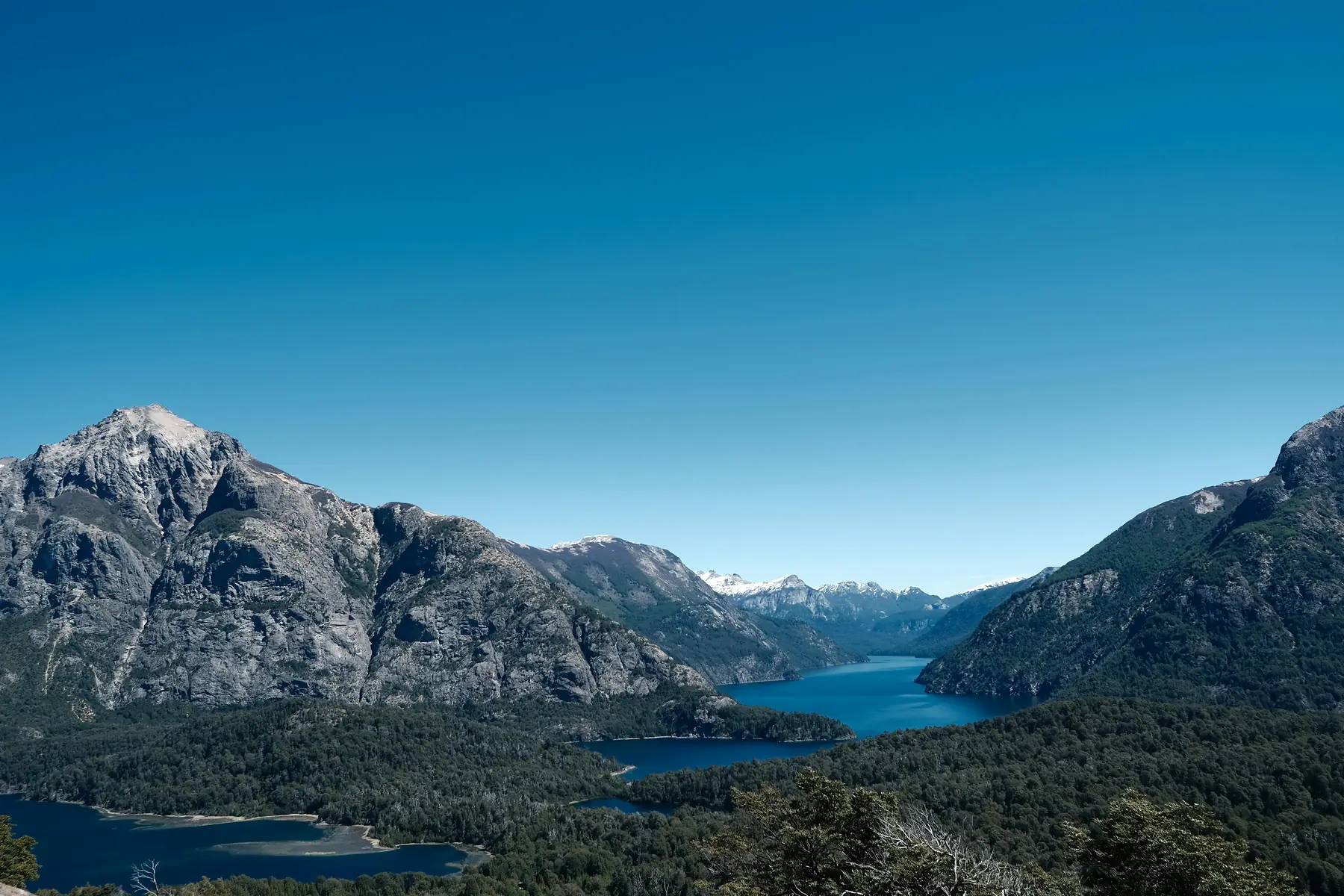
The Huemul Circuit is best experienced over four days, which allows for manageable mileage and the best chance of catching a clear weather window at the two high passes.
Day 1: El Chalten to Laguna Toro (15km) The first day is a relatively gentle introduction, climbing through forests and open pampas with views of the Fitz Roy massif behind you. You will end the day at Laguna Toro, a primitive campsite nestled in a valley. This is the last camp with anything resembling a toilet, though its condition can be variable.
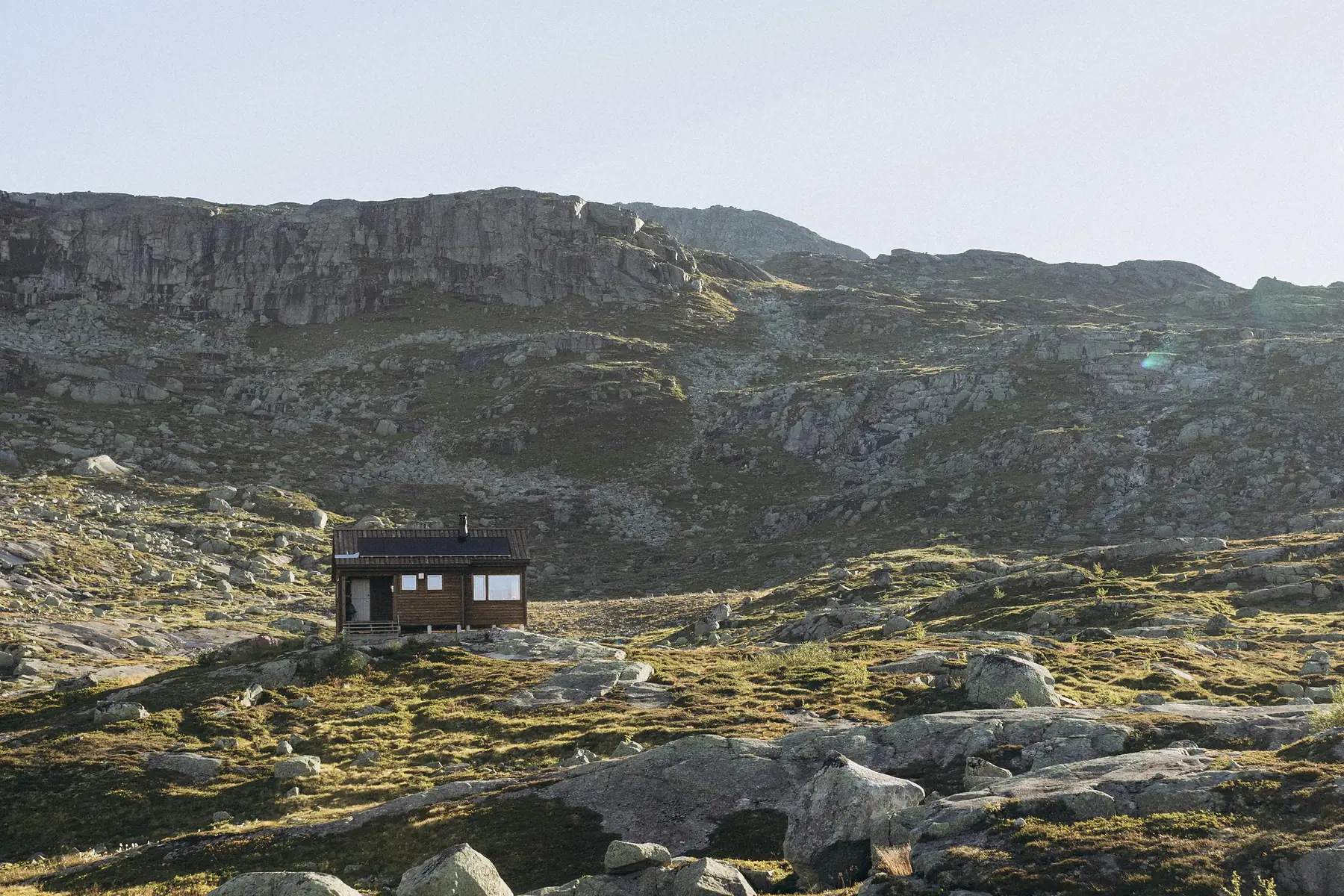
Day 2: Paso del Viento (12km) This is the “Crux” of the trek. You will face the first Tyrolean traverse shortly after leaving camp, followed by a long ascent across the Tunnel Glacier moraine. The terrain here is shifting rock and ice; following the cairns is essential. The reward is the summit of Paso del Viento, where the Southern Patagonian Ice Field is revealed. You will camp at the Refugio Paso del Viento, a small stone hut used primarily for cooking and emergencies.
Day 3: Paso Huemul to Lago Viedma (18km) After a morning traverse with constant views of the Viedma Glacier, you will climb to Paso Huemul. The view here is often considered even better than the previous day, as the glacier spills directly into the turquoise waters of Lago Viedma. The day ends with the grueling 800m vertical descent to the lake shore.
Day 4: The Return to El Chalten (18km) The final leg follows the coastline of Lago Viedma across ranch lands. You will face a second Tyrolean traverse at Bahia Tunnel. Once across, the trail eventually joins a gravel road. If you haven’t pre-arranged a taxi from the Bahia Tunnel port, expect an additional 8km walk on flat road back into town.
Navigation and Route Finding
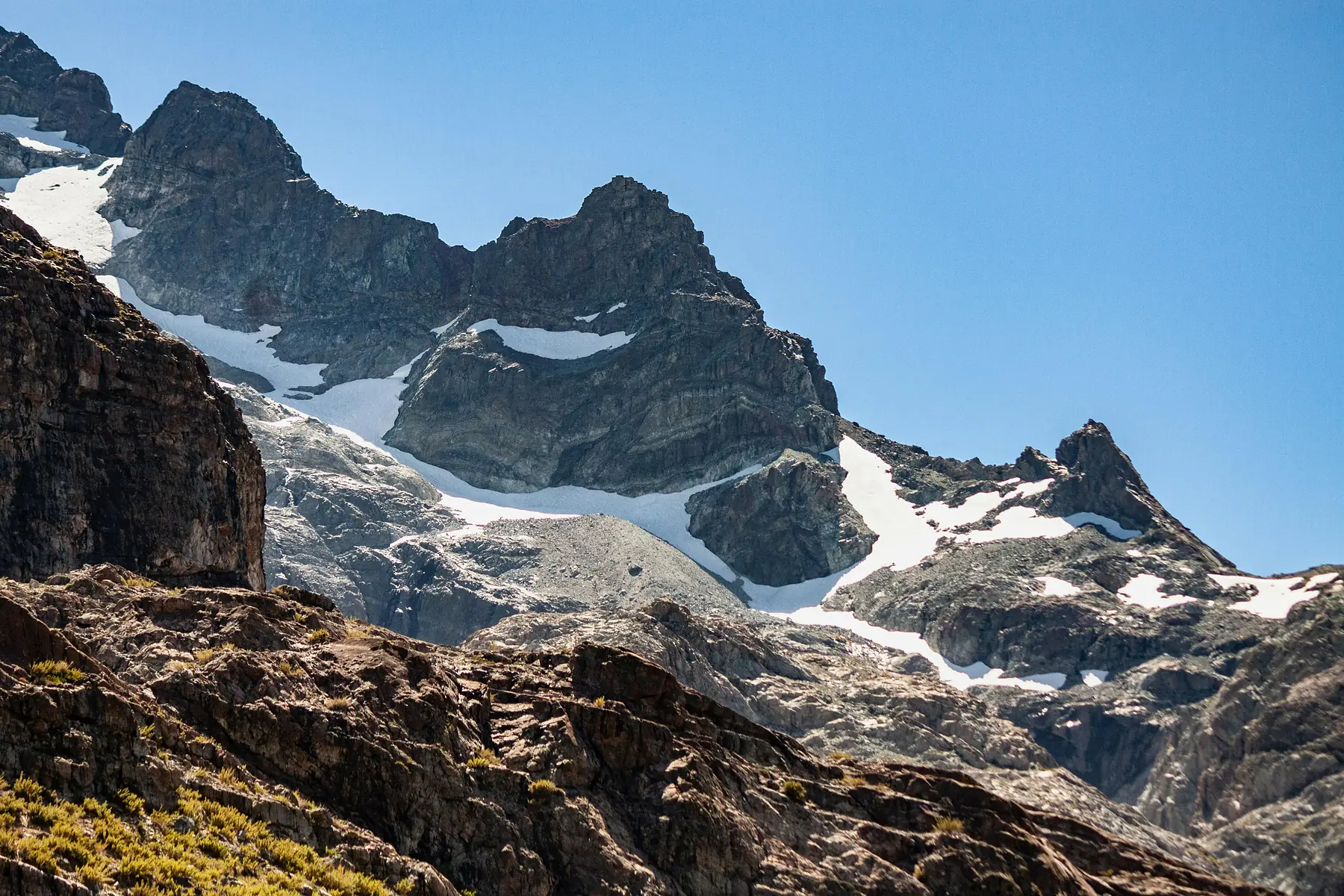
Navigation on the Huemul Circuit is a significant step up from the well-trodden paths of the Fitz Roy valley. Once you pass Laguna Toro on Day 1, formal trail markers essentially disappear. You will be relying on “cairns” (small stacks of rocks) left by previous hikers, which can be easily knocked over by wind or obscured by snow.
The section across the Tunnel Glacier moraine is particularly challenging. The landscape is a chaotic mix of loose boulders and glacial silt that changes every season as the ice shifts. It is very easy to lose the “line” here and end up in unstable terrain. On the final day, the challenge is different: numerous “cow trails” created by local livestock can lead you away from the river crossing and into dead-end thickets.
For these reasons, carrying a dedicated GPS device like a Garmin inReach is highly recommended, not just for navigation but for emergency communication. You should also have offline maps downloaded on your phone. To understand the layout of the region before you go, consult our El Chalten trail map.
The “cairn-hopping” on the Day 2 moraine is significantly slower than standard hiking. Budget at least 1.5 to 2 hours just for the glacier section, even if the distance looks short on your map.
Best Time to Hike and Weather Strategy
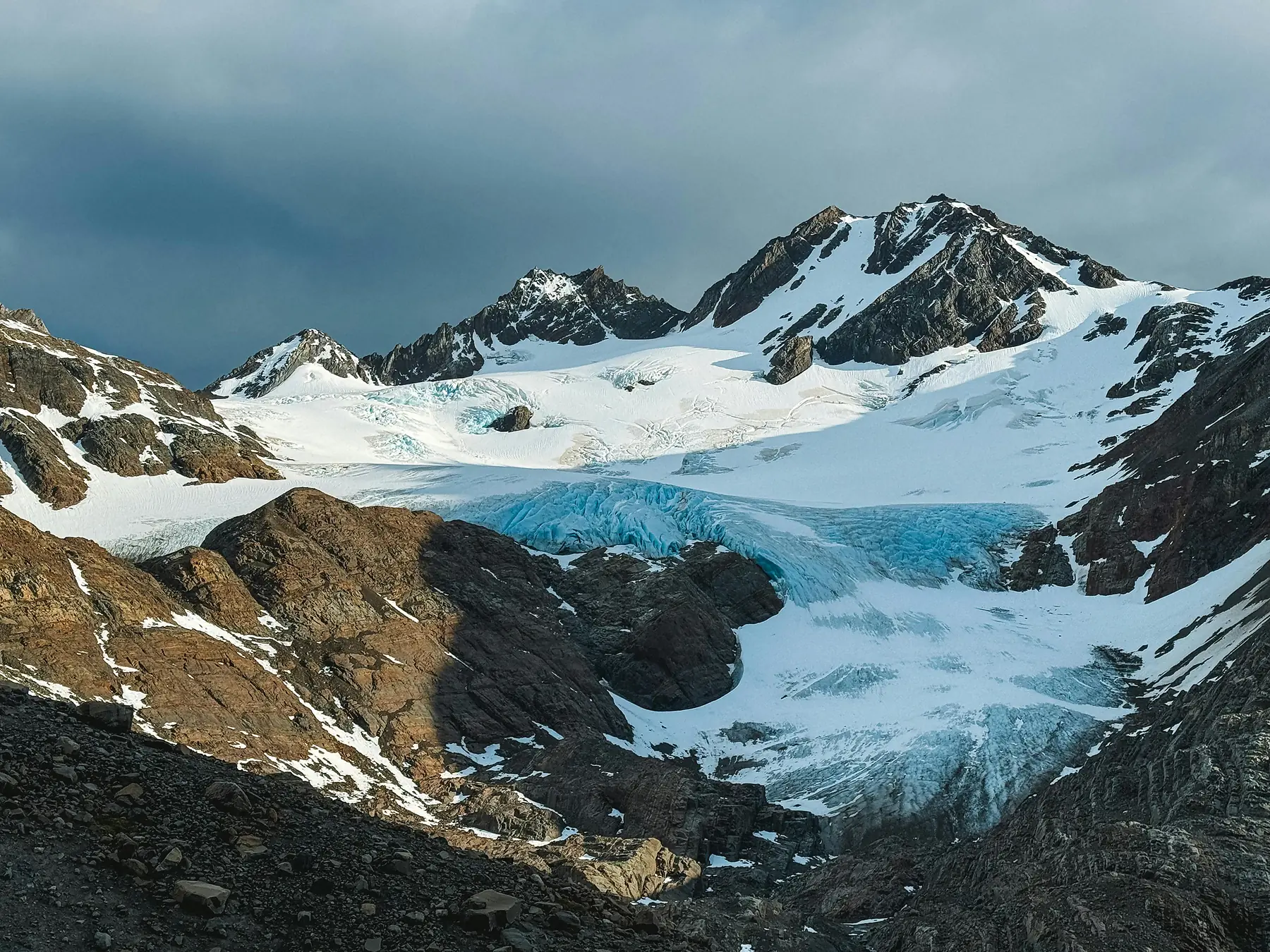
The primary window for the Huemul Circuit is from December to March, when the days are longest and the passes are most likely to be clear of deep snow. November and April are viable shoulder months, but they carry a much higher risk of winter storms that can make the Tyrolean traverses dangerous or the passes impassable.
Weather strategy on the Huemul is centered around wind speeds. While rain is an inconvenience, wind is a safety hazard. Paso del Viento earned its name for a reason: it acts as a funnel for the winds coming off the Ice Field. Before leaving El Chalten, check the El Chalten month-by-month weather and specifically look at the Windguru forecast for “Paso del Viento.”
If the forecast shows sustained winds exceeding 60-70 km/h, the park rangers will often advise against starting the trek or may temporarily close the trail to new departures. The best strategy is to build 1-2 “buffer days” into your El Chalten itinerary. If the weather is bad on your planned start date, use those days for shorter hikes like Laguna de los Tres and wait for the window to open.

Camping and Logistics on the Trail
Camping on the Huemul Circuit is primitive. There are no refugios with beds, no trash bins, and no kiosks to buy food. You must be prepared to pack out everything you pack in, including all food scraps and toilet paper.
Water is abundant along the route, sourced from glacial streams. While the water is generally some of the purest on earth, it is wise to use a filter when camping near Laguna Toro or on the final day’s ranch lands, where cattle grazing is common. The “Paso del Viento” shelter is a small, rustic stone hut. It is an excellent place to escape the wind while cooking dinner, but it is not intended for sleeping unless there is a genuine emergency.
One of the most overlooked logistical challenges is wildlife—specifically the mice. The campsites near Lago Viedma are known for a high population of rodents that can chew through expensive tents and backpacks to reach food. Always hang your food or use a rodent-proof bag. For your “non-trekking” luggage, most hotels and hostels in town will provide secure storage for a few days while you are on the circuit; check our El Chalten accommodation guide for the best base camps.
The toilet situation at Laguna Toro has historically been a challenge for the park. If the designated area is full, ensure you are at least 60 meters from any water source and bury waste in a “cathole” 15-20cm deep.
Related guides to explore next
QUESTION: How hard is the Huemul Circuit compared to other Patagonia treks?
ANSWER: The Huemul Circuit is significantly harder than the W or O Treks, requiring technical river crossings and off-trail navigation. It involves steep, 50-degree descents and cumulative elevation gains that demand high physical fitness and backcountry experience.
QUESTION: Is a guide mandatory for the Huemul Circuit in El Chalten?
ANSWER: No, a guide is not mandatory, but highly recommended for those without experience in Tyrolean traverses or glacial navigation. If you are not confident with a harness or reading topographic maps in shifting terrain, hiring a local guide is a vital safety decision.
QUESTION: Do I need a permit for the Huemul Circuit?
ANSWER: Yes, a free permit is required and should be completed via the Los Glaciares National Park online form before starting. You must also check back in with the rangers upon your return to El Chalten to close your permit.
QUESTION: Are there refugios on the Huemul Circuit?
ANSWER: No, there are no sleeping refugios on the Huemul Circuit; you must be fully self-sufficient with a 4-season tent and stove. There are small emergency shelters at Paso del Viento and Laguna Toro, but these are for cooking or survival, not for overnight stays.
QUESTION: Can I do the Huemul Circuit in 3 days?
ANSWER: While possible for elite hikers, the Huemul Circuit is designed as a 4-day trek to allow for safe passage over the two high mountain passes. Attempting it in three days increases the risk of fatigue on the technical river crossings and the steep Paso Huemul descent.
QUESTION: Is the water on the Huemul Circuit safe to drink?
ANSWER: Yes, water from glacial streams on the Huemul Circuit is generally safe, though filtration is recommended near the Laguna Toro and ranch land sections. Always collect water upstream from campsites or areas where livestock are present.