W Trek Packing List: The Definitive 2026/27 Trail Gear Guide
Packing for the W Trek requires a tactical balance between preparing for 100 km/h winds and keeping your pack light enough for steep vertical climbs. The most successful hikers use a tiered system: high-performance technical layers for the trail, a dedicated summit pack for the highlights, and a city bag left safely in a Puerto Natales locker.
Torres del Paine is famous for experiencing four seasons in a single day. You might begin a morning in the Francés Valley under a relentless sun, only to face freezing rain and lateral gusts by the time you reach the Grey Glacier lookout. This guide breaks down exactly what needs to be in your pack - and what should stay in town - to ensure you are prepared for the specific microclimates of the W Trek.
The W Trek Packing Philosophy: Light is Right
Every extra kilogram in your pack is a tax you will pay on the 800-meter vertical ascent to the Mirador Las Torres. The goal is not to bring everything you might need, but to bring only what is essential for safety and comfort in a high-alpine environment.
Most hikers arrive in Patagonia with far too much gear. The secret to a manageable pack is the Puerto Natales Stash. Almost every hostel and hotel in Puerto Natales offers secure luggage storage for a small fee or for free while you are on the trail. You should leave your travel clothes, laptops, and “just in case” items there, taking only your trekking kit into the park.
When organising your gear, think in three categories: what you wear (your base outfit), what stays in your main pack (camp gear and extras), and what goes into a 15-20L summit pack for the out-and-back sections. For a deeper look at specific brand recommendations for these items, see our W Trek gear reviews.
The Layering System: Defeating the Patagonian Wind
On the W Trek, the wind is a more formidable opponent than the rain. The section between Refugio Paine Grande and Refugio Grey acts as a natural wind tunnel, where gusts can easily exceed 100 km/h during the peak summer season. Your clothing must function as a cohesive system to manage moisture from sweat while blocking the biting sub-polar air.
Focus your layering strategy on the trail-specific transitions. During the steep climb up the Francés Valley, you will likely be down to a single moisture-wicking base layer. However, as soon as you stop at the Británico lookout, your core temperature will drop rapidly. You need a mid-layer or a lightweight “puffy” jacket accessible at the top of your pack to throw on immediately.
Do not rely on a standard waterproof rain jacket as your only wind protection. The wind in Torres del Paine can force moisture through zippers and seams. Ensure your shell is a high-quality, 3-layer technical jacket designed for alpine conditions.
Your outer shell is your wind armor. It should be breathable enough to wear while moving but robust enough to withstand 80 km/h gusts. For the lower body, many hikers prefer softshell trekking pants for their wind resistance and stretch, though a combination of leggings and lightweight rain pants is a more versatile alternative for variable weather. For a full technical breakdown of the fabrics and science behind this approach, read our guide to the Patagonia layering system.
Footwear: Protecting Your Engine
Your choice of footwear is the single most important gear decision you will make. The terrain on the W Trek is diverse, ranging from well-maintained gravel paths to the unstable, boulder-strewn moraine at the base of the Towers.
The debate between mid-weight boots and trail runners is ongoing. Boots offer essential ankle support for the rocky sections and better protection against the mud often found near Lake Skottsberg. However, trail runners are increasingly popular for their weight savings and faster drying times. If you choose trail runners, ensure they have a rock plate and aggressive lugs to handle the loose scree.
The “sacred” dry sock rule: Always keep one pair of heavy wool socks in a waterproof dry bag inside your sleeping bag. No matter how wet your day was, you must have a guaranteed dry pair for sleeping to prevent trench foot and maintain warmth.
To see the specific terrain where your boots will be tested, including the steep descents that punish your toes, visit our W Trek day-by-day guide.
Backpacks and the “Summit Pack” Strategy
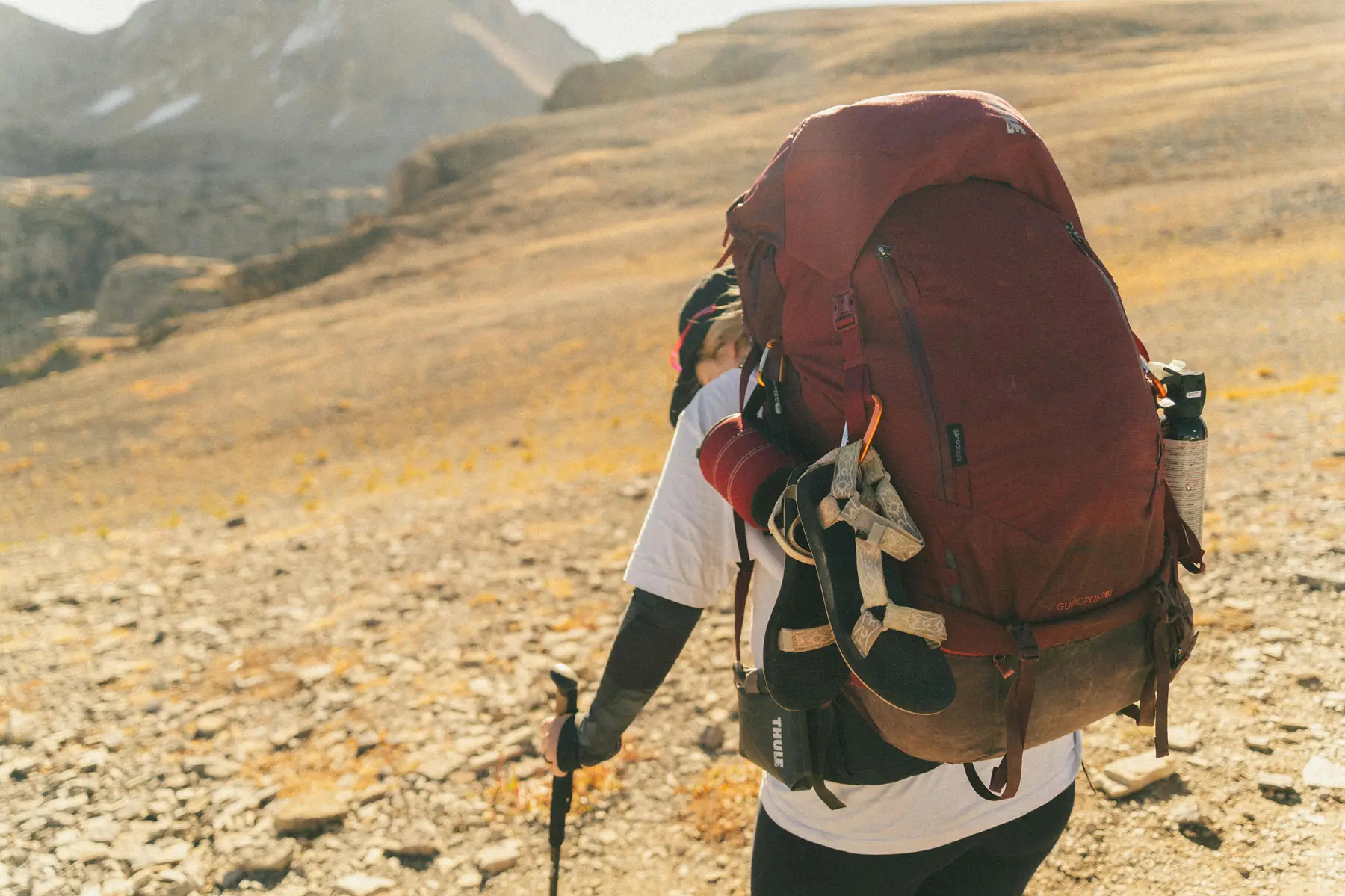
The volume of your pack depends entirely on your accommodation. Campers carrying a tent, stove, and food generally need a 50-65L pack. If you are staying in refugios and purchasing the full meal plan, you can easily fit everything into a 35-45L pack.
Regardless of your main pack size, a packable 15-20L summit pack is a tactical necessity. On Day 1 (to the Towers) and Day 3 (up the Francés Valley), you will leave your main pack at a ranger station or campsite. Carrying only water, snacks, and an extra layer in a light bag allows you to move significantly faster and with less strain on these vertical sections.
- Weight: 12-18kg vs 6-9kg
- Bulk: High (requires external attachments) vs Low (fits in overhead bins)
- Complexity: Requires stove/fuel/tent management vs Clothing and hygiene only
- Flexibility: Can camp anywhere booked vs Restricted to specific buildings
Refugio-based hikers save roughly 5-7kg in base weight, making the steep climbs significantly more enjoyable.
If the prospect of carrying a heavy pack over 70+ kilometres feels like a barrier to your trip, you may want to consider hiring porters or booking a guided trip. You can learn more about these logistics in our guided vs self-guided W Trek comparison.
The Essential W Trek Gear Checklist
This list covers the non-negotiable items required for a safe and successful trek in the 2026/27 season. Note that while many hikers drink directly from fast-flowing, glacier-fed streams, using a compact filter is recommended for water sources near high-traffic campsites.
- Trekking Poles: Non-negotiable. They save your knees on the nearly 900m of cumulative descent from the Towers and provide vital stability in high winds.
- Headlamp: Essential for sunrise hikes to the Mirador and navigating around camp.
- Hydration: A 1L bottle is sufficient due to frequent water access; avoid heavy 3L bladders.
- Navigation: Downloaded offline maps via Gaia or CalTopo. While the trail is well-marked, whiteouts can occur.
- Sun Protection: The UV levels in Patagonia are exceptionally high. Bring SPF 50+, a Buff, and high-quality sunglasses.
The Refugio Deduction: What to leave behind
If you have booked a “Fully Supported” stay (often called “Cama Armada” or “Made-up Bed”) in the refugios, you can remove the following items from your list:
- Sleeping Bag: These bookings provide a full bed setup including a duvet or sleeping bag, sheets, and a pillow.
- Stove and Fuel: Cooking is only allowed in designated camping areas, not inside refugios.
- Food: If you have a full board meal plan, you only need to carry trail snacks.
- Towel: Most “Made-up Bed” bookings in premium refugios include a towel, though it is worth double-checking your specific reservation.
Before you commit to buying all this gear, ensure you have secured your trail reservations, as campsites and refugios sell out months in advance. Follow our W Trek booking guide to lock in your dates.
Camping & Sleep System (Self-Supported Only)
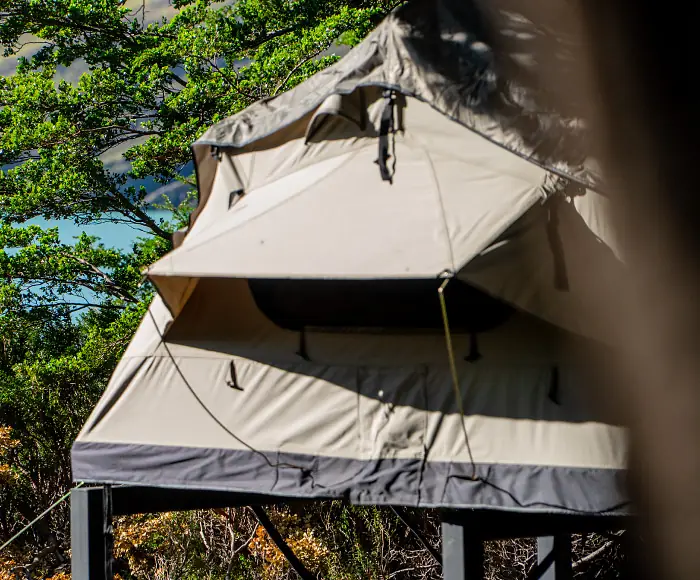
For those sleeping under canvas, your gear must be “Patagonia-proof.” A cheap festival tent will likely collapse or tear in the 100 km/h gusts at Campamento Grey. You need a low-profile, four-season tent with high-tension poles.
Your sleeping bag should be rated to a comfort level of at least 0°C (32°F), even in the height of summer. The ground remains cold year-round, so an insulated sleeping pad with an R-value of 3.0 or higher is essential to prevent the earth from leaching your body heat. For a list of specific tents and pads that have survived Torres del Paine’s worst storms, see our guide to the best tents for Patagonia.
Trail Kitchen & Food Logistics
Cooking on the W Trek is strictly regulated. You are only permitted to use stoves in designated areas at campsites to prevent forest fires, which have devastated the park in the past.
Integrated canister stoves like a Jetboil are the gold standard here because the burner is shielded from the wind, significantly reducing boil times and fuel consumption. You should purchase your isobutane-propane fuel canisters in Puerto Natales. While small shops at Refugio Paine Grande and Refugio Grey occasionally stock them at a premium, they are not available at the Laguna Amarga entrance and supplies are not guaranteed.
To save weight, repackage all freeze-dried meals into single bags and remove excess cardboard. This also helps with the “Leave No Trace” mandate, as you must carry all your trash out of the park.
What NOT to Pack
The most common mistake is over-packing for “just in case” scenarios. To keep your pack weight down, leave these items in Puerto Natales:
- Cotton Clothing: Jeans and cotton hoodies are heavy, hold moisture, and provide zero insulation when wet. They are a safety hazard in Patagonia.
- Excessive Toiletries: You do not need a full bottle of shampoo or a large towel. A small travel-sized soap and a microfiber cloth are sufficient.
- Heavy Books: A Kindle or a phone with e-books is a much lighter way to spend your evenings in the refugio.
- Large Water Bladders: Carrying 3kg of water is unnecessary when you cross a fresh, drinkable stream every hour. A 1L bottle is plenty.
Related Planning Resources
If you are ready to start assembling your kit or mapping out your journey, these guides provide the next level of detail.
FAQ
- QUESTION: Do I need trekking poles for the W Trek?
- ANSWER: Yes, trekking poles are highly recommended for the W Trek to provide stability against high winds and to protect your knees during the steep, rocky descents from Mirador Las Torres and the Francés Valley.
- QUESTION: Is the water on the W Trek safe to drink?
- ANSWER: Most hikers drink directly from the fast-flowing glacier-fed streams on the W Trek, but using a compact filter like a Katadyn BeFree is recommended to guarantee protection against Giardia and other parasites, especially near campsites.
- QUESTION: What is the best size backpack for the W Trek?
- ANSWER: If you are camping, a 50–65L backpack is ideal for the W Trek; if you are staying in refugios and purchasing meals, a 35–45L pack is sufficient.
- QUESTION: How many pairs of socks should I pack for the W Trek?
- ANSWER: Pack three pairs of high-quality wool hiking socks for the W Trek: one to wear, one drying on your pack, and one “sacred” dry pair kept strictly for sleeping.
- QUESTION: Can I buy stove fuel in Torres del Paine?
- ANSWER: It is not recommended to rely on buying fuel in the park. While shops at Paine Grande and Grey may have limited stock at high prices, you should purchase your isobutane-propane fuel canisters in Puerto Natales before entering the park.
- QUESTION: What should I wear for a W Trek sunrise hike?
- ANSWER: For the sunrise hike to the Towers, wear a moisture-wicking base layer, a heavy fleece, and a windproof shell, as temperatures at the Mirador Las Torres are significantly lower than at the trail base and the wind is often stronger.