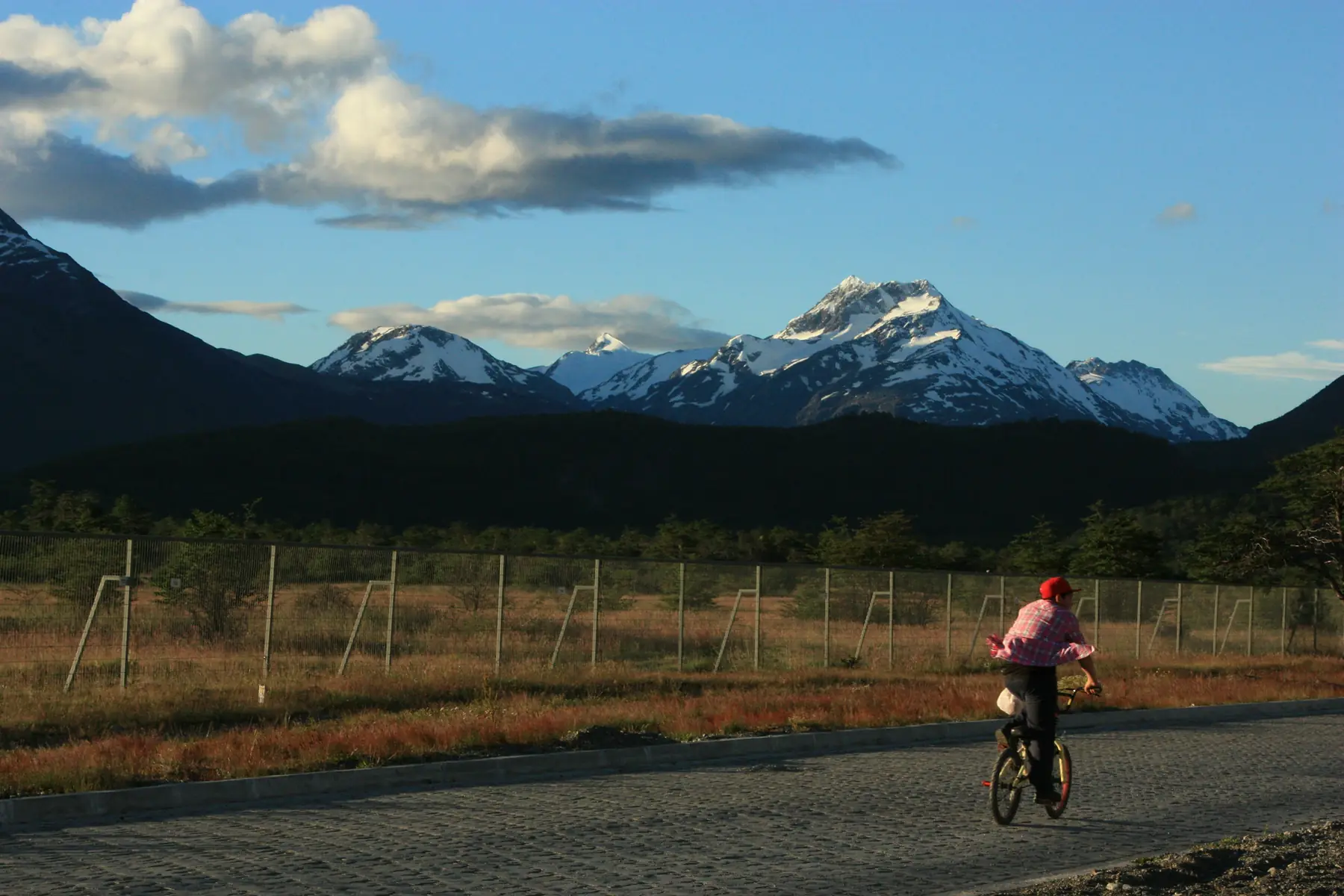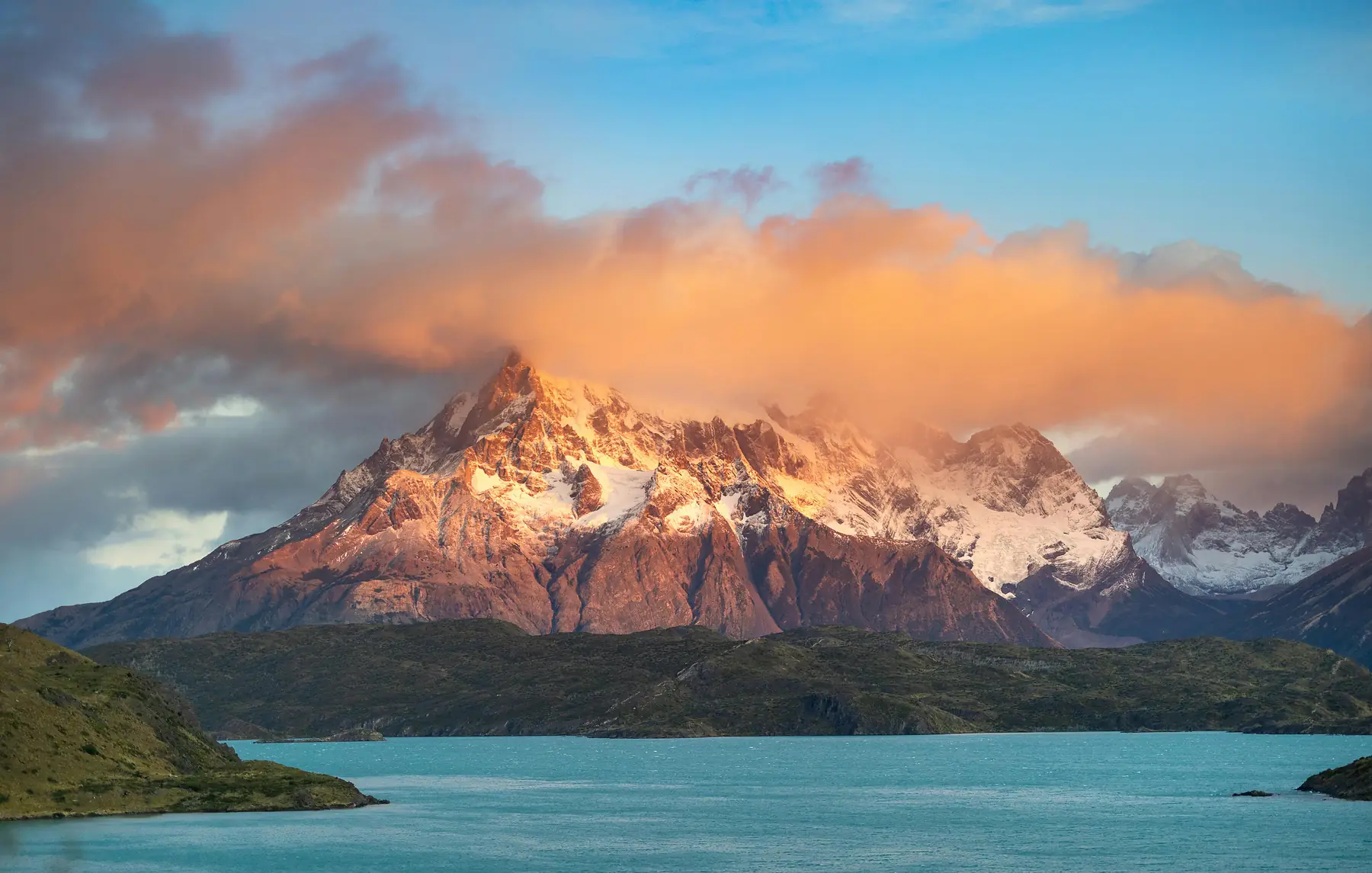
Hitchhiking in Patagonia, known locally as hacer dedo, is a safe, culturally accepted, and highly effective way to navigate the region, particularly along the Carretera Austral. For many travelers, it is the primary strategy for managing the high cost of Patagonian transport while reaching remote trailheads that buses simply do not serve.
While the “thumb” is a rite of passage here, success is not guaranteed by luck alone. It requires a specific understanding of Patagonian geography, wind patterns, and the unwritten social contract between drivers and travelers. Whether you are aiming to traverse the lush fjords of Chile’s Route 7 or the desolate steppe of Argentina’s Ruta 40, this guide provides the tactical blueprint for moving efficiently through some of the world’s most challenging landscapes.
Is Hitchhiking in Patagonia Safe?
Hitchhiking in Patagonia is remarkably safe compared to almost anywhere else in the world, with a long-standing tradition of locals picking up travelers in areas where public transport is sparse. In the Aysén and Magallanes regions, the culture of hacer dedo is so ingrained that you will often see local students and workers waiting at town exits alongside backpackers.
However, safety in this context is less about crime and more about environmental exposure. The primary risks are the climate and the isolation of the roads. If you are dropped at a remote junction, you must be prepared for the possibility that another car may not pass for hours, or even a full day.
Always carry a “bail-out” kit in your daypack, not buried in your main bag. This should include a headlamp, a windproof shell, and enough high-calorie snacks to last 24 hours. If a driver’s intuition feels off, “playing dumb” by claiming you forgot something in town or are waiting for a friend is a standard, low-conflict way to decline a ride.
For solo female travelers, the general sentiment remains positive, though standard precautions apply. While general safety in Patagonia is high, solo travelers should prioritize sharing their live location via WhatsApp when signal is available and trusting their gut when a vehicle stops. For a deeper breakdown of personal security protocols, refer to our guide on solo travel in Patagonia.
The wind is a genuine safety hazard. On the Argentinian side, sustained winds can exceed 80 km/h, with gusts reaching over 120 km/h. Never stand directly on the road shoulder during high winds, as gusts can push vehicles toward you or blow you into the path of traffic.
The Best Hitchhiking Routes in Patagonia
Not all Patagonian roads are created equal. The experience of hitching in the lush, rainy forests of Chile is fundamentally different from the experience on the dry, wind-swept plains of Argentina.
The two primary arteries for travelers are the Carretera Austral (Route 7) in Chile and Ruta 40 in Argentina. Understanding the traffic patterns of these roads will determine whether you spend your day moving or shivering on a shoulder.
- Traffic Volume: Moderate–high in summer; tourists, locals, campervans, and supply trucks. (Carretera Austral)
- Traffic Volume: Lower and more dispersed; mostly trucks and local traffic. (Ruta 40)
- Road Condition: Mix of pavement and maintained gravel (“ripio”); narrow and winding. (Carretera Austral)
- Road Condition: Mostly paved with rough gravel sections in the south; very long stretches. (Ruta 40)
- Typical Wait Times: Usually 30 min–4 hrs in peak season. (Carretera Austral)
- Typical Wait Times: Often 1–6+ hrs, especially in remote areas. (Ruta 40)
- Scenery: Rainforest, glaciers, turquoise rivers, fjords, and mountains. (Carretera Austral)
- Scenery: Huge skies, desert plains, and Andes views. (Ruta 40)
- Main Challenge: Competition from other hitchhikers at popular stops. (Carretera Austral)
- Main Challenge: Sparse traffic, strong wind, and isolated sections. (Ruta 40)
- Best For: Easier, more social hitchhiking with varied scenery. (Carretera Austral)
- Best For: A more remote, rugged long-distance adventure. (Ruta 40)
- Overall Difficulty: Moderate - relatively hitchhiker-friendly in summer. (Carretera Austral)
- Overall Difficulty: Moderate–hard - requires more patience and planning. (Ruta 40)
Choose the Carretera Austral for the highest success rate and scenery; choose Ruta 40 only if you have a high tolerance for waiting and a sturdy 4-season tent.
The Carretera Austral (Route 7)
This is the “Gold Standard” for hitchhiking. Because many sections have limited bus service, locals view picking up travelers as a neighborly duty. The most popular segments include the stretch from Coyhaique to Villa Cerro Castillo and the journey south toward Puerto Río Tranquilo. For a full list of must-see spots along this road, see our guide to the Carretera Austral.
Ruta 40 (Argentina)
Often referred to as “Hard Mode,” the Argentinian side involves vast distances across the Pampa. Between towns like Bajo Caracoles and El Chaltén, traffic can be non-existent for long stretches. The wind here is relentless, and there is almost no natural shelter. If you attempt Ruta 40, you must be entirely self-sufficient.
Short Hops and Border Crossings
Hitching between El Calafate and El Chaltén is very common and usually quite fast due to the high volume of tourist rental cars. Similarly, the border crossing near Chile Chico (Paso Río Jeinimeni) is a frequent transit point for those moving between the two countries.
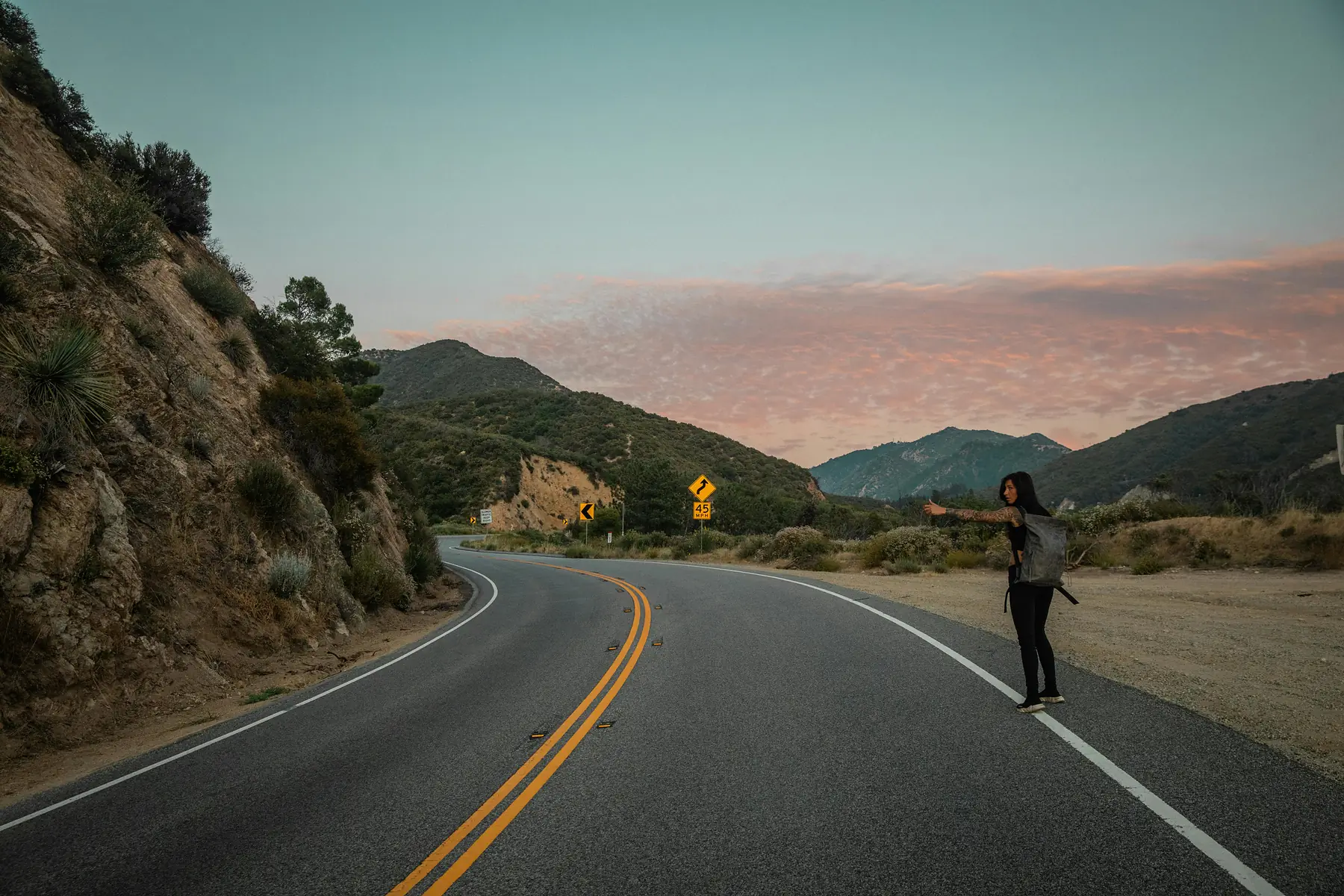
When to Go: Seasonality and Timing
The window for successful hitchhiking in Patagonia is narrow, dictated by the dramatic shift in traffic and daylight. Outside of the summer months, many roads become impassable or so quiet that you may wait days for a single vehicle.
Peak Summer (December–February)
This is when traffic is at its highest, but so is the competition. In popular hubs like El Chaltén or Coyhaique, you might find “queues” of ten or more backpackers at the town exit. During these months, the “early bird” rule is absolute. To see how this fits into your broader itinerary, check the best time to visit Patagonia.
The Shoulder Season (October–November & March–April)
Many experienced travelers consider this the “Sweet Spot.” While there are fewer cars, there is almost no competition from other hitchhikers. Drivers are often more inclined to pick you up because you are a “rare” sight rather than just another face in a crowd of twenty.
Winter (May–September)
Hitchhiking in winter is not recommended for anyone but the most experienced cold-weather experts. Many mountain passes close due to snow, and the risk of hypothermia while waiting on a roadside is significant. If you must travel during this time, stick to the bus network.
How to Catch a Ride: 7 Tactical Tips
Winning the “featured snippet” of a driver’s attention requires more than just a thumb in the air. You are competing with the landscape, the wind, and other travelers. Use these seven tactics to increase your chances of a quick pickup.
The Sign Strategy
Use a large piece of cardboard and a thick black marker. Write only the destination name in block capitals. If you are going a long way, write a major junction or the next town instead of the final destination 500km away. Drivers are more likely to pick you up for a 50km “hop” than a multi-day journey.
Master the Stand Point
Never stand in the middle of a town. Walk to the very last speed bump (lomo de toro) or the local gas station (YPF in Argentina, Copec in Chile). In El Chaltén, the best spot is the YPF at the town entrance. In Coyhaique, walk out past the bridge toward the Balmaceda junction.
The 'Traveler' Look
Drivers want to pick up an adventurer, not a vagrant. Keep your face visible (remove sunglasses and hoods when a car approaches). Stand up, smile, and make eye contact. If you are sitting on your pack looking miserable, cars will drive right past.
Manage Your Gear Visually
Stack your bags neatly so a driver can instantly see how much space you take up. If you have a massive trekking pack, keep it upright. If you have a small daypack, wear it on your front or tuck it behind the big bag to look more compact.
Avoid the 'Dog Trap'
Patagonian towns are full of stray dogs that love to chase car tires. If a dog is hanging around you, move. Drivers will not stop if they think a dog will jump at their door or get under their wheels.
The Power of Two
A solo traveler is easiest to pick up, but a pair (ideally one male, one female) is the most common successful configuration. If you are a group of three or more, your chances drop by 90%. Split up and agree to meet in the next town.
Digital Reinforcements
Use offline maps like Maps.me or Organic Maps to identify river crossings or junctions where cars are forced to slow down. Additionally, join Facebook groups like “Mochileros Carretera Austral” or “Hacer Dedo por la Carretera Austral” for real-time updates on road closures or ride-share offers.
Etiquette and Cultural Nuances of “Hacer Dedo”
Hitchhiking is a social contract. In exchange for a free ride, you are providing company and conversation to the driver. Understanding the unwritten rules of Patagonian roads will ensure you remain a welcome guest.
The Queue System
If you arrive at a junction and another hitchhiker is already there, the rule is simple: walk at least 50 to 100 meters past them (in the direction of travel). Never “jump” the line by standing in front of someone who was there first. If the first person gets a ride, you move up to their spot.
The Mate Strategy
In Argentina especially, the mate (a caffeinated herbal tea) is the center of social life. If a driver is drinking mate, they may ask you to “prime” it for them (pouring the water and passing it back). This is the ultimate sign of trust. If you have your own thermos, offering hot water to a driver is a guaranteed way to make a friend.
Conversation and Spanish
You don’t need to be fluent, but knowing basic phrases is essential. Drivers pick you up because they are bored or curious. Being able to talk about where you are from and your impressions of Patagonia is part of the “payment.” Brush up on your skills with our Patagonian language guide.
Offering Gas Money
In Chile and Argentina, it is not strictly expected to pay for a ride, but it is polite to offer, especially on long hauls of 200km or more.
When offering money, use the phrase “¿Te puedo ayudar con algo para la bencina/nafta?” (Can I help you with something for the gas?). As of the 2026/27 season, a contribution of 5,000–10,000 CLP or the equivalent in ARS is a respectful gesture for a long journey. If they refuse twice, don’t insist; just offer some high-quality snacks or chocolate instead.
For more on local currency and tipping culture, see our guide to money in Patagonia.
Crossing Borders While Hitchhiking
Crossing between Chile and Argentina while hitchhiking adds a layer of logistical complexity. Most border stations in Patagonia are not “back-to-back.” There is often a “No Man’s Land” of several kilometers between the Chilean customs office and the Argentinian one.
For example, at the Paso Río Jeinimeni near Chile Chico, the distance between the Chilean customs office and the Argentine office in Los Antiguos is approximately 8 kilometers.
The Strategy for Borders:
- The Drop-off: Ask your driver to drop you at the first customs office.
- The Exit: Complete your exit paperwork and get your passport stamped.
- The Walk: Do not wait for a car at the first office. Walk across the “No Man’s Land” toward the second office. Drivers are much more likely to pick you up once they see you have already cleared the first stage of the border.
- The Re-entry: Complete your entry paperwork at the second office, then stand at the exit of that building to catch a ride into the next town.
Drivers are often hesitant to take hitchhikers across the actual border line because they are legally responsible for everything in their vehicle. It is much easier to get two separate rides than one ride that crosses the line. For more on documentation, see our Patagonia border crossing guide.
Essential Gear for the Patagonian Hitchhiker
When you are hitchhiking, your gear is your life support system. You must be prepared to spend a night on the side of the road if a ride doesn’t materialize.
- Shelter: A 4-season tent is non-negotiable. The wind in Patagonia can snap the poles of a cheap 3-season tent in minutes. Check out our tent recommendations for specific models that handle the wind.
- High-Visibility: A bright rain cover for your backpack or a small high-vis vest. This isn’t just for night; Patagonian dust storms can reduce visibility to near zero in seconds.
- Emergency Rations: Always have two days’ worth of food that doesn’t require cooking (nuts, dried fruit, chocolate). If it’s too windy to light your stove, you still need to eat.
- Wind Protection: A high-quality hardshell jacket. Waiting for three hours in a 60 km/h wind will sap your body heat even if it’s sunny. See our layering guide for more.
If the prospect of waiting in the wind with a heavy pack sounds daunting, you aren’t alone. Many travelers mix hitchhiking with more predictable methods.
Hitchhiking is the ultimate way to see Patagonia on a budget, but it requires patience and a sense of adventure. If you’re looking for more ways to save, explore our guide to Patagonia on a budget.
FAQ
Is hitchhiking in Patagonia safe for solo female travelers? Yes, Patagonia is generally very safe for solo women, though standard precautions like sharing your live location and trusting your intuition are essential. Most solo women report positive experiences, often being picked up by families or other female drivers.
How much money should I offer for gas when hitchhiking in Patagonia? While most drivers don’t expect payment, offering to contribute 5,000–10,000 CLP or the equivalent in ARS (as of 2026/27) on long journeys is a polite gesture. It is often appreciated, though many locals will refuse the money out of a sense of hospitality.
What does “hacer dedo” mean in Patagonia? “Hacer dedo” is the local Spanish phrase for hitchhiking, literally translating to “doing the finger” or “using the thumb.” It is the term you will use when locals ask how you are getting around.
Is it easy to hitchhike the Carretera Austral during the summer? Hitchhiking the Carretera Austral is very popular in summer, meaning rides are frequent but competition from other backpackers at junctions can be high. You should expect to wait and start your day as early as possible to beat the crowds.
Can I hitchhike from El Calafate to El Chaltén? Yes, this is a common hitchhiking route, though you should start early at the town exit as buses are frequent and competition for cars is stiff. The road is fully paved and the journey takes about 3 hours.
Do I need a tent to hitchhike in Patagonia? Yes, carrying a tent is critical for safety when hitchhiking in Patagonia in case you are stranded between towns where there is no indoor accommodation. A 4-season tent is highly recommended due to the extreme winds.