
Best Hikes in Torres del Paine: 2026/27 Trail Guide
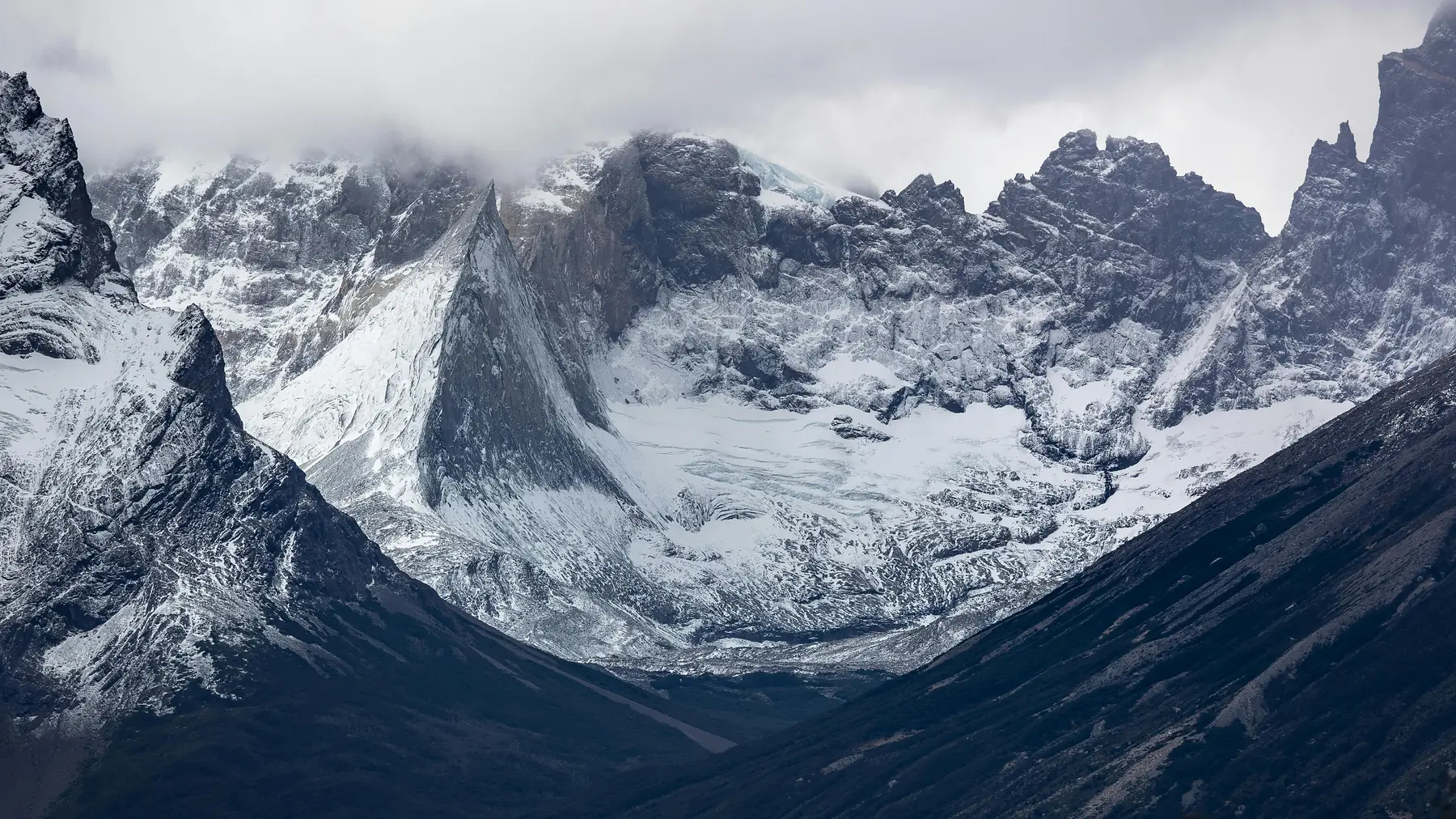
The best hikes in Torres del Paine allow you to experience the park’s most dramatic granite peaks, turquoise lakes, and calving glaciers through a series of accessible day trips. While the multi-day W and O treks receive the most international attention, almost every iconic viewpoint in the park can be reached by a single-day hike if you understand the park’s internal logistics and trail systems.
Torres del Paine National Park is the crown jewel of Chilean Patagonia, a 181,000-hectare wilderness where the transition from the rolling pampa to the vertical granite of the Paine Massif happens with startling abruptness. For the 2026/27 season, hiking here requires more than just a pair of boots; it requires a digital-first approach to entry permits and a clear strategy for moving between the park’s distinct sectors. Whether you are looking for the knee-straining ascent to the Base of the Towers or a quiet walk among grazing guanacos at Laguna Azul, this guide breaks down the essential trails for your itinerary.
Planning Your Torres del Paine Hiking Logistics
Success on the trails begins with navigating the park entry system. All visitors must purchase a park entry ticket online via the official portal (pasesparques.cl) before arriving. A multi-day pass costs CLP 48,500 and a 1-day pass costs CLP 32,400. These tickets are separate from your refugio or campsite reservations. Booking your entry as soon as your travel dates are confirmed is the first step in your planning process.
Intra-park movement is the second logistical hurdle. The park operates on a hub-and-spoke system centered around the Laguna Amarga and Pudeto sectors. If you are arriving from Puerto Natales or Punta Arenas, you will likely enter via Laguna Amarga. From there, a dedicated shuttle service coordinates with the main buses to ferry hikers to the Las Torres sector, the starting point for the park’s most famous hike. For those heading toward Glaciar Grey or the French Valley, the Pudeto sector serves as the boarding point for the catamaran across Lake Pehoé. As of the 2026/27 season, the catamaran costs CLP 25,000 one-way or CLP 40,000 return per person.
2026/27 Hiking Essentials
- Entry Permit: Mandatory online booking via pasesparques.cl (CLP 48,500 multi-day, CLP 32,400 day pass).
- Trail Cut-offs: Most major trails close to new uphill hikers at 15:00 or 16:00 for safety.
- Water: Stream water is safe to drink in most areas; bring a reusable bottle.
- Connectivity: Extremely limited; download offline maps (AllTrails or Gaia) before arrival.
- Transport: The Pudeto catamaran and Laguna Amarga shuttle are timed to meet the main buses.
For many hikers, the choice between renting a car and using the bus system is the biggest decision. A rental car offers the flexibility to reach trailheads like Laguna Azul or Cerro Ferrier on your own schedule, which is particularly valuable for sunrise or sunset photography. However, the park’s bus and catamaran system is highly efficient and connects all the “Big Three” trailheads. If you prefer to focus on the most popular routes, the bus system is a reliable and more sustainable choice.
To help you visualize these connections, you can view our Torres del Paine trail map which outlines the relationship between the main roads and the trailheads. For a deeper dive into the specific bus schedules and rental car advice, refer to our guide on how to get to Torres del Paine.
The “Big Three” Iconic Day Hikes
The “Big Three” hikes—Mirador Base Las Torres, Mirador Cuernos, and Glaciar Grey—represent the quintessential Torres del Paine experience. These trails are the most heavily trafficked for a reason: they provide the most direct access to the geological features that define the park’s identity.
| Criteria | Base Las Torres | Mirador Cuernos | Glaciar Grey |
|---|---|---|---|
| Difficulty | Strenuous | Easy-Moderate | Moderate |
| Time (RT) | 8 - 10 hours | 2 hours | 4 - 5 hours |
| Elevation | 800m - 900m | 100m | 250m |
| Highlight | The granite towers | Turquoise water | Glacial icebergs |
Choose Base Torres for the challenge, Cuernos for the best effort-to-reward ratio, and Grey for icebergs.
The hike to Mirador Base Las Torres is the park’s namesake and most demanding day trip. The 22km roundtrip journey takes you through the Ascencio Valley, climbing steeply through the “Windy Pass” before descending into a lush lenga forest. The final kilometer is a grueling scramble over a steep glacial moraine, but the payoff is the classic view of the three granite towers reflected in a glacial tarn. While the full Mirador Las Torres guide provides a step-by-step breakdown, hikers should prepare for a long day that requires an early start to beat the 16:00 trail closure at the Chileno ranger station.
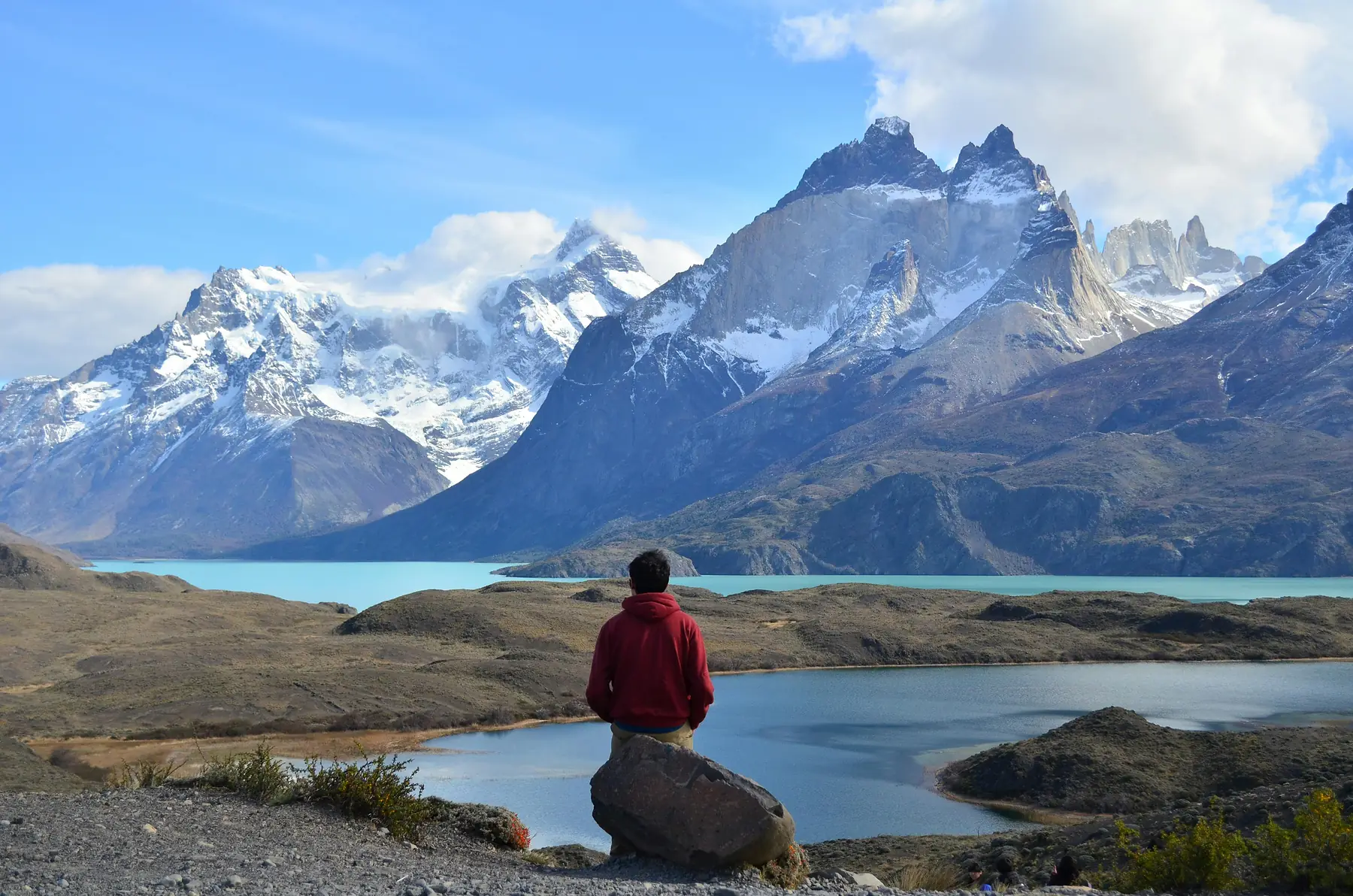
Mirador Cuernos offers a completely different rhythm. Starting from the Salto Grande waterfall, this relatively flat trail skirts the edge of Lake Nordenskjöld. The wind here can be ferocious, often funneling through the valley with enough force to create “water devils” on the lake’s surface, but the path leads to a panoramic view of the “Horns” (Los Cuernos) with their distinct black sedimentary caps. It is the best hike for those with limited time or energy who still want a high-impact view.
The hike to Glaciar Grey usually begins with a catamaran crossing from Pudeto to Paine Grande. From the landing, the trail winds through a rocky valley toward the first viewpoint of the Southern Patagonian Ice Field. As you approach the glacier, you’ll see massive blue icebergs grounded near the shore. For those wanting the complete experience, our Glaciar Grey trail guide explains how to extend this hike to the suspension bridges for a bird’s-eye view of the ice.
Challenging Climbs & Hidden Gems
Once you have seen the icons, the park’s interior holds several challenging trails that offer a more solitary experience. These “Hidden Gems” often involve steeper gradients and more exposure to the elements, but they reward the effort with perspectives of the Massif that most visitors never see.
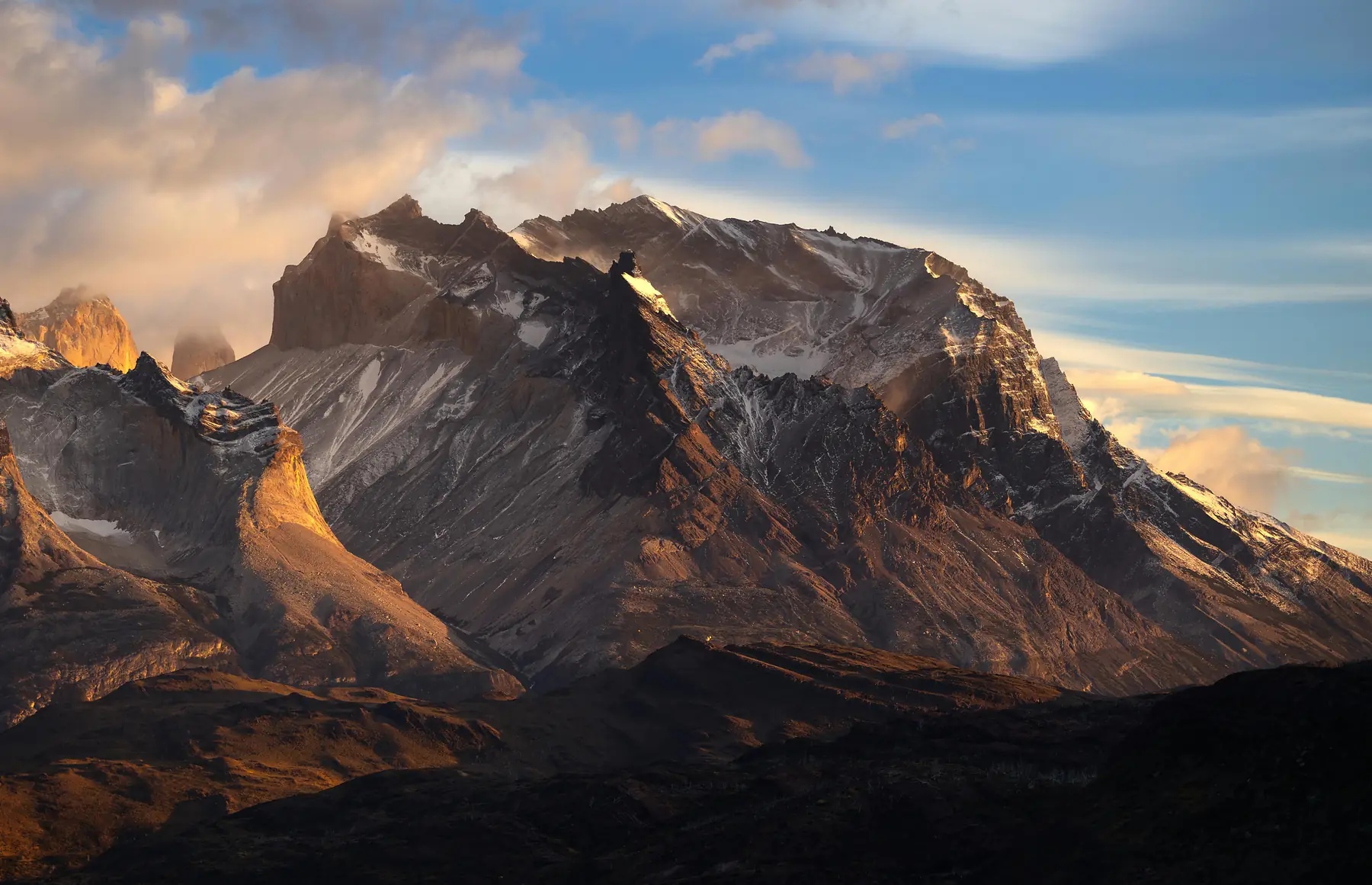
Cerro Ferrier is arguably the most underrated viewpoint in the park. Located near the Guardería Grey, the trail is a relentless 700m vertical ascent over just a few kilometers. It is a steep, often muddy climb through dense forest that eventually breaks out onto a ridge with a 360-degree view. From the top, you can see the Pingo and Grey glaciers to the west and the entire Paine Massif to the east.
The Cerro Ferrier trail is strictly monitored by CONAF. Hikers must register at the Guardería Grey ranger station before 11:00 and are often required to show they have appropriate footwear and water. If winds exceed 70-80 km/h, rangers will close the trail for safety.
For a shorter but equally steep challenge, Mirador Cóndor provides the park’s best sunset vantage point. The trail starts near Camping Pehoé and climbs quickly to a rocky outcropping where condors are frequently seen catching the thermals. From here, Lake Pehoé looks like a spilled bottle of blue ink, with the Cuernos rising directly behind it.
If you are looking for a true “secret” of the southern park, head toward Laguna Verde for the Mirador del Toro hike. This trail moves through a tundra-like landscape that feels world’s away from the crowded W trek. It offers a unique angle of the Massif, looking north across Lake Toro, the largest lake in the region. Because this area is less serviced by public transport, it is a perfect candidate for those with a rental car.
To make the most of these remote trails, it is helpful to know where to base yourself. Staying in the right sector can save you hours of driving or bus time each day.
Easy Walks & Wildlife Watching
Not every day in Torres del Paine needs to be a vertical struggle. Some of the park’s most beautiful corners are accessible via flat, well-marked paths that are ideal for families, photographers, or those on a rest day between longer treks. These areas are also the best places to see Patagonia’s “Big Five” wildlife species, particularly the guanaco.
Laguna Azul and Sierra Masle are located in the northeastern corner of the park. Unlike the granite-and-glacier scenery of the west, this area is characterized by golden pampa and clear blue lagoons. It is the most reliable place in the park to see large herds of guanacos and the ostrich-like rhea (ñandú). The walk along the lake is flat and offers a stunning view of the Towers from an angle where they appear to rise directly from the plains.
The walk across the Península Lago Grey is another essential easy outing. After a short walk through a mature lenga forest, you emerge onto a massive gravel spit that stretches out into Lake Grey. Depending on the wind and currents, this beach is often littered with “bergy bits”—chunks of ancient glacial ice that have drifted down from the glacier and run aground. It is a surreal experience to touch ice that may be hundreds of years old while walking on a wind-swept beach.
If you are interested in the flora and fauna of the region beyond just the hiking trails, you might enjoy our guide on where to see guanacos and other wildlife or our overview of other things to do in the park like kayaking or horseback riding.
Multi-Day Trekking: The W and the O
While this guide focuses on day hikes, many travelers find that a single day isn’t enough to satisfy their curiosity. If you find yourself looking at the horizon and wondering what lies beyond the next ridge, you are likely a candidate for one of the park’s multi-day circuits.
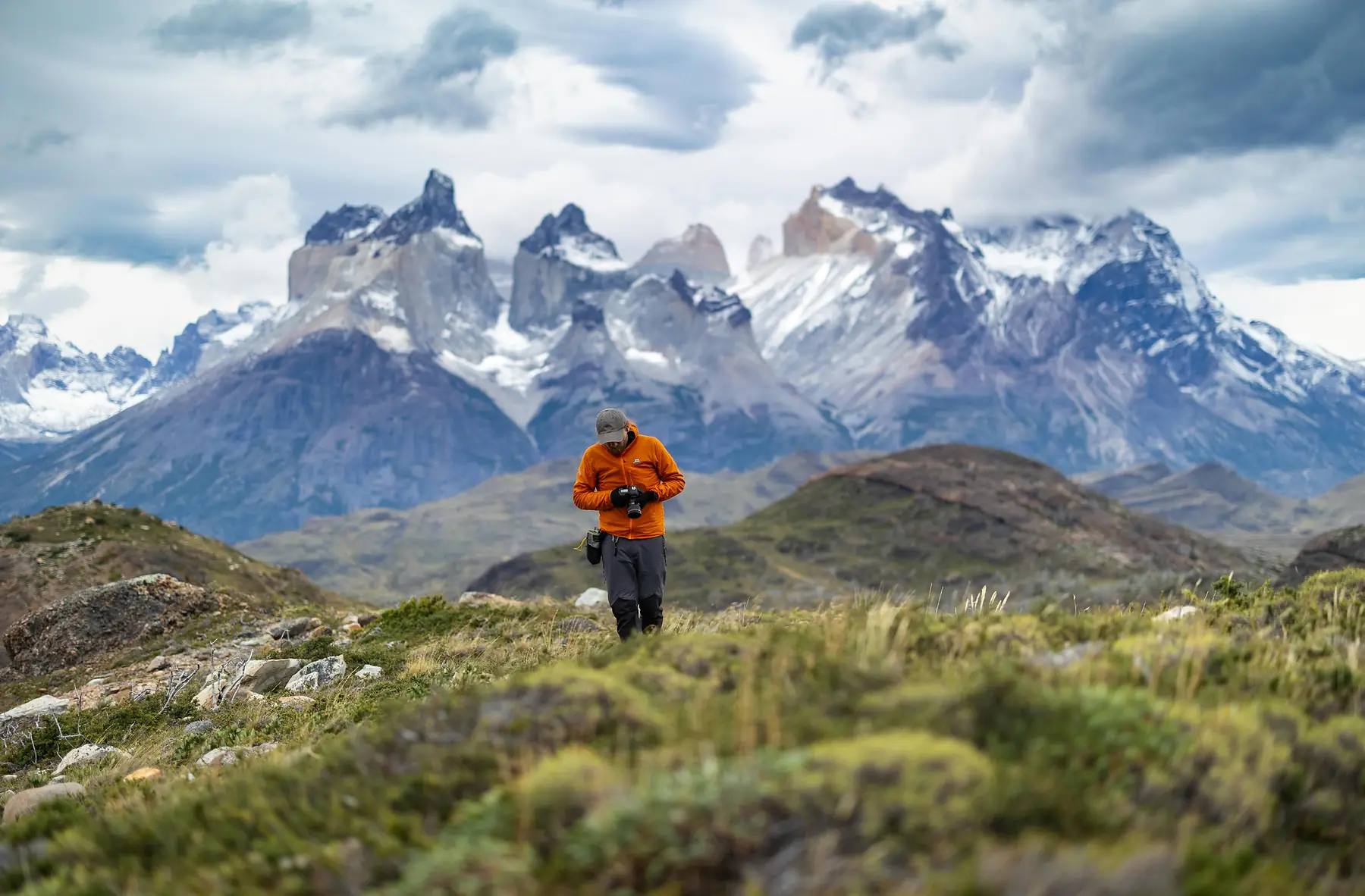
The W Trek is the most famous multi-day route in South America. Typically taking 4 to 5 days, it connects the “Big Three” highlights into a single continuous journey. You sleep in mountain lodges (refugios) or campsites along the way, removing the need for daily travel logistics. The O Circuit is the more ambitious 7 to 9-day loop that circles the back side of the Massif, offering a much more remote and rugged experience.
The mental model for choosing between day hiking and multi-day trekking usually comes down to your preference for comfort versus immersion. Day hikers can return to a warm hotel or a hostel in Puerto Natales, while trekkers trade those comforts for the experience of seeing the park in the quiet hours of dawn and dusk when the day-trippers have gone.
If you are considering making the jump from day hikes to a full trek, we have dedicated resources to help you plan.
Related guides for multi-day trekking
Essential Gear for Torres del Paine Trails
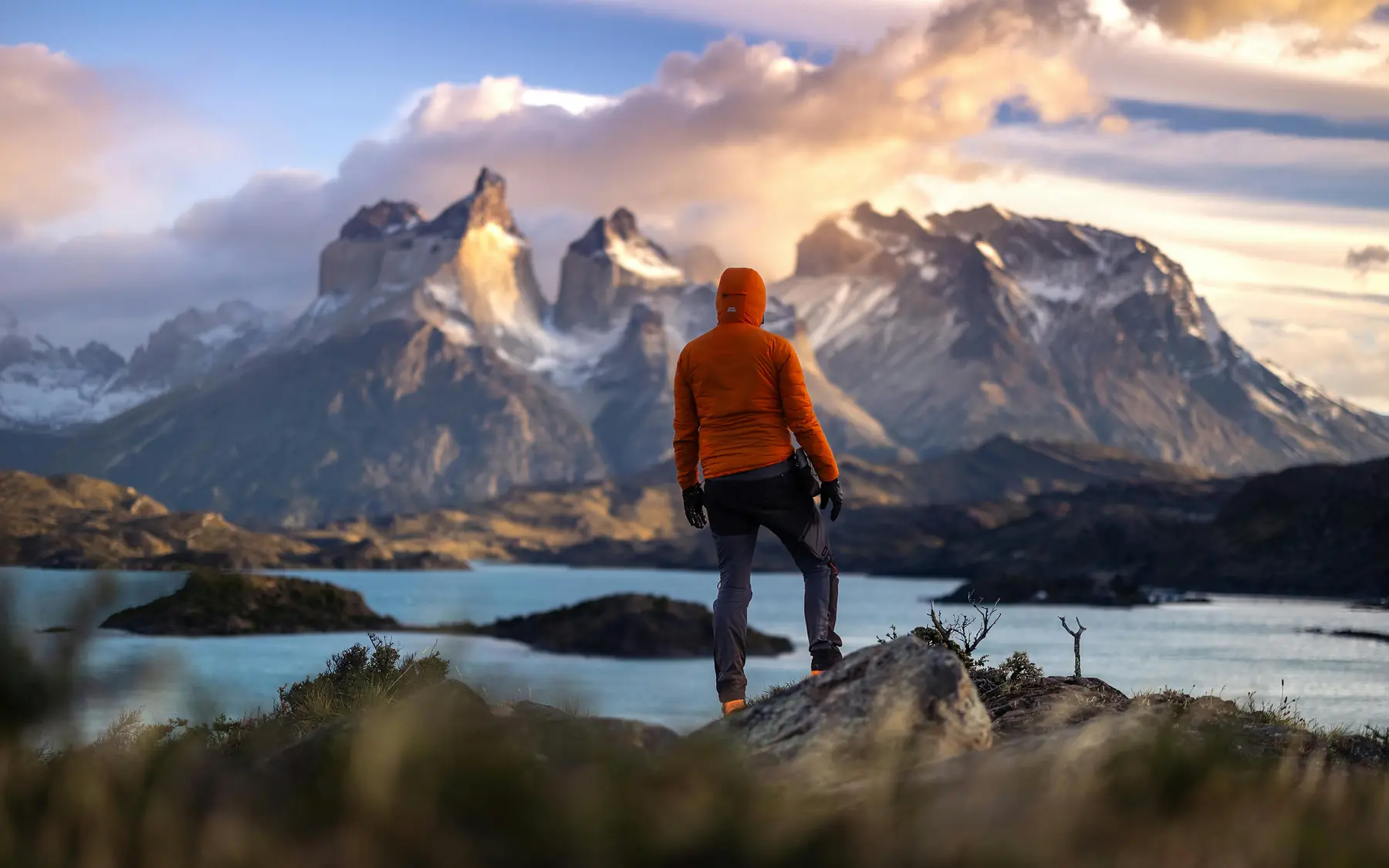
The weather in Torres del Paine is the single most important factor in your hiking safety. The park is famous for “four seasons in one day,” where a perfectly still, sunny morning can transform into a sleet-filled gale in under twenty minutes. Your gear needs to be a modular system that can adapt to these shifts.
For day hikes like Base Torres or Cerro Ferrier, trekking poles are highly recommended. The final descent from the Towers is over loose, shifting granite scree that can be punishing on the knees, while the Ferrier trail is often slick with mud and loose soil. Poles provide the stability needed to prevent an ankle injury in a remote area where rescue is difficult and expensive.
The wind in Torres del Paine is a physical force. On exposed ridges like the “Windy Pass” or the Cuernos lookout, gusts can exceed 100 km/h. Avoid using a rain poncho, which acts as a sail and can pull you off balance; instead, invest in a high-quality, 3-layer hard-shell jacket that can block the wind effectively.
Hydration is surprisingly easy in the park. The water in fast-flowing streams is generally safe to drink directly from the source, as long as you are upstream from established campsites or livestock areas. This means you can carry a smaller bottle and refill it throughout the day, saving weight on steep climbs.
Finally, remember that the park has strict safety regulations. Using camp stoves of any kind is strictly forbidden on day trails; they may only be used in designated areas within official campsites. For more detailed advice on what to pack for the specific conditions of 2026/27, see our Patagonia packing list and check the current weather patterns.
FAQ
QUESTION: Do I need a guide for the best hikes in Torres del Paine?
No, all primary trails in Torres del Paine are well-marked and can be hiked solo, though a guide is recommended for those wanting deep geological and botanical context.
QUESTION: Is the water in Torres del Paine safe to drink while hiking?
Yes, the glacial water in Torres del Paine is generally safe to drink directly from fast-flowing streams, provided you are away from high-traffic campsites.
QUESTION: What is the hardest day hike in Torres del Paine?
Mirador Base Las Torres is the most demanding due to its 22km length, while Cerro Ferrier is the steepest, gaining 700m of elevation in just a few kilometers.
QUESTION: Can I do day hikes in Torres del Paine without a car?
Yes, most iconic Torres del Paine hikes like Base Torres and Mirador Cuernos are accessible via the park’s bus and shuttle system from Puerto Natales.
QUESTION: What time do trails close in Torres del Paine?
During the 2026 season, CONAF typically closes the trail to Mirador Base Las Torres at 16:00 and the trail from Grey to Paine Grande at 15:00 for safety.
QUESTION: Are trekking poles necessary for hiking in Torres del Paine?
Trekking poles are highly recommended for Torres del Paine, especially for the steep, rocky moraine at Base Torres and the slippery descent from Cerro Ferrier.